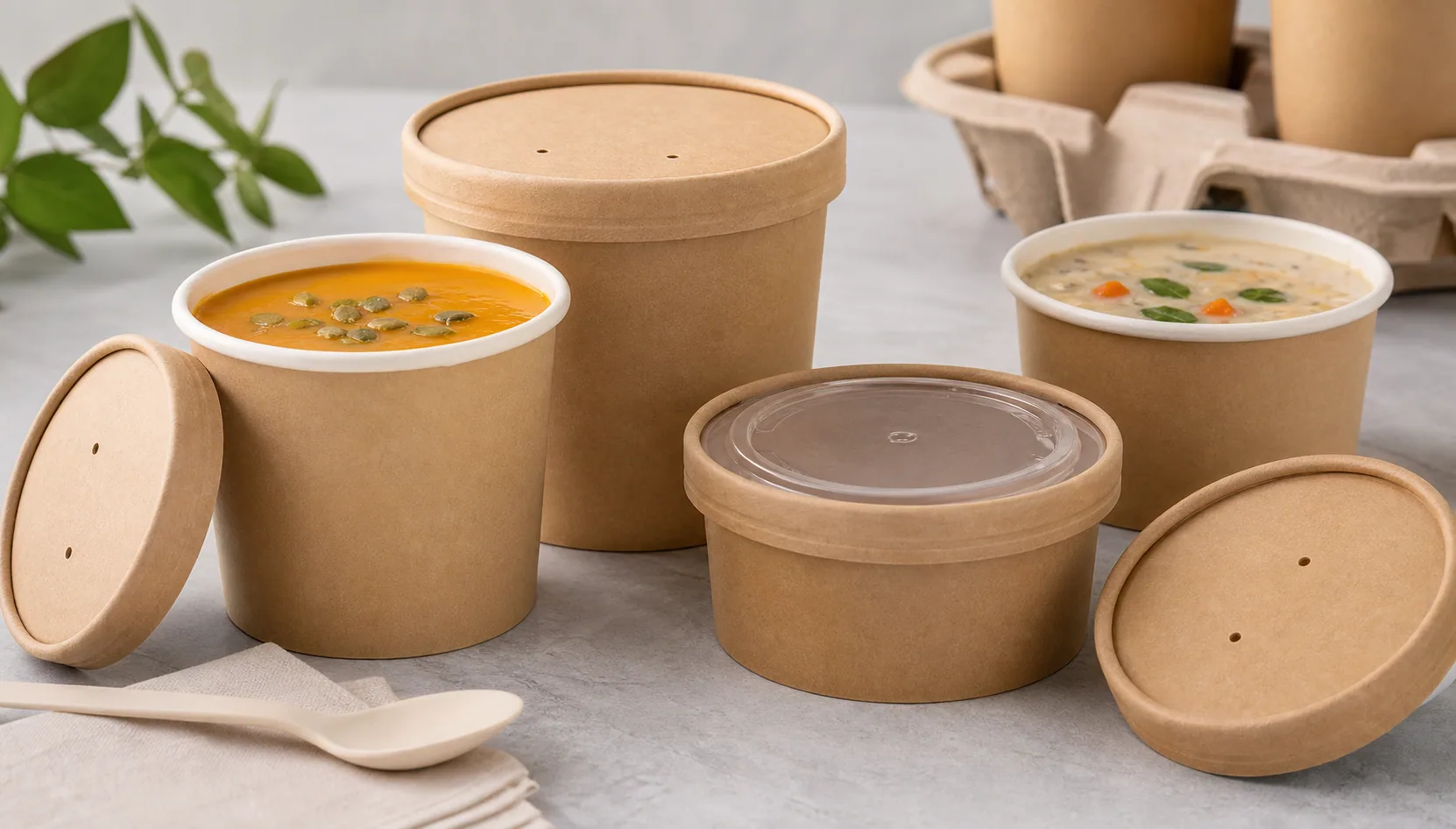
Soup packaging is a system: bowl wall, barrier, rim and lid all work together. A bowl that feels firm when empty may behave differently after hot, oily or acidic food sits inside it.
The best size and construction depend on soup texture, serving volume, headspace, holding time and whether the order is carried, stacked or delivered.
TOGO offers paper soup containers from 6 oz to 32 oz and a broader paper bowls with lids range for soup, noodles, salads and takeaway meals.
What Does a Soup Bowl Need to Do?
Paper bowls for soup are disposable fiber-based bowls or containers designed for liquid or semi-liquid foods. Their suitability depends on the specific item, coating, rim, lid, soup type, holding time and service route.
Start With the Soup and Holding Time
Paper bowls can be suitable for soup when the product is designed for that use and tested with the real menu. A bowl that works for salad may not automatically be right for hot broth, chili or delivery soup. Lid fit, fill line and coating are central to the decision.
TOGO's guide to paper bowls with lids for soup, salad and takeout. This draft can be used as a focused refresh or a narrower support page around the phrase “paper bowls for soup.”
| Soup type | Packaging concern | Better TOGO product direction |
|---|---|---|
| Clear broth | Splashing and lid pressure | Vented lid or stable rim test |
| Cream soup | Coating and sidewall contact | Coated paper soup container direction |
| Chili or stew | Weight and oil/moisture exposure | Stronger bowl or kraft soup container |
| Noodle soup | Toppings and headspace | Larger 24-32 oz bowl/container |
| Cold soup | Condensation and lid clarity | Confirm cold storage condition |
Coating, Rim and Lid Work Together
Soup creates longer contact time than dry snacks. Coating can help resist moisture, but coating also changes any material or environmental claim planned for the website or packaging and disposal options. The FDA's food-contact packaging resources are a useful external link for explaining why coating and intended use need to be reviewed together.
The rim is just as important. A weak rim can compromise lid fit, stacking and delivery. A tight lid can improve transport, but it can also trap steam or create pressure if the package is not intended for that condition.
Choose the Format Around the Menu
TOGO's Round Paper Bowls Wholesale and Kraft Paper Soup Container with Vented Lid are appropriate internal links. Use them as product pathways rather than making broad heat or microwave statements.
For microwave-related questions, link to TOGO's Can You Microwave Paper Bowls & Cups? instead of repeating the full microwave discussion.
Test With the Soup You Actually Serve
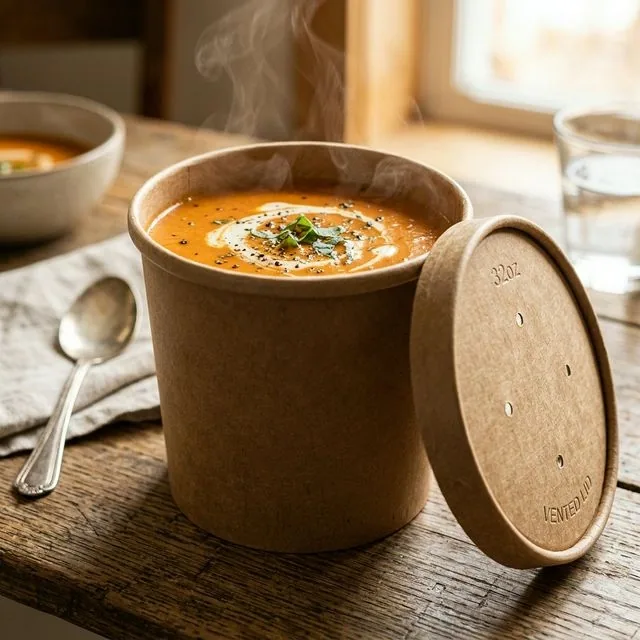
Water tests can hide the real problem. Cream soup, ramen, chili and oily broth behave differently under a lid. A kraft paper soup container with a vented lid lets you check rim strength, steam release and lid behavior with the food you actually serve.
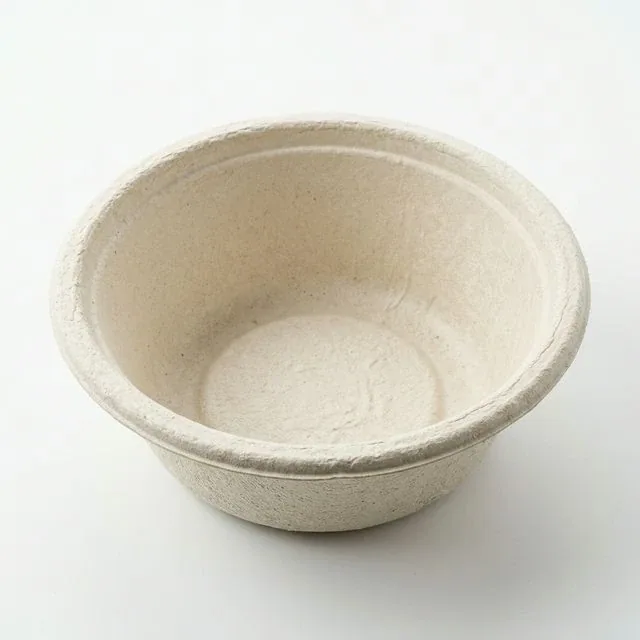
A molded fiber option such as an 8 oz bagasse bowl can be tested for small sides, tasting portions and non-liquid foods, but soup use still needs realistic fill, time and lid checks.
| Test step | What to do | What you learn |
|---|---|---|
| Fill line | Fill to the intended serving level | Whether nominal capacity leaves enough headspace |
| Lid closure | Close with the exact lid after filling | Whether steam or food pressure lifts the lid |
| Hold time | Hold for the expected service window | Whether sidewall and rim stay stable |
| Tilt check | Simulate delivery movement | Whether leakage or lid movement appears |
| Opening check | Open after holding | Whether the customer experience still feels clean |
A filled-sample test reveals what a size chart cannot. The right bowl is the one that handles the soup's heat, fat, thickness and movement in the actual service condition.
When several soup sizes share one lid family, keep one extra product reference from each size after the first test. Rechecking them after storage helps you catch small rim or nesting differences before the order moves into repeat purchasing.
Send TOGO the Soup, Fill and Delivery Details
For an accurate quote, include soup type, fat or oil level, target fill volume, lid style, serving temperature, holding time, delivery distance, where you plan to sell or use it and carton needs. TOGO can compare paper soup containers, paper bowls and bagasse bowls around that service condition.
FAQ
Are paper bowls good for soup?
They can be, if the specific bowl and lid match the soup type, fill line and service condition.
What size paper bowl is best for soup?
12-16 oz works for many single servings. 24-32 oz may fit noodle soup or meal bowls.
Do paper soup bowls need lids?
Delivery and takeout usually need lids. Dine-in sampling may not.
Can paper soup bowls go in the microwave?
Only if the specific item is documented or labeled for microwave use.