
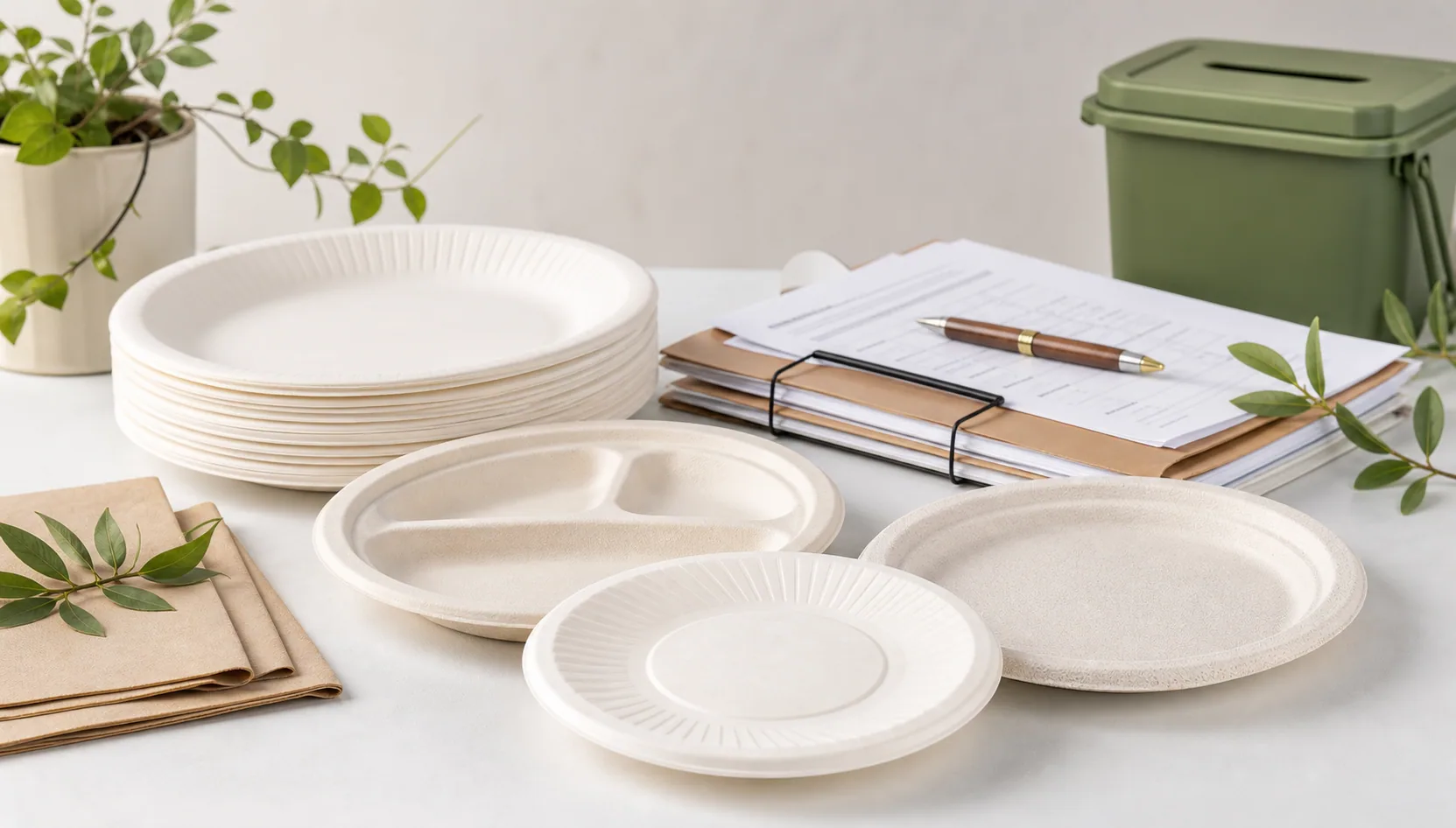
A paper plate is not compostable simply because it looks like fiber. Coatings, inks and other components can change both the product's behavior and the claim that can be made about it.
Compostability is also tied to a defined system. Product certification and local facility acceptance matter more than a broad material label.
TOGO supplies both paper plates and bagasse plates; the two ranges should be compared by construction, food use and available documentation rather than by appearance alone.
Compostable and Biodegradable Are Different Claims
Compostable means an specific item is designed to break down under defined composting conditions. Biodegradable is a broader term and can be misleading when the time frame, environment and product structure are not clear.
When Can a Plate Be Called Compostable?
Some paper plates may be compostable or biodegradable, but the statement depends on the specific plate, coating, food residue, certification evidence and local disposal route. A plain paper plate, a coated paper plate and a bagasse plate should not be described with the same claim.
| Plate type | Compostable statement risk | What to verify |
|---|---|---|
| Uncoated paper plate | Lower, but still not automatic | Product construction and facility acceptance |
| Coated paper plate | Coating may change the statement | Coating type and certification scope |
| Bagasse plate | Often marketed as compostable | Certification that covers the plate and market wording |
| Printed plate | Ink may matter | Food-contact side and disposal statement evidence |
| Food-soiled plate | Facility acceptance varies | Local compost program rules |
Why the Claim Needs Conditions
The FTC's Green Guides and environmental statements guidance remind marketers to avoid broad environmental statements that can mislead readers. The EPA's composting resources also show that composting depends on managed systems, not just material names.
For products marketed as commercially compostable, certification scope matters. The BPI certification schemes explain how standards, test methods and product or component rules are applied. Use certification references only for products actually covered by the evidence.
BPI explains that “biodegradable” lacks the defined environment and time frame needed for a compostability claim. Use “compostable” only when the product, evidence and disposal conditions support the term.
What the Two Terms Mean in Practice
“Biodegradable” may sound simple, but without a time frame and environment it does not tell a foodservice team where the plate can go after use. “Compostable” is more specific, but only when tied to commercial composting conditions, certification scope and local acceptance.
If you want the broader difference in wording, TOGO's guide to biodegradable containers and compostability is a useful next read.
Start With the Specific Plate
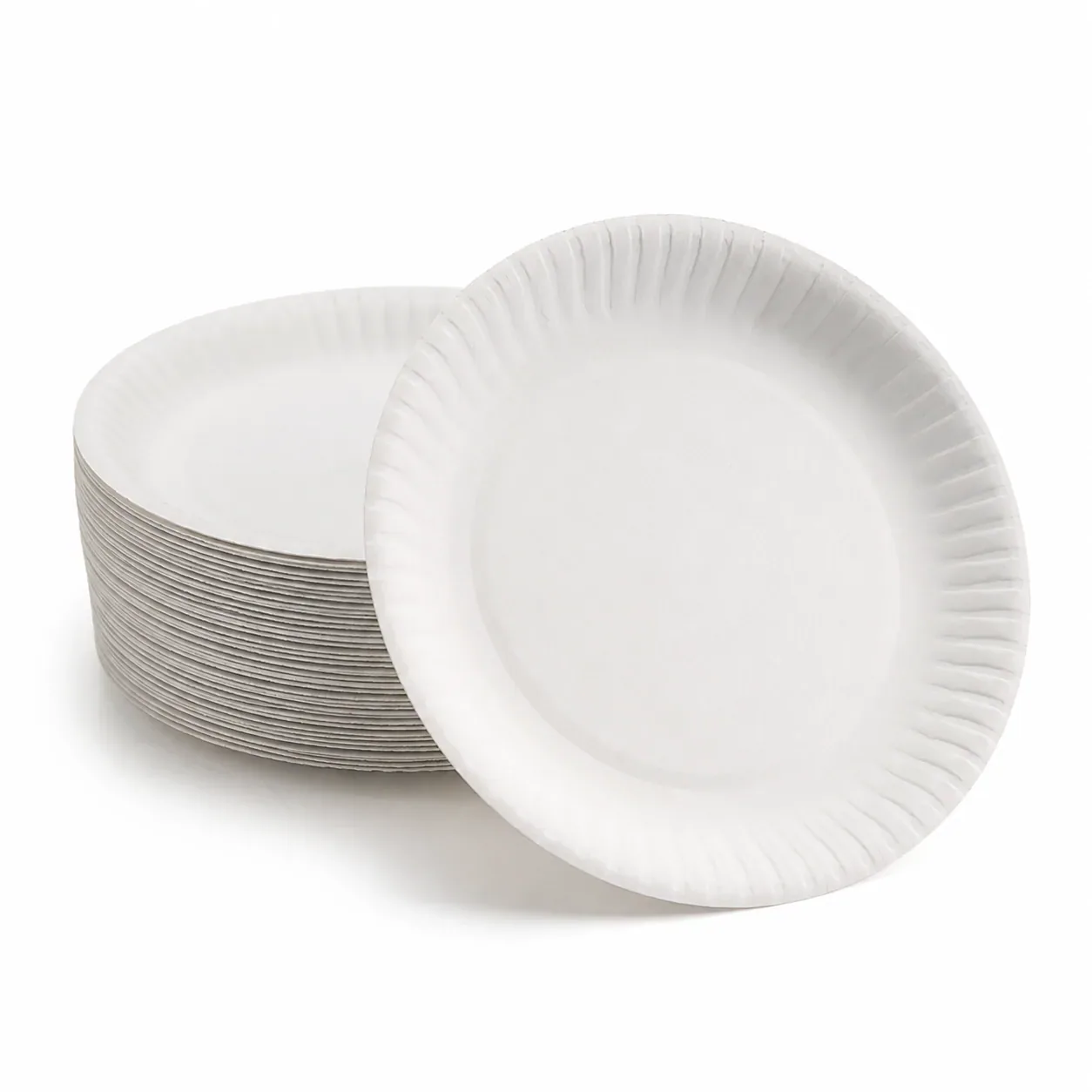
Paper plates and bagasse plates are often discussed together, but the claim should follow the plate being sold. A 10 inch heavy duty paper plate helps you test the paperboard side of the question: surface finish, oil behavior, food use and any supporting documents.
A round bagasse plate with a wide rim gives you a molded-fiber comparison. It may support a different product story, but the final wording still needs evidence that matches the plate and a realistic disposal route.

| Statement level | Stronger wording path | Weak wording to avoid |
|---|---|---|
| Material description | State the base material accurately | Calling every fiber plate compostable |
| Product evidence | Tie wording to the specific plate | Applying one document to all products |
| Certification scope | Match the certificate to the product | Saying certified without scope |
| Disposal route | Mention industrial facility or local acceptance when relevant | Saying it composts everywhere |
| Published claim | Keep the statement narrow and evidence-based | Using broad green language without proof |
The practical difference is that the claim stays tied to the plate, evidence and disposal route. Compostable and biodegradable are not interchangeable shortcuts for "made from paper" or "made from fiber."
A website can explain conditions in detail; short carton text still has to remain accurate when read on its own. Blog wording can explain the condition behind a statement, but carton wording is shorter and often read without context. If a carton mark says compostable, the specific plate, certification scope and disposal instruction need to be clear enough on their own. If that cannot be done, keep the stronger explanation on the product page and use narrower wording on packaging.
What TOGO Needs to Review the Plate
For an accurate quote, include the plate type, material preference, food use, printing need, where you plan to sell or use it, any material or environmental claim planned for the website or packaging, and any document requirement from your channel. TOGO can review available paper plate and bagasse plate options with the documents currently available for those products.
FAQ
Are all paper plates compostable?
No. Coating, ink, additives, food residue and local facility acceptance can change the answer.
Are bagasse plates compostable?
Some bagasse plate products may support compostability statements, but confirm documents for the plate and market wording.
Is biodegradable the same as compostable?
No. Compostable is a more specific disposal statement with defined conditions.
Can greasy paper plates go into compost?
That depends on the local compost facility and product. Do not assume acceptance.