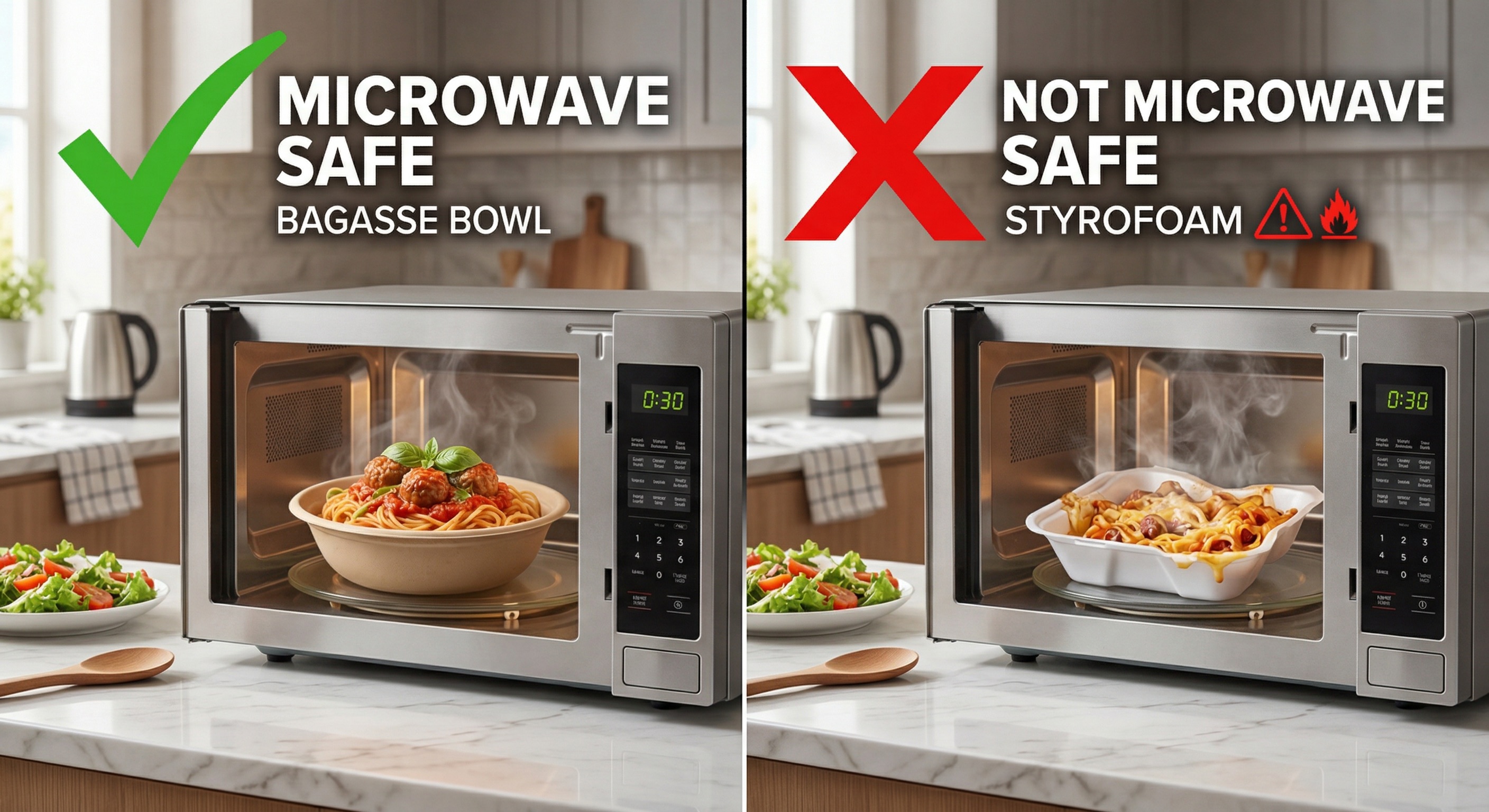
It's lunchtime. You've got leftover pasta in a paper bowl, or your takeout just arrived in a disposable container. You're standing in front of the microwave thinking: "Can I just heat this up as is?"
It's a question we've all asked. And honestly, the answer isn't always straightforward. The wrong choice could mean chemicals leaching into your food, a container melting, or in the worst case, a fire hazard.
Let's break down what's actually safe to microwave and what you should avoid.
The Quick Answer: What's Safe and What's Not
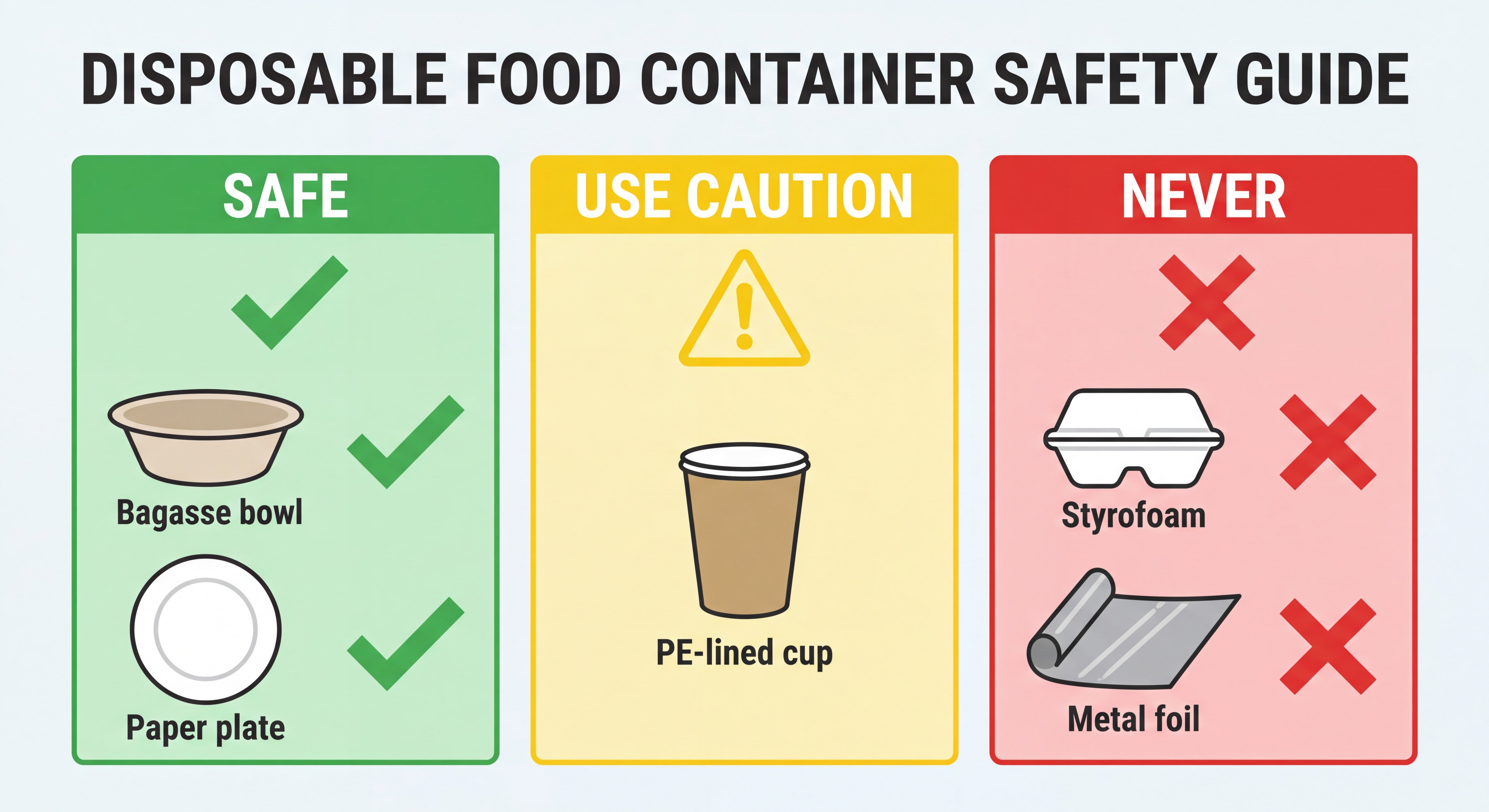
Let me give you the simple version first, then we'll dig into the details.
Safe to Microwave
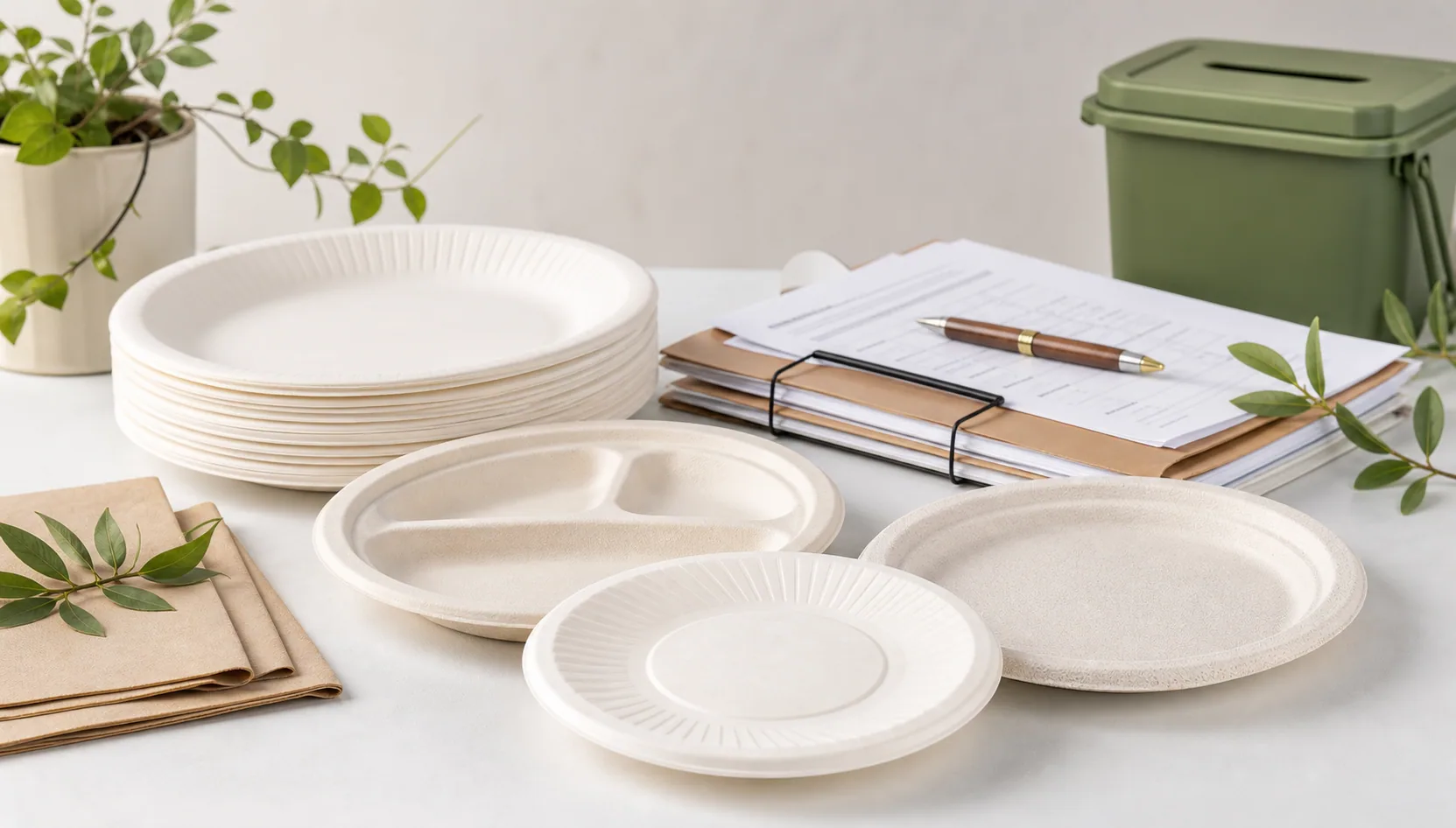
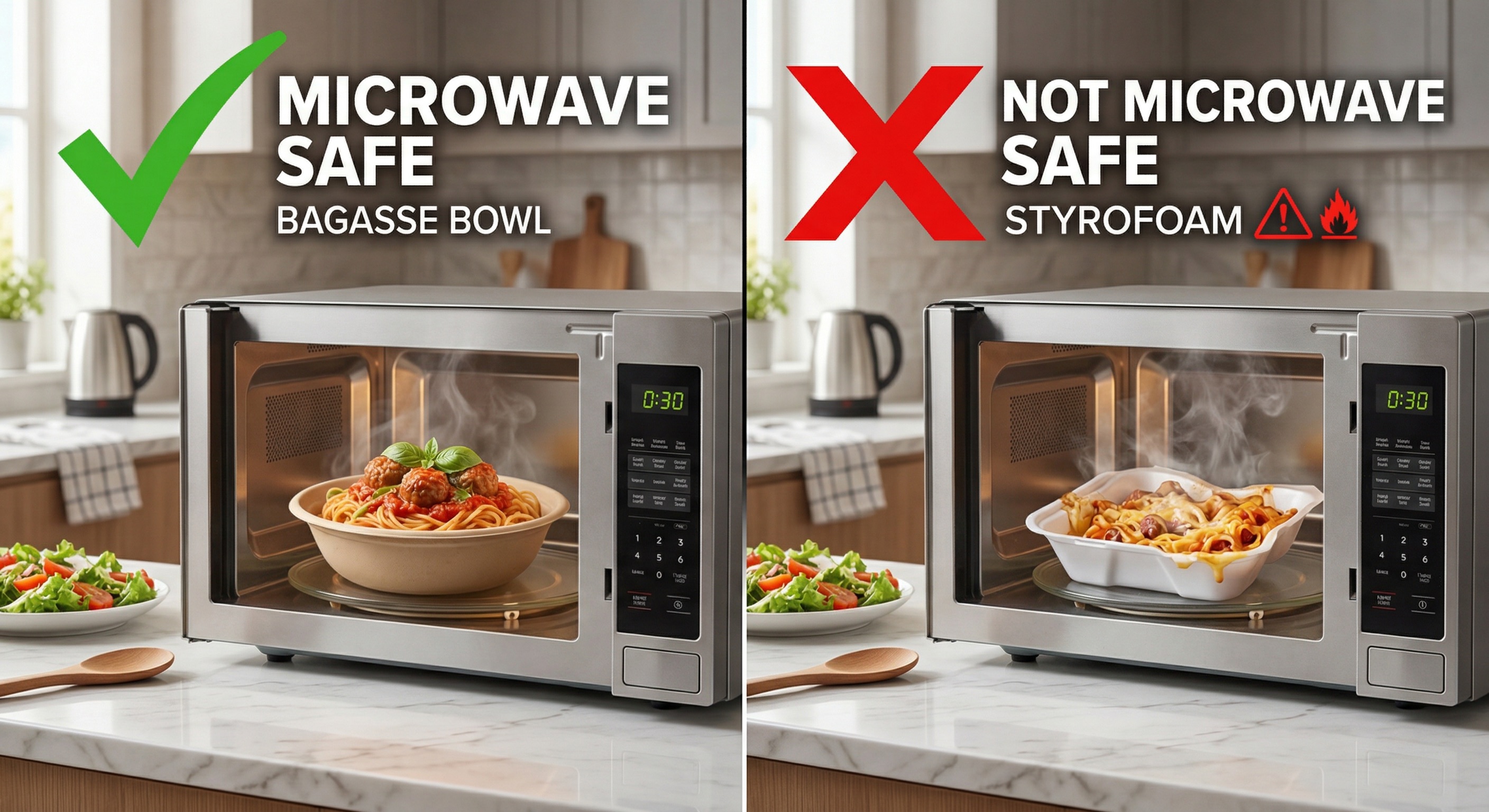
Bagasse (sugarcane fiber) - This is your best bet. No chemicals, handles heat beautifully, won't warp or melt.
Plain white paper bowls - The uncoated kind. Fine for quick reheating (1-2 minutes). Just make sure there's no metallic decoration.
Parchment paper - Designed for heat. Can handle up to 230°C (450°F).
Microwave-safe plastic (PP #5) - Look for the microwave symbol on the bottom. Polypropylene is one of the safer plastics for heating.
Use With Caution
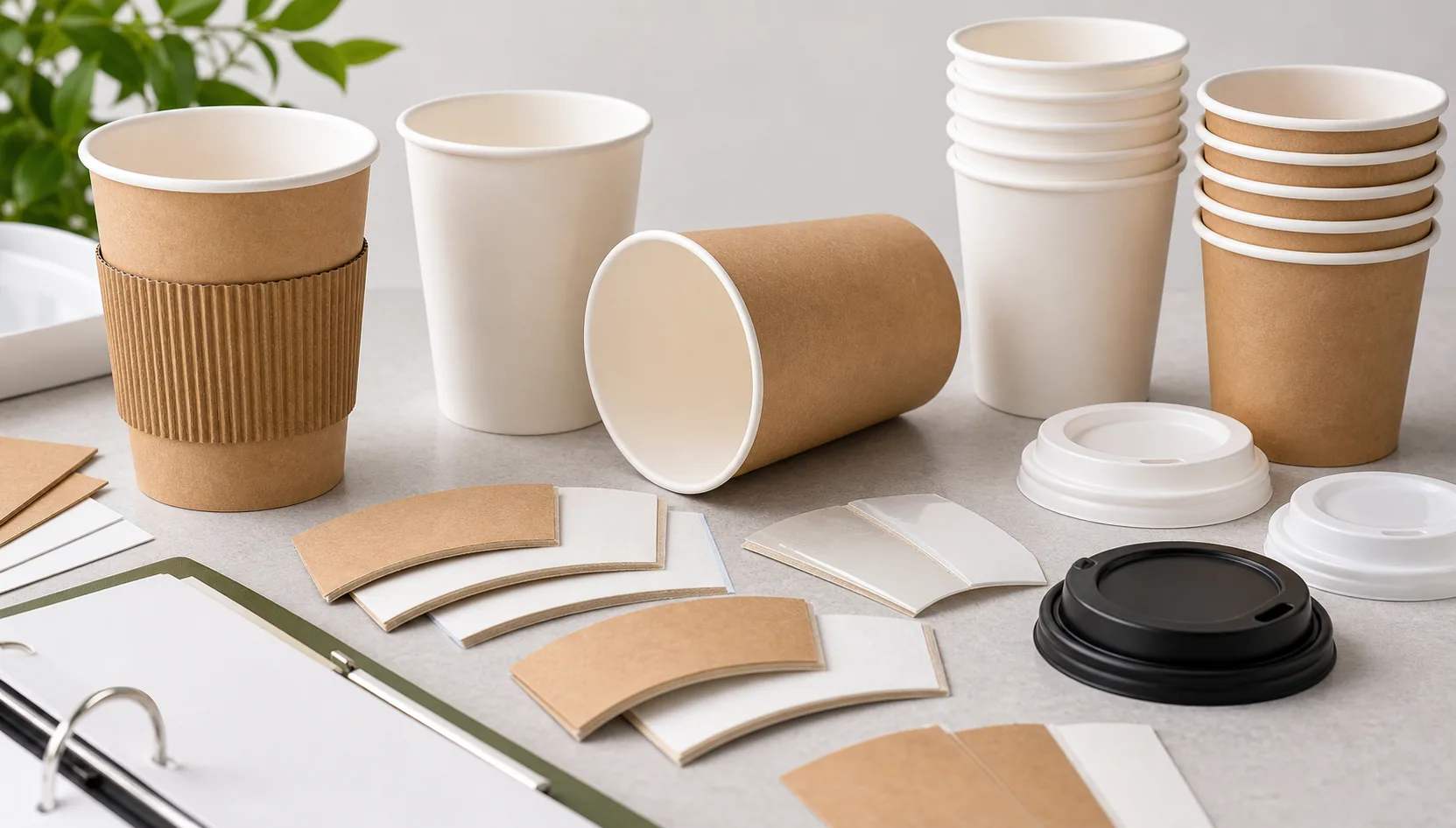
Paper cups and bowls with plastic lining - Most have a thin polyethylene (PE) coating inside. It can soften when heated and potentially release microplastics. If you must use them, keep it under 30 seconds.
Wax-coated paper - The wax melts at microwave temperatures and can transfer to your food.
Never Microwave
Styrofoam - Melts around 80°C and releases styrene, which is a probable carcinogen. Just don't.
PLA "bioplastic" - Warps at just 55°C, way below what your food reaches in the microwave.
Anything with metal or foil - Sparks, arcing, potential fire. Not worth the risk.
Thin single-use plastic - The cheap takeout containers. They deform and can release harmful chemicals including BPA and microplastics.
What Actually Happens When You Microwave Paper?
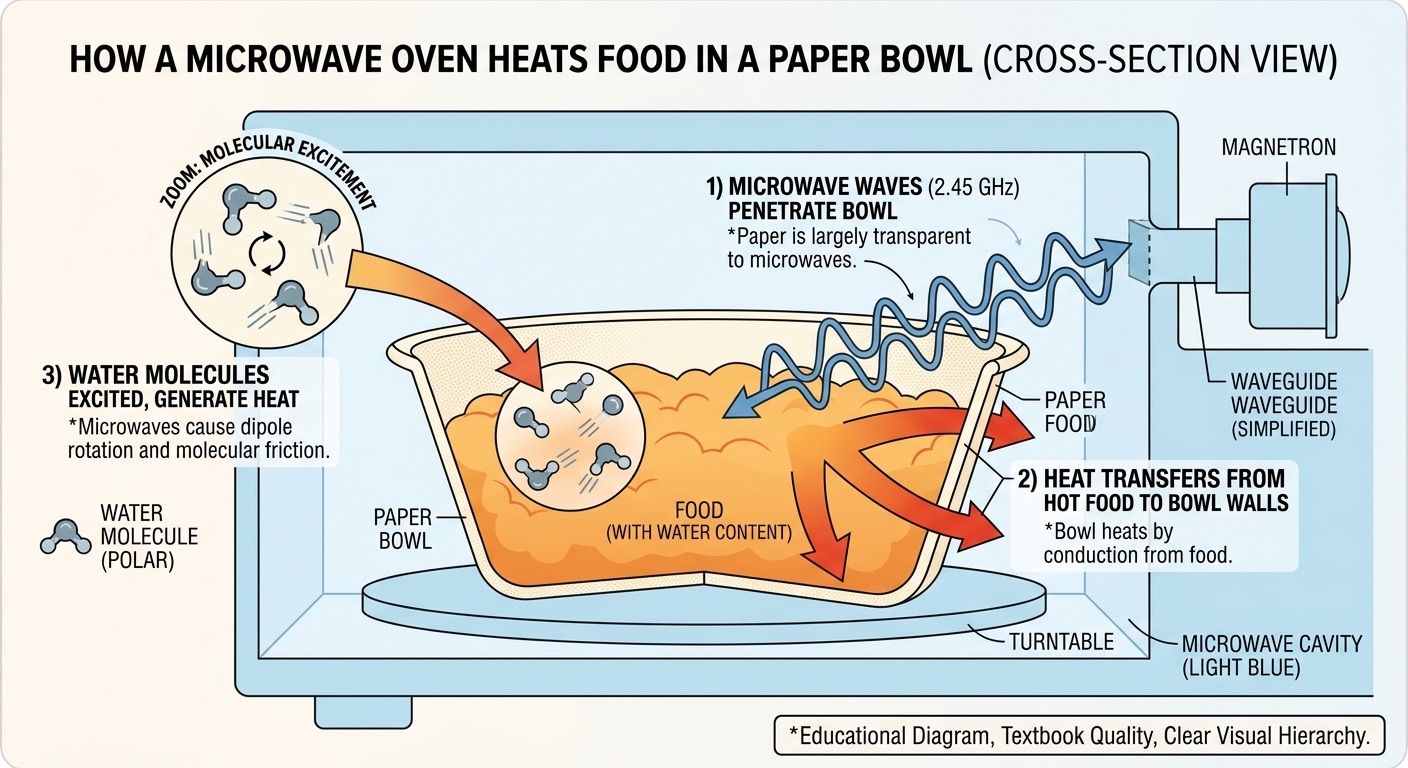
Here's the science.
Microwaves work by exciting water molecules in your food. The paper itself doesn't actually absorb microwave radiation - it's basically transparent to it. That's why if you put an empty paper plate in the microwave, it stays cool.
The heat transfer works like this:
Microwaves heat up your food and the moisture in it
The hot food transfers heat to the paper container through direct contact
If the container can handle that heat, you're good
Problems happen when:
Coatings like plastic, wax, or certain inks absorb heat differently and start to melt or break down
You microwave for too long (5+ minutes) and the paper dries out and starts to char
There's any metal (even metallic ink) that causes electrical sparking
Answering Your Specific Questions
Can I microwave a paper bowl?
Yes, if it's plain or made from bagasse. Most standard white paper bowls are fine for 1-2 minutes of reheating. If the bowl has a shiny plastic coating inside, either keep it under 30 seconds or just transfer your food to a ceramic bowl.
Can I microwave pasta in a paper bowl?
Sure, for a quick 1-2 minute reheat. Since pasta usually has sauce and moisture, that actually helps prevent the paper from drying out. Just avoid microwaving dry pasta in paper - it can overheat and char.
Can I boil water in a paper bowl in the microwave?
I wouldn't recommend it. While paper can technically hold boiling water for a moment, the sustained 100°C temperature can weaken the bowl and any coatings might start to break down. Use a ceramic mug for boiling water.
Are paper cups microwave safe?
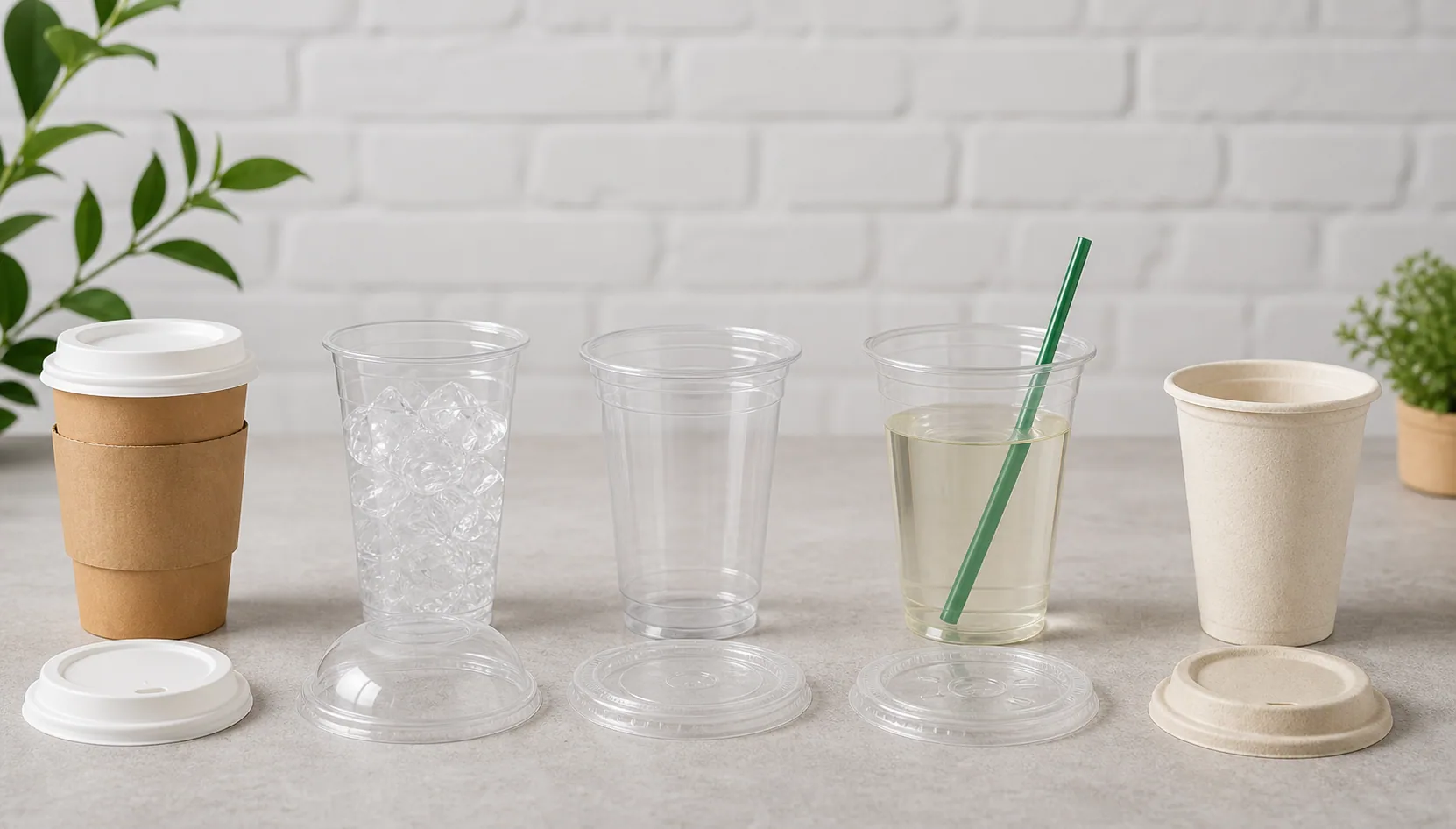
Most takeout paper cups aren't great for microwaving. They typically have a plastic lining (PE or PLA) to prevent leaking, and that lining can melt or warp when heated. Your best bet is to transfer your drink to a ceramic mug first.
Can you microwave bagasse bowls and cups?
Absolutely. Bagasse is actually one of the best materials for microwaving. It can handle temperatures up to about 120°C (250°F) without warping, melting, or releasing anything nasty. It's specifically designed for hot food service.
Five Simple Rules for Microwaving Disposable Containers
Look for the microwave symbol - It's usually a wavy line icon on the bottom of the container.
When in doubt, transfer - Takes 10 seconds to move food to a ceramic dish and eliminates all risk.
Keep it short - Limit microwave time to 2 minutes or less for disposable containers.
Avoid metal and foil - Even small foil edges or metallic print can cause sparks.
Choose bagasse or plain paper bowls - These are your safest disposable options by far.
Why Bagasse is the Smart Choice for Microwave-Safe Takeout
If you run a business that serves food people reheat - meal prep companies, catering services, takeout restaurants - your container choice matters for both safety and brand perception.
Here's how bagasse stacks up:
What Matters | Bagasse | Paper with Plastic Lining | Cheap Plastic |
|---|---|---|---|
Microwave safety | Completely safe | Short duration only | Risk of toxins |
Customer perception | Premium & eco-conscious | Standard | Cheap |
Compostable | 60-90 days | No (plastic blocks it) | 500+ years |
PFAS-free | Certified | Varies | Often contains it |
Grease resistance | Excellent | Fair | Good |
Bagasse gives your customers confidence. They can reheat their food without worry, and they know you care about both their health and the environment.
Ready to Offer Worry-Free, Microwave-Safe Packaging?
ToGoTableware's bagasse product line is designed specifically for businesses that want to provide safe, sustainable takeout options:
Bagasse Bowls (8oz-32oz) - Perfect for soups, grain bowls, salads, and pasta dishes. Microwave-safe, leak-resistant, and sturdy enough for hot liquids.
Bagasse Clamshell Containers - Ideal for burgers, sandwiches, and entrees. Hinged lids snap shut securely for delivery, and customers can reheat right in the container.
Bagasse Cups - Hot and cold beverage service without the plastic lining concerns.
Complete Your Eco Setup:
Wooden cutlery sets - Heavy-duty birch wood utensils
Bamboo cutlery - Premium alternative to plastic
Wooden coffee stirrers - Perfect companion to bagasse cups
All ToGoTableware products are:
FDA 21 CFR compliant for food contact
PFAS-free certified
100% compostable (EN 13432)
Available at competitive wholesale pricing with volume discounts
Get samples and test the quality before committing to a full order.
Common Questions About Microwaving Paper and Disposable Containers
Does a paper cup have microplastics?
Many standard paper cups do contain microplastics because of their polyethylene (PE) inner lining. Studies have found that PE-lined paper cups can release tens of thousands of microplastic particles when exposed to hot liquids above 85°C. To minimize exposure, choose bagasse cups or PLA-lined options. All ToGoTableware products are certified free of petroleum-based plastic linings.
Are paper cups biodegradable?
Plain paper is biodegradable, but most commercial paper cups aren't. The PE plastic inner lining prevents full biodegradation in composting facilities. Only cups with PLA (plant-based) linings or unlined cups meet compostability standards. Bagasse cups are 100% compostable.
What is the healthiest cup to drink from?
For daily use, ceramic and glass are safest. For disposable cups, bagasse (sugarcane fiber) and unlined paper cups are the healthiest options - no plastic coatings, no BPA, no microplastics. Avoid Styrofoam and low-grade plastic cups, especially for hot beverages.
Are paper bowls better than plastic?
For microwaving and environmental impact, yes. Plain paper bowls are safer than plastic bowls when heated because they don't release microplastics or BPA. For overall sustainability, uncoated paper bowls are superior. However, bagasse bowls outperform both in terms of strength, microwave safety, and compostability.
What is the healthiest way to cover food in the microwave?
Use a damp paper towel, parchment paper, or a microwave-safe ceramic plate as a cover. Avoid using plastic wrap in direct contact with food during microwaving, as heat may cause plasticizers to migrate into food. A microwave-safe glass lid is the gold standard.
Why are paper bowls so expensive?
Paper bowls cost more than plastic due to higher raw material and manufacturing costs. Wood pulp is more expensive than petroleum-based polymers, and eco-friendly coatings add further cost. However, when factoring in environmental cleanup costs and plastic bans or taxes now active in dozens of countries, paper and bagasse bowls deliver better long-term value.
Is it cheaper to run the dishwasher or use paper bowls?
For households, a full dishwasher load is typically cheaper per bowl. Modern efficient dishwashers use minimal energy and water per load. When running a full load, the cost per bowl is usually lower than disposable paper bowls. For businesses serving hundreds of meals, disposable bowls save significant labor and water costs.
What two things should you never put in a microwave?
Metal (including aluminum foil) and Styrofoam. Metal causes electrical arcing (sparks) that can damage the microwave and cause fires. Styrofoam melts at approximately 80°C and releases styrene, classified as a "reasonably anticipated human carcinogen."