
Planning a party for 50 people sounds simple until you start counting plates. At first, 50 paper plates may seem enough. But once you add appetizers, main dishes, desserts, second servings, kids, or buffet-style food, that number can run out quickly.
So, how many paper plates do you really need for 50 people?
For most events, a realistic answer is:
Prepare 100–150 paper plates for a simple meal, and 150–200 paper plates if your event includes BBQ, buffet service, dessert, or multiple courses.
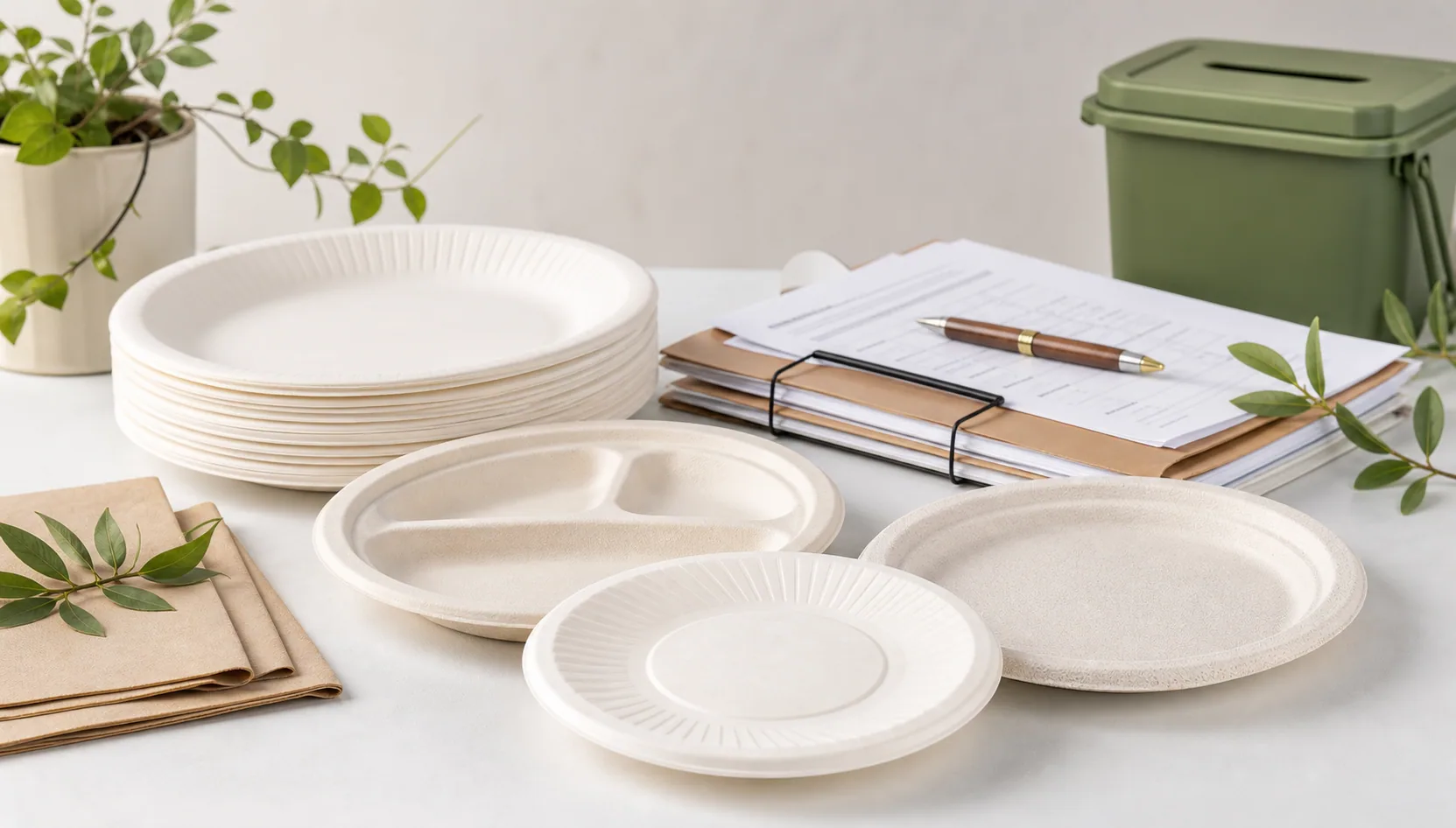
This guide uses practical event-planning logic rather than a fixed one-size-fits-all number. It also explains how to choose between 6 inch, 7 inch, 9 inch, 10 inch, and 3 compartment paper plates depending on the type of food you are serving.
What Is a Good Paper Plate Count for 50 People?
A good paper plate count for 50 people is not simply one plate per guest. In most real party settings, a good count means having enough plates for the main meal, dessert, second servings, and a small backup supply.
For a simple lunch or dinner, a good starting point is 100–125 paper plates. This gives each guest about two plates, with a few extras for accidents or second servings.
For parties with BBQ, buffet service, appetizers, kids, or dessert, a better count is 150–200 paper plates. These events usually require more plates because guests may use separate plates for different foods or go back for additional servings.
A practical rule is:
Plan 2 plates per person for a simple meal, and 3–4 plates per person for parties with dessert, BBQ, or buffet-style food.
For example, if you are hosting 50 people:
Simple meal: 50 × 2 = 100 plates, plus backup
BBQ or buffet: 50 × 3 = 150 plates, plus backup
Full meal plus dessert: 50 × 3–4 = 150–200 plates
This is why many hosts prepare around 200 paper plates for 50 people. It may sound like more than expected, but it helps avoid running out during the event.
How This Guide Was Calculated
The numbers in this guide are based on a simple planning method used for disposable tableware estimates:
Total plates = number of guests × expected plates per guest + backup plates
For a 50-person event, the most important variables are:
Whether you are serving snacks, a simple meal, or a full meal
Whether dessert is served separately
Whether the food is heavy, oily, saucy, or easy to spill
Whether guests are seated or eating while standing
Whether the meal is buffet-style
Whether kids are attending
How much backup you want
A 20%–30% backup buffer is a practical range for most parties. It helps cover dropped plates, second servings, dessert, and unexpected guests without overbuying too much.
For product examples, this guide refers to the TOGO Paper Plates collection, which includes common plate formats such as 6 inch, 7 inch, 9 inch, 10 inch heavy-duty, and 3 compartment paper plates. The category page positions TOGO as a wholesale paper plates B2B manufacturer and lists five paper plate options for different foodservice needs.
How Many Paper Plates for 50 People?
For a 50-person event, use this simple estimate:
Snacks or cake only: 60–100 plates
Simple lunch or dinner: 100–125 plates
Dinner plus dessert: 150–200 plates
BBQ or buffet: 175–200 plates
Wedding, catering, or longer event: 175–225 plates
A safe all-purpose setup is:
125 large dinner plates + 50 dessert plates + 25 backup plates = 200 paper plates
This setup works for most casual parties because it gives you enough plates for the main meal, dessert, second servings, and accidents.
If your event is very short and only includes cake or snacks, you can buy fewer. If your event includes BBQ, buffet food, children, or multiple courses, buy more.
Paper Plate Quantity Guide for 50 People
Event Type | Estimated Plates Per Guest | Recommended Plates for 50 People | Best Plate Type | Why This Estimate Makes Sense |
|---|---|---|---|---|
Cake, snacks, or light refreshments | 1–1.5 | 60–75 plates | 6 inch or 7 inch plates | Most guests use one small plate, with some extras for seconds or spills |
Dessert table or kids’ party | 1.5–2 | 75–100 plates | 6 inch or 7 inch plates | Kids and dessert tables usually create more plate use |
Simple lunch or dinner | 2 | 100–125 plates | 9 inch plates | Allows one meal plate plus extra plates for seconds or backup |
BBQ or heavy meal | 2.5–3 | 125–150 plates | 10 inch heavy-duty plates | Heavy, oily, or saucy food needs sturdier plates and more backups |
Buffet-style party | 3–3.5 | 150–175 plates | 9 inch or 10 inch plates | Guests often return for seconds or use separate plates |
Full meal plus dessert | 3–4 | 150–200 plates | Dinner plates + dessert plates | Main dishes and desserts usually need separate plates |
Cafeteria or separated meal | 2–3 | 100–150 plates | 3 compartment plates | Divided plates help separate mains, sides, sauces, and fruit |
Wedding, office event, or catering | 3.5–4.5 | 175–225 plates | Large plates + dessert plates | Longer events and multi-course meals need more backup |
The main takeaway: 50 plates are almost never enough for 50 people unless you are serving only one very light item.
Why One Plate Per Person Usually Does Not Work
The biggest mistake is assuming every guest will use exactly one plate.
That rarely happens.
For example, at a typical 50-person birthday party:
Some guests use a plate for snacks before the meal.
Most guests use a plate for the main food.
Many guests use another plate for cake.
A few guests go back for seconds.
Kids may grab extra plates.
Some plates may be thrown away too early.
Even if the event is simple, the count can rise quickly:
50 plates for the main meal
25–50 plates for dessert
10–25 backup plates
That already brings you to 85–125 plates.
For BBQ or buffet service, the number is higher because people are more likely to take multiple servings or use separate plates for different foods.
The Best Plate Sizes for a 50-Person Event
Choosing the right plate size is just as important as choosing the right quantity.
A 10 inch plate may be perfect for BBQ, but it is wasteful for cake. A 6 inch plate is great for cookies, but it is too small for a full meal.
Here is a practical way to think about plate sizes.
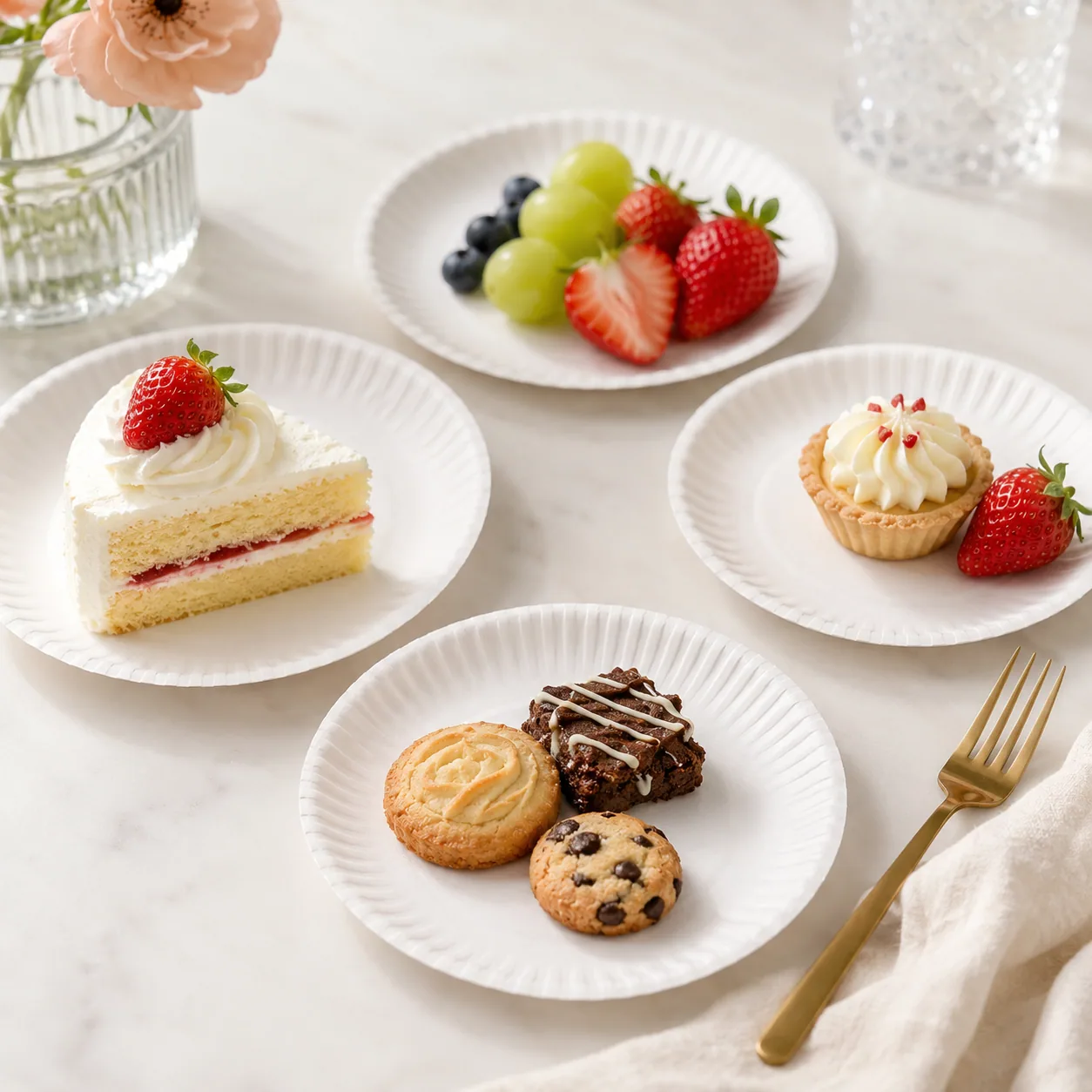
6 Inch Paper Plates
Use 6 inch plates for:
Cake
Cookies
Fruit
Samples
Small snacks
Bakery items
Small dessert portions
If your event is dessert-only, prepare 75–100 small plates for 50 people.
For this use case, TOGO 6 Inch Paper Plates are a natural product match because they are positioned for desserts, snacks, catering, and bulk supply.
7 Inch Paper Plates
Use 7 inch plates for:
Appetizers
Pastries
Salads
Light meals
Fruit
Snacks
Dessert portions that need a little more room
For a party with appetizers or dessert, prepare 50–100 plates depending on whether these are used alone or alongside dinner plates.
TOGO 7 Inch Paper Plates fit this middle-ground use case well because they are designed for desserts, appetizers, and light meals.
9 Inch Paper Plates
Use 9 inch plates for:
Sandwiches
Pizza slices
Pasta
Salads
Rice dishes
Casual lunches
Office meals
Birthday parties
For a simple meal for 50 people, prepare 100–125 plates.
TOGO 9 Inch Paper Plates are the most versatile option for standard party meals because the size works well for everyday lunch service, parties, restaurants, cafeterias, and general foodservice.
10 Inch Heavy Duty Paper Plates
Use 10 inch heavy-duty plates for:
BBQ
Burgers
Ribs
Fried chicken
Steak
Pasta
Saucy food
Oily food
Buffet meals
Larger portions
For BBQ or heavy food for 50 people, prepare 125–150 large plates. If dessert is also served, add 50–75 smaller plates.
TOGO 10 Inch Heavy Duty Paper Plates are the right fit when the meal is heavier or more likely to bend a thin plate.
3 Compartment Paper Plates
Use 3 compartment plates for:
Cafeterias
School meals
Meal programs
Combo meals
Buffets
Catering
Meals with sauces or sides
For a 50-person separated meal, prepare 100–150 divided plates.
TOGO 3 Compartment Paper Plates are useful when you want to keep mains, sides, sauces, fruit, and desserts separate on one plate.
Practical Plate Matches by Event Type
Event Need | Best TOGO Plate Option | Why It Fits | Suggested Quantity for 50 People |
|---|---|---|---|
Cake, cookies, fruit, samples | Small enough for dessert and snacks without wasting larger plates | 75–100 | |
Appetizers, pastries, salads, light meals | Gives more room than a small dessert plate but is still compact | 50–100 | |
Casual lunch, office meal, birthday party | A flexible everyday size for most simple meals | 100–150 | |
BBQ, buffet, oily or heavy food | Better for larger portions, sauces, and heavier food | 125–150 | |
Cafeteria, meal program, combo meal | Keeps main dishes, sides, sauces, and fruit separated | 100–150 |
This table is not meant to say one product is always better than another. It simply matches plate size to the way the food is likely to be served.
Recommended Setups for Common 50-Person Events
Simple Lunch or Office Meal
For sandwiches, pasta, salads, pizza slices, or casual lunch plates, start with:
100–125 9 inch plates
25–50 smaller plates if snacks or dessert are included
Recommended total: 125–175 plates
This is a good setup for office lunches, school events, casual birthday parties, and community meals.
Birthday Party with Cake
For a birthday party with pizza, snacks, and cake:
100–125 9 inch plates
50–75 6 inch or 7 inch dessert plates
25 backup plates
Recommended total: 175–225 plates
This may sound like a lot, but birthday parties often involve snacks, cake, second servings, and children.
BBQ or Outdoor Picnic
For BBQ, burgers, ribs, grilled food, pasta salad, and dessert:
125–150 10 inch heavy-duty plates
50–75 smaller dessert plates
25 backup plates
Recommended total: 200–250 plates
Outdoor events usually need more backup because people may be eating while standing, walking, or holding drinks at the same time.
Buffet or Potluck
For a buffet or potluck:
125–150 dinner plates
50–75 dessert plates
25 backup plates
Recommended total: 200–250 plates
Buffets are one of the easiest situations to underestimate. Guests often take one plate first, return for another serving, and then use a third plate for dessert.
Cafeteria or Meal Program
For school meals, cafeterias, institutions, and organized meal programs:
100–150 3 compartment plates
Additional small plates if dessert, fruit, or snacks are served separately
Recommended total: 100–175 plates
Divided plates can reduce the need for multiple plates because one plate can hold a main item, sides, fruit, and sauces separately.
Should You Buy Heavy-Duty Paper Plates?
Heavy-duty plates are not necessary for every event.
They are useful when the food is:
Heavy
Hot
Oily
Saucy
Served buffet-style
Eaten while standing
Served outdoors
For example, a thin plate may be fine for cookies or sandwiches. But it may bend under ribs, pasta, fried chicken, or saucy BBQ.
For a BBQ or buffet serving 50 people, it is usually better to buy 125–150 sturdier 10 inch plates than to buy exactly 100 lightweight plates. If guests double up thin plates, the cheaper option may not actually save money.
How Many Dessert Plates for 50 People?
If dessert is served separately, do not rely only on dinner plates.
For 50 people, prepare:
50 dessert plates for a simple dessert
75 dessert plates if there are multiple dessert options
75–100 dessert plates for kids’ parties, dessert tables, or longer events
Smaller plates are easier to use for cake, cupcakes, cookies, fruit, and pastries. They also make the table setup look more intentional because guests are not using oversized dinner plates for small desserts.
Are Eco Friendly Paper Plates Worth It?
Eco friendly paper plates are worth considering if your event or business cares about sustainability, brand image, or reducing reliance on generic single-use tableware.
They are especially relevant for:
Schools
Offices
Catering businesses
Restaurants
Outdoor events
Weddings
Corporate events
Foodservice distributors
Wholesale buyers
For example, the TOGO Paper Plates collection is positioned for B2B buyers and includes multiple paper plate formats for different foodservice needs. From a buying perspective, the practical advantage is that you can choose the right size for the job: small plates for desserts, standard plates for meals, larger plates for heavy food, and divided plates for separated meals.
That helps avoid using the wrong plate size for the wrong food. A 6 inch plate makes sense for cake; a 10 inch plate makes sense for BBQ.
Can You Microwave Paper Plates?
Some paper plates are microwave-safe, but not all. Do not assume that every disposable plate can be microwaved.
Before microwaving, check:
The product label
The supplier’s product specification
Whether the plate has any coating
Whether the food is oily or very hot
Whether the plate has metallic decoration
For foodservice or catering purchases, confirm the intended use with the supplier before using paper plates for microwave heating or very hot foods.
This is one area where it is better to be cautious than to rely on general assumptions.
Common Mistakes When Buying Paper Plates for 50 People
Buying Exactly 50 Plates
This is the most common mistake. One plate per person does not account for dessert, seconds, spills, or backup needs.
Buying Only One Size
A single plate size rarely fits every part of the meal. Main dishes, desserts, snacks, and sauces often need different plate types.
Using Small Plates for Heavy Food
Small dessert plates are not designed for BBQ, pasta, burgers, or large meals.
Using Large Plates for Cake
Large plates work, but they are wasteful for cake, cookies, and fruit. Smaller plates are usually better.
Forgetting Buffet Behavior
Buffets use more plates than plated meals because guests often return for another serving.
Forgetting Food Separation
If you are serving rice, sauces, sides, fruit, or combo meals, divided plates can make the meal cleaner and easier to serve.
FAQ
How many paper plates do I need for 50 people?
For 50 people, prepare 100–150 paper plates for a simple meal and 150–200 paper plates if your event includes BBQ, buffet service, dessert, or multiple courses.
Are 100 paper plates enough for 50 people?
Yes, 100 plates can be enough for a simple meal. However, if you are serving dessert, appetizers, BBQ, buffet food, or kids’ meals, 150–200 plates is safer.
How many plates do I need for a BBQ with 50 guests?
For a BBQ with 50 guests, prepare 175–200 plates if dessert or sides are included. Use 125–150 large heavy-duty plates for the main meal and 50–75 smaller plates for dessert or snacks.
How many dessert plates do I need for 50 people?
Prepare 50–75 dessert plates for most 50-person events. For kids’ parties or dessert tables, prepare 75–100 dessert plates.
What size paper plates are best for parties?
For most parties, 9 inch plates work well for meals, 10 inch heavy-duty plates are better for BBQ or buffet food, and 6 inch or 7 inch plates are best for dessert and snacks.
When should I use 3 compartment paper plates?
Use 3 compartment paper plates when you need to separate foods, such as main dishes, sides, sauces, fruit, or desserts. They are useful for cafeterias, school meals, meal programs, buffets, and catering.
Which TOGO paper plates are best for 50 people?
For casual meals, use TOGO 9 Inch Paper Plates. For BBQ or heavy food, use TOGO 10 Inch Heavy Duty Paper Plates. For desserts and snacks, use TOGO 6 Inch Paper Plates or TOGO 7 Inch Paper Plates. For separated meals, use TOGO 3 Compartment Paper Plates.
Final Recommendation
For 50 people, the best estimate depends on the event:
Snacks or cake only: 75–100 plates
Simple meal: 100–125 plates
Dinner plus dessert: 150–200 plates
BBQ or buffet: 175–200 plates
Cafeteria or separated meal: 100–150 compartment plates
Wedding, catering, or formal event: 175–225 plates
For most real parties, the safest setup is:
125 dinner plates + 50 dessert plates + 25 backup plates = 200 paper plates
This gives you enough flexibility without making the planning overly complicated.
In short, when asking how many paper plates for 50 people, the most practical answer is:
Buy at least 100 plates for a simple meal, but plan for 150–200 plates for most parties.