
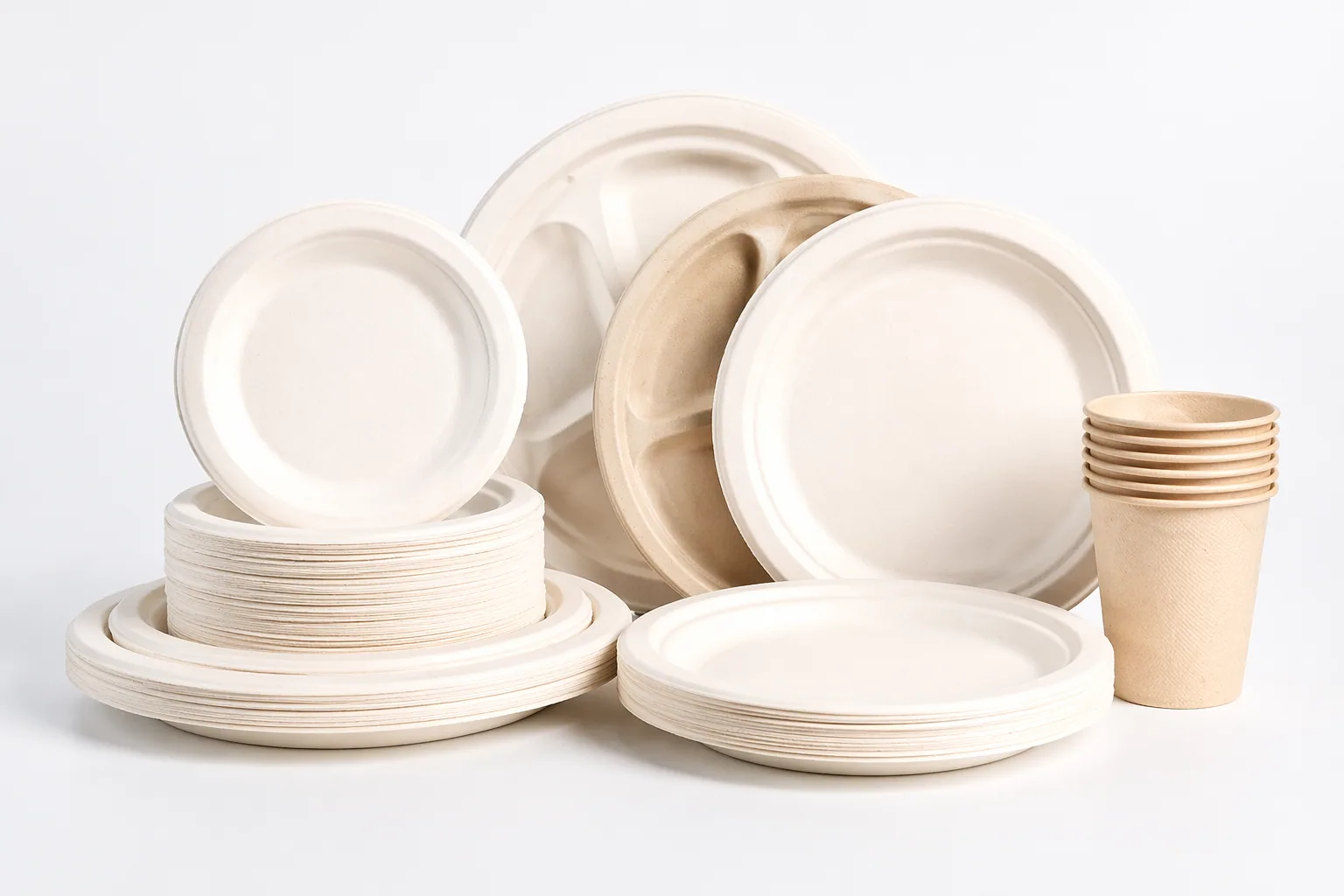
Short Answer: PFAS-Free Should Be Verified, Not Assumed
PFAS-free paper plates and bowls are only meaningful when the claim is tied to the specific product, material, coating, and test or declaration scope. For greasy, hot, or wet food, buyers should confirm whether the plate or bowl relies on any grease-resistant treatment and whether the supplier can support the claim language requested for the destination market.
| Item to verify | Why it matters | Practical order note |
|---|---|---|
| Material and coating | PFAS concerns often relate to grease-resistant treatments | Ask for the exact product construction |
| Food-contact use | Hot, oily, or wet meals create different use conditions | Match samples to the menu |
| Claim support | Label wording needs evidence | Confirm test or declaration scope before printing |
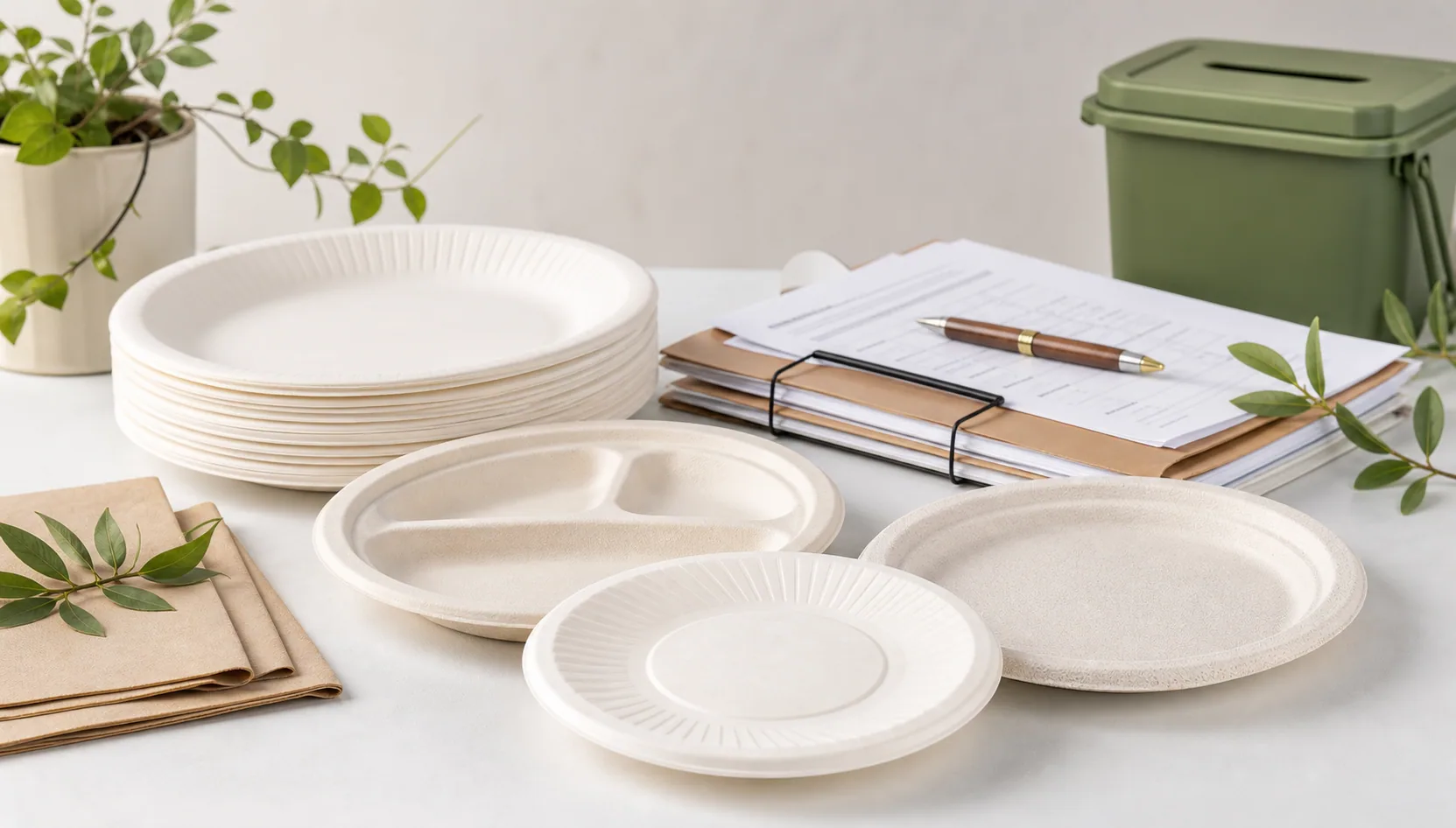
For sample review, many buyers compare bagasse containers, bagasse bowls with lids, bagasse dishes, bagasse trays, and bagasse plates before choosing the best format for hot, oily, or wet meals.
The Short Answer: Are PFAS Paper Plates Safe?
Paper plates and bowls are only completely safe if they are explicitly verified as "PFAS-free," because many traditional disposable paper dishes have historically relied on toxic "forever chemicals" to prevent grease and liquids from soaking through the cardboard.
The Hidden Coating on PFAS Paper Plates
When consumers hear the term pfas paper plates, they often wonder how paper—a natural material—can be toxic.
The issue lies in the invisible, microscopic coating applied during the manufacturing process. Plain paper naturally absorbs water and cooking oils. To make a paper plate rigid enough to hold a slice of hot pizza without turning into mush, manufacturers historically sprayed it with PFAS (Per- and Polyfluoroalkyl Substances). These chemicals create a formidable surface tension that repels oil. A product marketed as containing pfas free paper plates or pfas free paper bowls means the manufacturer has successfully substituted those forever chemicals with safe, organic alternatives.
Why It Matters: Chemical Leaching During Dinner
Using paper plates treated with PFAS turns a convenient meal into a chemical hazard.
As warned by safety tests conducted by Consumer Reports, heat and grease are the primary catalysts that pull PFAS out of packaging. When you place hot, oily food on a traditional paper plate, those forever chemicals actively migrate into your meal. Repeated exposure over time leads to bioaccumulation, a process closely monitored by the Centers for Disease Control and Prevention (CDC / ATSDR), linking PFAS levels to increased cancer risk, impaired liver function, and lowered immune responses.
Legislative Crackdowns on Toxic Paper Coatings
Due to the overwhelming evidence of chemical migration, regulatory bodies are cracking down on paper food contact materials:
The Food and Drug Administration (FDA): The FDA has acknowledged the risks of grease-proofing agents containing PFAS and established a phase-out agreement for paper and paperboard food packaging sold in the United States.
State Legislation: An accelerating number of states have implemented full bans on the sale of paper food packaging that contains any intentionally added PFAS, drastically shifting the North American market away from toxic coatings.
How to Judge and Choose Safe PFAS Free Paper Bowls
Never assume a paper product is safe just because it looks brown and "earthy."
When purchasing disposable tableware, you must look for clear, certified labeling. Check the manufacturer's site for badges from the Biodegradable Products Institute (BPI) or explicit "Fluorine-Free" test reports from labs like Intertek. A genuine manufacturer of pfas free paper bowls will be transparent about testing their products against the modern 100 ppm total fluorine limit.
Safer Alternatives: Finding True PFAS Free Paper Plates
Thankfully, eliminating toxins does not mean settling for soggy, weak plates.
At ToGoTableware, our state-of-the-art bagasse (sugarcane pulp) and paper products use advanced plant-based waterproof and greaseproof coatings, fundamentally removing the need for forever chemicals. Whether you are searching for compostable, heavy-duty pfas free paper plates for a big catered event, or deep, sturdy pfas free paper bowls for hot soups, our structural innovations provide superior, natural barrier properties without a single drop of PFAS.
Buyer Note: Match the Claim to the Product File
For bulk programs, keep PFAS-free wording connected to the exact SKU, material, coating, food-contact document, and destination-market label. Avoid broad safety language unless the product-level evidence supports that exact claim. A 9 x 9 one-compartment PFAS-free clamshell, a 9 x 9 three-compartment PFAS-free clamshell, and a 32 oz bagasse salad bowl should each be checked against its own file.
FAQ: Understanding Paper Tableware Risks
Q: Can you microwave PFAS paper plates?
A: No. Microwaving immensely accelerates the rate at which forever chemicals leach from the plate into your food. This makes having guaranteed pfas free paper plates absolutely critical for reheating meals.
Q: Are wax-coated paper plates PFAS-free?
A: In many cases, yes, traditional wax or clay coatings do not use PFAS. However, for modern hot-food applications, advanced plant-based barrier coatings are generally preferred for durability and compostability.
Q: Do cheap, flimsy paper plates have PFAS?
A: The ultra-thin, uncoated, highly absorbent paper plates (the ones that immediately get soggy) typically do not have PFAS. It is the stiff, grease-resistant "heavy-duty" paper plates that historically carried the highest PFAS risks.
Making the Switch to PFAS-Free Food Packaging
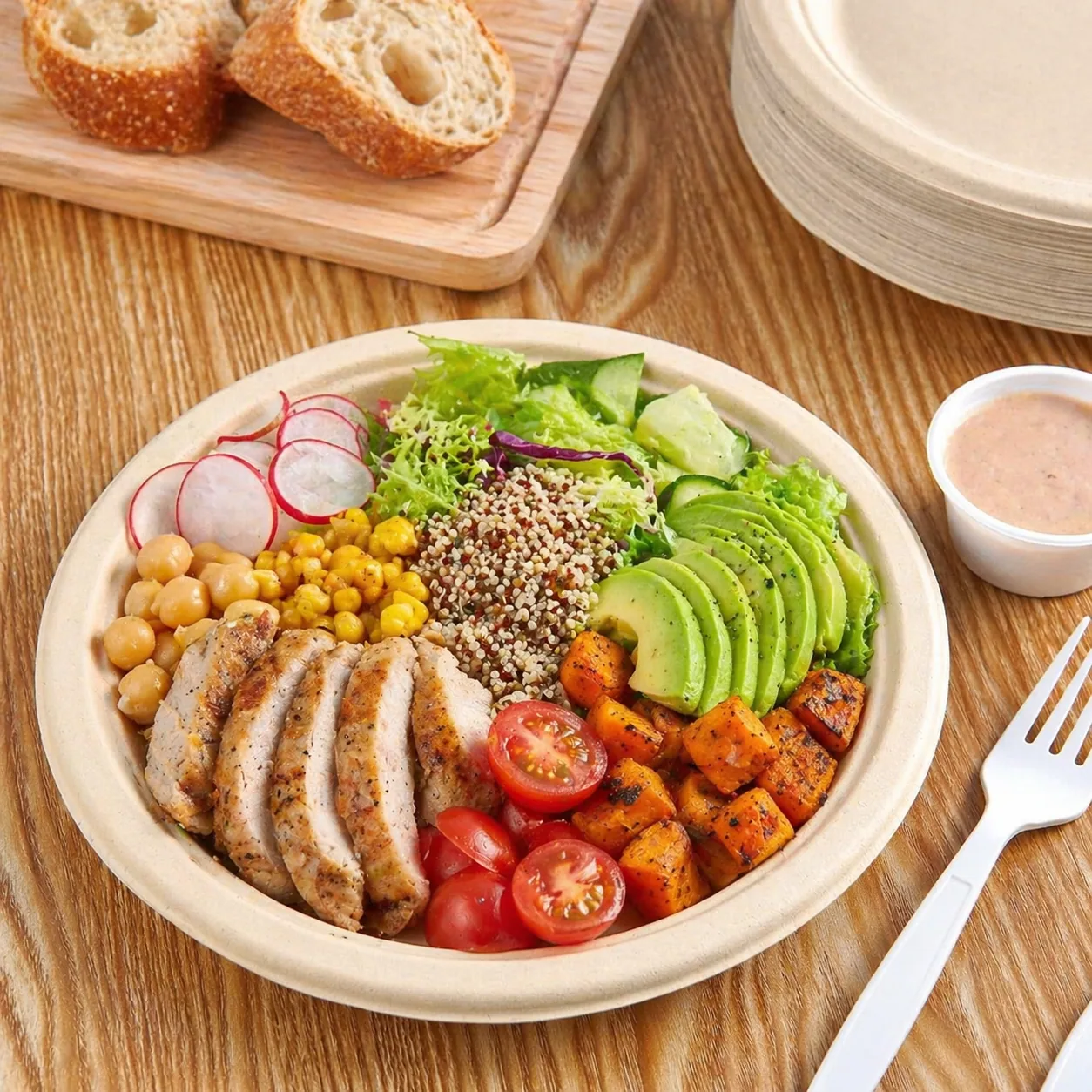
Your convenience shouldn't come at the cost of your health or the environment's safety. Making the transition to lab-tested, verifiably clean paper products gives complete peace of mind.
Ready to make the sustainable switch? Explore our complete range of certified ecofriendly tableware at ToGoTableware. From thick, compostable bagasse clamshells to premium pfas free paper plates and pfas free paper bowls, we provide you with lab-tested, genuinely eco-friendly packaging solutions that protect both your food and the environment.