Replacing foam starts with the menu, not with a material slogan. Fried food, soup, rice meals and chilled salads place different demands on a takeout container.
Bagasse, paperboard and PP each have useful roles. The practical choice balances food performance, lid and closure design, local waste handling and the claims supported for the selected item.
For molded-fiber formats, see TOGO's bagasse food containers. Paperboard projects can start with kraft paper takeaway boxes and the wider paper container range.
What Can Replace a Foam Takeout Box?
Styrofoam is commonly used by consumers to describe expanded polystyrene foam food packaging. In a foodservice replacement project, the practical question is which material can handle the menu, delivery route, packing cost and any material or environmental claim planned for the website or packaging.
There Is No One-for-One Material Swap
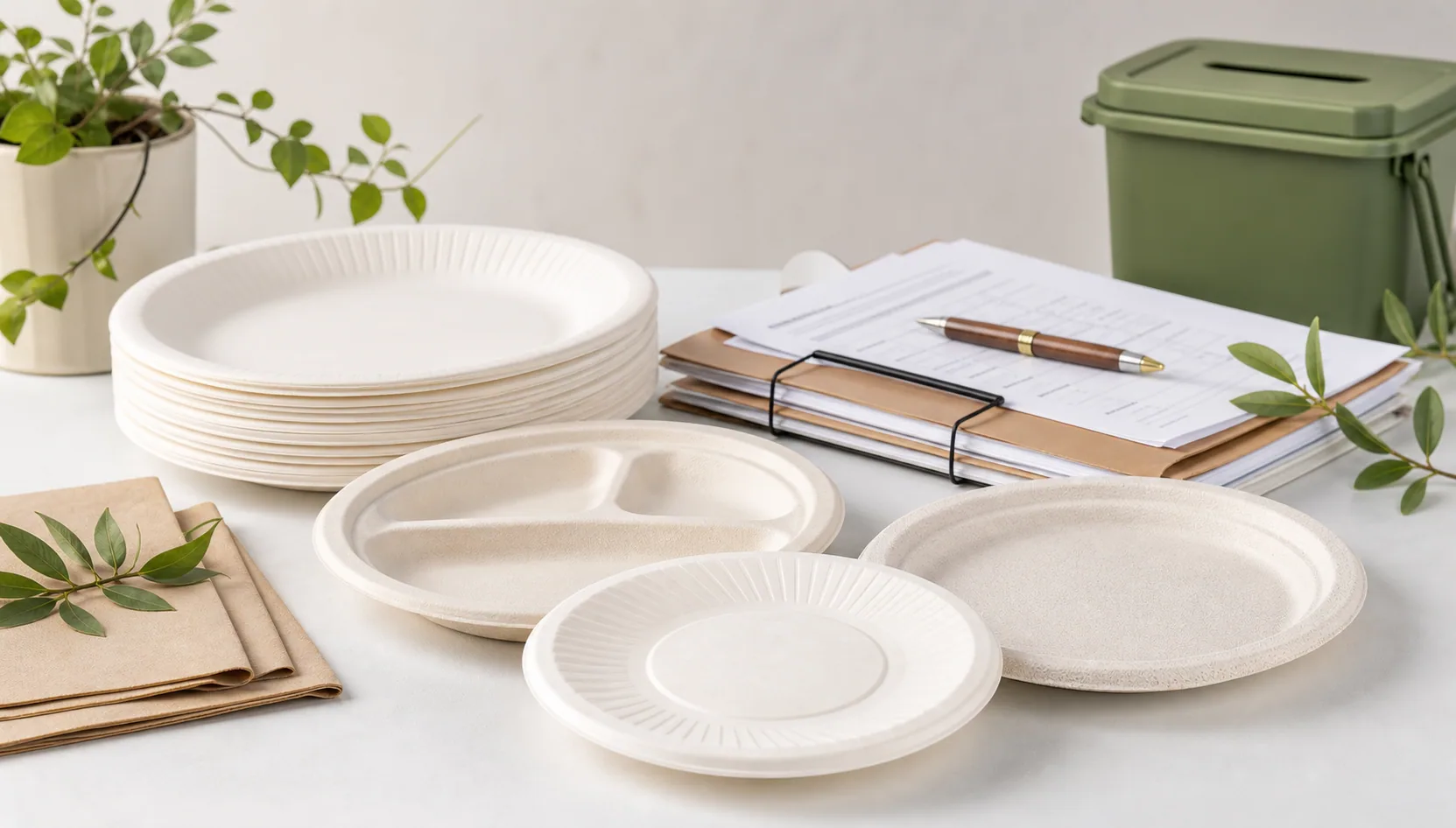
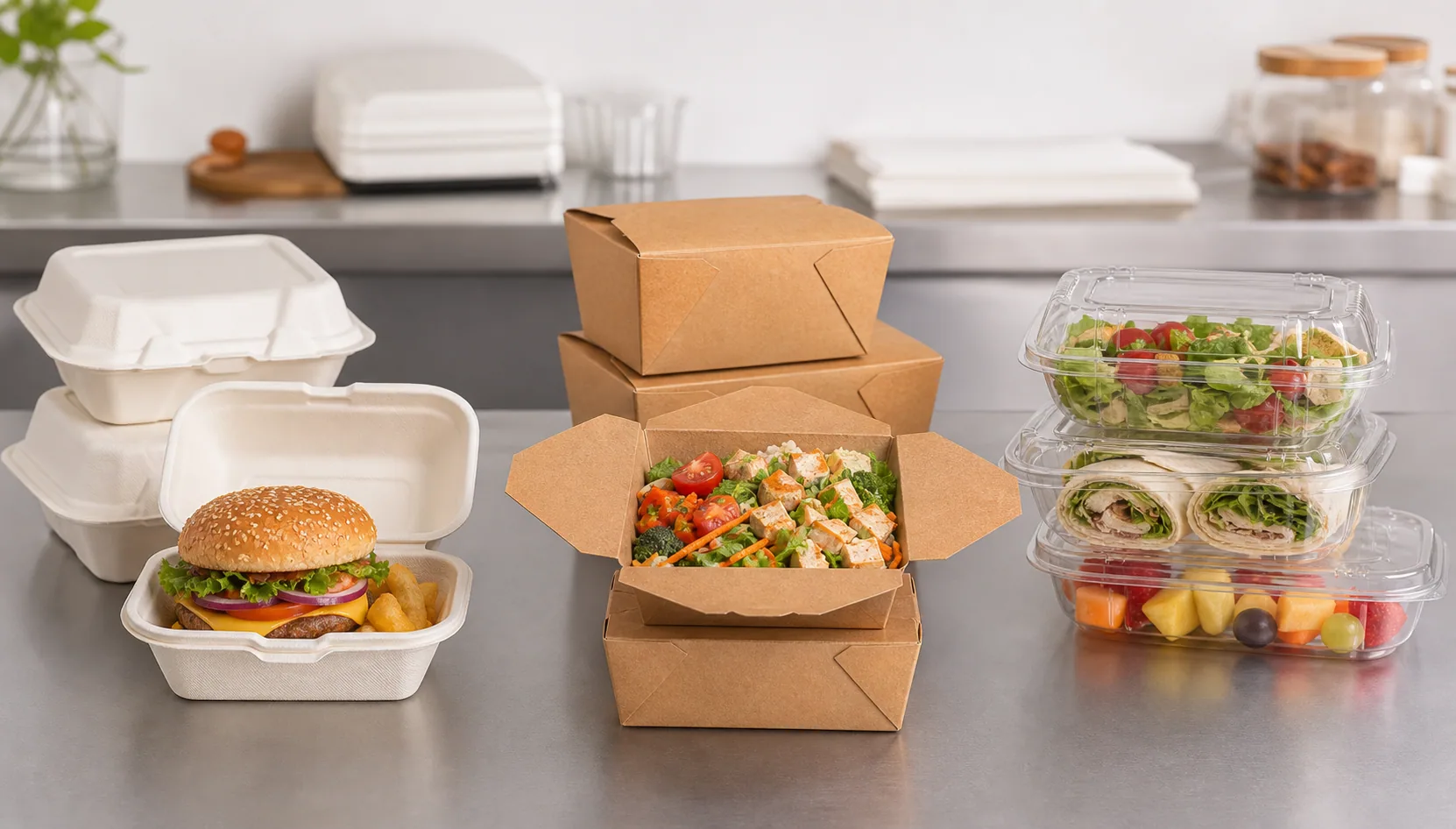
Common alternatives to Styrofoam takeout containers include bagasse clamshells, kraft paper food boxes, molded fiber trays and PP or PET containers. The right choice depends on food moisture, oil, heat, lid needs, local disposal infrastructure and the customer-facing sentence.
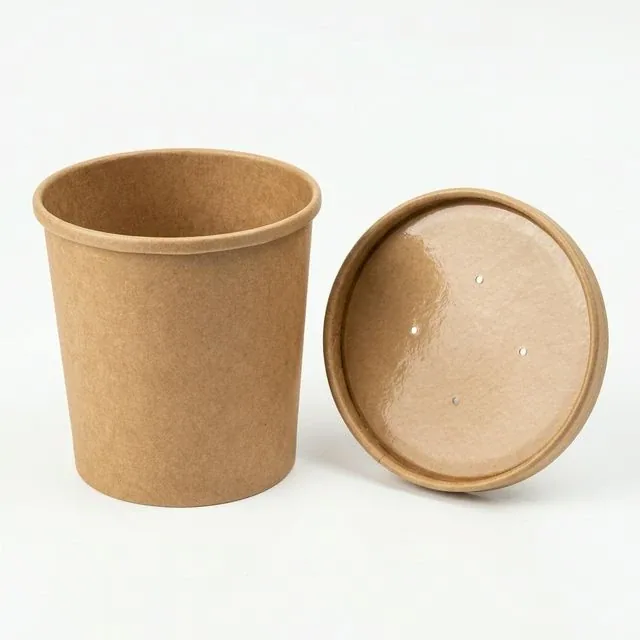
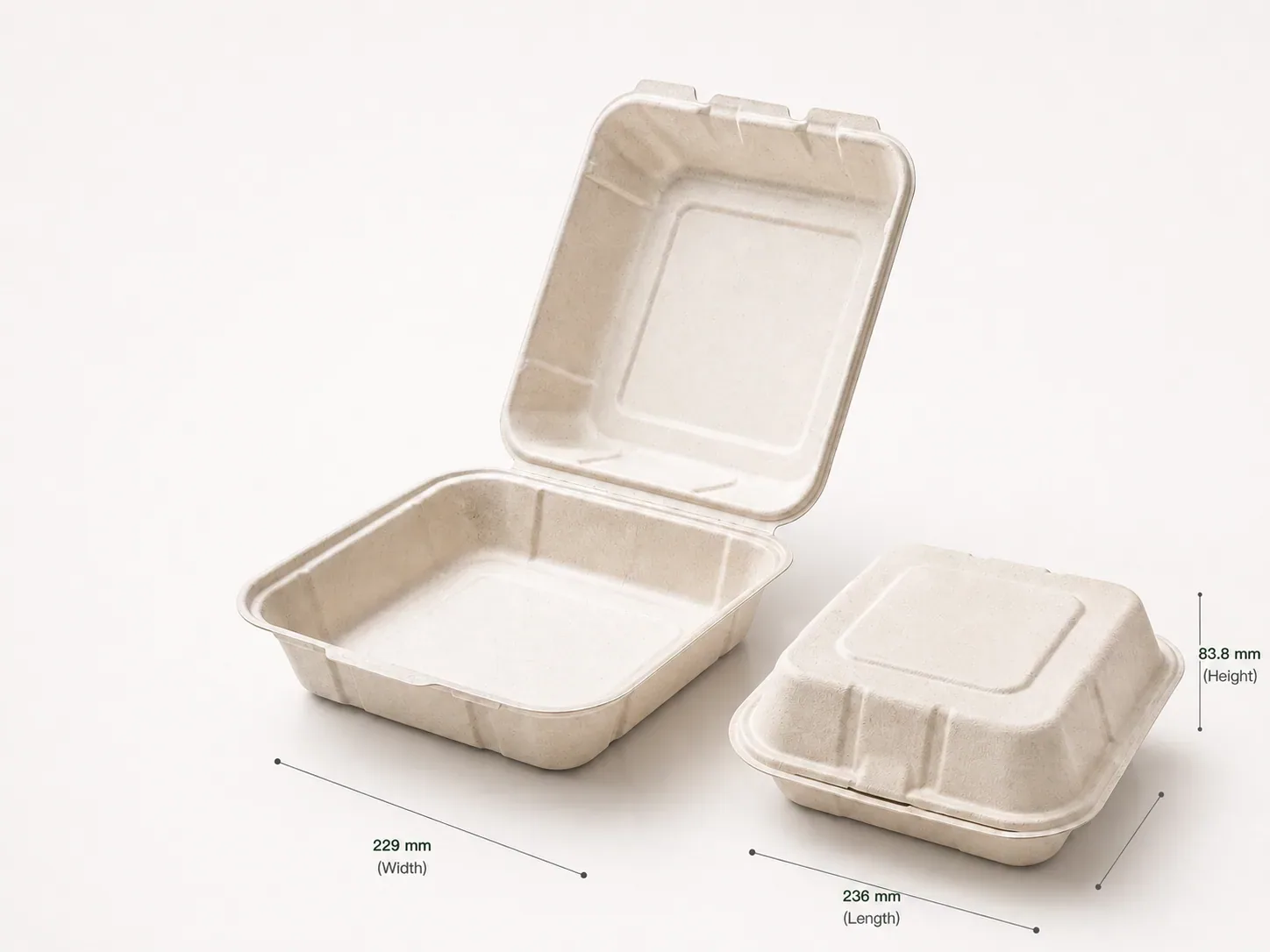
TOGO's 9 x 9 Compostable Clamshell and 32oz Kraft Paper Food Container and Lid Combo are relevant product examples.
| Alternative | Good fit | Watch point | What to be careful about |
|---|---|---|---|
| Bagasse clamshell | Hot meals, burgers, rice, many sauced foods | Moisture and holding time | Compostable wording needs evidence and facility context |
| Kraft paper food box | Salads, fried sides, bakery, dry-to-moist foods | Coating and window material | Recyclable/compostable wording varies by product |
| PP container | Reheat-focused takeout | Plastic-reduction goals | Do not call it compostable |
| PET container | Cold salads, deli, clear display | Heat limitations | Best kept to cold-use language |
| Aluminum tray | Baking/reheating programs | Lid and disposal route | Not a fiber-based replacement |
Let the Menu Decide the Material
A greasy burger, curry rice, cold salad and bakery product do not need the same container. Bagasse clamshells often make sense for hot meals and takeout programs where a molded-fiber look is acceptable. Kraft boxes can work well for drier foods, salads or retail-style presentation. PP/PET may still be the practical choice when visibility, sealing or reheating is the main requirement.
For disposal and marketing language, the FTC's Green Guides and environmental statements summary are useful sources for cautious wording. The EPA also discusses foodservice ware in the context of greener purchasing and certified commercially compostable options (EPA food service ware).
The EPA's food-service-ware guidance gives priority to reusables and treats certified compostable service ware as a conditional option when an accepting commercial composting program and collection system are available. The FTC Green Guides likewise require environmental claims to be substantiated and qualified. These are stronger decision points than calling one material “green.”
Check the Local Waste Route
A product may be designed for commercial composting and still not be accepted by every local facility. BPI certification and ASTM standards such as ASTM D6400 and ASTM D6868 help you understand the evidence, but the statement still belongs to the specific item and the local disposal route.
Match Each Menu Item to a Container
A good foam replacement plan starts with the menu. Soups, salads, fried food, rice meals and cold deli products do not need the same package. A 32 oz kraft paper food container can work when presentation, print feel and carton packing are important.
For hot meals and delivery portions, a 9 x 9 compostable clamshell gives you a molded-fiber route to test food fit, hinge behavior and stacking. Keep any compostable or PFAS-free wording tied to the specific item and available documents.
| Menu or service need | Foam replacement direction | What to test before switching |
|---|---|---|
| Hot entree with sauce | Bagasse clamshell or fiber tray | Hinge, oil, moisture and lid pressure |
| Salad or grain bowl | Kraft paper bowl or clear-lid bowl | Presentation height and condensation |
| Soup or stew | Paper soup container | Lid seal, venting and holding time |
| Fried food | Venting and grease behavior | Crispness after delivery time |
| Retail meal prep | Paper or molded fiber with label area | Shelf display, stacking and label position |
The industry mistake is replacing foam with one material everywhere. A stronger route is to build a small product map by menu type, then confirm which products can share carton sizes, lid systems or supporting documents.
This also helps cost control. Instead of replacing every foam product with the same new material, you can reserve stronger molded fiber formats for hot meals and use lighter paper or lidded bowl formats where the menu allows it. The result is a cleaner transition plan.
What TOGO Needs for a Replacement Quote
For an accurate quote, include the current foam product size, food type, portion weight, delivery time, hot or cold use, lid needs, selling market, expected order volume and any material or environmental claim planned for the website or packaging. TOGO can prepare a comparison set across kraft paper containers, paper soup containers, bagasse clamshells and related lidded formats.
FAQ
What is the best alternative to Styrofoam takeout containers?
There is no universal best material. Bagasse, kraft paper and PP/PET fit different menu and disposal conditions.
Are bagasse clamshells suitable for greasy food?
They can be considered for many greasy or moist foods, but the specific item should be tested with the real menu and holding time.
Are paper food boxes compostable?
Only if the specific item, coating and disposal route support that statement.
Can TOGO provide comparison sets for replacement testing?
TOGO can prepare product options by menu type, lid format, carton packing and market-specific wording needs.