
The word paper describes only part of a disposable plate. Depending on the design, the plate may also use a coating, binder, surface treatment or printing ink.
Those details affect stiffness, grease and moisture resistance, food-contact review and any environmental claim attached to the plate.
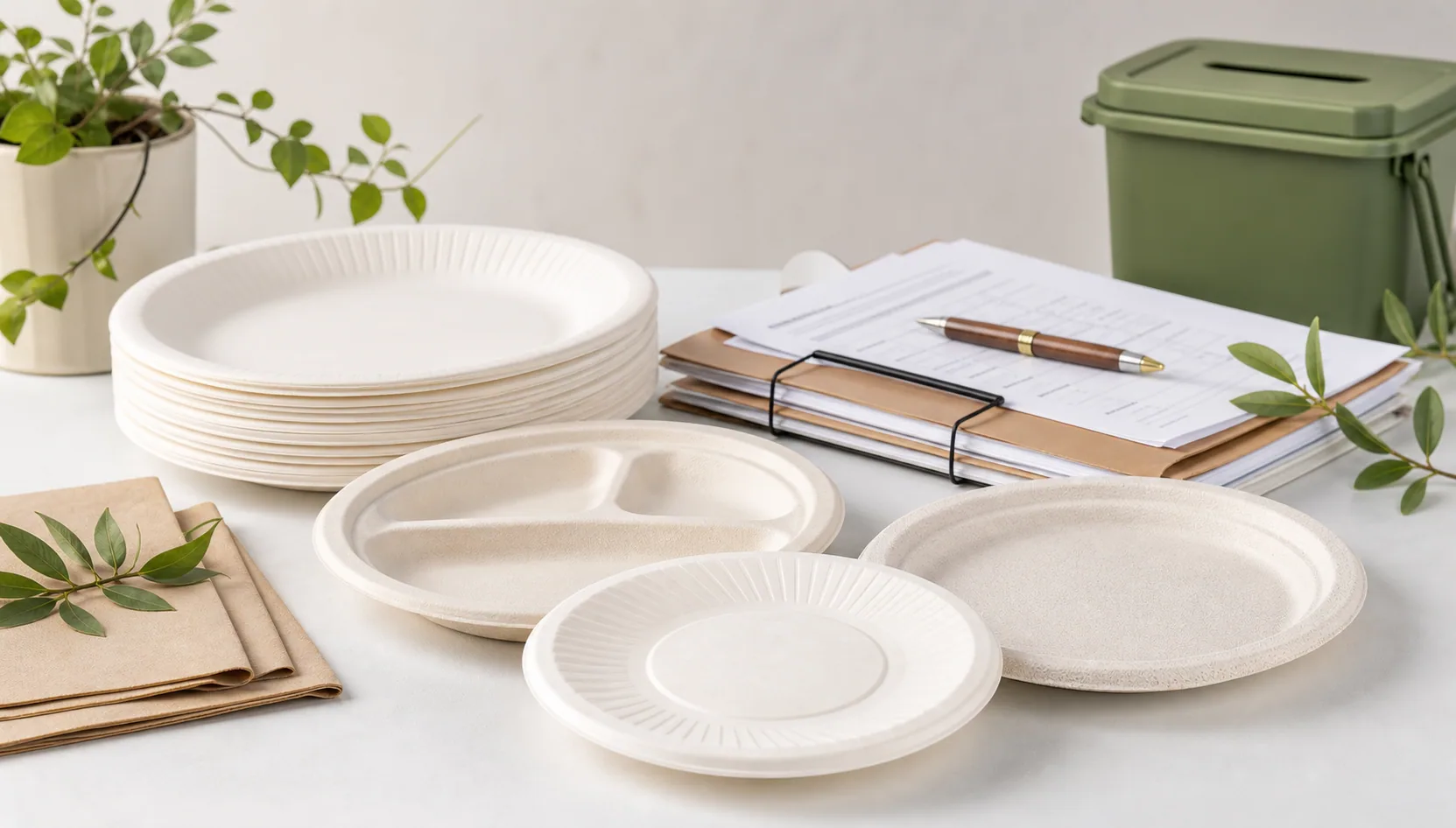
TOGO's paper plate collection covers paperboard formats, while the bagasse plate collection covers molded sugarcane-fiber options for meals and catering.
A Paper Plate Is More Than a Sheet of Paper
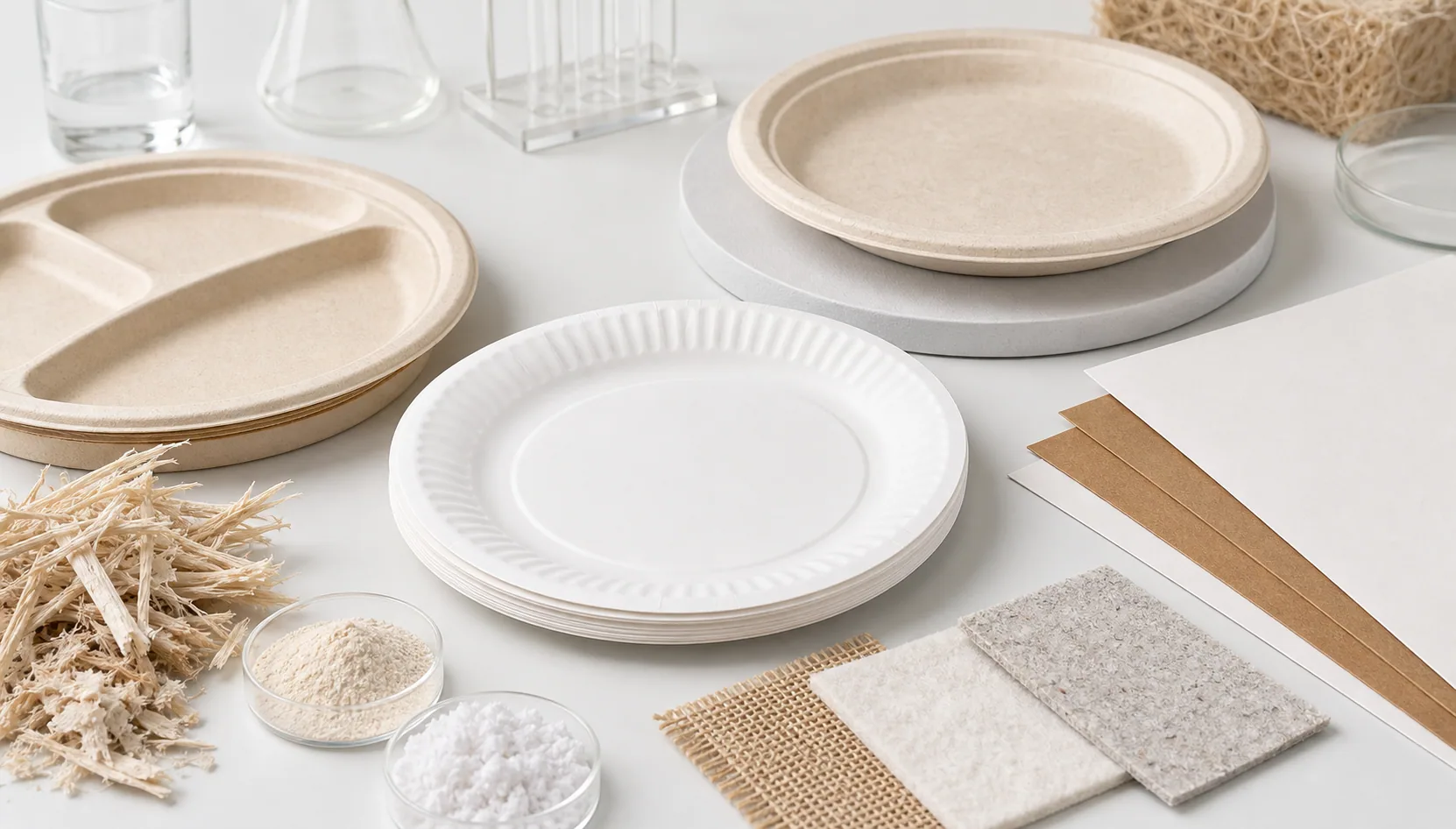
A paper plate is a disposable plate made from fiber-based material such as paperboard, molded pulp or similar formed fiber. Some plates are uncoated, while others use coating or surface treatment to improve oil and moisture resistance.
Common Paper Plate Constructions
Paper plates are commonly made from paperboard or molded fiber. Depending on the product, they may also include coatings, binders, printing ink or surface treatments. A coated paper plate and an uncoated molded fiber plate should not be described as the same product.
Plate type | Main material | Typical use | What to be careful about |
|---|---|---|---|
Uncoated paper plate | Paperboard fiber | Dry snacks, light foods | Moisture resistance may be limited |
Coated paper plate | Paperboard plus coating | Oily or moist foods | Coating affects grease resistance and the claim the evidence can support |
Molded fiber/bagasse plate | Formed plant fiber | Meals, catering, hot food serving | Available documents for the specific item still matter |
Printed paper plate | Fiber plus ink/print | Events, branding, retail | Food-contact side and ink position matter |
Why Construction and Intended Use Matter
The FDA treats food packaging as a food-contact material issue. Its Packaging & Food Contact Substances resources help explain why base material, additives, coatings and intended use all matter. A plate can be made mainly from fiber but still have a coating that changes compostability, recyclability or hot-food use language.
The FDA's food-contact resources treat packaging as a combination of substances and intended conditions of use. For US paper packaging, the FDA also records the 2024 market phase-out and 2025 revocation of PFAS grease-proofing authorizations for paper and paperboard food packaging. Neither source supports assuming that every fiber-looking plate has the same construction or documentation.
Paperboard and Bagasse Plates Are Built Differently
Paper plates often use paperboard. Bagasse plates are formed from sugarcane fiber after juice extraction. In use, both can serve food, but their structure, thickness, oil resistance and supporting documents can differ. When you choose between them, test the food you actually serve, not only compare material names.
Compare Plates With the Food You Serve
A paper plate is usually made from paperboard or molded paper fiber with a surface finish that helps it handle food. A bagasse plate is molded from sugarcane fiber. The better comparison is not which material sounds greener, but which plate fits your food, any material or environmental claim planned for the website or packaging and service condition. TOGO's round bagasse plates with a wide rim give you a molded-fiber reference for heavier foods and catering presentation.
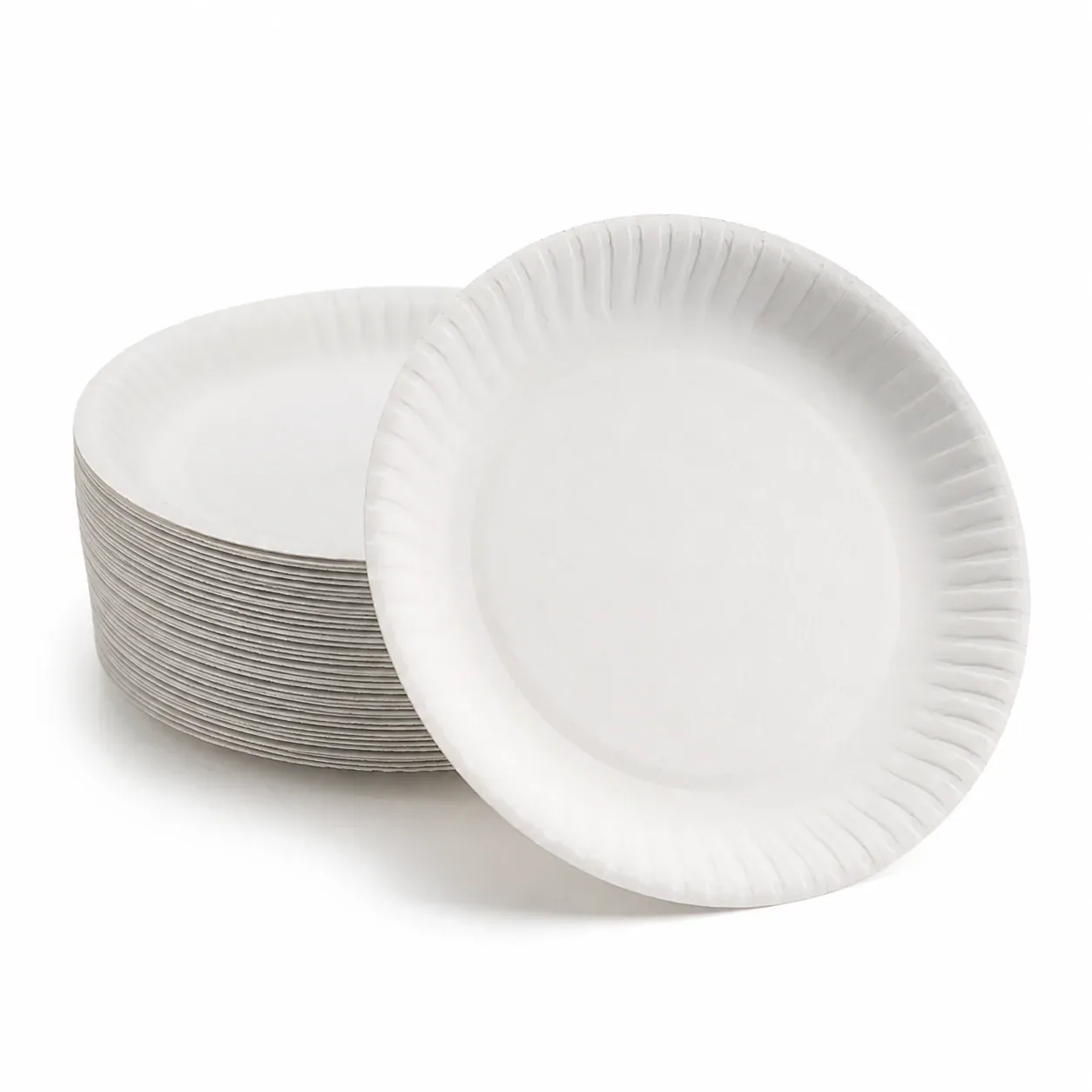
For a paperboard direction, a 10 inch heavy duty paper plate lets you check stiffness, surface finish and oil/moisture behavior with the real meal.
What you are checking | Paper plate question | Bagasse plate question | Why it matters |
|---|---|---|---|
Base material | Paperboard, pulp or laminated board | Molded sugarcane fiber | Material affects feel, disposal language and product information |
Food-contact surface | Coating or surface finish | Molded fiber surface and possible treatment | Oil and moisture behavior differ |
Stiffness | Board weight and rim design | Fiber density and shape | Heavy foods need better support |
Printing | Ink position and food-contact side | Usually less print-focused | Branding can change the review |
Material or environmental claim | Product-level support needed | Product-level support needed | Material name is not a certification |
The practical point is simple: material is only the start. the specific plate, food type, surface, print, disposal path and claim are what make the packaging decision real.
Compare Paper and Bagasse Plate Options With TOGO
For an accurate quote, include food type, plate diameter, portion weight, oil or sauce level, printing need, selling market, packing style, order forecast and any material or environmental claim planned for the website or packaging. TOGO can then compare paper plates and bagasse plates as specific item options instead of treating the material name as the whole answer.
FAQ
Are paper plates made of plastic?
The base is usually fiber, but some plates may include plastic-like coating or lamination. Confirm the specific item.
Are coated paper plates compostable?
Only if the specific item and coating support that statement and the disposal route accepts it.
What are bagasse plates made of?
Bagasse plates are made from molded sugarcane fiber. For more detail, see TOGO's bagasse guide.
Can paper plates hold oily food?
Some can, depending on structure and coating. Test with the real menu before ordering.