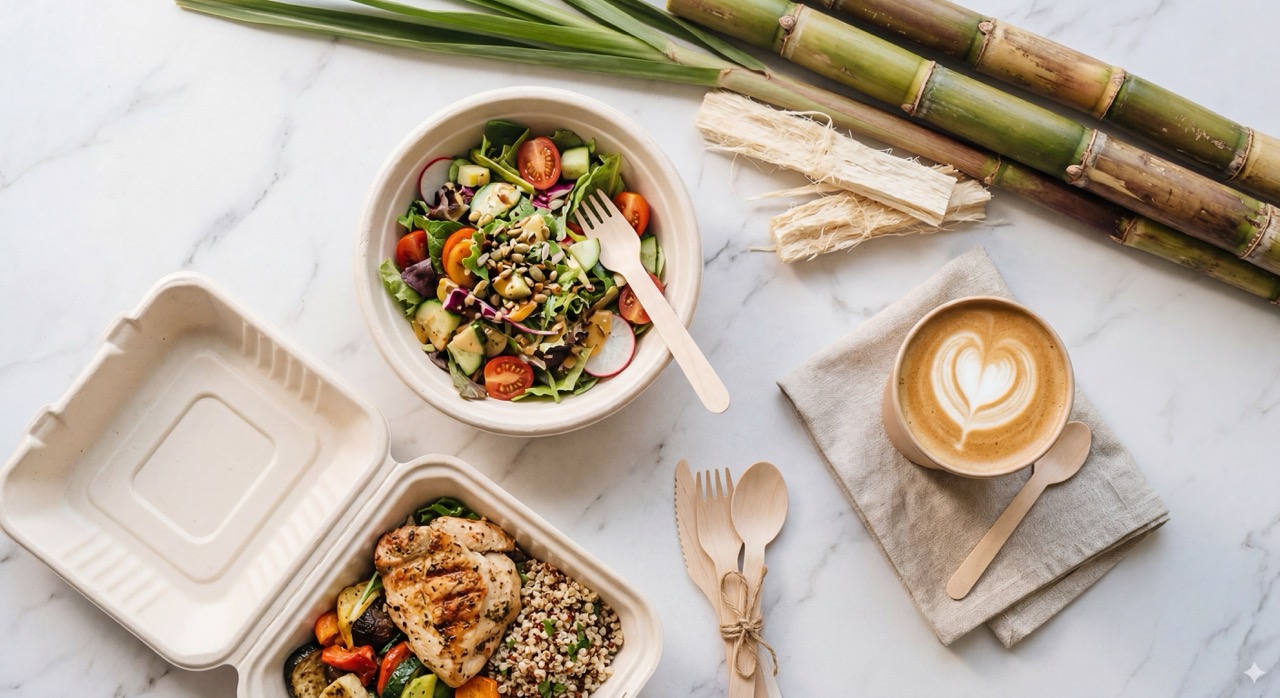
If you've been looking into sustainable food packaging lately, you've probably stumbled across the word "bagasse" (pronounced buh-GAS). It's popping up everywhere these days, and honestly, for good reason.
So what's the deal with bagasse? Why are restaurants, cafés, and food businesses switching to it? Let's break it down.
What Exactly is Bagasse?
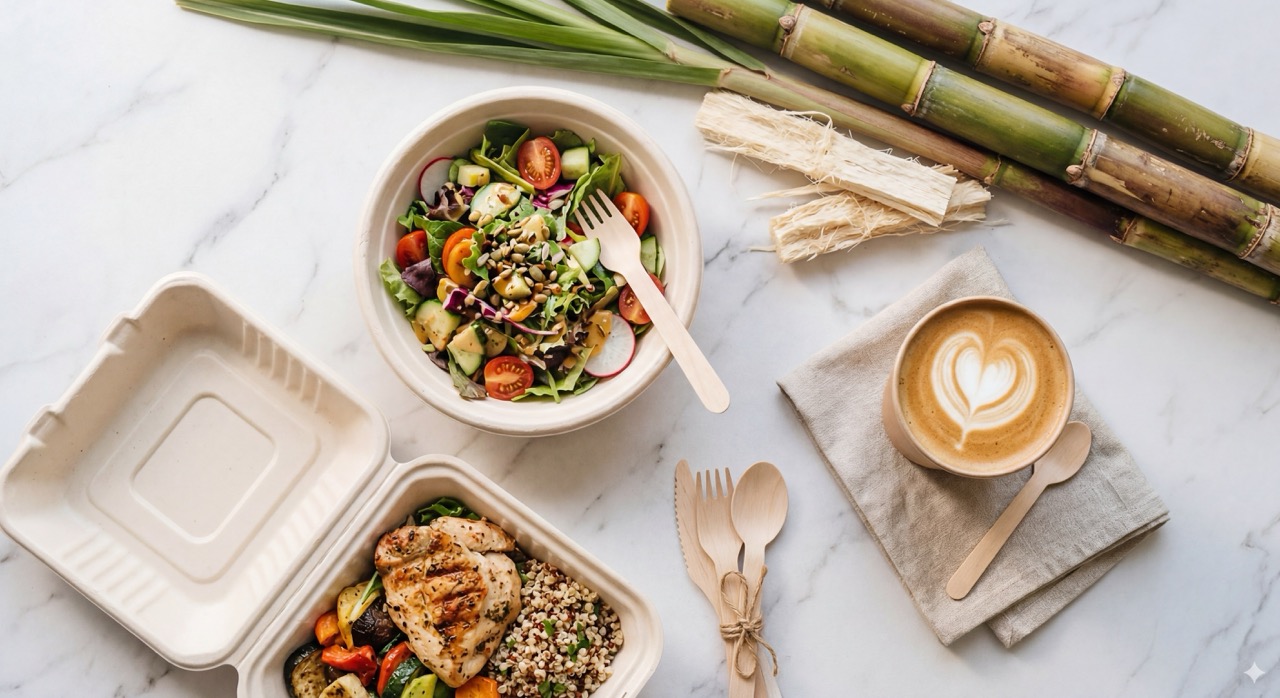
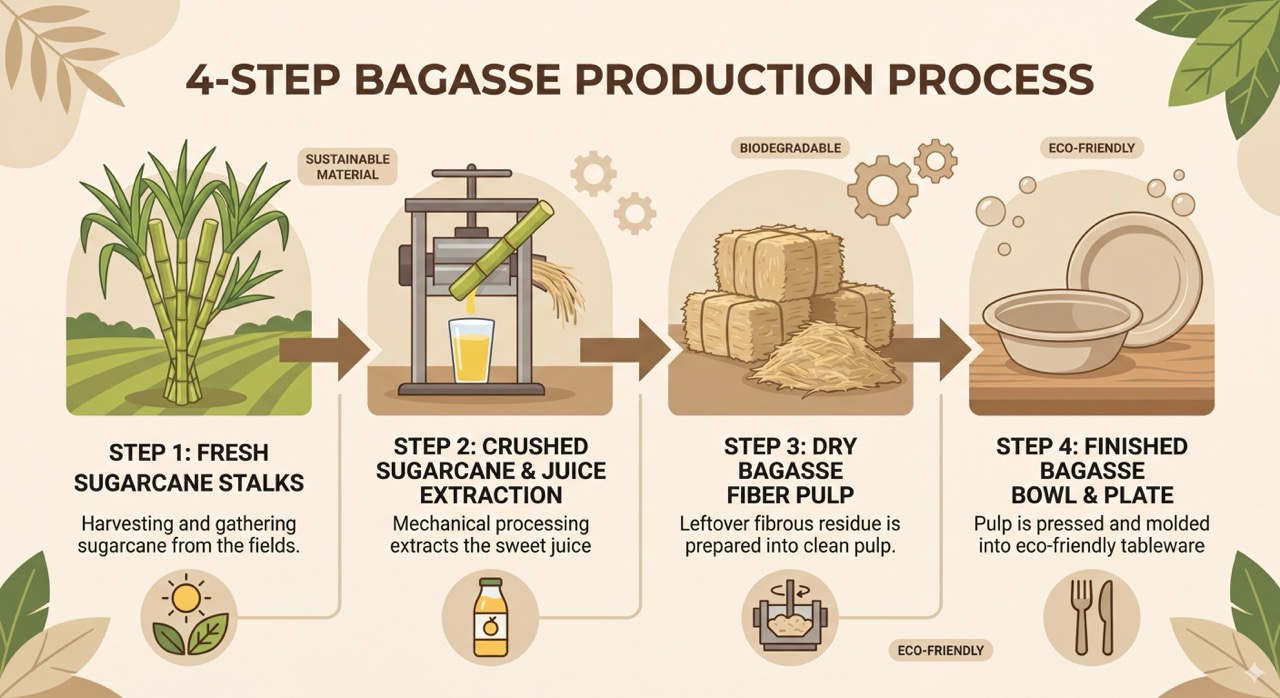
Here's the simple version: bagasse is what's left over after sugarcane gets crushed to make sugar. You know how when you juice an orange, you're left with all that pulp? Same idea. After the sugar factory squeezes out all the sweet juice from sugarcane stalks, you're left with this dry, fibrous stuff. That's bagasse.
For years, sugar mills just treated it as waste - they'd burn it or toss it. But someone had a brilliant idea: why not turn this leftover fiber into something useful? And that's exactly what happened.
Now bagasse gets transformed into all kinds of food packaging:
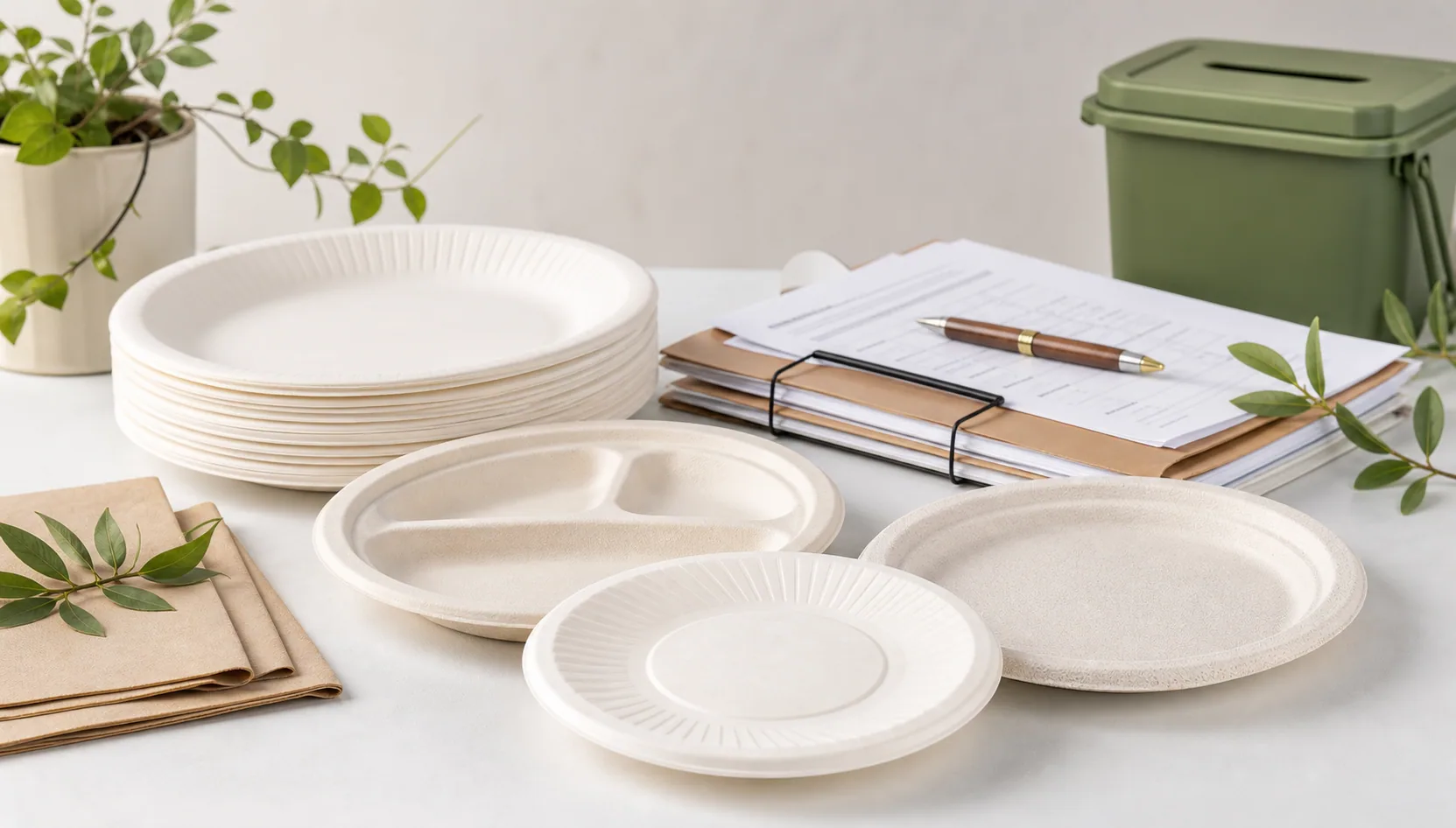
Plates and bowls
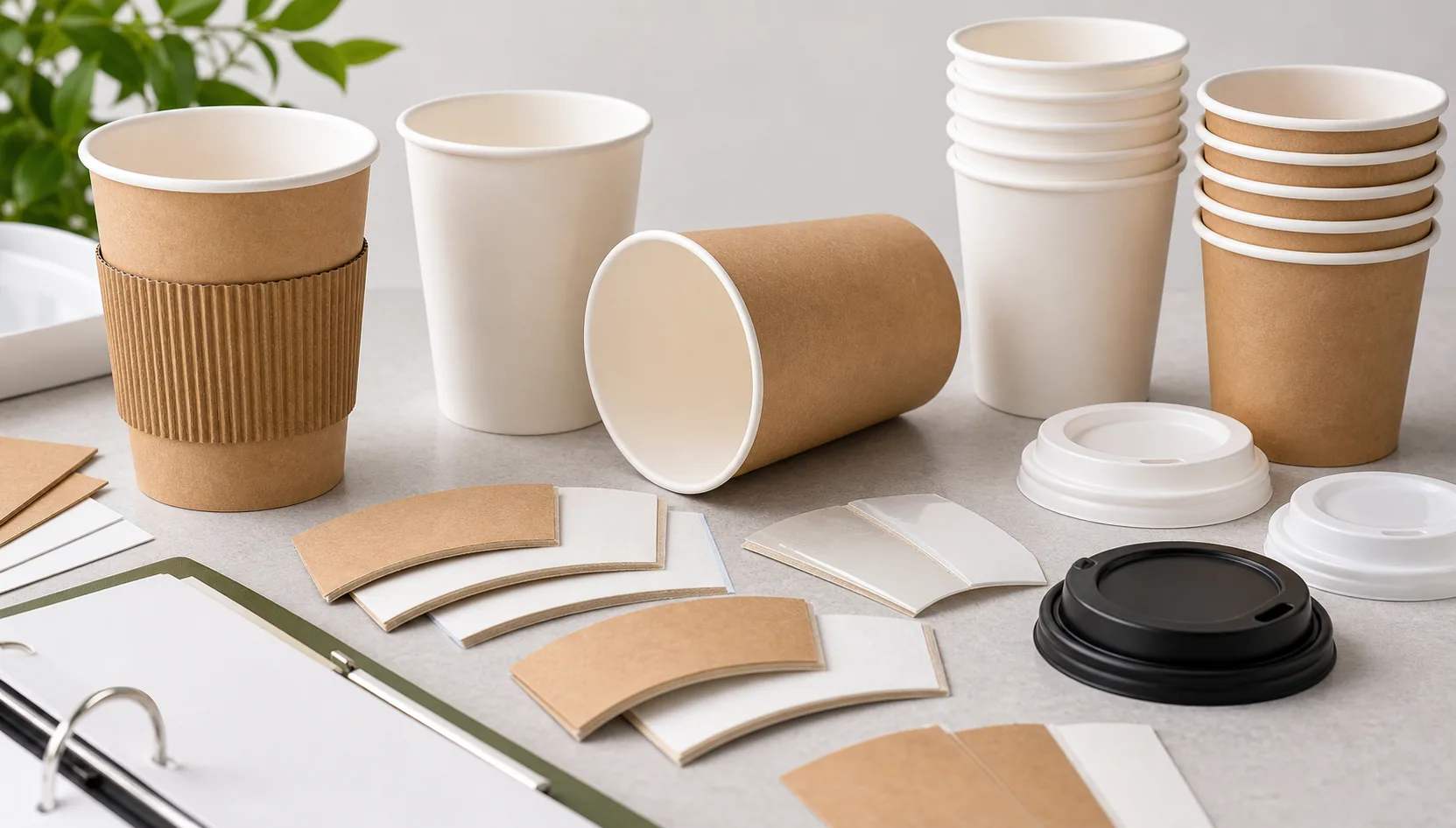
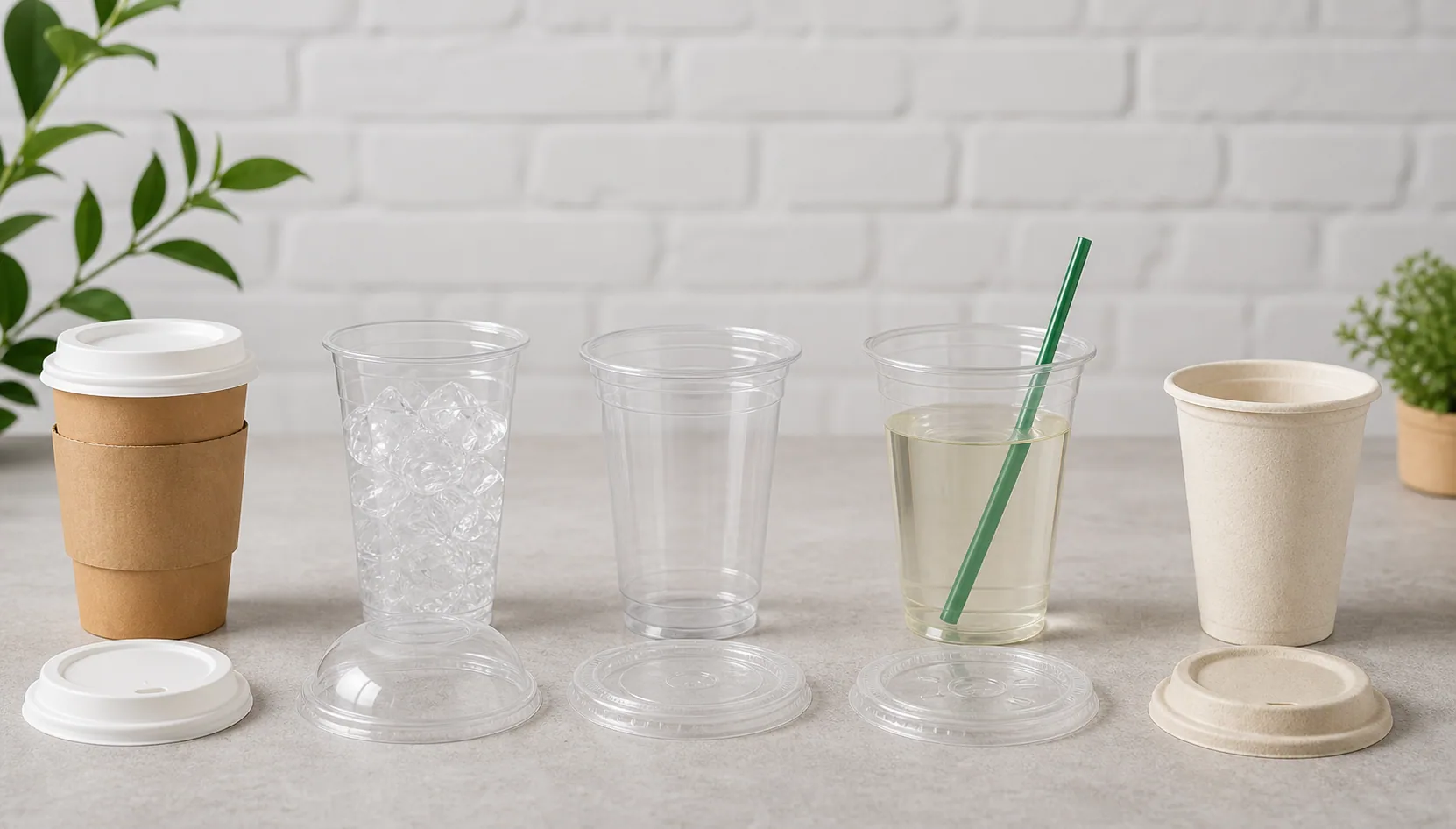
Coffee cups
Takeout containers
Food trays
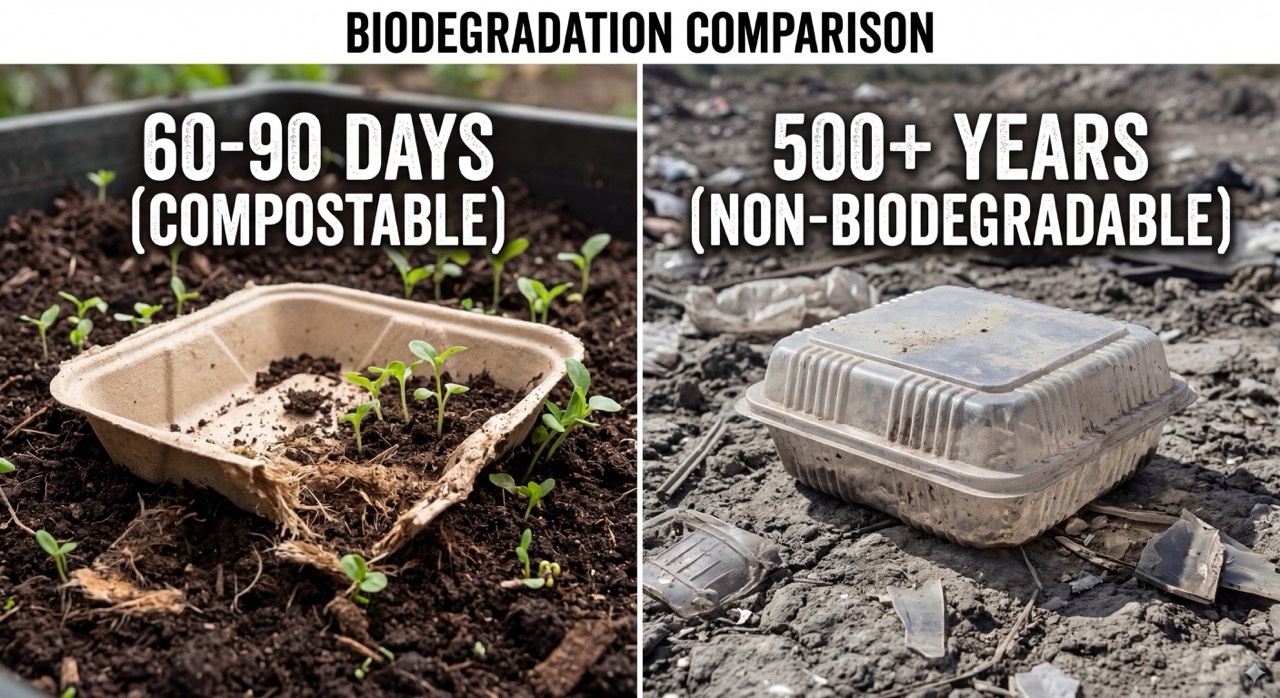
And the best part? It's 100% biodegradable and compostable.
How Does Leftover Sugarcane Become Your Coffee Cup?
The process is actually pretty straightforward:
First, the bagasse fibers get cleaned up and mixed with water to create a pulp - kind of like making paper. Then this pulp gets poured into heated molds and pressed under high temperature and pressure. The heat and pressure shape it into whatever form is needed - a bowl, a plate, a cup. After that, it's trimmed, checked for quality, and ready to ship.
What makes this so cool is the sustainability angle. No trees get cut down. No petroleum gets used. We're literally taking agricultural waste that would otherwise be burned or dumped and turning it into something valuable.
Is Bagasse Safe to Eat From?
This is probably the first question on your mind, right? And the answer is yes, absolutely.
Bagasse food packaging is made from natural plant fiber. During manufacturing, it gets heated to over 150°C (300°F), which sterilizes everything. So what you're getting is:
No plastics
No BPA
No heavy metals
No weird artificial coatings (at least not in quality products)
What About FDA Approval?
Quality bagasse products are manufactured following US FDA food contact regulations. At ToGoTableware, all our bagasse items are tested by third-party labs to make sure they're safe for direct contact with your food, whether it's hot or cold.
The PFAS Question
Now this is important, especially in 2026. You've probably heard about PFAS - those "forever chemicals" that have been showing up in some disposable packaging. It's a legitimate concern.
Here's the thing: cheaper bagasse products might use chemical treatments that contain PFAS. But high-quality bagasse either uses PFAS-free water-resistant treatments or no chemical treatments at all.
At ToGoTableware, every product comes with documentation certifying zero PFAS content. Because when it comes to food safety, there's no room for compromise.
Can You Microwave Bagasse?
Yep, you sure can. Bagasse containers are fully microwave-safe and can handle temperatures up to about 120°C (250°F) without warping, melting, or releasing anything nasty.
Let's put this in perspective:
Material | Microwave Safe? | Max Temp | Any Concerns? |
|---|---|---|---|
Bagasse | Yes | ~120°C (250°F) | None |
Paper (with plastic lining) | Sort of | ~100°C (212°F) | Plastic may soften |
Plastic containers | Yes | ~120°C (250°F) | Microplastic risk at high temps |
Styrofoam | No | ~80°C (176°F) | Can leach styrene |
PLA "bioplastic" | No | ~55°C (131°F) | Warps easily |
Bottom line: bagasse is one of the safest options out there for reheating food.
Is Bagasse Actually Eco-Friendly?
Short answer: extremely. Let's look at how it compares to other materials:
Factor | Bagasse | Plastic | Styrofoam | Paper |
|---|---|---|---|---|
Made from renewable resource? | Yes (sugarcane waste) | No (petroleum) | No (petroleum) | Mostly (trees) |
Biodegradable? | 60-90 days | 500+ years | 500+ years | Depends on coating |
Home compostable? | Yes | No | No | Sometimes |
Industrial compostable? | Yes | No | No | Sometimes |
Carbon footprint | Low | Very High | Very High | Medium |
Causes deforestation? | No | No | No | Can (if not FSC certified) |
How Long Does It Take to Break Down?
This depends on where it ends up:
In industrial composting: 45-90 days
In your backyard compost: 60-120 days
In a landfill: 1-2 years
Compare that to plastic's 500+ years, and you can see why people are making the switch. Though honestly, composting is the way to go if you can.
What About the Cost?
Let's be real here - this is what most business owners want to know.
Bagasse typically costs about 10-25% more than equivalent plastic containers when you're buying wholesale. But before you close this tab, hear me out.
That price gap is shrinking fast because:
Plastic prices keep going up (thanks to petroleum price swings and plastic taxes in over 40 countries)
Bagasse production is scaling up globally, bringing costs down
You avoid other costs - no fines for violating plastic bans, no damage to your brand reputation, no expensive plastic waste disposal fees
When you factor in the full picture - including the marketing value of being able to say "100% Compostable" on your packaging - bagasse often delivers better ROI than plastic.
What Bagasse Products Are Out There?
Cups
Great for both hot and cold drinks. They hold heat really well without needing that double-wall construction.
Perfect for specialty coffee, tea, lattes
Common sizes: 8 oz, 12 oz, 16 oz
Bowls
Sturdy enough for soups, salads, grain bowls - you name it. They won't get soggy on you, even with hot liquids.
Great for soup kitchens, salad bars, açaí bowls, food trucks
Common sizes: 8 oz, 12 oz, 16 oz, 32 oz
Takeout Containers
These are the workhorses of the takeout world. The hinged-lid clamshells snap shut nice and secure for delivery orders.
Perfect for burger joints, Chinese takeout, meal-prep companies
Common sizes: 6×6", 8×8", 9×6" rectangular, 3-compartment options
How Does Bagasse Stack Up Against Other Materials?
Feature | Bagasse | Paper | PLA "Bioplastic" | Bamboo |
|---|---|---|---|---|
What it's made from | Sugarcane waste | Wood pulp (trees) | Corn starch | Bamboo stalks |
Sturdiness | Excellent | Good | Poor | Very good |
Hot food performance | Excellent | Good (if coated) | Poor (warps at 55°C+) | Good |
Microwave safe | Yes | Depends | No | Sometimes |
Oil/grease resistance | Very good | Fair (needs coating) | Good | Good |
Compostable | Home + Industrial | Only if uncoated | Industrial only | Mostly yes |
Cost (wholesale) | Medium | Low | High | Medium |
Best used for | Takeout, hot food | Hot drinks | Cold drinks, salads | Plates, cutlery |
Ready to Switch to Bagasse? Explore ToGoTableware's Eco-Friendly Collection
Now that you know all about bagasse, it's time to see these products in action. At ToGoTableware, we offer a complete range of premium bagasse food containers designed for restaurants, cafés, food trucks, and catering businesses.
Our Bagasse Product Line
Bagasse Bowls - Perfect for soups, salads, grain bowls, and açaí bowls. Available in multiple sizes (8oz to 32oz), our bagasse bowls are leak-resistant, microwave-safe, and sturdy enough for hot liquids. Whether you're running a soup kitchen or a trendy salad bar, these compostable bowls deliver performance without compromise.
Bagasse Containers & Clamshells - Our hinged-lid bagasse takeout containers are the workhorses of sustainable food service. From 6×6" to 9×6" sizes, plus 3-compartment options, these eco-friendly food containers handle everything from burgers to stir-fry. They're grease-resistant, stackable, and snap shut securely for delivery orders.
Bagasse Cups - Serve your specialty coffee and artisan beverages in our bagasse cups. Excellent heat retention means no need for double-wall construction. Your customers get a comfortable grip, and you get to showcase your commitment to sustainability.
Complete Your Sustainable Setup
Pair your bagasse packaging with our complementary eco-friendly products:
Wooden Cutlery Sets - Heavy-duty birch wood forks, knives, and spoons that won't snap or splinter
Bamboo Cutlery - Premium bamboo utensils for an elevated dining experience
Wooden Coffee Stirrers - The perfect companion for your bagasse coffee cups
Compostable Straws - Complete your zero-plastic beverage service
Why Choose ToGoTableware?
✓ All products are FDA 21 CFR compliant and third-party tested
✓ 100% PFAS-free certification with every order
✓ Competitive wholesale pricing with volume discounts
✓ Fast shipping and reliable inventory
✓ Free samples available for quality testing
Ready to make the switch to sustainable packaging? Browse our full collection of bagasse plates, bagasse bowls, and bagasse food containers, or contact us for a custom wholesale quote and free samples.
Common Questions About Bagasse
What are the downsides of bagasse?
The main drawbacks are cost and storage limitations. Bagasse typically runs 10-25% more than plastic at wholesale prices, though that gap keeps shrinking. It's designed for immediate food service use (1-4 hours), not long-term liquid storage (24+ hours). Also, you have fewer color and customization options compared to plastic.
Is bagasse waterproof?
It's water-resistant for normal meal times (1-4 hours), but not waterproof for extended periods. Quality products include a thin, food-safe, PFAS-free coating for better liquid resistance. A properly made bagasse container will hold up fine for the duration of a typical meal.
Does bagasse smell?
High-quality bagasse products don't smell at all. Lower-grade stuff might have a faint natural fiber scent when you first open the package, but it goes away quickly and doesn't transfer to food. At ToGoTableware, our bagasse goes through thorough washing and high-temperature molding (over 150°C) that eliminates any residual odor.
Is bagasse paper or plastic?
Neither. Bagasse is natural plant fiber - specifically, the dry fibrous stuff left over from sugarcane processing. It gets molded under heat and pressure into rigid tableware without heavy chemical processing, making it fundamentally different from both paper (wood pulp) and plastic (petroleum).
Does bagasse rot?
Yes, and that's the whole point. According to EN 13432 testing standards, bagasse fully breaks down within 45-90 days in industrial composting and 60-120 days in home composting. This is a huge advantage - it returns to the soil as compost instead of sitting around for centuries like plastic.
What are the pros and cons of bagasse?
Pros: 100% natural and compostable, microwave-safe up to ~120°C, FDA compliant for food contact, PFAS-free, BPA-free, supports circular economy.
Cons: 10-25% higher cost than plastic (though narrowing), not ideal for 24+ hour liquid storage, fewer color options.
Overall, bagasse offers the best safety-to-sustainability ratio among all disposable food packaging materials available today.
Can bagasse bowls hold liquid?
Yes. ToGoTableware bagasse bowls are specifically designed to hold hot soups, stews, and liquid-heavy dishes for typical meal durations (1-4 hours) without leaking or getting soft. They pass FDA-required leakage testing for commercial food service.
How do you dispose of bagasse plates?
The best way is composting - either at home or through your municipal compost program. If composting isn't available where you are, bagasse can go in general waste - it'll biodegrade way faster than plastic in any environment. Just don't put it in paper recycling bins.
What material is 100% biodegradable?
Bagasse (sugarcane fiber), untreated wood, bamboo, and uncoated paper are all 100% biodegradable. Among commercial food packaging materials, bagasse offers the strongest combination of biodegradability and structural performance. Per EN 13432 testing, bagasse achieves over 90% biodegradation within 6 months.
Are bagasse plates better than plastic plates?
For food service and events, yes. Bagasse plates are actually sturdier than thin plastic plates according to independent testing, they're fully microwave-safe, 100% compostable, and free of microplastics. The only real advantage plastic has is lower unit cost - and even that's shrinking as dozens of countries have implemented plastic bans or taxes.