Understanding the Custom Sourcing Process
When exploring how to source custom pla straws, the process involves adjusting a PLA-based drinking straw to perfectly fit a buyer's exact program requirements. This encompasses a specific diameter, length, color or ingredient look, wrapper artwork, claim text, carton marks, packing count, and any private-label needs. The scope covers both the physical straw and every single printed element that travels with it.
For buyers looking at wholesale pla straws bulk orders, customization naturally affects production planning. A plain 6 mm white PLA straw can usually move through production faster than a custom color straw featuring printed wrappers, private carton marks, and mixed case packing. While the product itself might seem simple, artwork approval, exact color matching, and wrapper proofing introduce essential steps before mass production can begin. At TOGO, we maintain a meticulous sample approval record and packing confirmation together, ensuring the final quotation reflects the comprehensive custom work rather than just the straw's diameter and length.
The Project Timeline: How a Custom PLA Straw Order Actually Moves
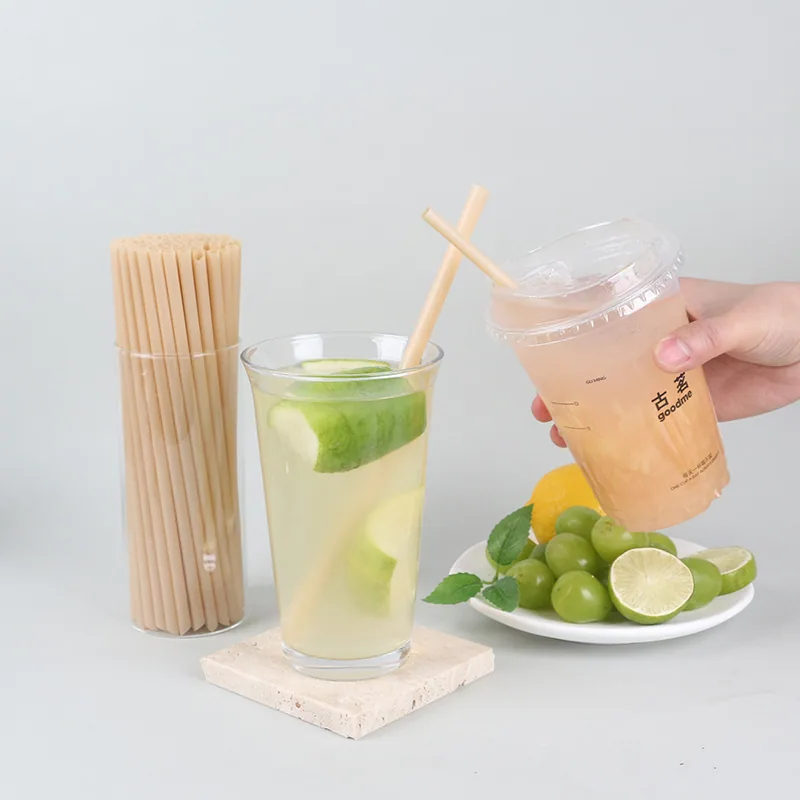
Most custom projects follow the same sequence, and skipping steps is where problems start. Step 1 — Lock the straw specification (diameter, length, cut style, and color) by testing standard samples from our PLA Straws Wholesale range in actual drinks. Next, Step 2 — Confirm color or ingredient look on physical samples, whether that's the natural-fiber appearance of the PLA Bamboo Powder Straw, the darker tone of the PLA Coffee Grounds Straw, or the green tint of the PLA Green Sugarcane Bagasse Straw.
Step 3 — Draft the wrapper artwork by adding logos, barcodes, and disposal language to the proof, paying special attention to claim wording. Step 4 — Review claim text against product documents to ensure words like 'commercially compostable' match ASTM D6400 tests or equivalent, using the FTC's Green Guides summary as a practical reference.
Step 5 — Finalize carton marks and packing counts by adding material names, sizes, quantities, and customer codes to outer cartons to prevent warehouse mix-ups. Finally, Step 6 — Production and shipment begins, running against a locked specification with all proofs approved and filed, ensuring the final output matches the agreed-upon standards without deviation.
Custom PLA Straw Order Details
| Custom Area | Order Detail | Common Mistake |
|---|---|---|
| Size | Diameter, length, cut style | Ordering 6 mm straws for cups with 8 mm lid holes |
| Color or look | White, green, translucent, bamboo, coffee | Approving color on screen instead of a physical sample |
| Wrapper | Logo, claim text, barcode, disposal language | Printing "biodegradable" when the cert supports "commercially compostable" |
| Carton mark | SKU, size, quantity, customer code | Leaving carton marks identical across different straw sizes |
| MOQ and lead time | Standard versus custom production run | Requesting custom wrappers at standard-product MOQ levels |
Mitigating Risks in Wrapper Artwork
The wrapper is often the most visible element of a custom PLA straw—and consequently, the riskiest. While a design file might look perfectly harmless on screen, the wrapper carries critical information: the brand name, item description, disposal language, barcodes, claim wording, and occasionally a production code. If any detail is incorrect, that error is magnified across every single straw in the carton.
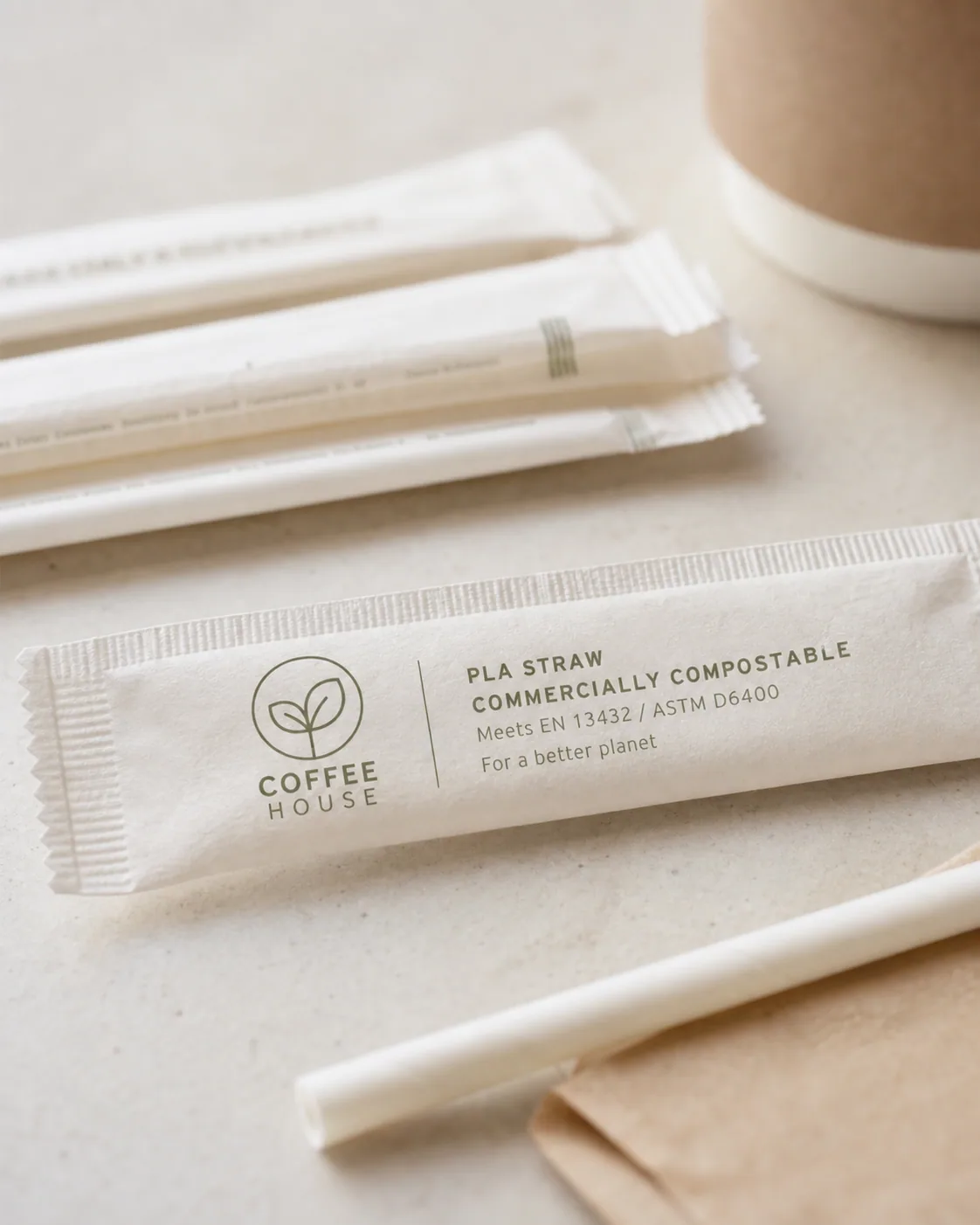 For example, when dealing with custom printing straws, we once intercepted a wrapper proof where the claim text stated "biodegradable," yet testing documentation only supported "commercially compostable." Catching that single incorrect word saved 50,000 wrappers from becoming a compliance headache. BPI's compostability certification program is an excellent reference for aligning wrapper language with product evidence. Furthermore, if a customer later switches from standard PLA to a bamboo powder or coffee grounds look, the wrapper text must be comprehensively reviewed again to ensure claims match the new underlying material.
Carton Marks: Small Detail, Large Consequences
Custom projects often produce similar-looking cartons with different contents. One carton holds 6 mm white PLA straws. The next holds 8 mm green PLA straws. A third holds individually wrapped coffee-look PLA straws. Without clear carton marks, the warehouse ships the wrong SKU — or mixes old artwork with new.
A useful carton mark includes: material name, straw diameter and length, color or look, packing count and customer code. For reorders, that carton mark becomes part of the permanent product record.
Reordering Without Version Drift
The first shipment of a custom PLA straw usually goes well because everyone remembers the details. The second and third orders are where things slip.
We had a private-label account reorder six months after their initial run. The team pulled up the original PO, but the wrapper artwork file on record was a pre-approval draft — not the final version. The production-ready proof had been emailed but never saved to the project file. We caught the mismatch during pre-production review, but it added a week to the timeline.
A complete approval record keeps the final straw specification, approved wrapper proof, carton mark layout, packing count and claim wording together in one file. When the same customer adds a second straw size or a new wrapper design, the new project builds from the approved record instead of starting from a blank brief.
Orchestrating a Flawless Custom Order
A successful custom straw program requires discipline. One of the most frequent errors we see is buyers attempting to design their custom wrapper before physically testing the straw. The straw sample must always come first. The wrapper design should strictly follow the approved straw size, color, confirmed drink-use performance, and the verified claim documentation. Designing the wrapper prematurely risks printing specifications or environmental claims that do not actually align with the final engineered product.
When building your custom program, you have extensive options. PLA straws can certainly feature custom wrappers that include your logo, product text, barcodes, and environmental claim language. However, these customizations—whether they involve unique colors, printed wrappers, or specific carton marks—naturally introduce setup costs, which typically require higher Minimum Order Quantities (MOQs) to absorb effectively. We will always clearly outline how each specific customization element impacts your MOQ during the initial quoting phase.
To guarantee consistency over the long term, TOGO maintains a strict, centralized project file containing the approved physical straw spec, final locked wrapper proof, carton mark layout, and precise packing count. When restocking, we run your reorder explicitly against that master file, eliminating the risk of version mistakes. When you are ready to initiate a custom program, review the standard formats in our PLA Straws Wholesale catalog, then reach out to the TOGO team with your target straw size, drink application, color preferences, initial wrapper artwork, carton mark requirements, and forecast volumes. We will guide you through confirming the physical straw first, ensuring that when we finally print your custom wrappers, everything is perfectly aligned and fully compliant.