Evaluating Material Performance
When comparing pla vs paper straw options in the context of cafes, juice bars, and boba shops, the focus should be on how each material performs during real drink service—not just what it's made from. The practical question operators must answer before deciding to replace paper straws is determining which material holds up in which drink, at what diameter, and for how long.
Common Challenges with Paper Straws
When beverage operators explain why paper straws suck, the feedback usually centers on boba and thick smoothies. A primary issue is premature softening: while paper works for a quick 5-minute soda, a 700ml boba cup sipped over 30 minutes inevitably causes the straw to soften prematurely. Furthermore, standard paper straws struggle with puncturing issues. Because boba cups utilize a heat-sealed plastic film rather than a traditional lid, paper straws lack the tip rigidity required for a clean punch, often resulting in torn film, paper fragments pushed directly into the drink, and frustrated customers.
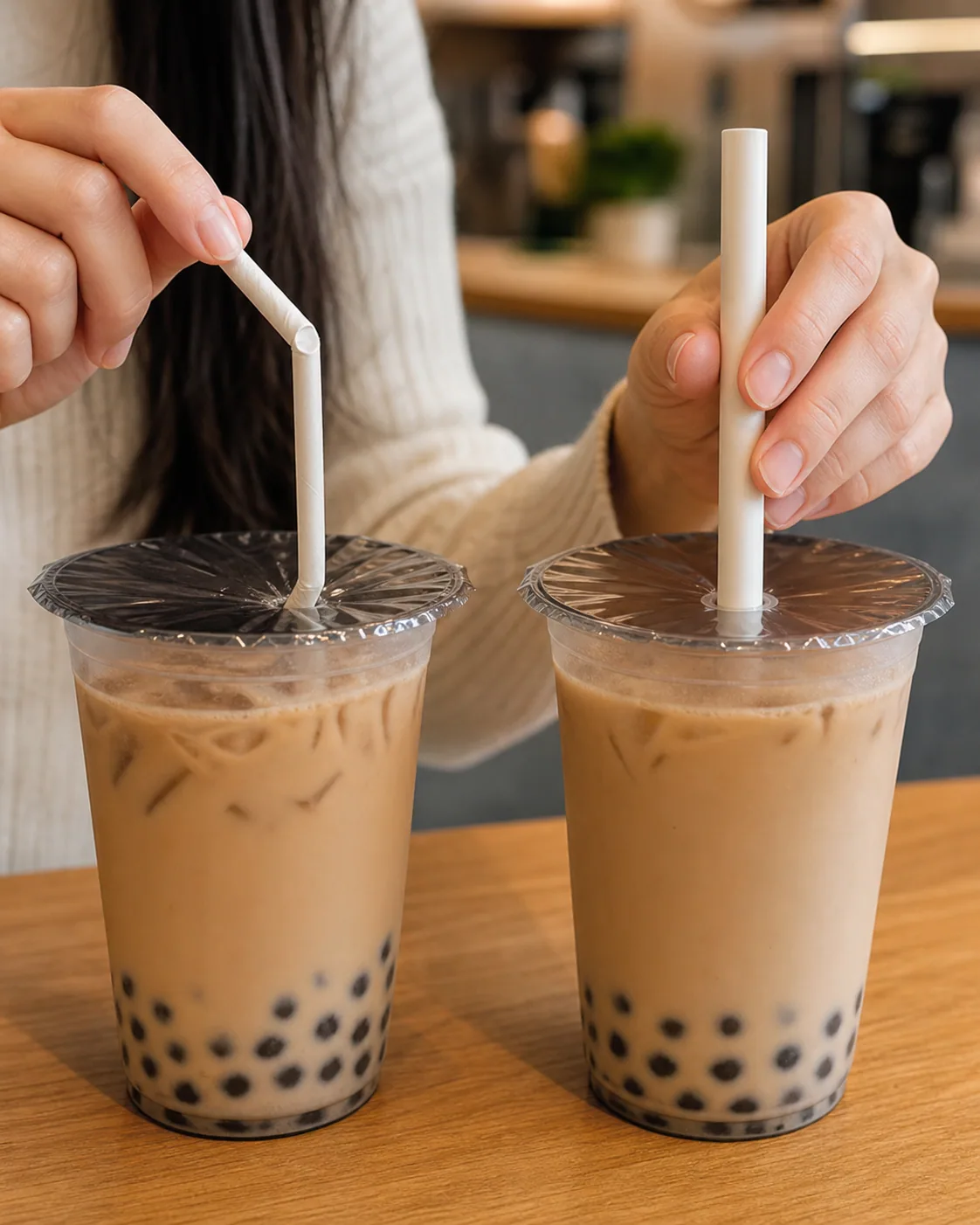 Taste alteration is another frequent complaint. Paper carries a distinct mouthfeel and a slight fiber taste that customers notice in delicate milk-based beverages, particularly premium $7 brown sugar boba. However, these challenges do not mean paper is a poor choice universally. They simply establish that paper has a clear performance ceiling, and demanding applications like boba, heavy smoothies, and long-service cold drinks sit comfortably above it.
Bore Size: The First Question, Not the Last
For bubble tea, you need at least a 12mm bore. A standard 6mm PLA straw won't let tapioca pearls through — they'll jam at the opening and the customer ends up chewing on the straw tip trying to dislodge them. We see this mistake on first orders regularly: a buyer tests a 6mm PLA straw in iced coffee, loves the feel, then assumes the same straw works for boba. It doesn't.
Here's how diameter maps to drink type:
| Straw Diameter | Best Drink Fit | Key Requirement | Material Notes |
|---|---|---|---|
| 6mm | Iced coffee, iced tea, juice, water | Smooth flow, mouthfeel | Standard PLA or paper both work |
| 8mm | Smoothies, thick juices, frappés | Handles viscous liquids without collapse | PLA holds structure better than paper over time |
| 12mm | Boba, bubble tea with toppings | Pearls and jelly pass through cleanly | Must have pointed or angled tip for film puncture |
| 6mm short (under 150mm) | Cocktails, small cups, kids' drinks | Cup height match, clean presentation | PLA Plant Fiber Short Straw fits here |
Getting the diameter wrong matters more than getting the material wrong. A 12mm paper boba straw with a reinforced tip will outperform a 6mm PLA straw in bubble tea every time. Material selection comes after functional sizing.
PLA vs Paper: Performance by Drink Program
| Drink Program | Paper Performance | PLA Performance | Our Recommendation |
|---|---|---|---|
| Iced americano / iced tea | Works for 5–10 min service | Firm feel through 20+ min | PLA if drinks sit on counter; paper if turnover is fast |
| Fresh juice and soda | Generally fine | Slight upgrade in mouthfeel | Paper is often sufficient — save cost |
| Smoothies and frappés | Thin paper can collapse under suction | 8mm PLA holds shape | Test PLA if you get collapse complaints |
| Boba with tapioca | Film puncture failures, soggy tip | 12mm PLA with angled cut works well | PLA strongly preferred for sealed-film boba |
| Cocktails or small cups | Can work visually | Short PLA gives a clean look | Depends on brand positioning |
PLA Straw Options for Cafes, Juice Bars, and Boba
A café running multiple drink types doesn't need one straw for everything. We often set up sample kits like this:
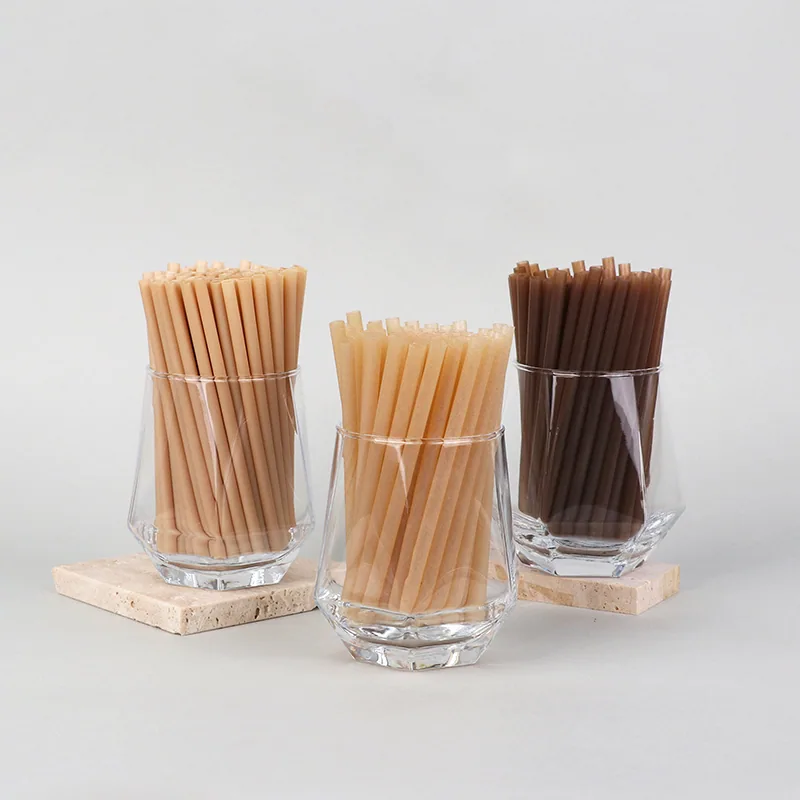
- Iced coffee and tea: PLA Cold Drinking White Straw at 6mm — clean mouthfeel, pairs well with standard lids
- Clear cold drinks and juices: PLA Translucent Sugarcane Bagasse Straw — the translucent look works in glass or clear cups
- Cocktails and small cups: PLA Plant Fiber Short Straw — sized for short glassware
- Brand-forward café drinks: PLA Coffee Grounds Straw — the visible fiber specks give a craft look that coffee-focused shops appreciate
For boba specifically, we work with buyers to match bore diameter, tip angle, and wall thickness to their cup film and topping sizes. A small difference in bore — 11.5mm vs 12.5mm — can change whether pearls flow smoothly or jam every third sip.
Considering Staff Handling
A straw that performs perfectly in the beverage can still create friction at the service counter. During rigorous sample tests at high-volume boba chains, issues often emerge that only become apparent under real service pressure.
For example, paper wrappers on wider straws might tear unevenly, leaving annoying fragments that stick to the straw itself. Straws that are too long for the specific cup can easily bend during lid insertion, inherently weakening the structural wall before the customer takes their first sip. Furthermore, staff might struggle to visually distinguish a 6mm from an 8mm straw when both are individually wrapped, leading to the wrong straws being hastily placed into the wrong drinks during a rush.
To mitigate these issues, testing at the counter—rather than just in a quiet office setting—is highly recommended. Having staff run a mock rush reveals which straw is naturally grabbed, which wrapper opens most cleanly, and perfectly verifies that each diameter fits its intended cup-and-lid combination without forcing.
Getting the Wrapper Text Right
Both PLA and paper carry claim risks. PLA may be described too broadly as "compostable." Paper may be labeled "natural" without accounting for coatings or adhesives. The FTC's Green Guides apply to both — any environmental language on wrappers or packaging needs supporting documentation. We include relevant cert references with every quote so wrapper artwork review doesn't become a bottleneck.
Implementing a Mixed-Material Strategy
For diverse beverage menus, the most effective approach often isn't choosing one material over the other, but rather utilizing both strategically. Many of our successful café accounts deploy paper straws for simple, quick-service drinks, while reserving PLA specifically for iced coffee, thick smoothies, and premium beverages. This mixed-material program—tailored strictly to drink type—almost always yields better results and higher customer satisfaction than forcing a single straw style across an entire menu.
When configuring this mixed approach, precise dimensions matter immensely. For smoothies and heavy frappés, an 8mm bore is generally required; anything thinner creates frustrating suction resistance and risks collapsing under the pressure of thick blends. For sealed-film boba, the demands are even stricter: a 12mm diameter with a highly precise angled tip is mandatory for clean puncture and smooth tapioca flow. In these high-demand scenarios, operators frequently find PLA outperforms paper, but both options should always be vigorously tested in your actual cups before placing a bulk order.
At TOGO, we don't just send generic assortments; we build comprehensive sample kits meticulously curated around your actual drink menu. To get started, explore our full PLA Straws Wholesale range or our comprehensive Bio-Based Straws Wholesale category. Once you have a general direction, share your cup sizes, lid types, detailed drink list (especially noting boba toppings and smoothie thickness), preferred packing formats, and monthly volume estimates with our team. We will match the optimal PLA options against your current paper benchmarks so you can test them rigorously under real service conditions and confidently source the SKUs that perfectly fit your program.