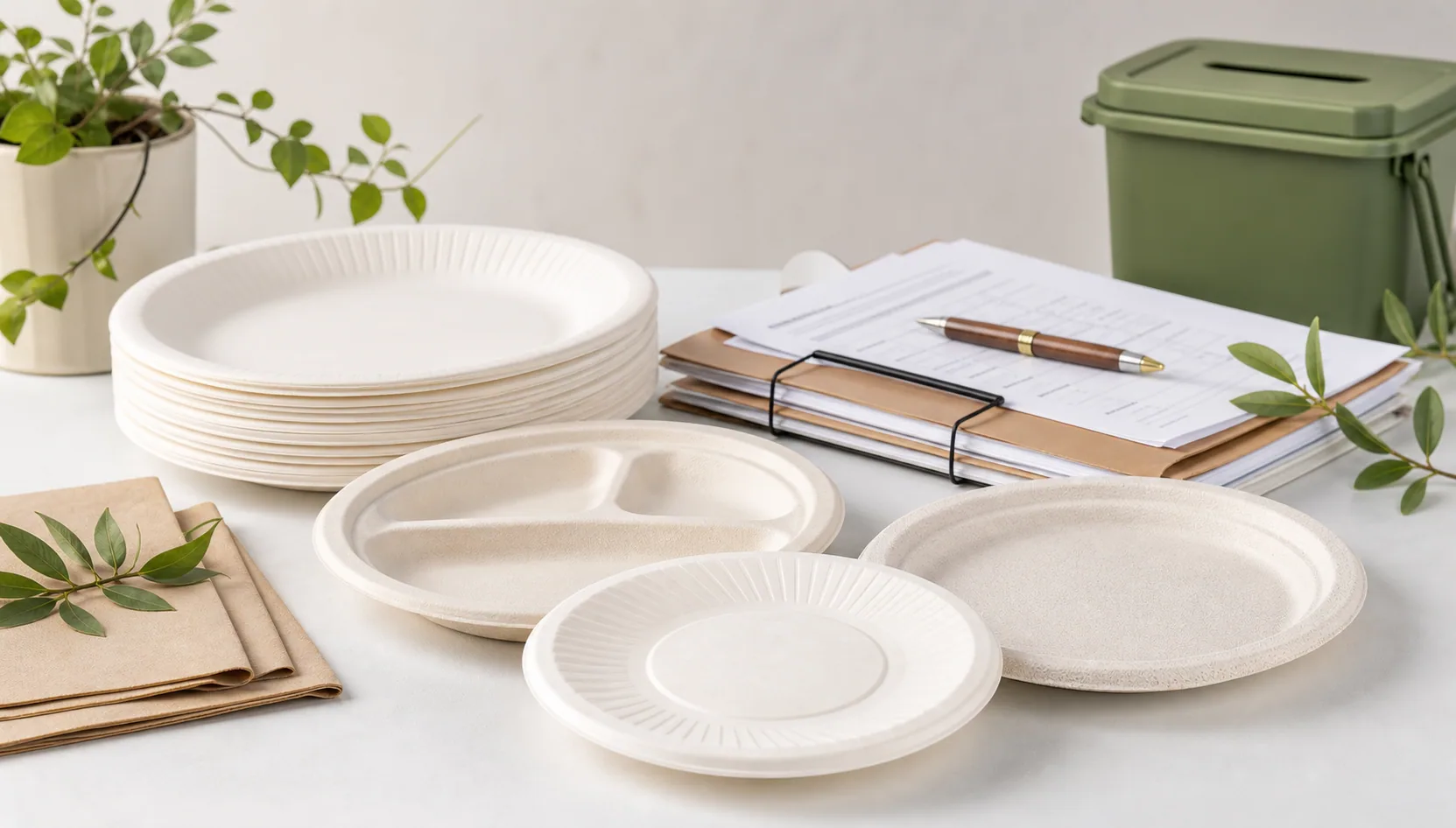

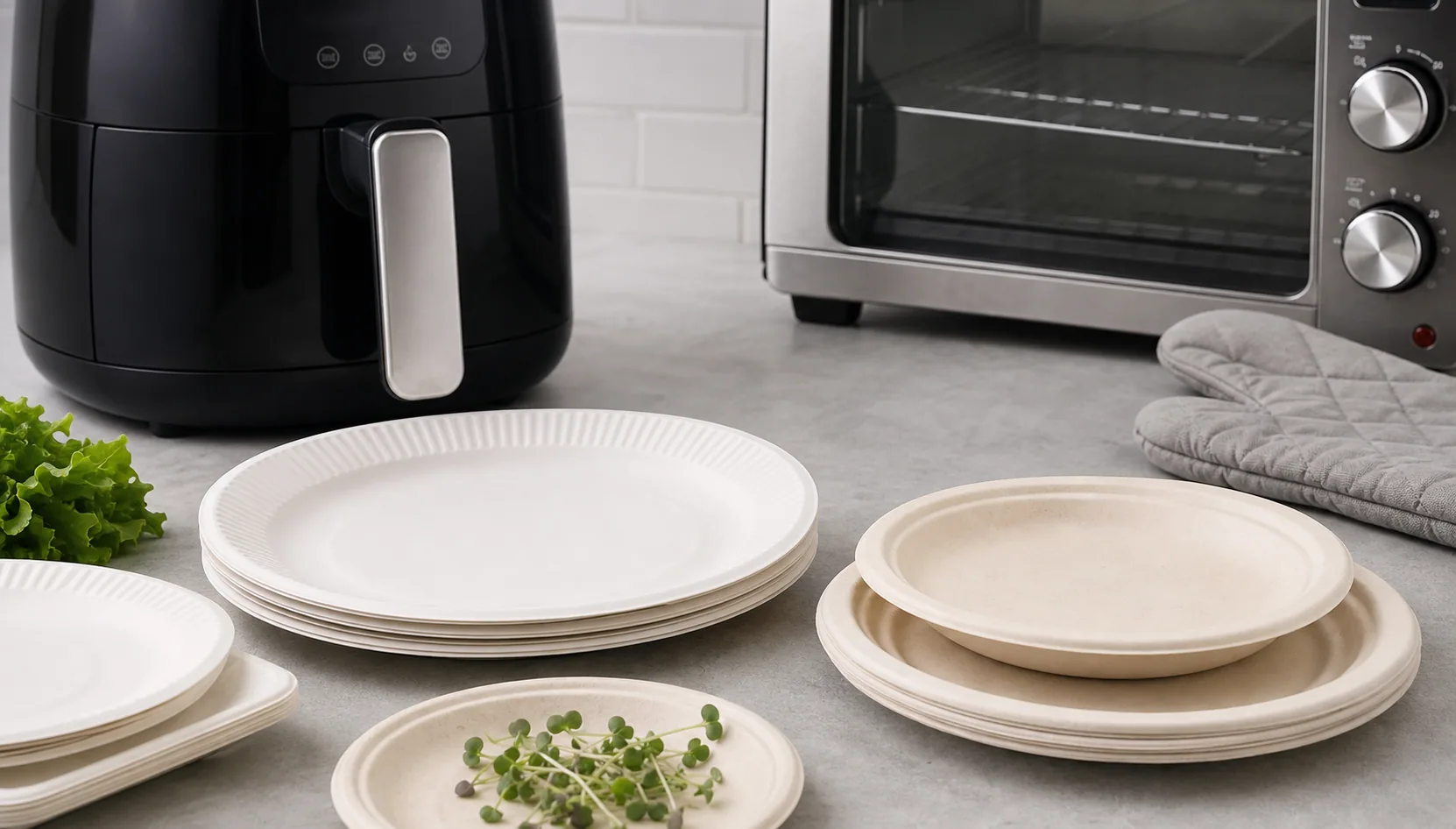
Most disposable paper and bagasse plates are serving products, not cookware. Holding hot food on a table is different from exposure to an oven element or fast-moving hot air.
Do not put a plate in an oven or air fryer unless its label and product documentation expressly allow that use.
TOGO supplies paper plates for foodservice and bagasse plates for meals and catering. These collections describe serving formats; appliance suitability must still be confirmed item by item.
Serving Hot Food Is Not the Same as Appliance Use
Oven or air-fryer suitability means an exact plate can handle a dry-heat environment under specific instructions. It is different from holding hot food, and it is different from microwave reheating.
Check the Label Before Applying Heat
Do not assume disposable paper plates can go in the oven or air fryer. Ordinary paper plates, coated plates and molded fiber plates should be treated as serving products unless the product is specifically designed, labeled and documented for oven or air-fryer use.
The FDA's microwave explanation notes that microwave energy passes through paper-like materials and is absorbed by food (FDA Microwave Ovens). That principle does not apply to an oven or air fryer, where dry heat, hot air and proximity to heating elements create a different risk profile.
Use condition | What happens | Use note |
|---|---|---|
Serving hot food | Plate contacts already cooked food | Confirm grease, moisture and holding time |
Microwave reheating | Food heats through microwave energy | Check microwave-specific guidance |
Oven warming | Dry heat surrounds the plate | Use only when the specific item is approved for it |
Air fryer | Fast hot air near heating element | Avoid unless product instructions allow it |
Heat lamp | Radiant dry heat over time | Confirm with product guidance and service testing |
The FDA explains that microwave energy passes through materials such as paper and is absorbed by food, while containers can still become hot from the food itself. It also advises following the oven manufacturer's container instructions. That microwave guidance should not be extended to dry-heat appliances without product-specific instructions.
Microwaves, Ovens and Air Fryers Heat Differently
Air fryers move hot air quickly and may place lightweight materials close to a heating element. A paper plate can dry, deform, scorch or move inside the basket. Even if a plate holds hot food well on a table, that does not prove it belongs inside an appliance.
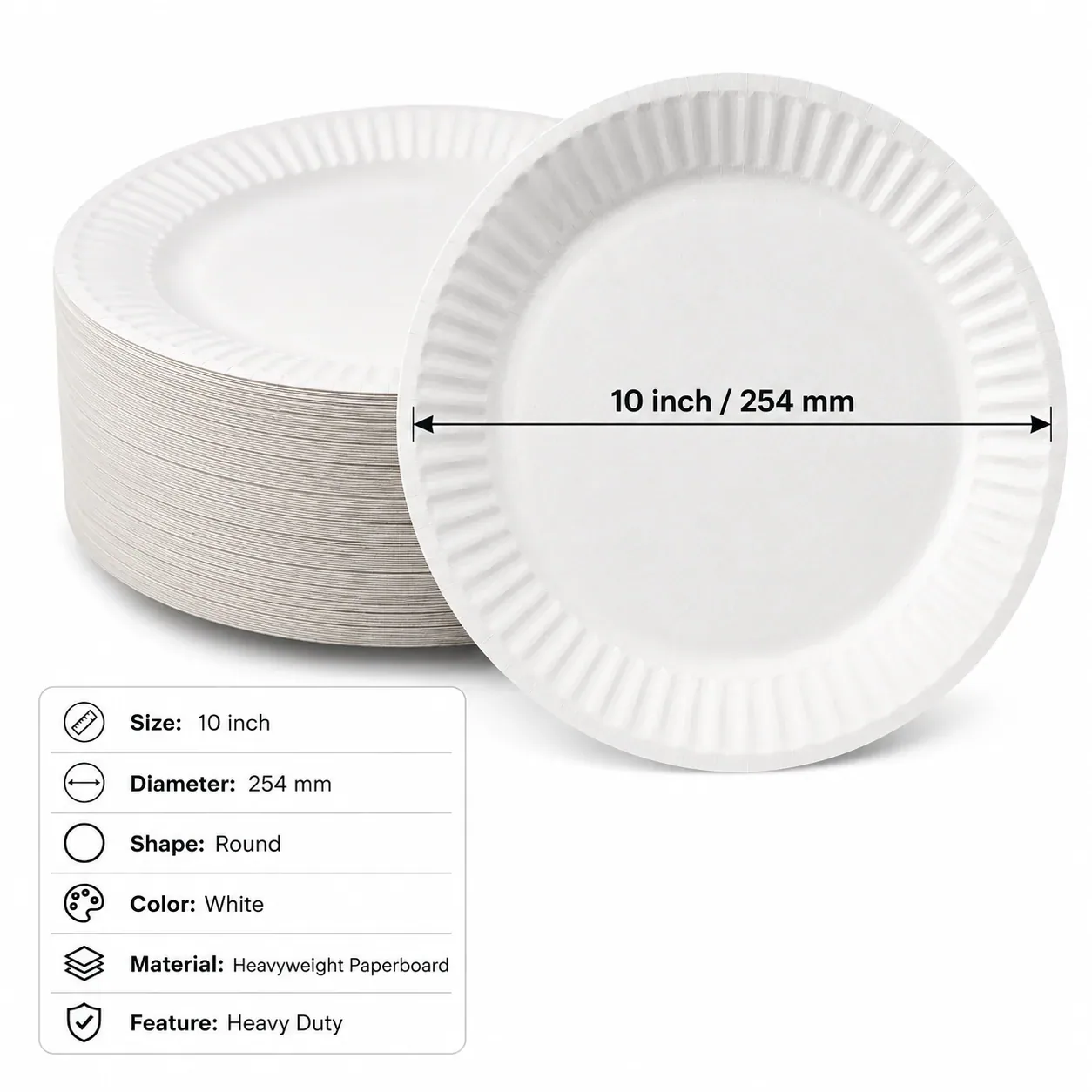
If you are choosing serving plates, start with TOGO's 10 Inch Heavy Duty Paper Plates and Round Bagasse Plates with Wide Rim. Use them for hot meal service testing first, and only add oven or air-fryer language when the specific item supports it.
Use Clear, Product-Specific Heat Guidance
A clear product instruction is: “for serving hot food,” “confirm the product label,” or “not intended for oven or air-fryer use unless documented.” That keeps the guidance tied to the real plate instead of stretching a serving product into an appliance-use product.
Use Disposable Plates for Their Documented Purpose
Paper plates and bagasse plates can be useful for hot-food serving, but oven and air-fryer use are separate questions. A round bagasse plate with a wide rim can help you present hot meals, sides or catering portions while keeping appliance statements out of the product description unless the specific item supports them.
A 10 inch heavy duty paper plate works best as a serving product for this use case. If your menu needs heating, treat the heating method as a separate product requirement instead of assuming every plate can go into every appliance.
Use condition | How to discuss it | Product decision |
|---|---|---|
Serving hot food | Reasonable serving context | Check stiffness, oil resistance and portion load |
Microwave reheating | Only if guidance for that specific item supports it | Review material, label and food type |
Oven use | Do not assume | Needs specific product support, not a material shortcut |
Air fryer use | Treat as higher-risk appliance wording | Air flow, heat concentration and contact points matter |
Heat lamp or buffet | Separate from oven/air fryer | Check holding time and food moisture |
The practical distinction is simple: plates are first serving products. Appliance use belongs to the specific item and its documented condition, not to a general paper or bagasse category.
For product guidance, keep serving strength and appliance exposure separate. You can describe plate size, food load, oil resistance and serving use without implying oven or air-fryer use. That keeps the product page helpful while leaving stronger heat wording for documented products only.
Confirm the Intended Plate Use With TOGO
For an accurate quote, include the food type, plate size, serving weight, expected temperature, contact time, oil level, whether the plate touches an appliance surface, and where you plan to sell or use it. TOGO can then separate ordinary serving items from any project that needs a stronger, documented heat-use review.
FAQ
Can paper plates go in the air fryer?
Ordinary paper plates should not be placed in an air fryer unless the product instructions explicitly allow it.
Can paper plates go in the oven?
Do not assume they can. Oven use requires product-specific design and instructions.
Are bagasse plates oven-safe?
Treat this as a Product-specific statement. Do not say a whole material family is oven-safe without evidence.
Are disposable plates suitable for hot food?
Many disposable plates are used for serving hot food, but hot-food serving is not the same as appliance use.