A US liquid pint is 16 fluid ounces; a quart is 32 fluid ounces. Those familiar size names are useful references for food containers, but they do not define the practical fill line.
Soup, salad, noodles and dense side dishes need different headspace, lid clearance and delivery stability even when the nominal volume is the same.
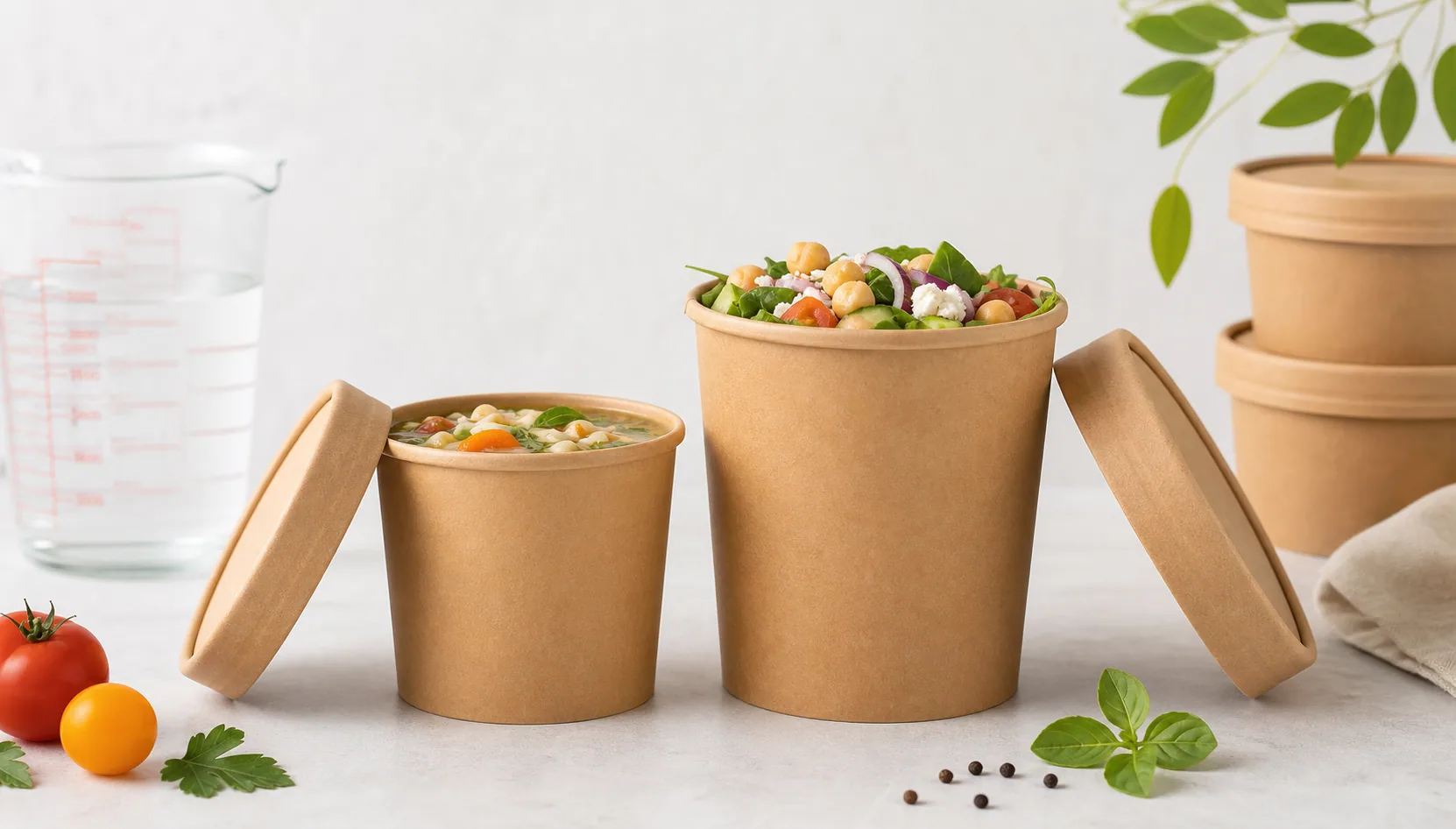
TOGO's paper soup container collection and paper food container range provide pint- and quart-style options for filled-sample comparison.
NIST lists a US liquid pint as approximately 0.47 L and a quart as approximately 0.95 L. In US customary units, that corresponds to 16 and 32 fluid ounces. Treat these as nominal size references and verify usable fill with the selected container and lid.
Pint and Quart in US Liquid Measure
A pint is a US liquid volume equal to 16 fluid ounces, while a quart is equal to 32 fluid ounces. In disposable food packaging, those numbers often appear as nominal container sizes, but the practical fill level may be lower when the food needs headspace, a lid, toppings or delivery stability.
When to Use 16 oz or 32 oz
A pint container is the 16 oz size. A quart container is the 32 oz size. For a restaurant, deli or meal-prep program, that means a pint usually fits single-serve soup, sides, sauces or small salads, while a quart is closer to a large salad, noodle bowl, family side or two-portion soup.
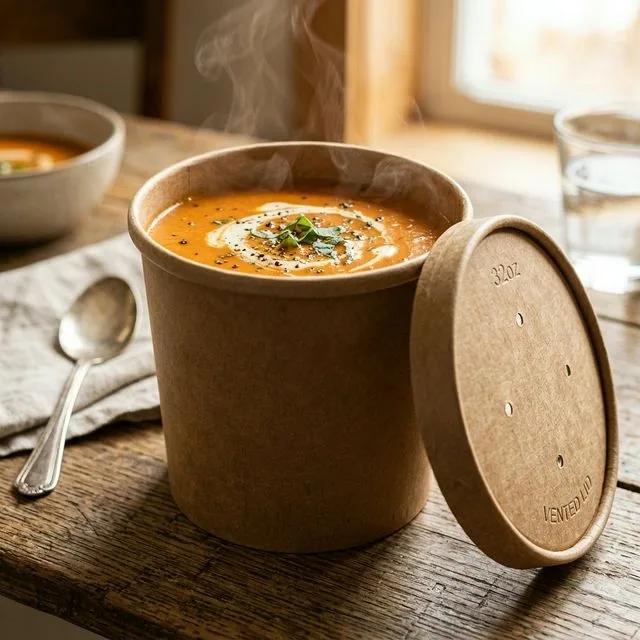
TOGO's 32oz Kraft Paper Food Container and Lid Combo and Kraft Paper Soup Container with Vented Lid are useful reference points when you need to translate a measurement question into a real packaging inquiry.
| Size term | US fluid ounces | US cups | Common packaging reference | Typical foodservice use |
|---|---|---|---|---|
| Half pint | 8 fl oz | 1 cup | Small bowl or tasting cup | Sauces, desserts, side dishes |
| Pint | 16 fl oz | 2 cups | 16 oz bowl or container | Soup, deli sides, small salad |
| 1.5 pints | 24 fl oz | 3 cups | 24 oz bowl or container | Rice bowl, noodles, entree salad |
| Quart | 32 fl oz | 4 cups | 32 oz food container | Large salad, soup, family side |
Nominal Volume Is Only the Starting Point
A conversion chart can answer the math, but food packaging needs one more step. Soup moves differently from salad. Chili needs more headspace than clear broth. A noodle bowl may need room for toppings, and a deli salad may compress during transport. A 32 oz quart container can be a better practical choice even when the recipe appears to fit inside a smaller volume.
Food-contact packaging also depends on the specific item and its intended use. FDA resources on Packaging & Food Contact Substances and Food Types & Conditions of Use are useful when you check the material, coating, food type and heating condition together. For TOGO inquiries, keep any statement tied to the specific item; a general material name is not enough.
When 16 oz Is the Better Fit
A pint container works when portion control matters. Single-serve soup, prepared grains, sauces and deli sides often sit naturally in the 16 oz range. It also keeps carton weight lower and can reduce empty space when the menu product is dense.
When you prepare the quote request, specify whether the container needs a paper lid, plastic lid, vented lid, nested packing, printing, sleeve, or carton mark. The container size alone is not enough to confirm fit.
When 32 oz Is the Better Fit
A quart-size container gives more room for meal bowls, topped salads, noodle dishes and family-size sides. It can also reduce lid pressure when the food is moist or bulky. The tradeoff is carton volume and landed cost, so it is worth sampling the food at the intended fill line.
Fill Both Sizes Before You Decide
The fastest way to settle a pint vs quart decision is not to argue over the conversion table. Fill two real container options with the food you plan to serve, close the lids, then check headspace, sidewall pressure and carton fit. A kraft paper soup container with a vented lid gives you a practical 16 oz reference for soup, sides and deli portions.
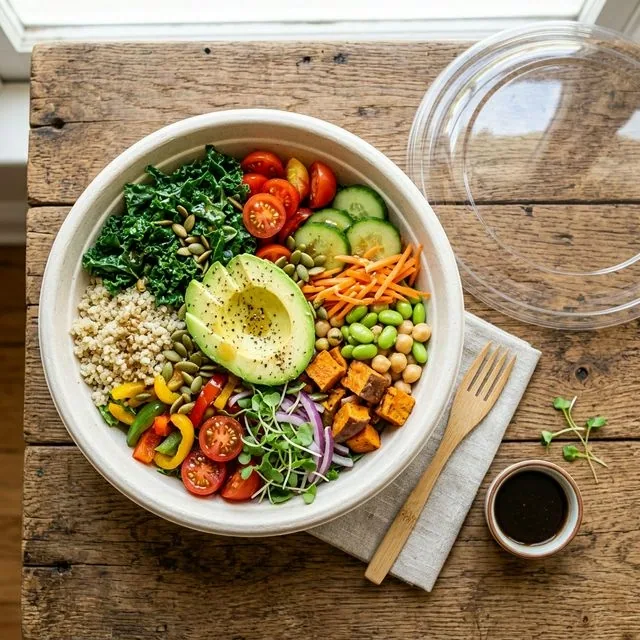
For the quart side, a 32 oz bagasse salad bowl with a clear lid shows what happens when the same food needs more room for toppings, sauce movement or delivery stacking.
| What you test | Pint / 16 oz direction | Quart / 32 oz direction | What the result tells you |
|---|---|---|---|
| Clear soup | Usually enough for single serve | Useful for large soup or family side | Whether the lid traps steam cleanly |
| Chili or thick stew | Can feel tight near the rim | Gives more headspace | Whether dense food pushes the lid upward |
| Salad with toppings | Often too compact | Usually easier to present | Whether the clear lid has enough height |
| Rice or noodle bowl | Works for small portions | Better for full meal bowls | Whether the food moves during delivery |
| Carton packing | Lower carton volume | Higher carton volume | Whether the larger size is worth the freight space |
This gives you a cleaner decision than size names alone. You can keep the pint when portion control and carton efficiency matter most, or move to the quart when presentation and lid clearance protect the eating experience.
Record the Practical Fill Line
A capacity page becomes more useful when it separates nominal capacity from practical fill. For a pint or quart container, the number on the carton tells you the reference size; the food test tells you the usable fill line. That difference matters when the food is oily, topped, aerated, thick, or likely to move during delivery. FDA's Food Types & Conditions of Use tables are a useful reminder that food-contact review changes with food type and use condition, not just with the package material.
Use the same test log for kraft paper soup containers and 32 oz lidded bowls so the final decision is visible to your menu, operations and quotation teams.
| Fill-line product to record | Why it changes the pint vs quart choice | What to note before quotation |
|---|---|---|
| Actual food weight at target fill | Dense food may fit by volume but feel heavy in hand | Portion weight, not only fluid ounces |
| Visible headspace after lid closure | Toppings, foam and steam need room | Lid type and top clearance |
| Sidewall pressure after holding | Thick soup or deli salad can push outward | Holding time and food temperature |
| Stacking result | A taller fill can deform the lid under carton pressure | Case pack and pallet plan |
| Open-after-delivery appearance | Presentation affects repeat orders | Whether quart size protects the food better |
This fill-line record remains useful after the conversion is understood. You can keep a pint where the food is compact and predictable, and move to a quart where the extra space prevents lid pressure, leakage risk or a poor opening experience.
What TOGO Needs for a Pint or Quart Quote
Send TOGO your target fill volume, food style, serving temperature, lid preference, carton mark needs, selling market and expected quantity. If you are not sure whether the project belongs closer to pint-style or quart-style packaging, include both use scenarios in the inquiry so TOGO can recommend the container and lid route before quotation.
FAQ
Is a pint container the same as 16 oz?
Yes. In US liquid volume, one pint equals 16 fluid ounces or 2 cups. In packaging, confirm the safe fill volume and lid fit before ordering.
Is a quart container the same as 32 oz?
Yes. One quart equals 32 fluid ounces or 4 cups. A 32 oz food container is commonly treated as the quart reference size.
Should soup use a pint or quart container?
Single-serve soup often fits a pint or 16 oz container. Large soup, noodle bowls or family portions may need a quart or 32 oz container.
Does a 32 oz container always hold 32 oz of food in service?
Not always. Nominal capacity and practical fill level can differ because of headspace, lid shape, toppings, foam, oil or delivery movement.