What does this packaging term mean?
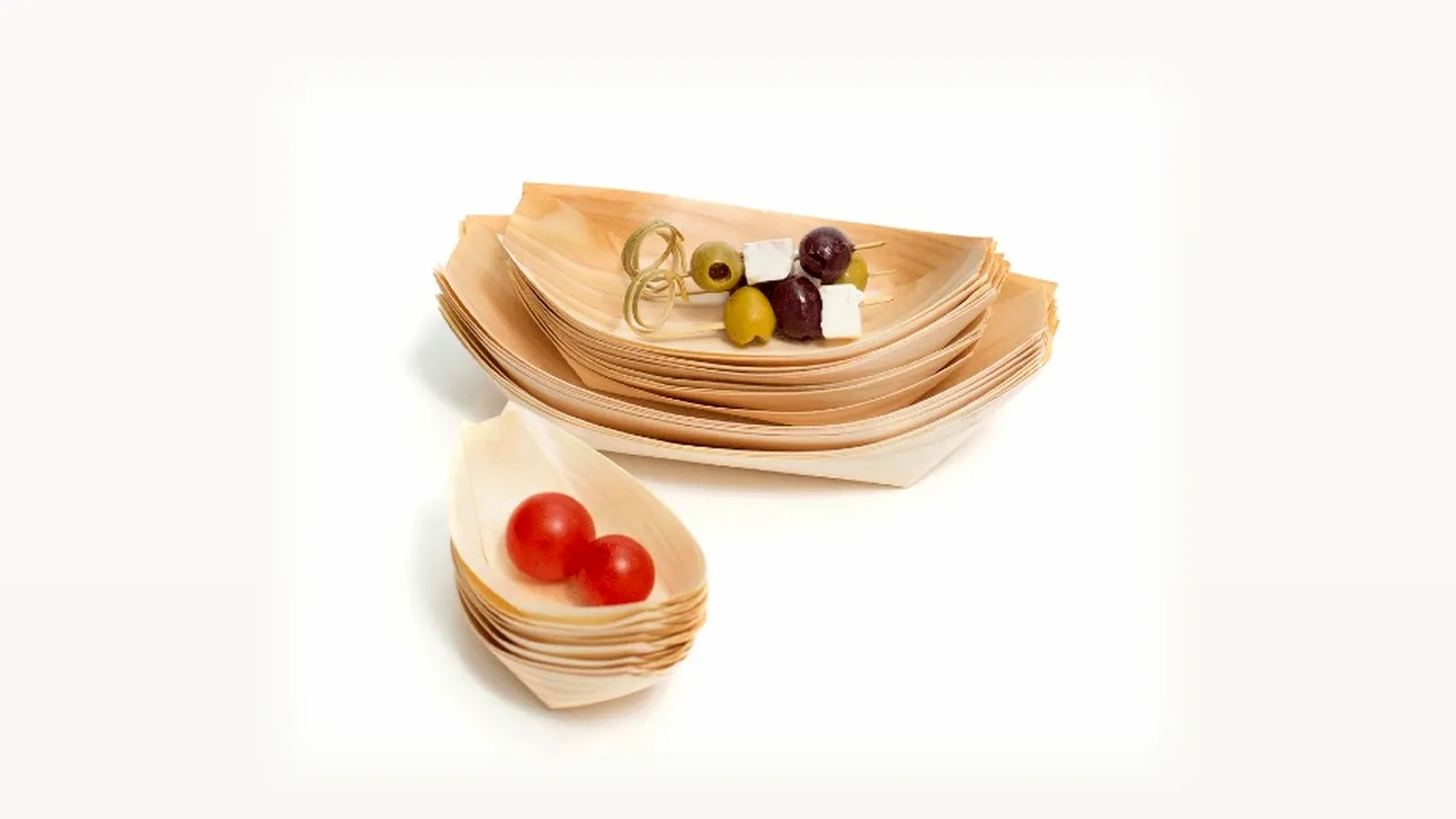
Wooden food containers include small boats, trays, cones, cups, and boxes used for appetizers, tastings, desserts, samples, and presentation-focused foodservice.
What is the short answer?
Wooden food containers are used for appetizers, tasting portions, desserts, cones, small boats, serving trays, and catered presentation where shape and material feel are part of the service experience.
TOGO treats wooden food containers as a separate category from paper food boat trays because wooden boats, trays, cones, cups, and lidded boxes serve a broader presentation role than paper food boats alone.
Why do caterers use wooden containers for small portions?
Small wooden boats, trays, and cups give appetizers and tastings a finished look without requiring ceramic serviceware. They are useful for hotels, events, buffets, dessert brands, and sampling tables where the food is served and consumed within a controlled window.
They still need food-contact review. The FDA food-contact guidance and European Commission food-contact materials legislation keep the discussion grounded in the intended food, market, and finished article rather than a general natural-material impression.
How are wooden boats, cones, trays, and cups different?
Boats work for appetizers and small servings, cones work for fries or snacks, trays work for plated presentation, and mini cups work for small desserts or tasting portions. The right choice depends on portion size, food moisture, hand feel, and whether a lid is needed.
Environmental wording should stay modest. The FTC Green Guides is a useful reminder that broad green claims require support and qualification, even when the product is made from a familiar natural material.
What should you confirm before ordering?
Buyers should confirm food type, portion size, moisture or oil exposure, finish, storage condition, packing count, and whether the item will be used for direct food contact or lined service.
TOGO can review wooden container samples with the buyer's real food application and align carton marks, mixed-SKU packing, and repeat-order records.
Wooden format | Common use | note |
|---|---|---|
Wooden food boat | Appetizers, snacks, small portions | Confirm food length, oil, and serving time. |
Wooden cone or cup | Fries, tastings, desserts | Check portion weight and hand feel. |
Wooden serving tray or box | Presentation, samples, premium catering | Confirm size, lid need, and carton packing. |
FAQ
Are wooden food containers for delivery?
They are usually stronger for presentation and controlled service than sealed long-distance delivery, though use depends on the exact format.
Can wooden containers touch food directly?
Use products intended for food contact and confirm finish, packaging label, and available documents for the intended market.
Can TOGO quote mixed wooden container formats?
Yes. Send the food application, size range, quantity, and packing plan so TOGO can match boats, trays, cones, cups, or boxes.
What should you send for a TOGO quotation?
For wooden food containers, send the food type, portion size, container shape, direct-contact need, quantity, carton count, and destination market. TOGO can prepare samples that match the presentation setting.