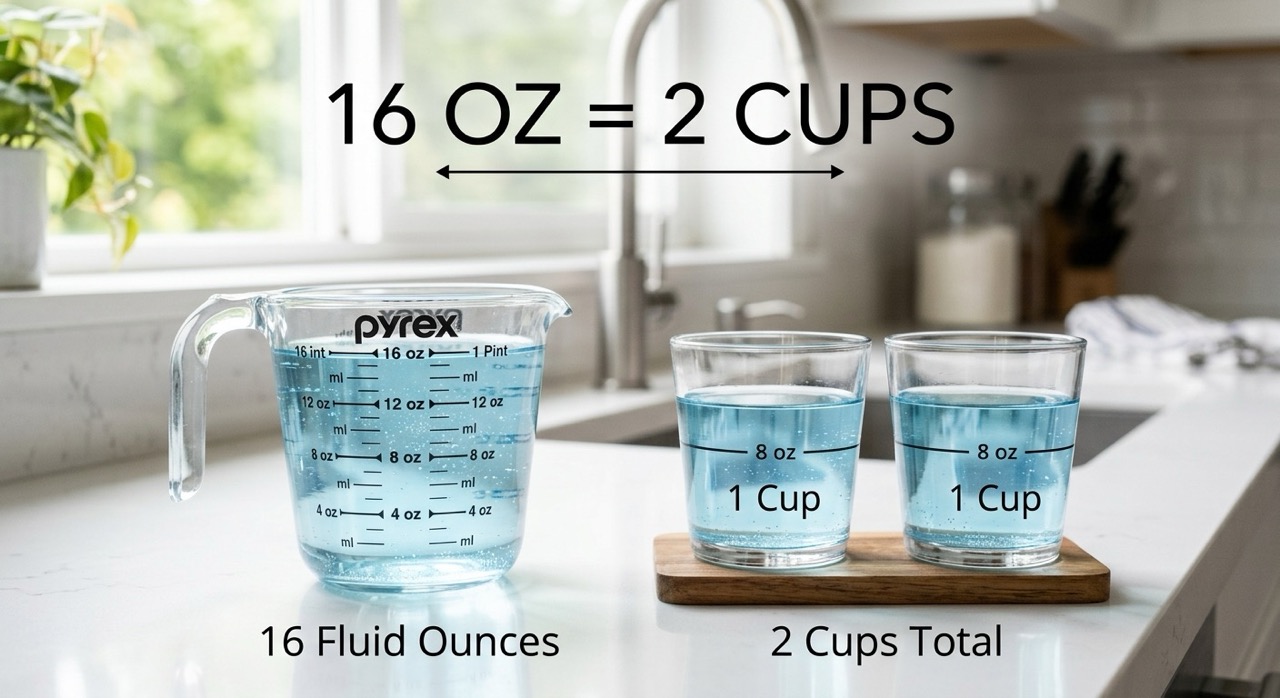
If there's one measurement conversion you should memorize, it's this one: 16 oz equals 2 cups. It's also equal to 1 US pint, which makes it one of the most useful measurements to know whether you're cooking at home or running a food service business.
But here's where it gets interesting - and potentially confusing. That "1 pint" part? It's only true in the United States. Cross the Atlantic to the UK, and a pint suddenly becomes 20 oz. This difference has tripped up more than a few people following recipes from different countries.
The Pint Problem
Let's talk about pints for a minute, because this is where things get messy. In the United States, 1 pint equals exactly 16 fluid ounces, which equals 2 cups. Simple enough. But in the United Kingdom, 1 pint equals 20 fluid ounces, which is 2.5 US cups.
Here's a comparison table:
Measurement System | Pint Size | In Ounces | In Cups | Common Use |
|---|---|---|---|---|
US Customary | 1 pint | 16 oz | 2 cups | American recipes, US bars |
UK Imperial | 1 pint | 20 oz | 2.5 cups | British recipes, UK pubs |
Metric | ~473 ml | 16 oz | 2 cups | International standard |
Why the difference? The US uses the US customary system, while the UK uses the Imperial system. They're similar but not identical, and the pint is one of the measurements where they diverge. This matters if you're following a British recipe, ordering beer in a UK pub, buying imported products, or working in international food service.
The practical impact? If you're making a British recipe that calls for a pint of cream, you need 20 oz, not 16 oz. That extra 4 oz can make a real difference in baking.
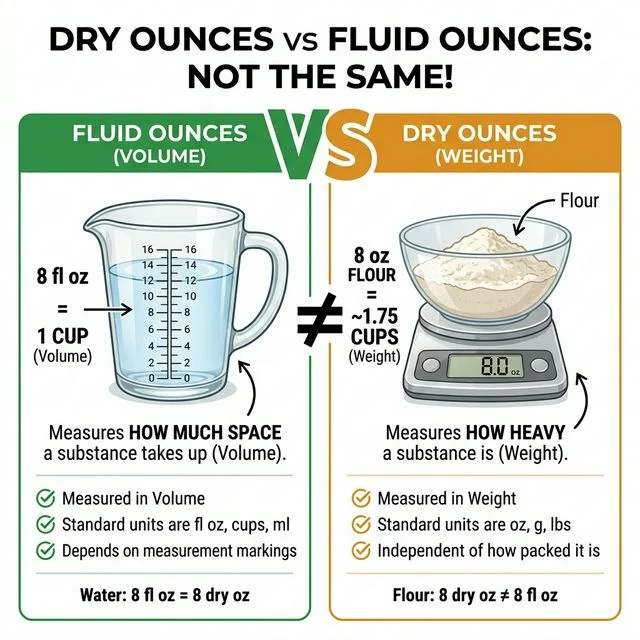
Liquid vs. Dry: Why It Matters
For liquids, 16 oz always equals 2 cups. Water, milk, juice, oil - doesn't matter. 16 fluid ounces is 2 cups, period.
For dry ingredients measured by weight, it's a different story. Here's a conversion table:
Ingredient | 16 oz by Weight | Volume in Cups | Density |
|---|---|---|---|
Water | 16 fl oz | 2 cups | Baseline |
All-Purpose Flour | 16 oz | ~3.6 cups | Very light |
Granulated Sugar | 16 oz | ~2 cups | Similar to water |
Brown Sugar (packed) | 16 oz | ~2.25 cups | Slightly lighter |
Powdered Sugar | 16 oz | ~4 cups | Extremely light |
Rice (uncooked) | 16 oz | ~1.75 cups | Dense |
Butter | 16 oz | 2 cups | 4 sticks |
Honey | 16 oz | ~1.3 cups | Very dense |
This is why serious bakers use scales. When a recipe says "16 oz flour," they mean weight. Trying to convert that to cups introduces error, and in baking, precision matters. A kitchen scale eliminates the guesswork.
The 16 oz Standard in Beverages
Walk into any Starbucks and order a Grande - you're getting 16 oz. It's become the standard "large" size across the coffee industry. Not too big, not too small. It's also the go-to size for iced coffee, smoothies, and bubble tea.
For beer, a US pint glass holds 16 oz. It's the standard serving size at bars and restaurants across America. Order a pint of beer, you're getting 16 oz (unless you're in the UK, where you'd get 20 oz).
The 16 oz size works because it's substantial enough to feel like you're getting your money's worth, but not so large that drinks get warm or flat before you finish them. For hot drinks especially, 16 oz is about the maximum size that stays at a good drinking temperature throughout.
16 oz in Food Service
In restaurants and food service, 16 oz containers are workhorses. They're perfect for single-serving meals - not too much food, not too little. They work great for soup bowls (a satisfying portion), salad bowls (room for greens and toppings), pasta dishes, rice bowls, and poke bowls.
For takeout and delivery, 16 oz containers hit a sweet spot. They're large enough to hold a full meal but not so large that they're awkward to carry or store. They stack well, they're not too heavy when full, and they fit in most delivery bags without issues.
Measuring 16 oz Accurately
For liquids, use a liquid measuring cup with clear markings. Place it on a flat, level surface - don't hold it in your hand. Pour to the 16 oz line or the 2 cup mark, and check it at eye level. Looking down at an angle can throw off your measurement by a surprising amount.
For dry ingredients, a kitchen scale is the way to go. Set it to ounces and measure out 16 oz. If you're measuring by volume instead, you can fill a 1-cup measure twice, but remember that this only works if you're measuring liquids or if the recipe specifically calls for cups rather than ounces by weight.
Why Businesses Love 16 oz
If you run a coffee shop, 16 oz is your large size. It's what customers expect when they order a large drink, and it offers a good profit margin - enough coffee and milk to feel substantial, but not so much that you're giving away product. It's also a standard size across the industry, which makes operations more efficient.
For restaurants, 16 oz containers are versatile. They work for entrees, soups, salads, and sides. They're substantial enough that customers feel satisfied, but not so large that you're dealing with a lot of waste. And for meal prep companies, 16 oz is a standard single-serving size that fits in lunch bags and reheats well.
Sourcing Quality 16 oz Containers
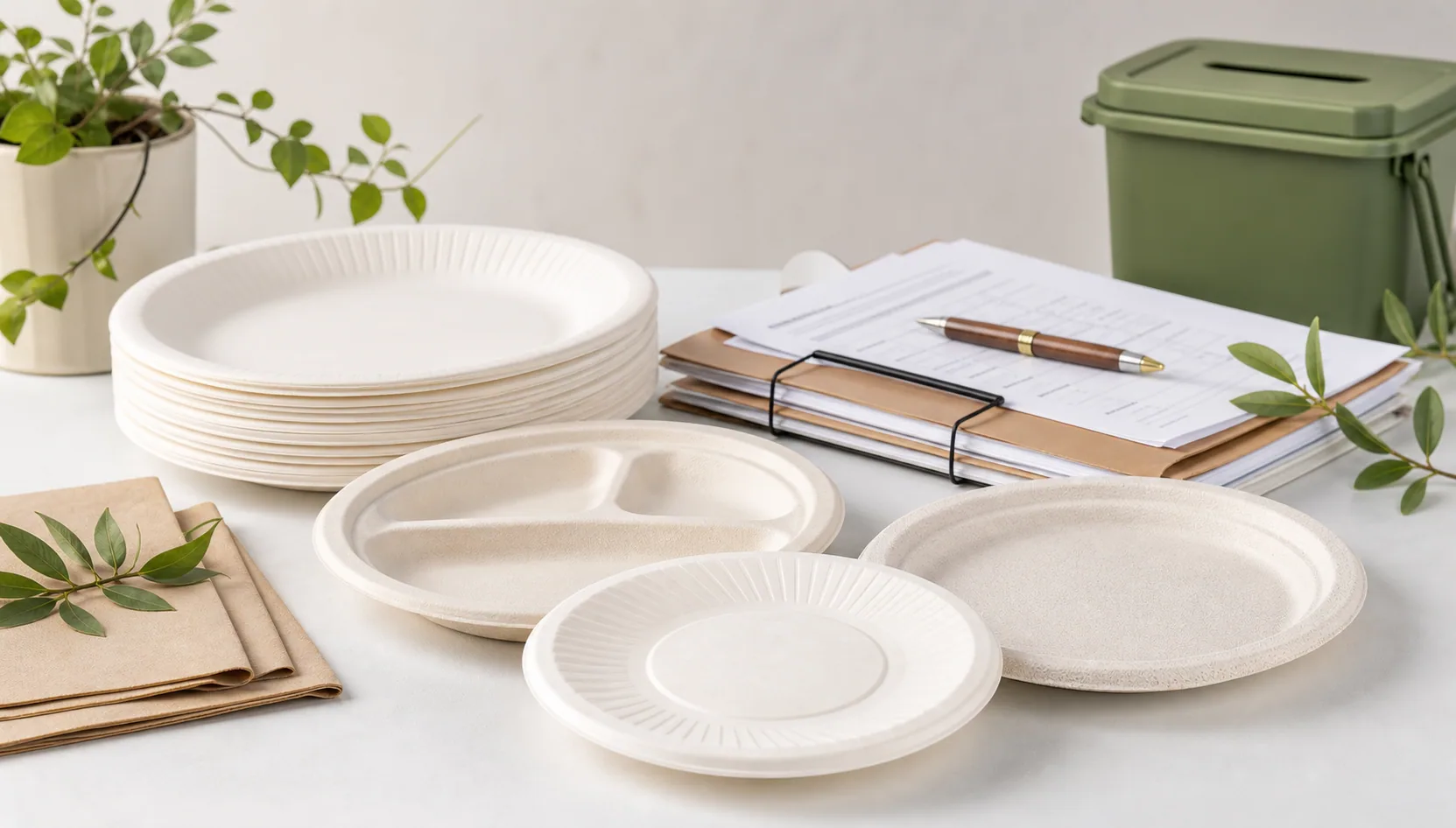
If you're in the market for 16 oz containers, you've got options. For hot food, bagasse bowls are excellent - they're made from sugarcane fiber, so they're compostable, and they handle hot liquids without getting soggy. They're also microwave-safe, which matters if your customers are reheating food.
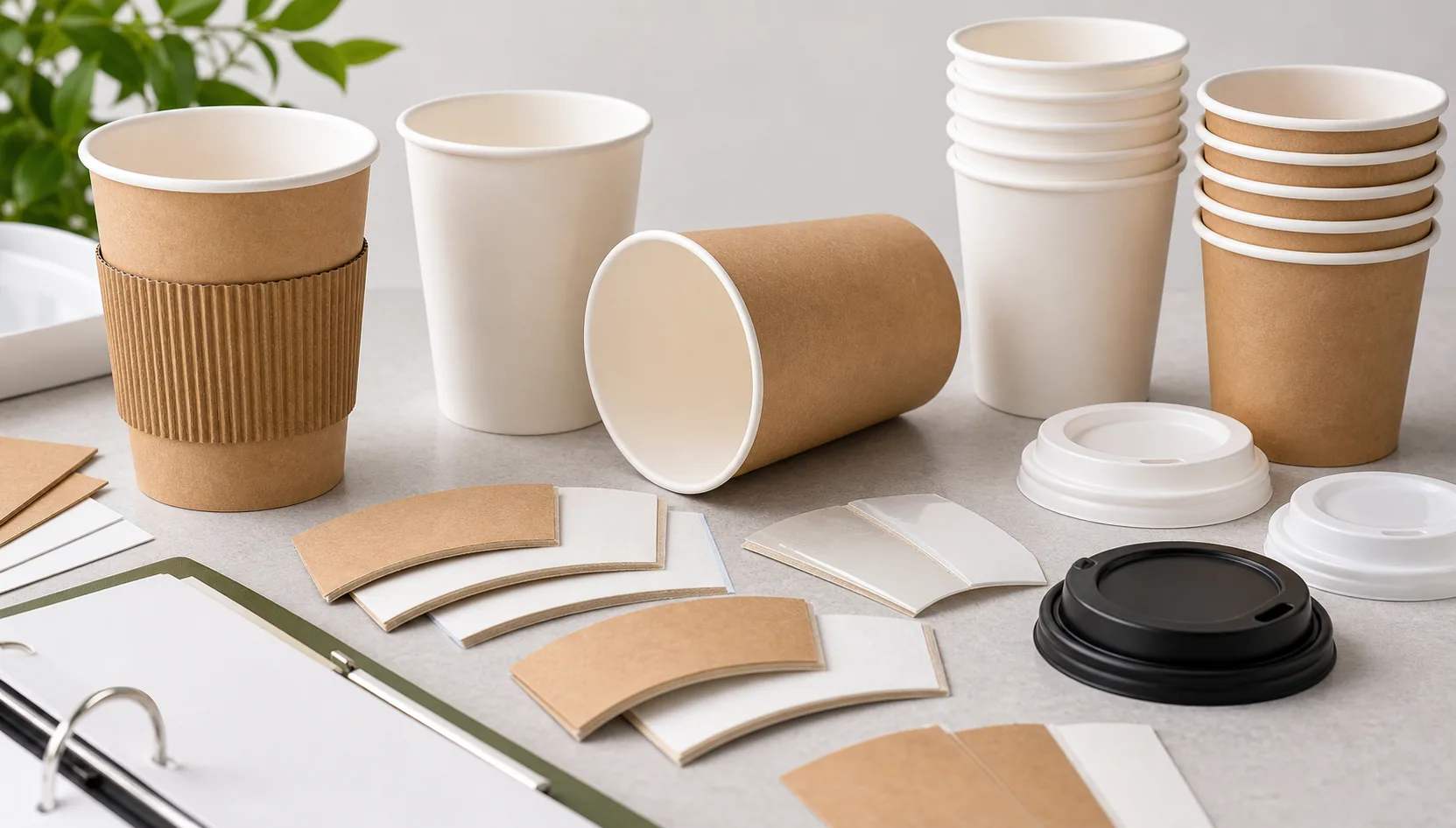
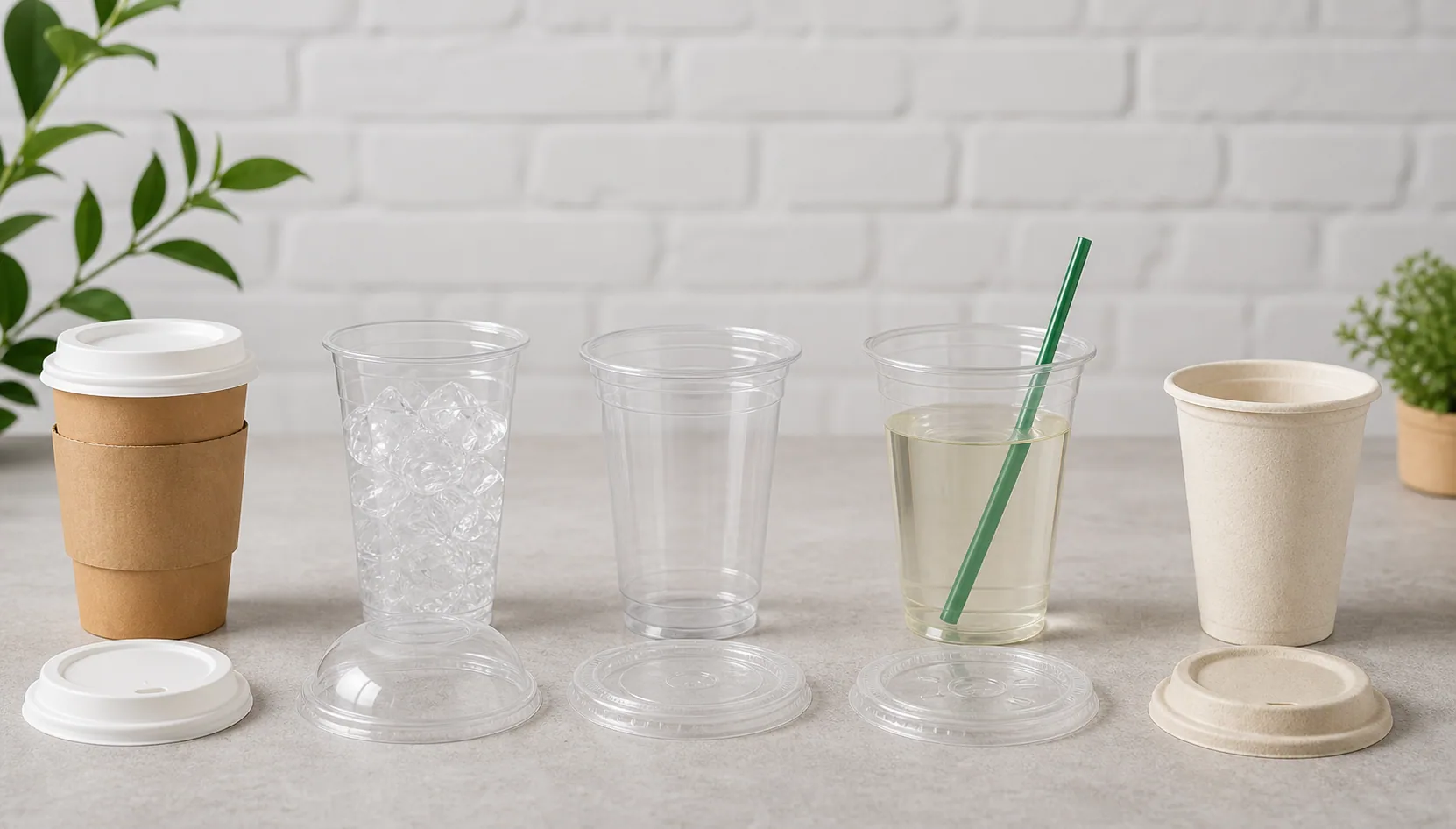
For beverages, paper cups are standard, but quality varies. Look for cups with matching lids (flat or dome, depending on your needs) and kraft sleeves for hot drinks. Make sure they're FDA compliant and PFAS-free - those forever chemicals are something you want to avoid.
For cold foods like salads or poke bowls, you want containers that are leak-resistant and stackable. Bagasse works well here too, or kraft paper containers if you want that natural, eco-friendly look.
Need Help Finding the Right 16 oz Containers?
Choosing packaging for your business isn't just about finding the cheapest option. You need containers that won't leak, that your customers will feel good about using, and that align with your brand. That's where we come in.
At ToGoTableware, we work with cafés, restaurants, and food service businesses to find packaging that actually works. We've got bagasse bowls that handle hot soup without falling apart, paper cups that don't leak, and containers that are actually compostable (not just labeled that way).
We get that you need to see and feel the product before committing to a bulk order. That's why we offer free samples. Tell us what you're looking for - soup bowls, coffee cups, takeout containers, whatever - and we'll send you samples so you can test them with your actual food and drinks.
Reach out and let us know what you're serving and what challenges you're facing with your current packaging. We'll help you find something that works.
Common Questions About 16 oz
Is 16 oz always 2 cups?
For liquids, yes. 16 fluid ounces always equals 2 cups. For dry ingredients measured by weight, the cup equivalent varies depending on the ingredient. Flour, sugar, and rice all have different densities, so 16 oz by weight converts to different volumes.
Is a pint the same as 16 oz?
In the United States, yes. A US pint equals 16 fluid ounces. But in the United Kingdom, a pint is 20 fluid ounces. This is why British recipes sometimes call for different amounts than American recipes.
How many 16 oz bottles equal a gallon?
Eight bottles. A gallon is 128 oz, so 128 ÷ 16 = 8. This is useful to know if you're buying water or other beverages in bulk.
Is 16 oz a good size for coffee?
Yes, it's the standard "large" or "grande" size at most coffee shops. It's substantial enough to feel like you're getting your money's worth, but not so large that hot drinks get cold before you finish them.
Can I use a 16 oz container for soup?
Absolutely. 16 oz is a perfect single-serving size for soup. It's enough to be a full meal without being overwhelming. Most soup bowls you see in restaurants are around 12-16 oz.
What's the difference between 16 oz and 1 pint?
In the US, there's no difference - they're the same thing. 16 oz equals 1 pint equals 2 cups. But in the UK, 1 pint is 20 oz, not 16 oz.
Why do coffee shops use 16 oz as their large size?
It's a balance between customer satisfaction and operational efficiency. 16 oz is large enough to feel substantial but not so large that hot drinks get cold or customers can't finish them. It's also become an industry standard, which makes it easier for customers to know what they're getting.
How many tablespoons are in 16 oz?
32 tablespoons. Since 1 fluid ounce equals 2 tablespoons, 16 oz equals 32 tablespoons. This can be useful for recipes that call for large amounts of liquid ingredients.
Can I freeze food in a 16 oz container?
Yes, as long as the container is freezer-safe. Just make sure to leave some room at the top - liquids expand when they freeze, so if you fill the container all the way, it might crack or the lid might pop off.
Is 16 oz of water the same as 16 oz of milk?
In terms of volume, yes - both are 2 cups. In terms of weight, they're very close but not exactly the same. Water weighs about 1 oz per fluid oz, while milk is slightly heavier due to its fat and protein content. For cooking purposes, the difference is negligible.