What should a cafe or restaurant test before ordering custom packaging, staff apparel, branded merch, and the first bulk cartons?
Summary: A low-waste cafe or restaurant launch should begin with the items that move through daily service: food-contact packaging, cups, bowls, cutlery, straws, labels, staff apparel, branded merchandise, and supplier documents. The strongest launch plan starts with a focused sample set, tests real menu conditions, keeps environmental claims specific, and expands custom packaging or merch only after demand is proven.
Definition
A low-waste foodservice launch plan is a sourcing plan that reduces avoidable inventory, packaging mismatch, claim risk, and reorder confusion before a cafe, restaurant, hotel, food truck, delivery brand, or catering program opens or introduces a new concept. It does not mean buying the smallest quantity of every item. It means selecting the right starting items, confirming samples under real service conditions, and keeping the next reorder path clear.
What Should Be Decided Before the First Order?
Cafes and restaurants should plan packaging, uniforms, and merchandise in the same launch system. Food-contact items come first because they affect food safety, delivery performance, portion control, and customer presentation.
Staff apparel and small-batch merchandise can follow once the visual identity is clear. Custom printing should be introduced in phases so the brand looks consistent without creating slow-moving inventory.
The practical starting point is simple: match packaging to the menu, match quantities to the first operating period, match brand details across packaging and staff presentation, and keep every sustainability claim tied to the finished product and available documentation.
Which Food-Contact Packaging Should Come First?
Food-contact packaging is the first layer customers handle. A takeaway bowl, clamshell, cup, straw, cutlery pack, or catering tray affects the meal before the customer reads any brand message.
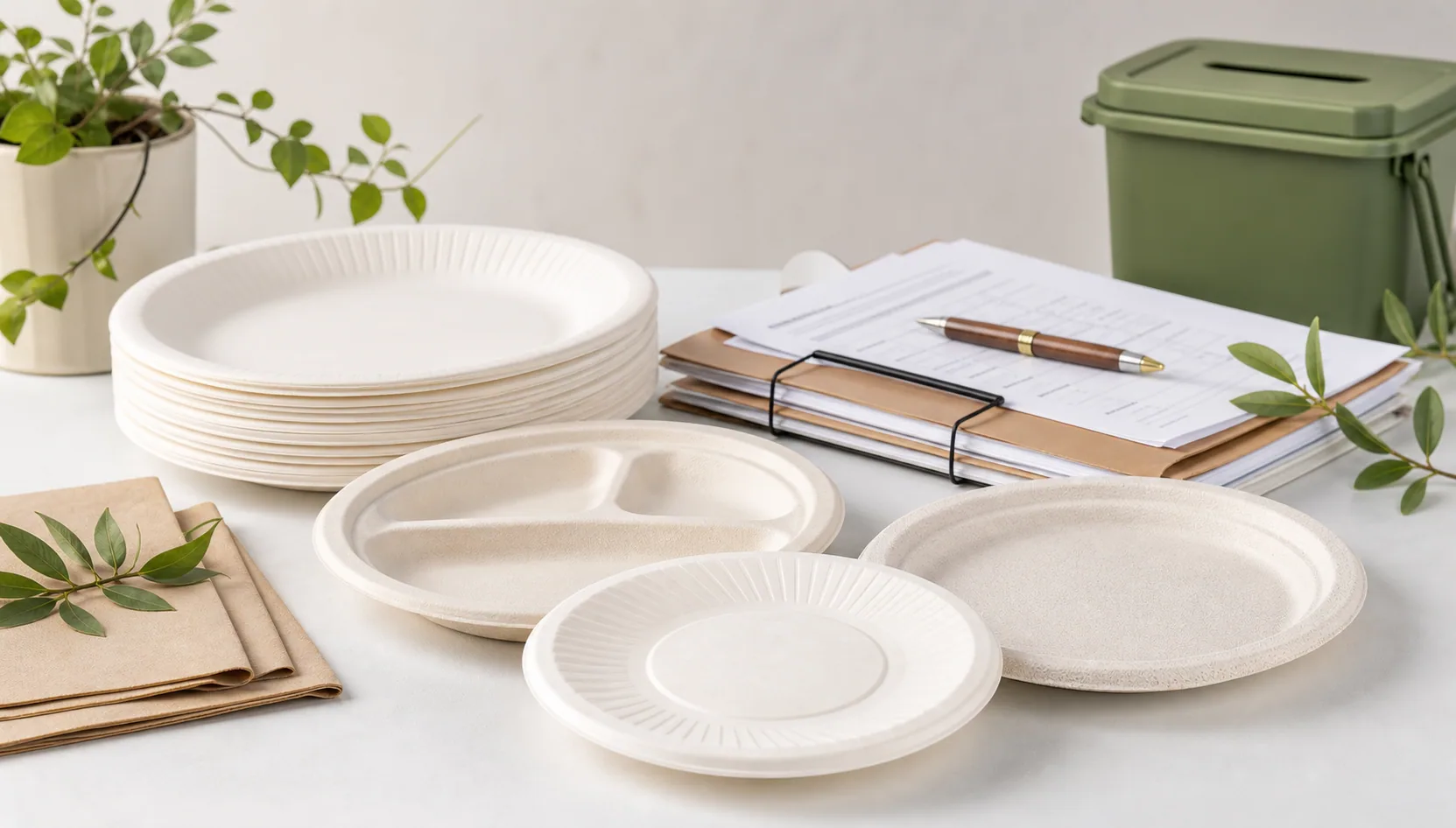
For hot meals, rice dishes, fried food, meal prep, and delivery entrees, bagasse food containers are often reviewed because molded fiber has a rigid hand feel and a natural presentation.
For lighter takeaway, bakery service, paper bags, food boats, bowls, and retail-style food packs, paper food containers may fit better.
The right answer depends on the food type, filling volume, oil level, sauce content, lid pressure, holding time, and delivery distance.
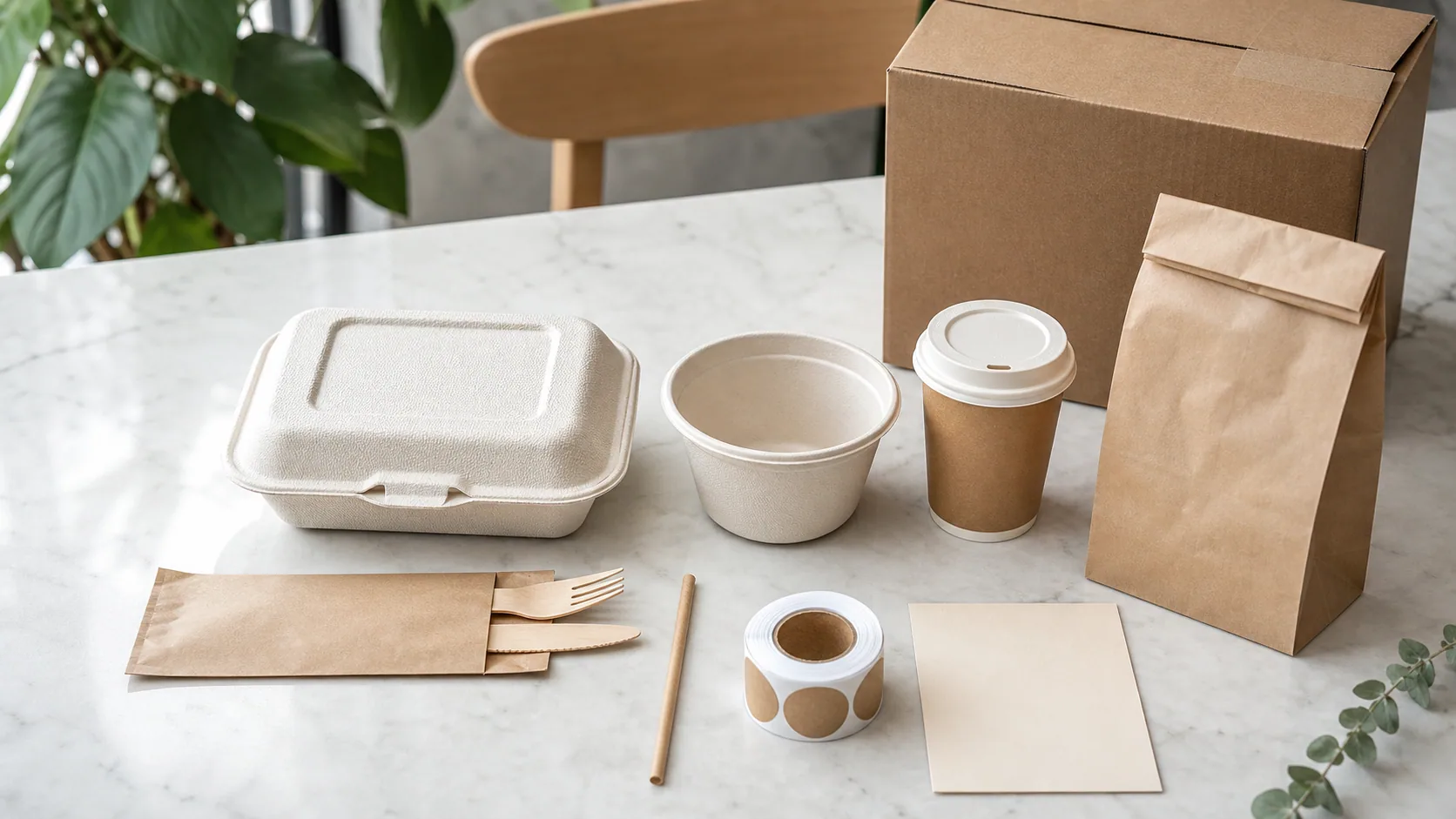
For a low-waste launch, the first sample set should be narrow. A new cafe does not need every container size on day one.
It may need one breakfast bowl, one bakery bag, one cup and lid combination, one cutlery option, and one sticker or sleeve route. A delivery brand may need two entree formats, one side container, one sealing method, and a carton plan that supports the expected first reorder.
Which Materials Fit the Actual Food and Service Model?
Material names are useful, but service conditions decide whether the finished item works. A container that looks good in a sample photo may fail if the food is oily, heavy, saucy, stacked for delivery, or held too long before handoff.
| Launch item | Practical use | What to confirm before scaling | TOGO product or service fit |
|---|---|---|---|
| Bagasse containers | Hot meals, rice dishes, lunch sets, takeaway entrees | Portion size, oil and moisture level, lid fit, compartment need, delivery time | Bagasse food containers, sample matching, carton packing review |
| Paper containers and bags | Bakery, salads, snacks, light takeaway, retail food packs | Coating, window or no window, label area, folding structure, grease exposure | Paper food containers, size review, packing count discussion |
| Wooden cutlery | Takeaway meals, catering, hotels, delivery kits | Length, strength, wrapper style, kit combination, carton mark | Wooden cutlery, wrapper proofing, bulk packing |
| Custom flag picks | Burgers, sandwiches, cupcakes, buffet labels, event trays | Stick height, flag size, artwork clarity, print side, food scale | Custom flag picks, artwork review, sample proofing |
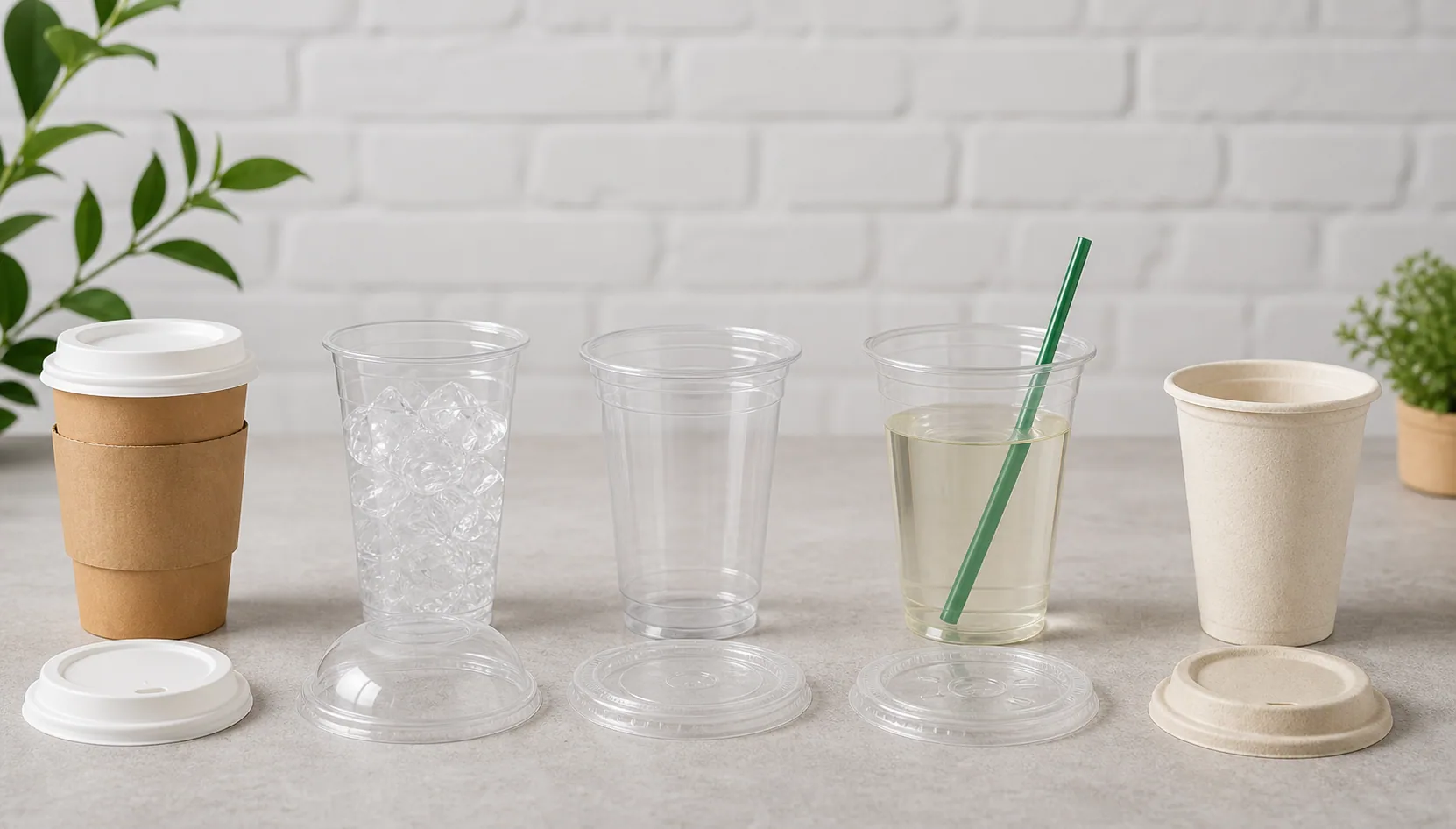
| Drink accessories | Coffee, cold drinks, catering beverages, bar service | Straw diameter, stirrer length, wrapper need, drink thickness, holding time | Straw and stirrer sample review, carton mark and private-label packing |
The goal is not to make every item use the same material. The goal is to make the whole service system work. A cafe may use paper cups, bagasse bowls, wooden stirrers, and kraft paper bags in the same launch if each item fits its actual use.
When Do Custom Details Make the Brand Easier to Recognize?
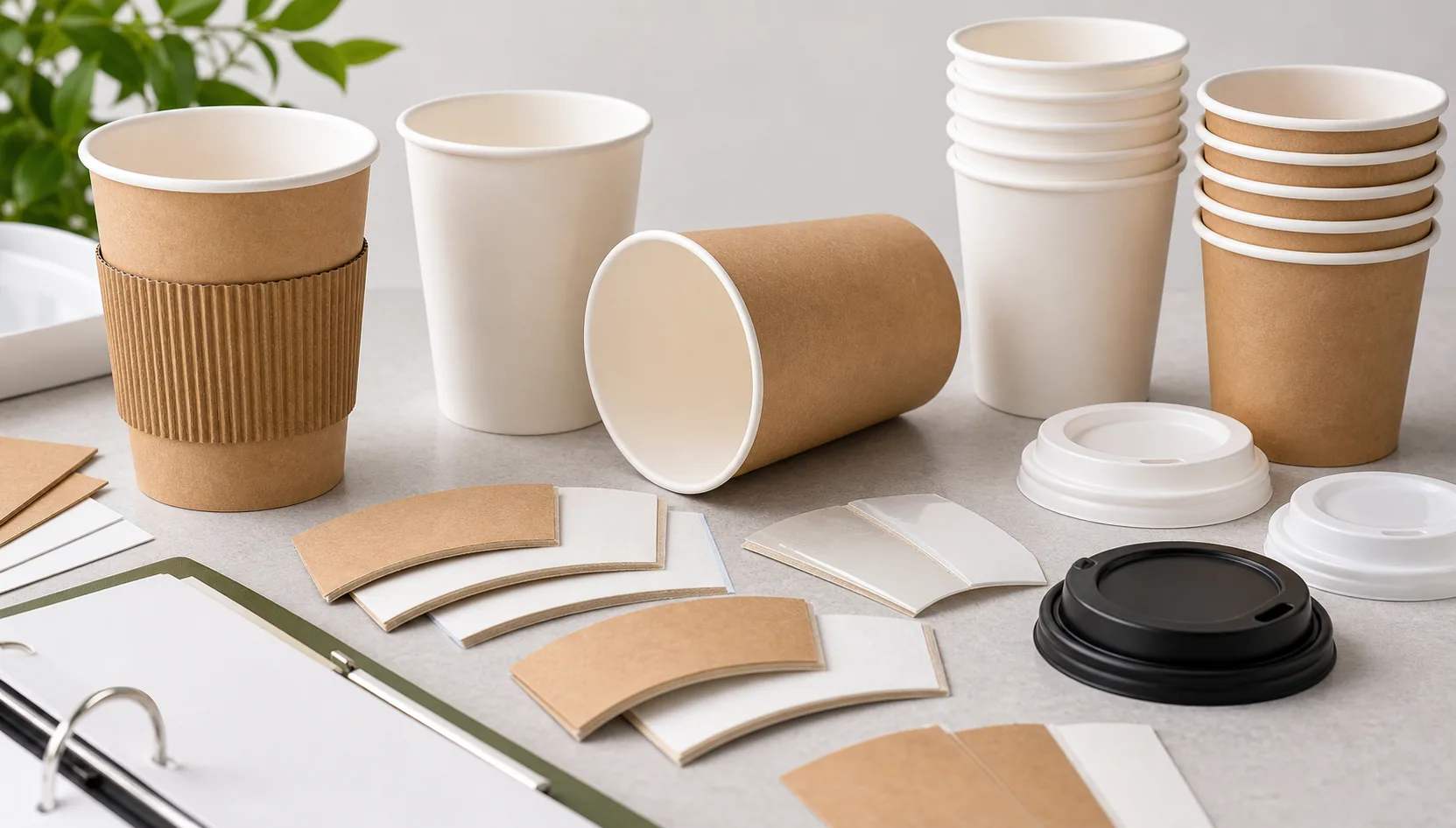
Custom packaging should be added where it improves recognition, service control, or repeat orders. A small logo sticker can be enough for the first month. A printed cup, sleeve, wrapper, or carton mark may be better once volume becomes predictable.
Useful custom details include:
- Printed paper sleeves for hot drinks
- Branded stickers for takeaway bags or clamshell seals
- Logo cutlery sleeves or wrapped cutlery kits
- Custom flag picks for burgers, sandwiches, desserts, and catering trays
- Carton marks for warehouse and distributor handling
- Private-label labels for retail packs or event packs
Custom details should not carry broad environmental claims unless the exact item supports them. The U.S. Federal Trade Commission's Green Guides are a useful reference point because environmental marketing claims need to avoid misleading wording.
In foodservice packaging, phrases such as "compostable," "recyclable," "PFAS-free," or "plastic-free" should be tied to the specific finished product, documentation, and disposal route.
How Can Uniforms and Small-Batch Merch Support the Launch?
Staff presentation also shapes the launch. Aprons, T-shirts, caps, hoodies, and event merchandise can make a cafe, food truck, hotel breakfast program, or pop-up event look more complete. But apparel inventory can become waste if the brand identity changes after the first season.
A practical route is to start with a small apparel set that matches the packaging colors and service style.
A cafe testing a seasonal campaign may use a small batch of aprons, T-shirts, or caps from a low MOQ clothing manufacturer in China instead of committing to a large apparel order before the concept is proven.
The logo position, fabric color, and packaging design should feel connected to the cups, food containers, labels, and carton marks used in daily service.
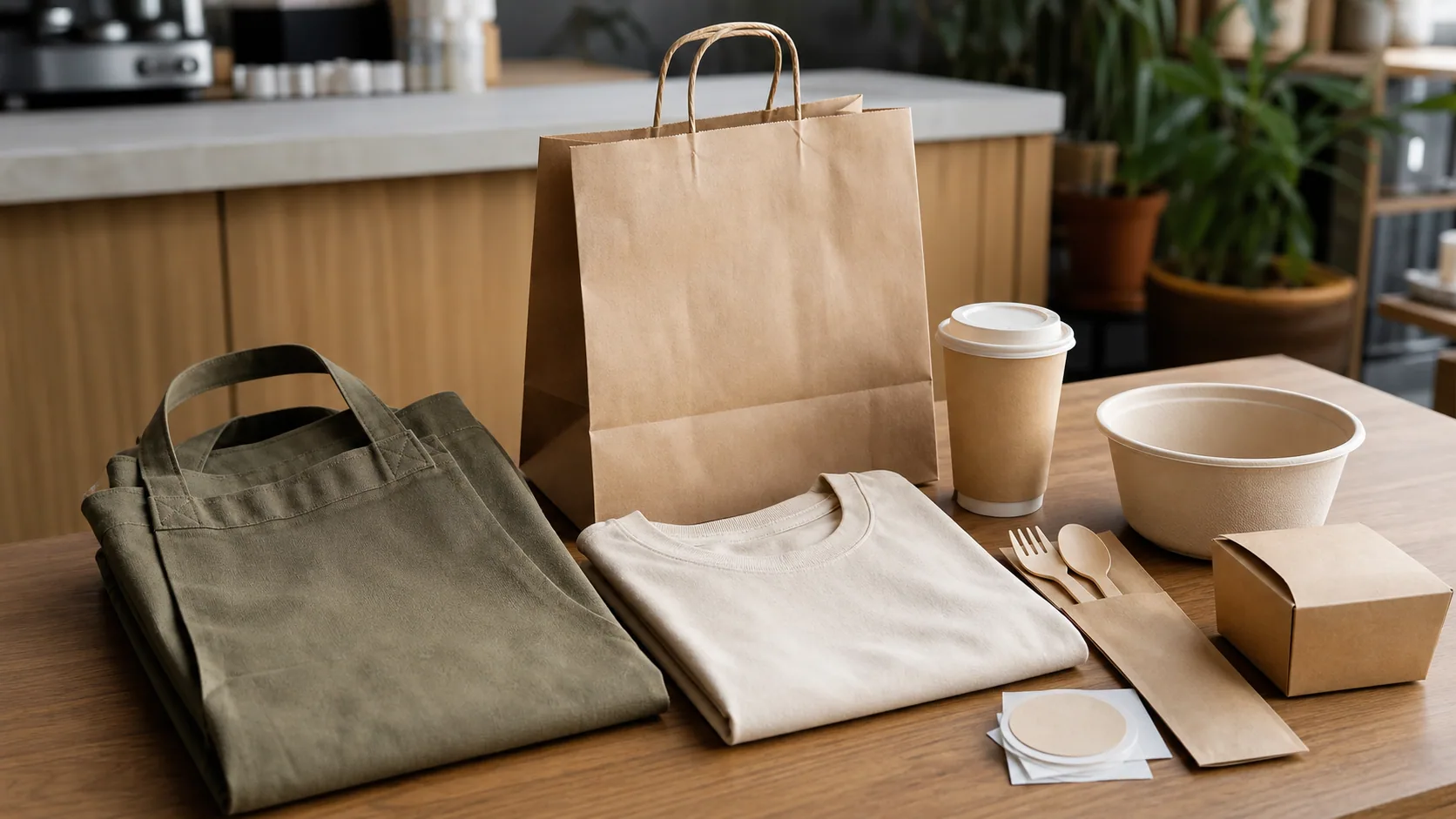
For merch, the same rule applies. Start with items that customers or staff will actually use. A launch T-shirt, a simple cap, or a reusable event tote may be enough. The first goal is not to create a full retail line. It is to test whether the brand detail supports the experience.
How Can a New Foodservice Brand Build the Launch in Phases?
A phased launch reduces waste because each decision is checked against real usage before it expands.
What Core Service Items Should Be Confirmed First?
Start with the smallest complete service set. A breakfast cafe may need hot cups, lids, paper bags, bagasse bowls, wooden stirrers, and napkin or label options.
A burger concept may need clamshells, cutlery kits, sauce cups, custom flag picks, and takeaway bags.
At this stage, TOGO can help review sample fit, container size, lid match, cutlery length, wrapper options, carton marks, and available product documents before the buyer confirms the first bulk order.
How Should Samples Be Tested in Real Service?
Test samples with actual food and drink. Check whether soup spills under lid pressure, whether a bowl stacks cleanly, and whether oily food leaves marks too quickly.
Also test whether the cutlery set feels strong enough and whether a drink accessory matches the service time.
This is also the right time to confirm claim wording. The U.S. FDA has published updates on PFAS used in grease-proofing agents for food packaging, but a buyer should still treat PFAS-free wording as a product-level documentation issue, not a general material nickname.
When Should Custom Packaging and Apparel Be Added?
Once the main packaging set works, add brand details. Printed stickers, sleeves, wrappers, carton marks, and flag picks are often easier to control than fully custom packaging at the first stage.
Staff apparel can be matched to the same color system so the counter, packaging, and service team look coordinated.
Which Items Should Be Scaled After the First Operating Period?
After the first operating period, review usage. Which container size runs out first? Which product receives complaints? Which item is over-ordered? Which printed detail is worth repeating? Which carton mark helps the warehouse or distributor?
The second order should be more precise than the first. It may increase the best-performing items, remove slow-moving sizes, and add custom printing only where the design has already been approved.
How Should Environmental Claims Stay Specific?
Low-waste branding works best when it uses clear, specific language. "Made from bagasse," "paper food container," "wooden cutlery," "available PFAS-free documentation," or "commercial composting where accepted" is usually more reliable than broad green slogans.
The wording should explain the material, document basis, or disposal condition.
Composting language needs particular care. The U.S. Environmental Protection Agency explains composting as a managed process, and disposal outcomes depend on collection systems and facility acceptance.
For foodservice packaging, this means compostability language should be tied to the finished SKU, certification scope where applicable, and the local disposal route, not treated as a universal outcome.
For TOGO orders, the most useful claim review usually happens at the sample and quotation stage. Buyers can share target market, required document type, packaging artwork, and preferred claim wording so the wording can be checked against available product information before printing.
What Should Go Into the Supplier Documentation Folder?
A low-waste launch also needs clean records. Without them, the second order becomes slower and less accurate.
The folder should include:
- Product specifications
- Approved sample photos
- Food-contact or available compliance documents
- Carton size and packing count
- Artwork files and print approvals
- Label, sticker, sleeve, or wrapper versions
- Carton mark requirements
- Supplier contact records
- Order quantities and reorder dates
- Destination-market notes
This folder helps restaurants, cafes, hotel groups, and distributors control repeat orders. It also reduces the risk of changing a container size, wrapper style, or claim phrase by accident.
What Would a Practical Cafe Launch Set Look Like?
A new cafe preparing hot drinks, breakfast bowls, and weekend pop-up events could begin with:
- Paper cups and matching lids for hot drinks
- Wooden coffee stirrers or selected drink accessories
- Bagasse bowls for breakfast items
- Paper bags for bakery and takeaway orders
- One custom sticker for bag sealing
- One apron or T-shirt set for staff
- One custom flag pick or label pick for event trays
- A documentation folder with specs, artwork, carton marks, and reorder notes
This set is small enough to test, but complete enough to make the brand feel intentional. If the cafe later adds delivery, catering, or retail packs, the second-stage sourcing plan can expand from real usage instead of guesswork.
FAQ
What packaging should a cafe or restaurant confirm first?
Start with the items that touch the food or drink every day: cups, lids, bowls, clamshells, bags, cutlery, straws, stirrers, and labels. Confirm samples with the actual menu before expanding custom printing.
Are bagasse containers suitable for every takeaway meal?
No single material fits every meal. Bagasse containers are commonly reviewed for hot meals, rice dishes, lunch sets, and takeaway entrees, but the exact choice depends on food weight, oil, moisture, sauce content, lid fit, and delivery time.
When should a new restaurant add custom packaging?
Custom packaging is easier to control after the core packaging sizes are confirmed. Many new brands start with stickers, sleeves, wrappers, or carton marks, then move to larger custom printing once demand and artwork are stable.
How can uniforms and merch support a low-waste launch?
Uniforms and merch support the launch when they are ordered in realistic quantities and match the brand system already used on packaging. Small-batch apparel helps test colors, logo placement, and customer response before larger production.
What should be included in a packaging RFQ?
A clear RFQ should include food type, serving temperature, expected holding time, target container size, lid requirement, order quantity, packing format, artwork, destination market, certificate or document needs, and target delivery term.
Can TOGO help with custom packaging details?
Yes. TOGO can review product samples, size matching, wrapper options, carton marks, artwork files, private-label packing, and available product documents before quotation or bulk production.
What Should You Send TOGO for Sample Review or RFQ?
For a cafe, restaurant, hotel, catering company, delivery brand, or distributor launch, TOGO can help review the packaging part of the launch plan before bulk ordering. Share your menu type, food temperature, portion size, expected service model, quantity, artwork, packing style, destination market, and document needs through the TOGO contact page.
A clearer brief makes the quotation more useful. It also helps the sample set match the real launch instead of creating excess inventory before the brand has tested daily service.