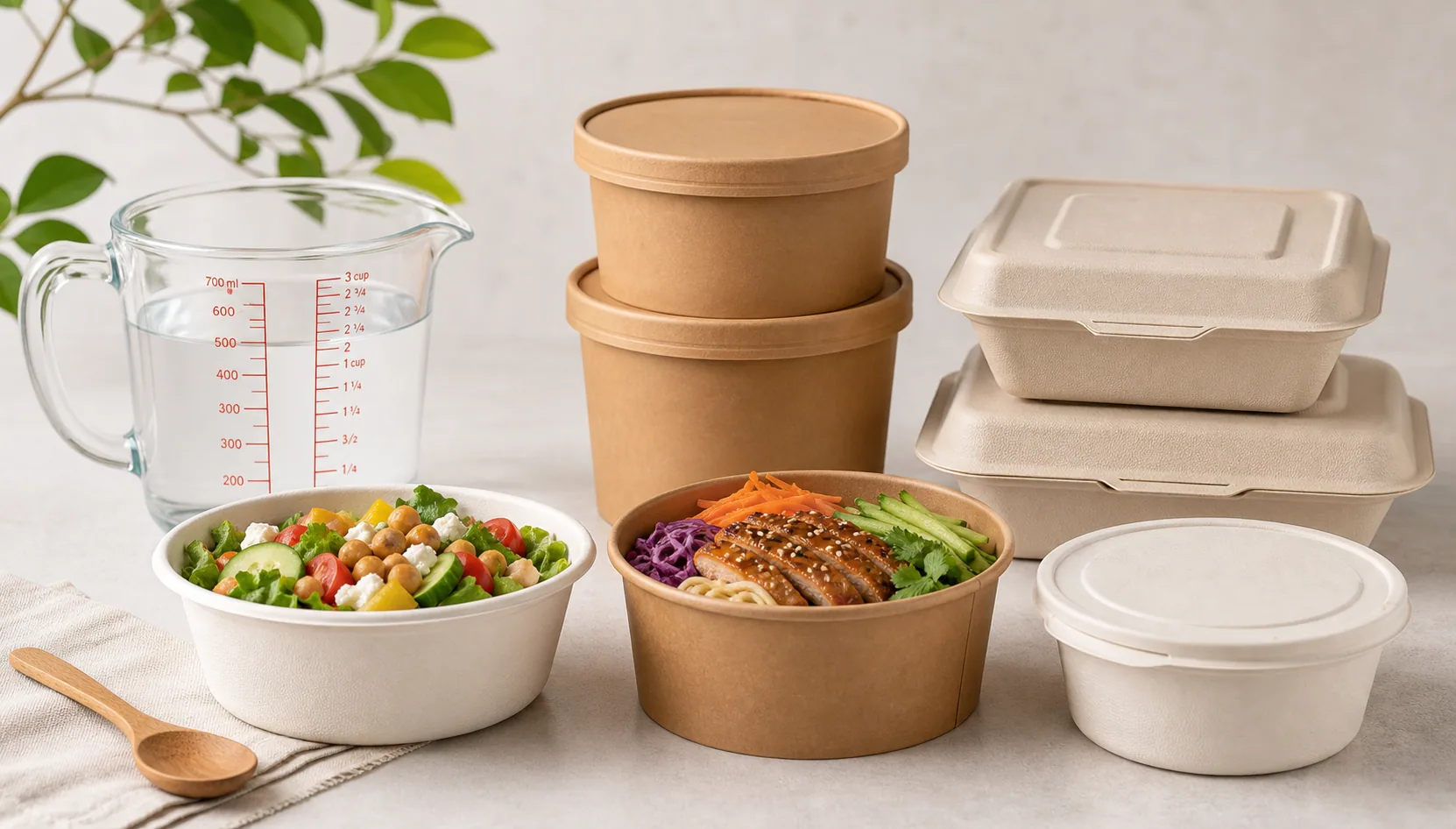
700 mL is about 23.7 US fluid ounces, or 2.96 US cups. In packaging catalogs, that puts it close to a 24 oz nominal container.
The correct pack may still be larger. Toppings, sauce movement, lid clearance and delivery handling can make a 32 oz bowl or container the better fit.
Compare the fill in TOGO's paper soup containers, paper bowls with lids and bagasse food containers before fixing the order size.
The conversion is based on the NIST reference of 29.57 mL per US fluid ounce: 700 mL is about 23.7 fl oz, and 8 fl oz equals one US cup. Packaging capacity remains nominal, so use the number as a comparison point rather than a guaranteed service fill.
What 700 mL Means in US Foodservice Units
700 mL is a metric liquid volume. In US foodservice language, it is close to 3 cups and close to 24 fluid ounces. Packaging catalogs may list the closest standard size as 24 oz, 750 mL, or sometimes a larger 32 oz format when headspace is needed.
Is 700 mL Closer to 24 oz or 32 oz?
700 mL equals about 2.96 US cups and about 23.7 US fluid ounces. For disposable bowls and takeout containers, it is usually closest to a 24 oz size, but the right product may be 24 oz or 32 oz depending on the food and lid.
For filled-sample comparison, consider the Biodegradable Bagasse Salad Bowl with Clear PET Lid or the 32oz Kraft Paper Food Container and Lid Combo, depending on whether the menu product is salad, rice, soup or a sauced dish.
| Metric volume | US cups | US fl oz | Closest packaging reference | Practical note |
|---|---|---|---|---|
| 500 mL | 2.11 cups | 16.9 fl oz | 16-18 oz container | Small entree or soup |
| 700 mL | 2.96 cups | 23.7 fl oz | 24 oz container | Good midpoint size |
| 750 mL | 3.17 cups | 25.4 fl oz | 24-26 oz container | Common EU/Asia reference |
| 946 mL | 4 cups | 32 fl oz | 32 oz container | US quart reference |
Nominal Capacity and Fill Line Are Different
A container may be listed by brim capacity, but foodservice operators rarely fill to the brim. Salad needs room for dressing, toppings and shaking. Noodles need headspace for a lid. Soup can expand or splash in delivery. Rice and curry are dense and may require stronger sidewalls or a tighter lid.
This is why you should test a 700 mL container at the intended fill line rather than only reading the nominal size. The FDA's food-contact framework separates material and use condition, including food types and conditions of use; that is a useful way to think about hot fill, cold fill, refrigerated storage and reheating statements.
Menus That Often Fit Near 700 mL
A 700 mL or 24 oz container often works for entree salads, rice bowls, poke bowls, noodle portions, large sides and prepared meals. It may be too large for a small soup cup and too small for bulky salads with high toppings.
For a clear-lid salad bowl, the visual fill level matters. For a paper food container, lid fit and stacking often matter more. For a bagasse bowl, oil and moisture exposure should be matched to the product structure and available documents.
Compare 24 oz and 32 oz With the Food Inside
700 mL is close to 23.7 US fluid ounces, so it often sits between a 24 oz pack and a 32 oz pack in real service. If the food is dense and filled close to the rim, 24 oz may look efficient on paper but feel tight once you add a lid. A 32 oz kraft paper food container is worth testing when your menu needs headspace, sauce control or a cleaner presentation.
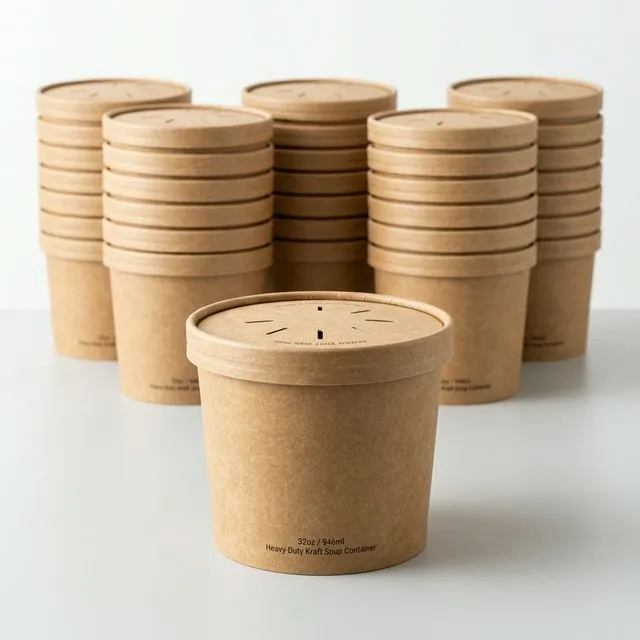
For soup, noodles or sauced sides, a kraft paper soup container with a vented lid helps you test whether 700 mL is a true serving size or only the liquid measure before foam, garnish and movement.
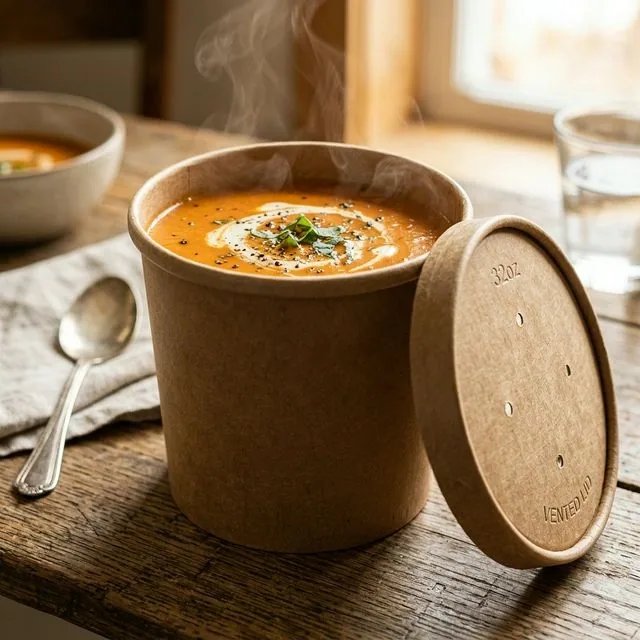
| 700 mL service condition | Better container direction | Why it matters in practice |
|---|---|---|
| Broth soup with little garnish | 24 oz or 26 oz option can be tested | Liquid fill may be predictable |
| Cream soup, curry or chili | 32 oz option is safer to compare | Thick foods climb the sidewall and need headspace |
| Salad with toppings | 32 oz clear-lid format | Visual height matters more than liquid volume |
| Rice bowl or noodle bowl | 32 oz bowl/container | Toppings and delivery movement need room |
| Retail meal prep | Test both 24 oz and 32 oz | Label weight, fill line and shelf appearance all matter |
The useful answer is not only "700 mL equals 2.96 cups." The useful answer is whether your food still looks intentional after the lid is closed and the container has been moved, stacked and opened again.
Turn the Number Into a Packaging Specification
A 700 mL inquiry often begins as a conversion question, but the useful output is a small specification note. Write down whether 700 mL is the recipe volume, the target customer portion, the maximum fill line, or the liquid measure before toppings. Those four meanings can point to different containers. A 700 mL noodle bowl with toppings may need the headspace of a 32 oz kraft paper food container, while a clear broth portion may stay closer to a smaller soup format.
| 700 mL means... | Packaging interpretation | Better inquiry detail |
|---|---|---|
| Recipe volume in the kitchen | Does not include delivery movement | Mention exact-fit and larger-size concerns |
| Target serving volume | Needs space for garnish and lid | Add headspace requirement to the quote request |
| Maximum fill line | Container must look intentional below the rim | Ask how the fill line should be checked |
| Label or retail net volume | Shelf appearance and label space matter | Include label area and display orientation |
| Liquid measure before solids | Solid ingredients change usable volume | Test with the actual prepared food |
For food-contact review, the FDA separates food types such as aqueous, oily and dry foods in its Food Types & Conditions of Use reference. That is a useful way to keep 700 mL from becoming a generic number. If the food is oily, acidic, hot filled or reheated, note that use condition next to the size request.
Common Reasons a 700 mL Pack Feels Wrong
A 700 mL order can go wrong when the number is treated as the product decision. If your kitchen measures the recipe in milliliters, the container still needs room for garnish, sauce movement, lid height and delivery handling. If the same meal is sold chilled and served hot, keep those two uses separate in the inquiry.
Before you approve the size, fill the container option with the real food, close the intended lid and move it the way it will move in service. Check whether the food still looks intentional after opening. If the label sits on the lid or sidewall, check that too. This is how the 700 mL question turns into a practical container choice instead of a math answer.
What TOGO Needs for a 700 mL Container Quote
Send TOGO the intended fill weight or fill volume, food type, topping height, lid style, reheating or holding expectation, packing style and where you plan to sell or use it. If the food is thick, oily or topped, mention that in the inquiry so TOGO can advise whether the container should stay near 24 oz or move up to 32 oz before quotation.
FAQ
How many cups is 700 mL?
700 mL is about 2.96 US cups, which is usually rounded to about 3 cups.
Is 700 mL the same as 24 oz?
It is close. 700 mL is about 23.7 US fluid ounces, so 24 oz is the closest common US packaging reference.
Should I use a 24 oz or 32 oz container for 700 mL food?
Use 24 oz when the food sits cleanly below the rim. Use 32 oz when the product needs headspace, toppings, sauce movement or a lid with more clearance.
Can TOGO quote by ml instead of oz?
Yes. For a clearer quote request, include both the metric fill target and the foodservice use case.