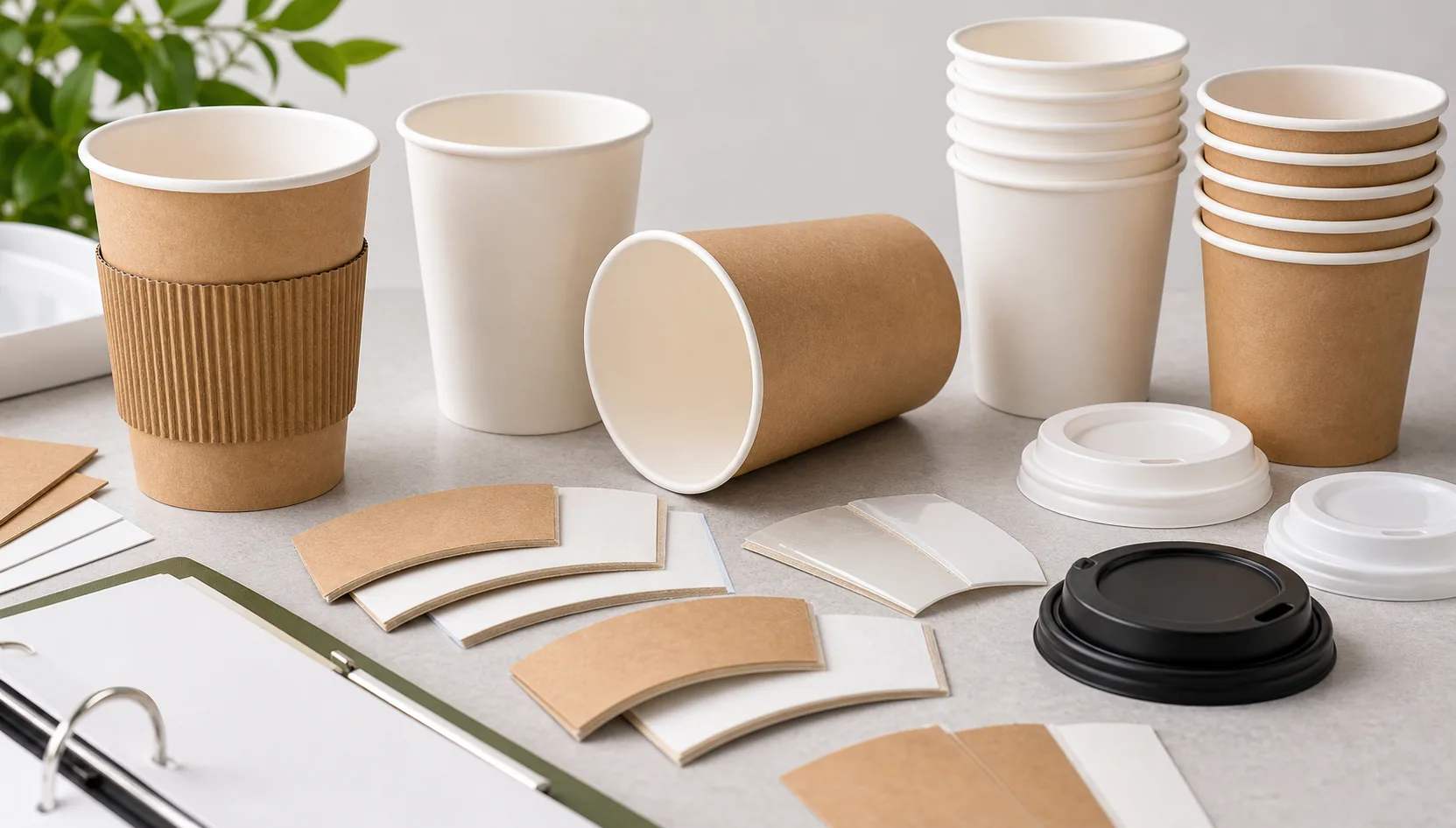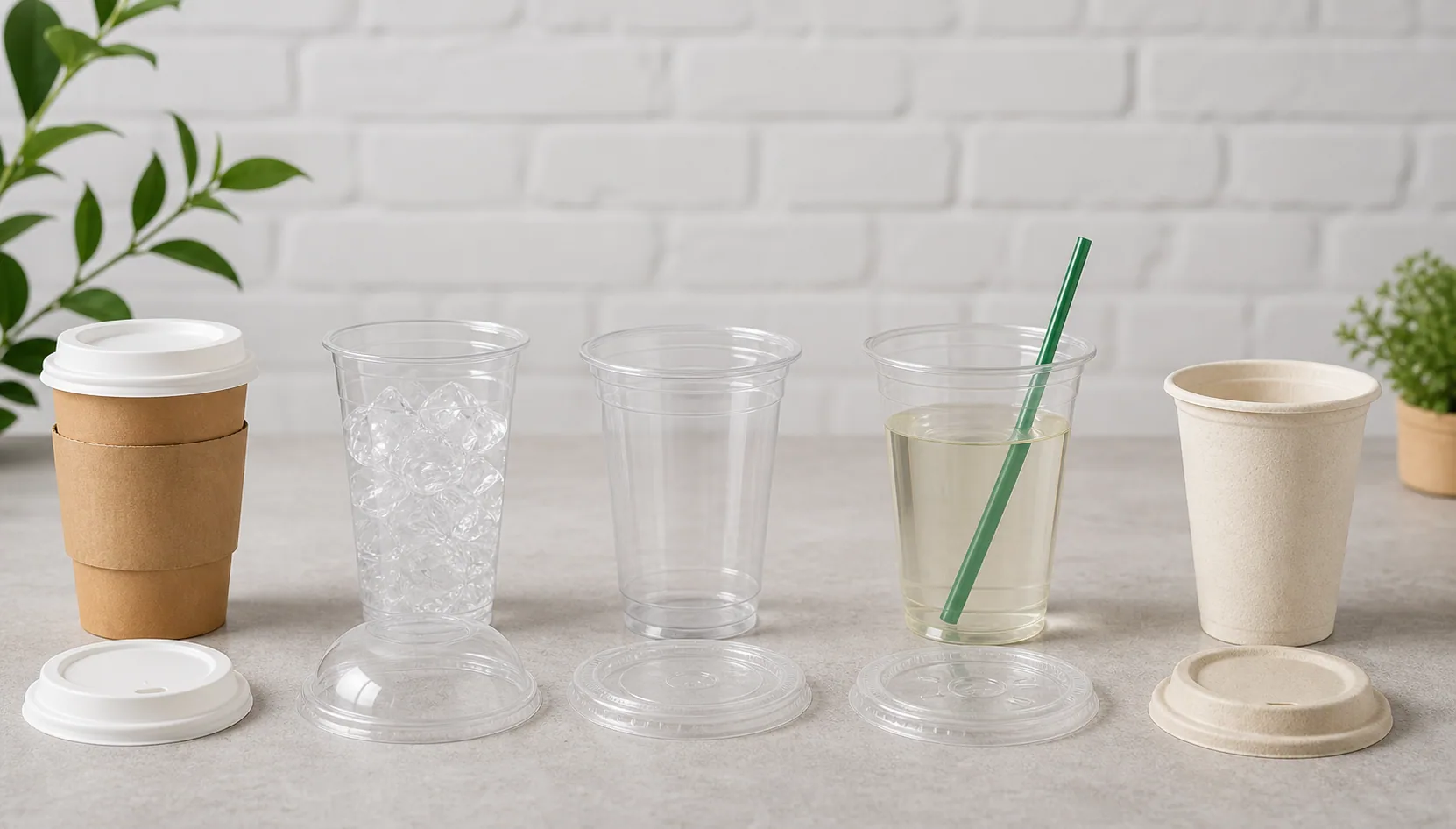
A cup lid materials guide for hot cup lids, cold drink lids, and cup lid wholesale programs that need reliable fit and clear documentation.
Summary: The right cup lid is chosen by drink condition first: hot beverage, cold drink, straw use, dome space, delivery movement, and cup rim. Material names matter, but fit, use condition, and documentation matter more.
What does this packaging term mean?
A cup lid is the top component of a disposable beverage package, designed around rim fit, drinking access, material behavior, stacking, and the intended drink condition.
What is the short answer?
Hot drinks usually need a stable sip lid, cold drinks often need straw access or dome clearance, and delivery drinks need the strongest sample review because movement reveals weak fit quickly. The lid should be matched to the exact cup, not chosen by material name alone.
TOGO can pair cup lids wholesale options with paper cups wholesale samples so the buyer can test rim fit, opening style, stacking, and carton count before confirming a cup lid wholesale order.
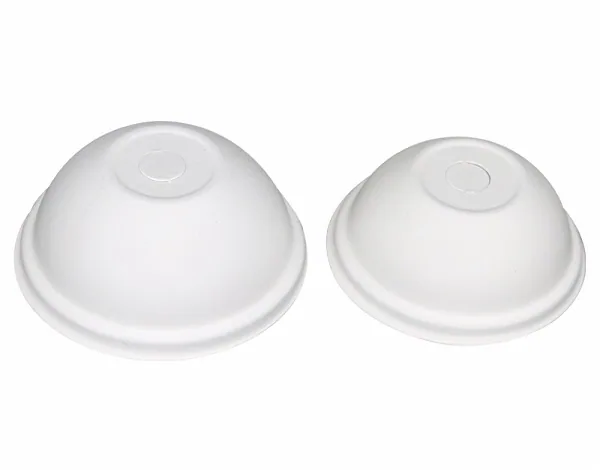
Why is cup lid material only one part of the decision?
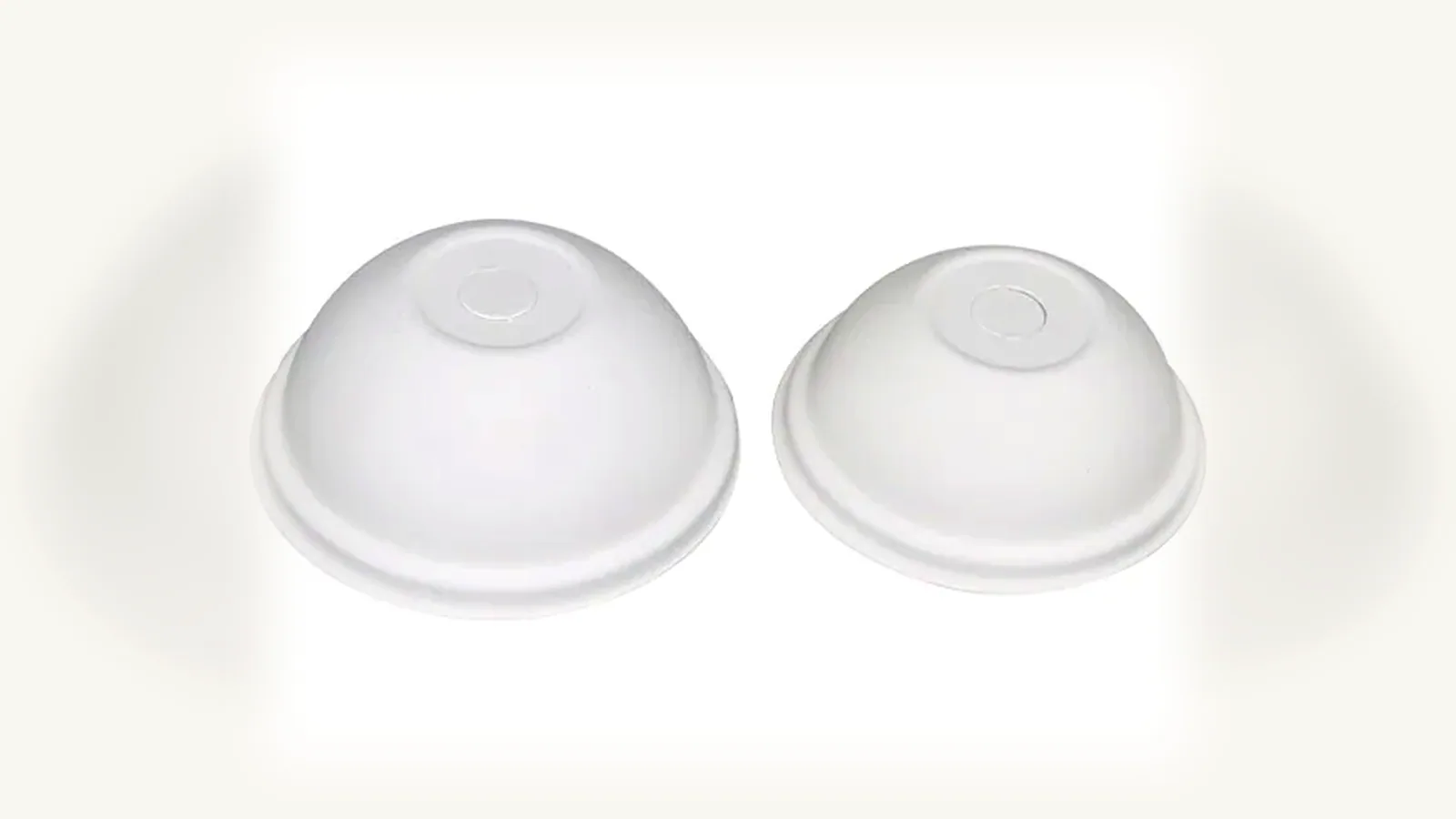
Lid material affects clarity, stiffness, heat feel, and claim wording, but a lid still has to lock onto the cup. A clear cold-drink lid that looks attractive may not be right for a hot drink, and a hot sip lid may not work for a smoothie or boba program.
Because lids are part of the food-contact package, the FDA packaging and food-contact substances resources and FDA food-contact guidance are useful reference points for keeping the review focused on the finished component and its intended use.
How do hot drink lids differ from cold drink lids?
A hot drink lid is usually judged by sip comfort, snap fit, venting, and whether the user can carry the cup without awkward pressure on the rim. A cold drink lid is more often judged by straw access, dome height, clarity, and how ice or toppings affect the drinking experience.
Claims should not move faster than the documentation. If a lid is described with recyclable, compostable, or plant-based language, the FTC Green Guides support the safer habit of qualifying the claim and tying it to the actual finished SKU.
What should be tested before delivery programs use a lid?
Delivery service adds time, motion, stacking, and bag pressure. A realistic sample check should include filling the cup, closing the lid, moving it in the expected carrier, and checking whether the lid edge lifts after handling.
For a TOGO quotation, the useful details are cup rim size, lid profile, drink type, fill temperature, delivery distance, packing count, and destination market. This is enough for TOGO to narrow the lid options before sample approval.
| Lid use | Common lid direction | Buyer confirmation |
|---|---|---|
| Hot coffee or tea | Sip lid with secure rim fit | Check sip opening, venting, sleeve need, and cup match. |
| Iced drink or juice | Flat or dome cold-drink lid | Check straw opening, clarity, ice, and stacking. |
| Delivery drink | Tighter fit chosen by sample test | Check movement, bag pressure, carton count, and complaint risk. |
What questions do buyers usually ask?
Are PLA lids always suitable for hot drinks?
No. Hot-drink suitability must be checked by finished SKU, material grade, cup match, and supplier documentation.
Do cold drink lids need a dome?
Only when the drink needs topping space, foam, whipped cream, or visual clearance. Many cold drinks work with flat straw-slot lids.
Can TOGO quote lids without cup samples?
TOGO can start the discussion, but final approval is stronger when the exact cup and lid are tested together.
What should you send for a TOGO quotation?
Send the cup rim size, drink type, lid profile, material preference, order volume, destination market, and delivery conditions. TOGO can then match lid samples and confirm practical packing details.