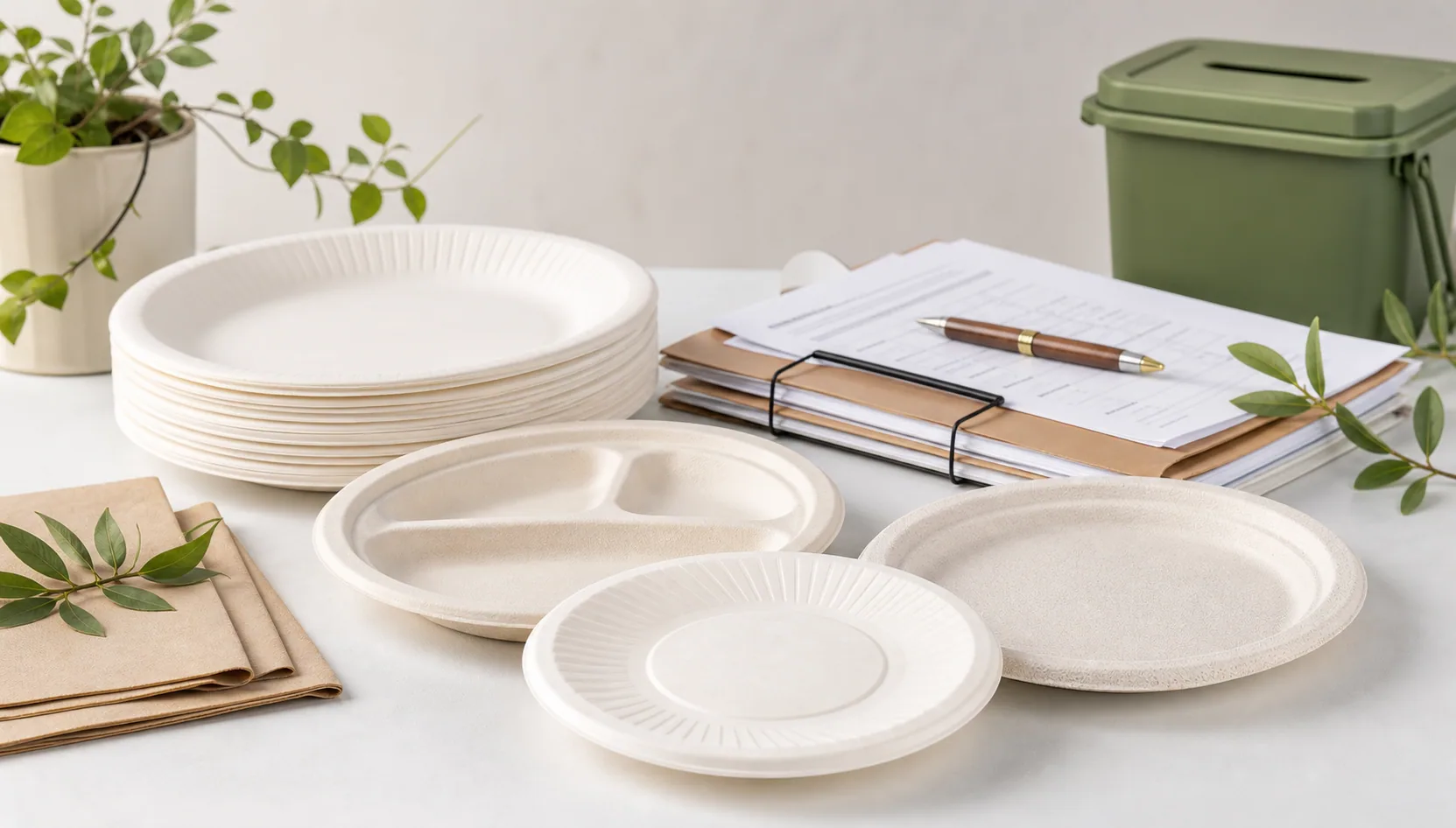
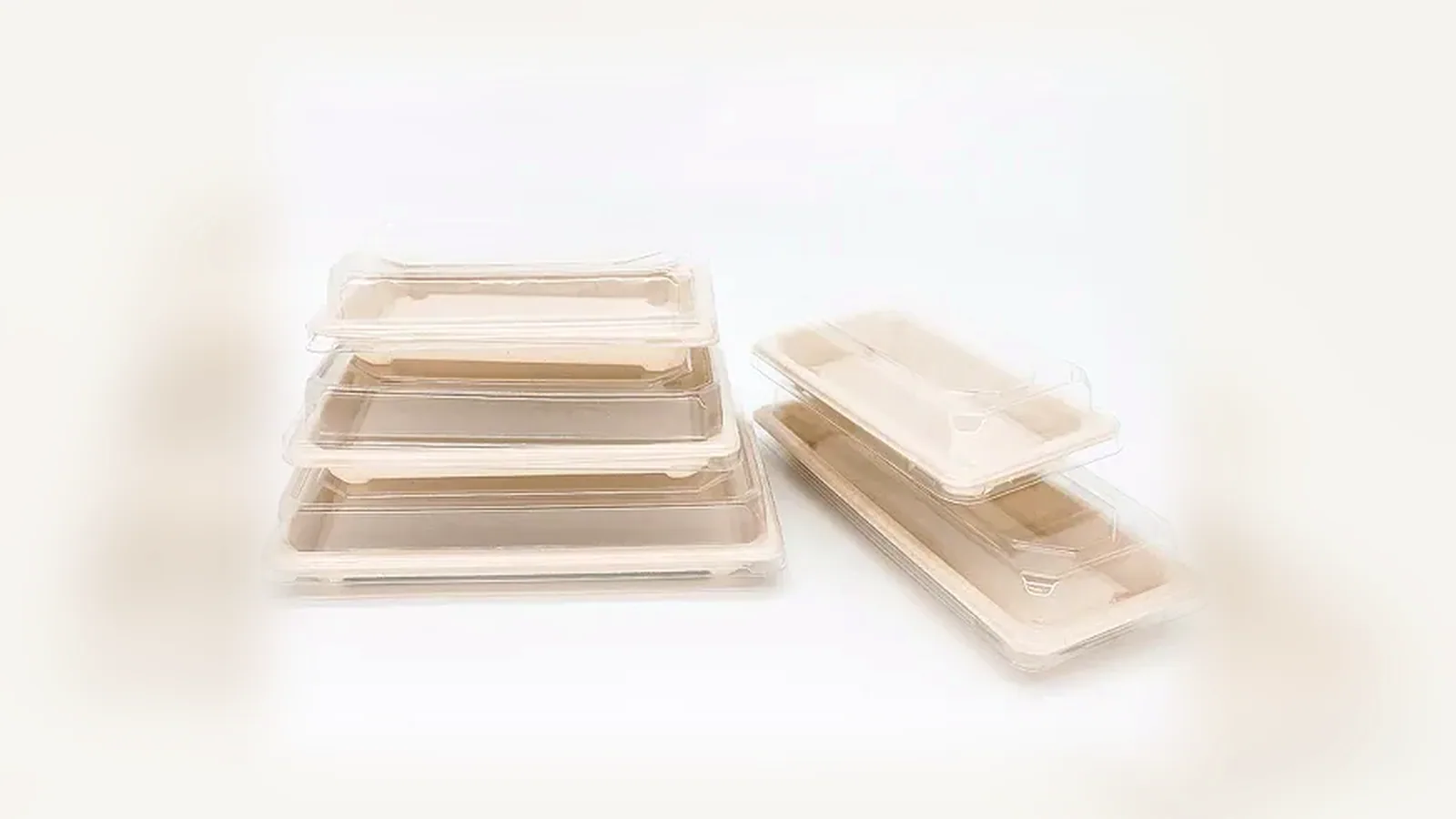
A practical guide to bagasse food trays, bagasse dishes, catering trays, and small portion dishes for foodservice presentation.
Summary: Bagasse food trays usually support larger meal, produce, sushi, meat, or catering formats, while bagasse dishes are better for small portions, appetizers, desserts, tasting menus, and event presentation.
What does this packaging term mean?
Bagasse food trays and dishes are molded sugarcane-fiber serving formats separated mainly by portion size, depth, food presentation, lid need, and packing style.
What is the short answer?
Bagasse trays are usually chosen for larger or flatter food formats, while bagasse dishes are chosen for small portions and presentation. The right choice depends on food weight, depth, lid need, stacking, and how the item will be displayed or transported.
TOGO can compare bagasse food trays and bagasse dishes options when a buyer needs one molded-fiber family for catering, retail packs, prepared food, or event service.
Why does portion size decide the format?
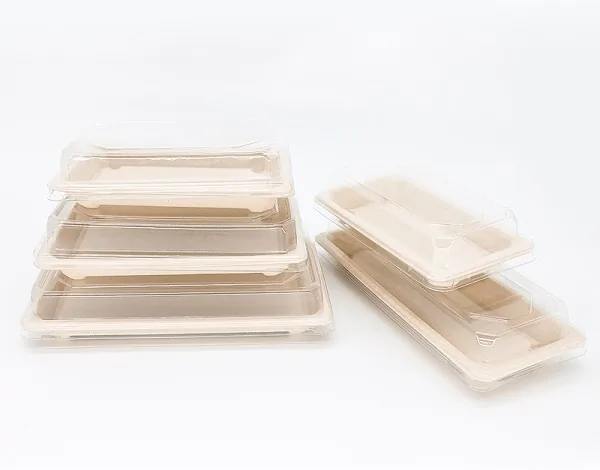
A tray is useful when the food needs surface area, separation, or a broader base. A dish is useful when the food is small, decorative, or served as a tasting portion. The difference is not only shape; it affects carton count, stack height, and how staff handle the product.
Since both formats may touch food directly, the FDA food-contact guidance is the right reference point for keeping the review focused on the finished product and intended food contact.
How should catering teams think about trays and dishes?
Catering teams often need a family of sizes: trays for meal prep, fruit, sushi, or deli service, and dishes for appetizers, desserts, sauces, or samples. A consistent material family can help presentation, but every SKU still needs its own fit and claim review.
If compostability language is considered, BPI compostability certification guidance and the FTC Green Guides support a qualified approach. A molded-fiber appearance is not a substitute for SKU-level documentation and local disposal context.
What should be included in the RFQ?
The useful details are food type, portion weight, expected holding time, whether a lid is needed, how the item will be displayed, and whether the buyer needs retail packing or bulk foodservice cartons.
TOGO can then recommend tray and dish samples that reflect the real service condition instead of sending a generic assortment that does not match the menu.
| Format | Better fit | Details to confirm |
|---|---|---|
| Bagasse food tray | Meal prep, sushi, fruit, produce, catering trays | Food weight, tray depth, lid, stacking |
| Bagasse dish | Appetizers, desserts, sauces, tasting portions | Portion size, presentation, carton count |
| Mixed tray and dish program | Events, hotels, distributors | Shared material story, separate SKU documents |
What questions do buyers usually ask?
Can bagasse trays be used for hot food?
Hot-food use should be confirmed by SKU, food type, holding time, and available documentation.
Are bagasse dishes only for desserts?
No. They can also fit appetizers, sauces, tastings, buffet portions, and small servings when shape and depth match the food.
Can TOGO quote trays and dishes as one program?
Yes. Share the menu, size range, lid needs, and packing plan so TOGO can build a practical sample set.
What should you send for a TOGO quotation?
For bagasse trays and dishes, send food use, size range, lid need, display or delivery condition, quantity, carton count, and destination market. TOGO can align samples with the actual catering or retail program.