The Fast Food Giants Are Moving—And Here's What You Can Learn
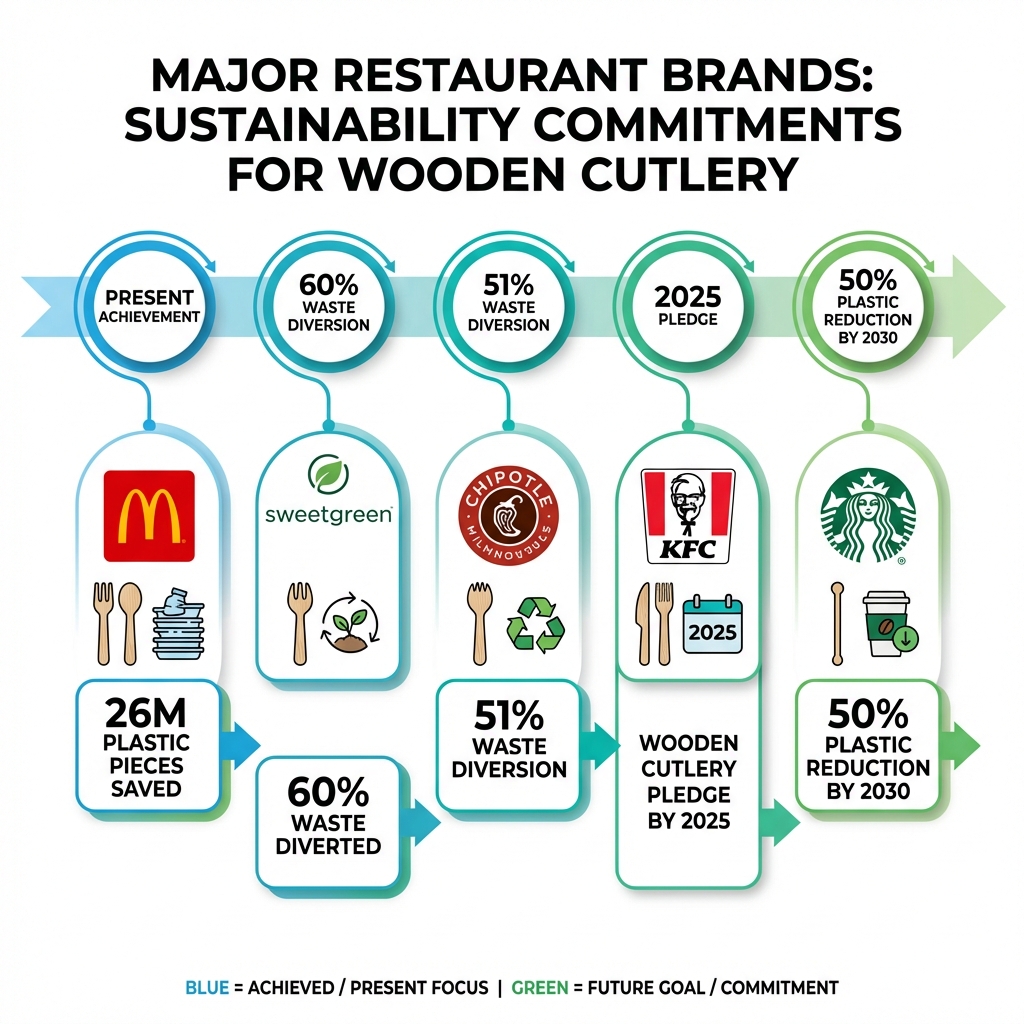
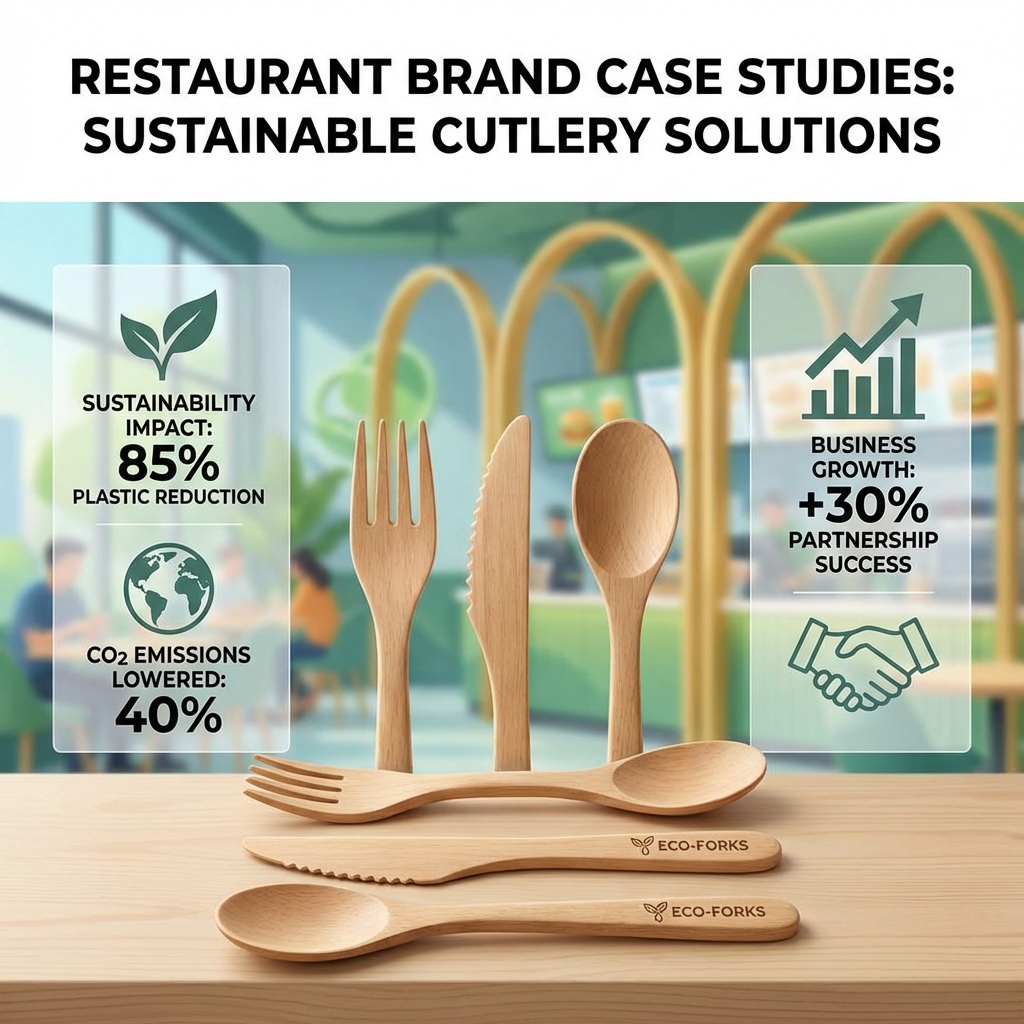
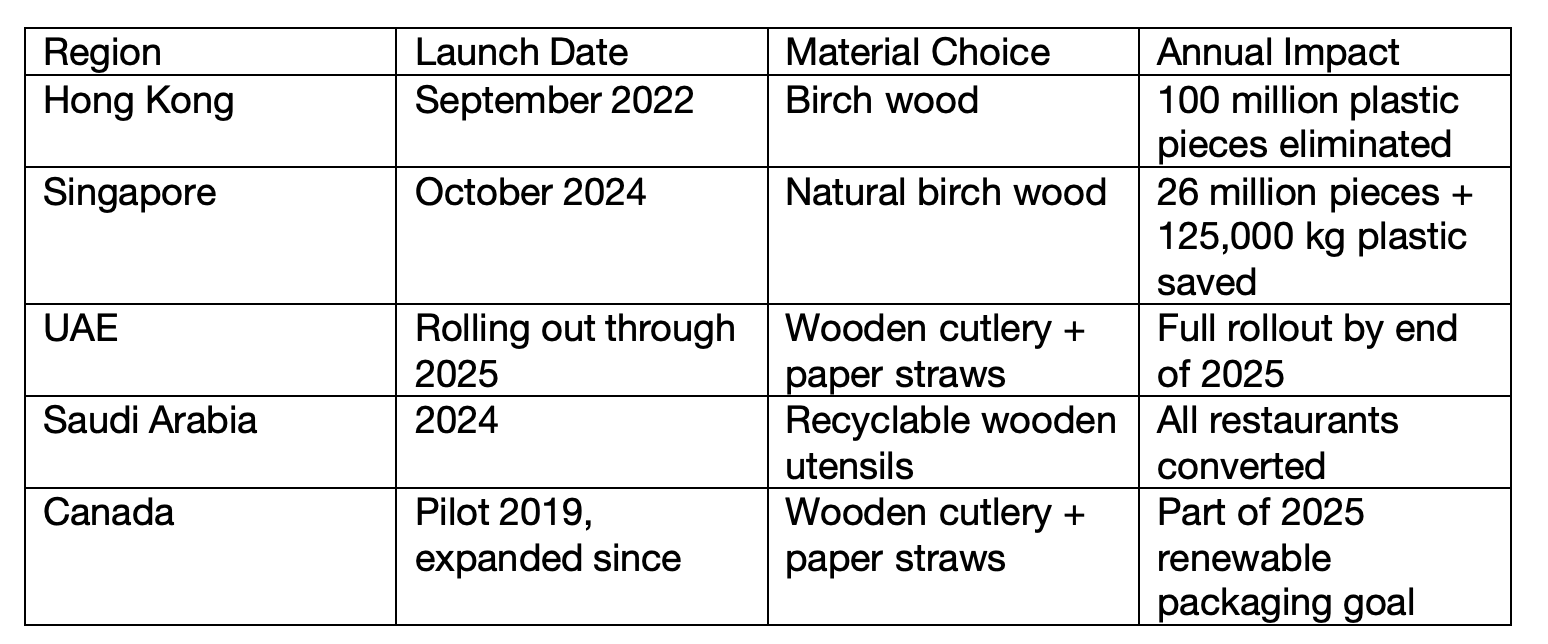
When McDonald's Singapore announced they'd eliminate 26 million pieces of plastic cutlery per year by switching to birch wood, the food service industry took notice. When Hong Kong's McDonald's followed with 100 million pieces annually, it became clear: this isn't a trend—it's the new standard.
But here's what the press releases don't tell you: the operational challenges, the vendor negotiations, the customer education, and the ROI calculations that made these transitions work.
We've analyzed how the world's biggest restaurant chains executed their sustainable cutlery transitions. This isn't theory—it's a playbook from brands that serve billions of customers annually.
Case Study 1: McDonald's — The Global Playbook
The Scale of Change
McDonald's operates over 40,000 restaurants worldwide. Their plastic-to-wood transition has happened market-by-market, providing a fascinating study in regional implementation.
What McDonald's Got Right
1. Choosing the Right Material
McDonald's Singapore explicitly stated their wooden cutlery is made from "natural birch wood, free of oils, chemicals, or additives." This matters because:
· It ensures EU/global compliance
· It avoids the PLA trap (still classified as plastic)
· Natural birch is proven durable for hot foods
2. Clear Communication
McDonald's didn't hide the change or apologize for it. In Singapore, they launched the "Go Green for Good" campaign, positioning the switch as a positive brand evolution rather than a sacrifice.
3. Not a Cost-Cutting Exercise
McDonald's Singapore specifically noted that "this is not a cost-cutting measure." Wooden cutlery costs more than plastic. They absorbed the cost difference because:
· Customer perception value outweighs the cost
· Regulatory compliance is non-negotiable in key markets
· Brand reputation has long-term financial value
Lessons for Your Business
· Volume matters: McDonald's negotiated competitive pricing through massive volume commitments
· Phase it in: Regional rollouts allow for learning and adjustment
· Own the narrative: Frame the switch as progress, not inconvenience
Case Study 2: KFC — The 2025 Deadline Strategy
The Commitment
In January 2019, KFC made a bold global pledge: by 2025, all plastic-based, consumer-facing packaging—including cutlery—would be recoverable or reusable.
Unlike some vague corporate sustainability statements, KFC's commitment was specific:
· Covers container lids, plastic bags, straws, and cutlery
· Applies globally, not just in regulated markets
· Backed by supplier and franchisee collaboration
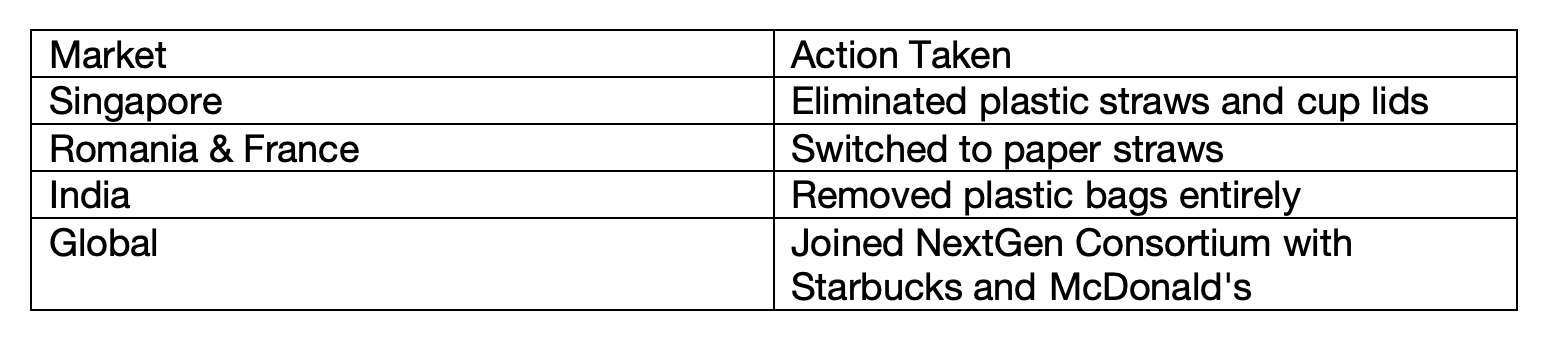
Regional Implementations
The NextGen Consortium Advantage
KFC joined the NextGen Consortium alongside Starbucks and McDonald's—an industry group focused on developing recyclable and compostable food packaging. This collaborative approach offers:
· Shared R&D costs for new materials
· Collective bargaining power with suppliers
· Industry-wide standards that benefit everyone
Lessons for Your Business
· Set public deadlines: External accountability drives internal action
· Collaborate with industry peers: You don't have to figure everything out alone
· Think beyond cutlery: A holistic packaging strategy is more impactful
Case Study 3: Sweetgreen — The Premium Positioning Play
The Approach
Sweetgreen took a different path from QSR giants. As a fast-casual chain focused on health-conscious consumers, sustainability isn't a corporate requirement—it's the brand identity.
Their Stats:
· All customer-facing items (forks, lids, bowls, bags, cups, straws) are certified compostable
· Composting services operate in all stores
· 60% of total waste diverted from landfills
· 75% of food scraps composted
Material Selection: Beyond Just "Eco"
Sweetgreen actively avoids PLA in favor of truly sustainable materials:
· Partnered with Footprint for bagasse-based containers (sugarcane waste)
· PFAS-free (no "forever chemicals")
· Exploring wood pulp for straws
They're publicly transparent about what they're still working on—replacing PLA, paper, and sugarcane fiber with even greener alternatives.
The Premium Payoff
Here's the business insight: Sweetgreen's average check is significantly higher than traditional fast food. Their sustainability investment supports premium pricing.
Customers who pay $15 for a salad expect compostable forks. The cutlery becomes part of the value proposition, not an afterthought.
Lessons for Your Business
· Sustainability can justify premium pricing
· Transparency builds trust (admitting what you're still working on)
· Composting infrastructure multiplies the value of compostable products
Case Study 4: Chipotle — The Early Mover Advantage
The Timeline
Chipotle was ahead of the curve. Back in 2008—before most chains were even discussing plastic reduction—they began piloting compostable cutlery made from bioplastic resin.
Their Current Commitments:
· Reduce plastic content in cutlery by 20%
· All consumer-facing packaging recyclable, compostable, or reusable by 2025
· Achieved 51% waste diversion from landfills (exceeding their 50% goal)
· Targeting 55% waste diversion by 2025
The Biodegradable Serviceware Stack
Chipotle's sustainable dining experience includes:
· Plant-based bowls
This integrated approach means every touchpoint reinforces the brand message.
Early Mover Benefits
By starting in 2008, Chipotle:
· Built supplier relationships before demand spiked
· Refined their approach through years of testing
· Established sustainability credentials before competitors
· Avoided scrambling when regulations tightened
Lessons for Your Business
· Start now, even if small: Pilot programs teach you more than planning
· Integrated sustainability is more powerful than piecemeal changes
· Early movers get supplier priority when demand surges
The Common Thread: Why Wood Wins
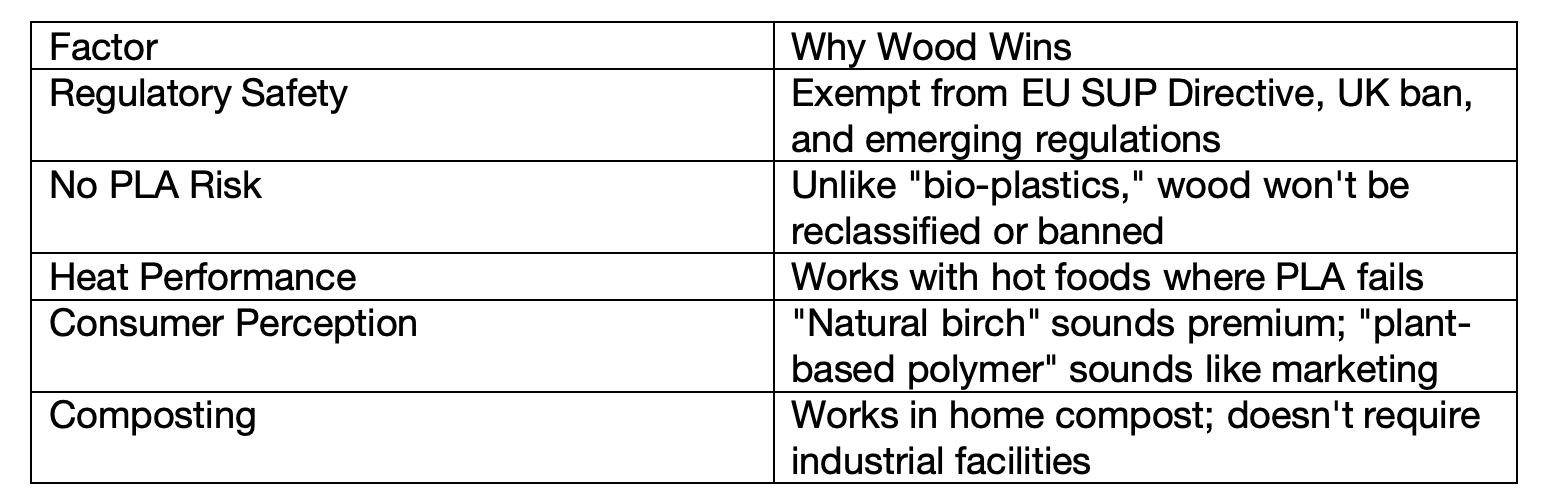
McDonald's specifically chose "natural birch wood, free of oils, chemicals, or additives." That's not an accident—it's deliberate material science and regulatory strategy combined.
Your Implementation Roadmap
Based on these case studies, here's a practical transition plan:
Phase 1: Research (Month 1)
· Audit current plastic cutlery usage (volume, cost, suppliers)
· Identify regulatory requirements for your markets
· Request samples from wooden cutlery wholesale suppliers
· Calculate cost differential and budget impact
Phase 2: Pilot (Months 2-3)
· Select 2-3 test locations
· Train staff on new products and messaging
· Collect customer feedback
· Monitor operational issues (storage, dispensing, breakage)
Phase 3: Negotiate (Month 4)
· Use pilot data to negotiate volume pricing
· Secure supply commitments
· Finalize specifications (size, packaging, certifications)
Phase 4: Roll Out (Months 5-6)
· Phase implementation by region or store cluster
· Launch customer communication campaign
· Update marketing materials with sustainability messaging
Phase 5: Optimize (Ongoing)
· Track waste reduction metrics
· Publicize impact (like McDonald's "26 million pieces" stat)
· Explore complementary sustainability upgrades
Cost Reality Check
Let's be honest about the numbers:

But consider the offsetting factors:
· Regulatory compliance costs avoided
· Brand value enhancement
· Customer loyalty from sustainability-conscious consumers
· Future-proofing against tightening regulations
· Marketing value of "X million pieces of plastic eliminated"
McDonald's called it out directly: "This is not a cost-cutting measure." They're investing in brand equity and regulatory alignment.
How ToGoTableWare Supports Your Transition
We've supplied wooden cutlery to food service chains across Asia, Europe, and North America. Here's what we offer:
Product Range
· Birch Wood Cutlery — Same material choice as McDonald's Singapore
· Bamboo Products — Premium option for upscale positioning
· Custom Sizes — 96mm to 190mm to match your service style
Enterprise Support
· Volume pricing for high-volume buyers
· Complete certification package (FSC, FDA)
· Custom branding and packaging
· Dedicated account management
Proven at Scale
We understand the logistics of serving chains with hundreds of locations. Our supply chain is built for consistency and reliability.
The Question Isn't If, But When
McDonald's, KFC, Starbucks, Sweetgreen, Chipotle—these aren't fringe environmentalist brands. They're mainstream giants who've made the calculation: the cost of not switching exceeds the cost of switching.
The brands that move first capture the narrative. The brands that wait scramble to catch up.
Your customers are already eating with wooden cutlery at McDonald's. The question is whether your brand will lead or follow.
Ready to start your transition?