
A restaurant chain in California once ordered 10,000 "9-inch plates" from an overseas supplier. When the shipment arrived, the plates measured 23cm - technically correct, but the actual usable surface was smaller than expected due to wide rims. The order cost $4,200 plus another $800 in return shipping.
The problem wasn't the conversion. It was not understanding how suppliers measure plates and what those measurements actually mean for your food service needs.
Why Plate Dimensions Matter
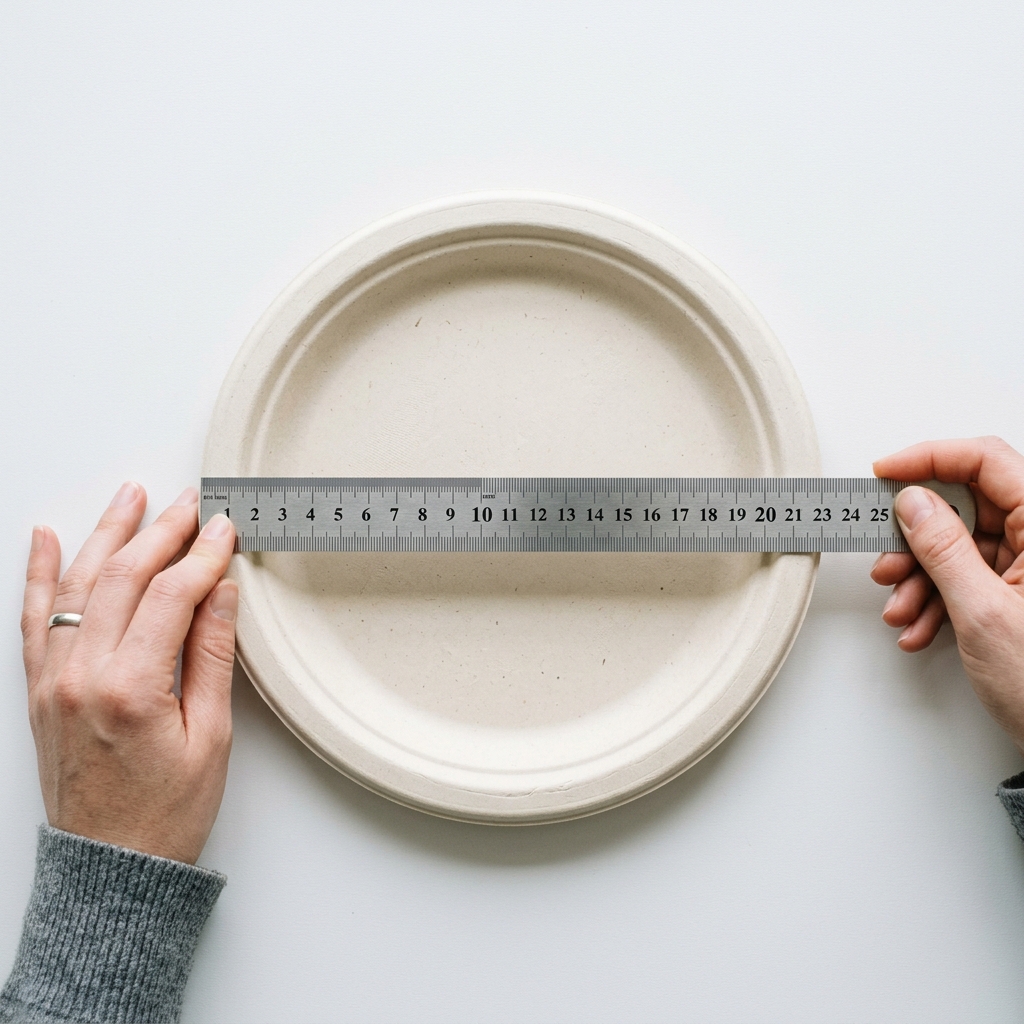
Plate size affects three things: food presentation, customer satisfaction, and cost per serving. According to research from Cornell University's Food and Brand Lab, the same portion looks 18% smaller on a 10-inch plate compared to a 9-inch plate, affecting perceived value.
For bulk orders, a 1-inch difference in diameter changes your per-unit cost by 15-25% and affects storage space. A case of 9-inch plates stacks 20% higher than 10-inch plates, impacting warehouse capacity.
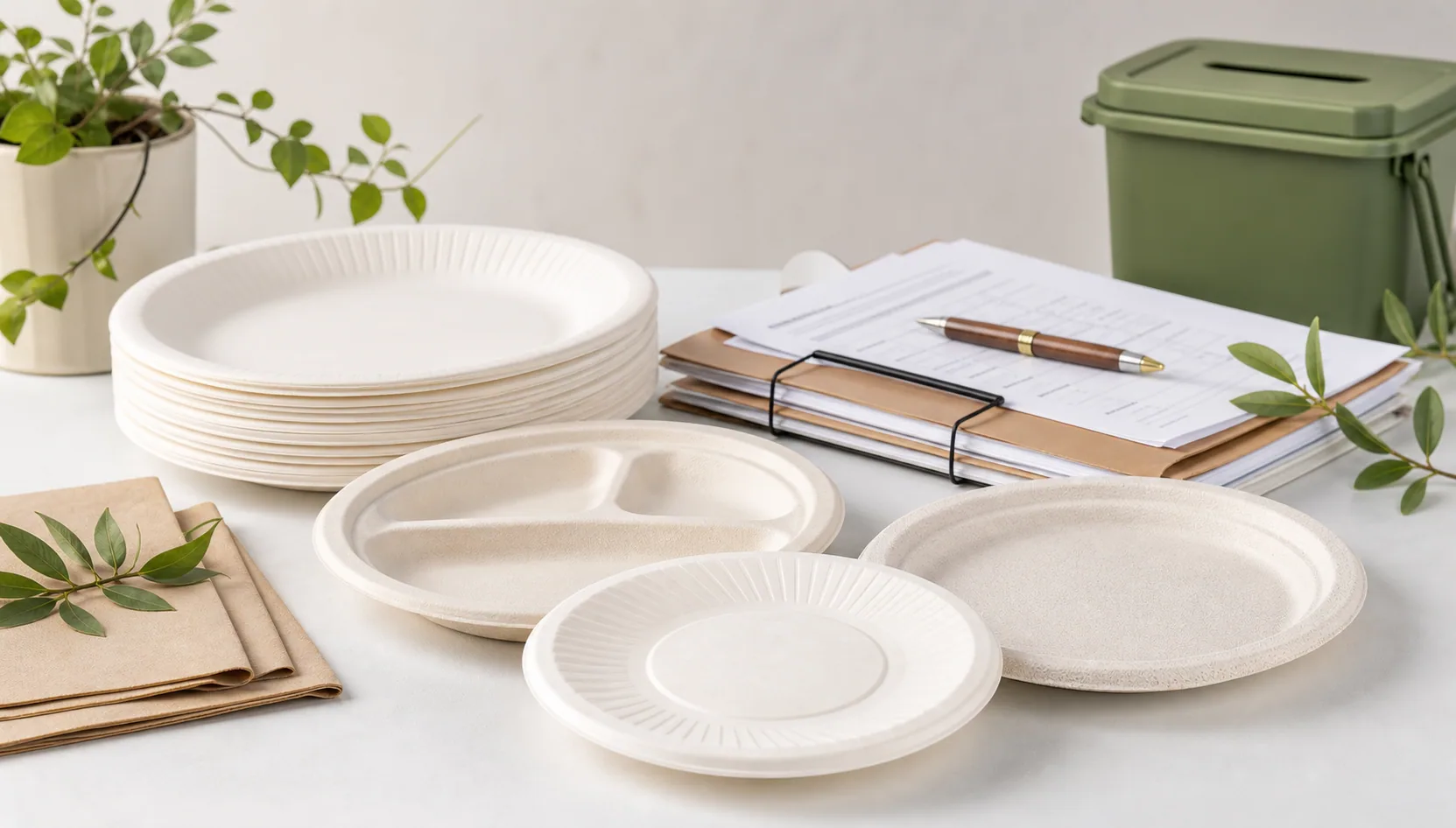
Material also matters. Bagasse plates (made from sugarcane fiber) typically have thicker rims than plastic plates. A 9-inch bagasse plate might have 1.5 inches less usable surface than a 9-inch plastic plate. Our bagasse plates specify both outer diameter and usable surface area to avoid confusion.
Standard Plate Sizes: Inches to Centimeters
The food service industry uses six standard sizes. These measurements represent the top diameter (outer edge), not the base or usable surface.
Plate Type | Inches | Centimeters | Typical Use |
|---|---|---|---|
Dessert/Bread | 6" | 15 cm | Appetizers, desserts, bread |
Salad | 7" | 18 cm | Side salads, small portions |
Lunch | 8" | 20 cm | Light meals, sandwiches |
Dinner | 9" | 23 cm | Standard entrées |
Large Dinner | 10" | 25 cm | Large portions, sharing |
Charger | 12" | 30 cm | Presentation base |
Source: National Restaurant Association Equipment Standards, 2024
The conversion formula is simple:
Inches to centimeters: multiply by 2.54
Centimeters to inches: divide by 2.54
So 9 inches × 2.54 = 22.86 cm, which manufacturers round to 23 cm.
Quick conversion: Use our Product Spec Pro Converter to instantly convert any plate dimension and compare supplier specifications.
How Suppliers Measure Plates
Not all "9-inch plates" are identical. Suppliers measure differently, and those differences matter when you're ordering thousands of units.
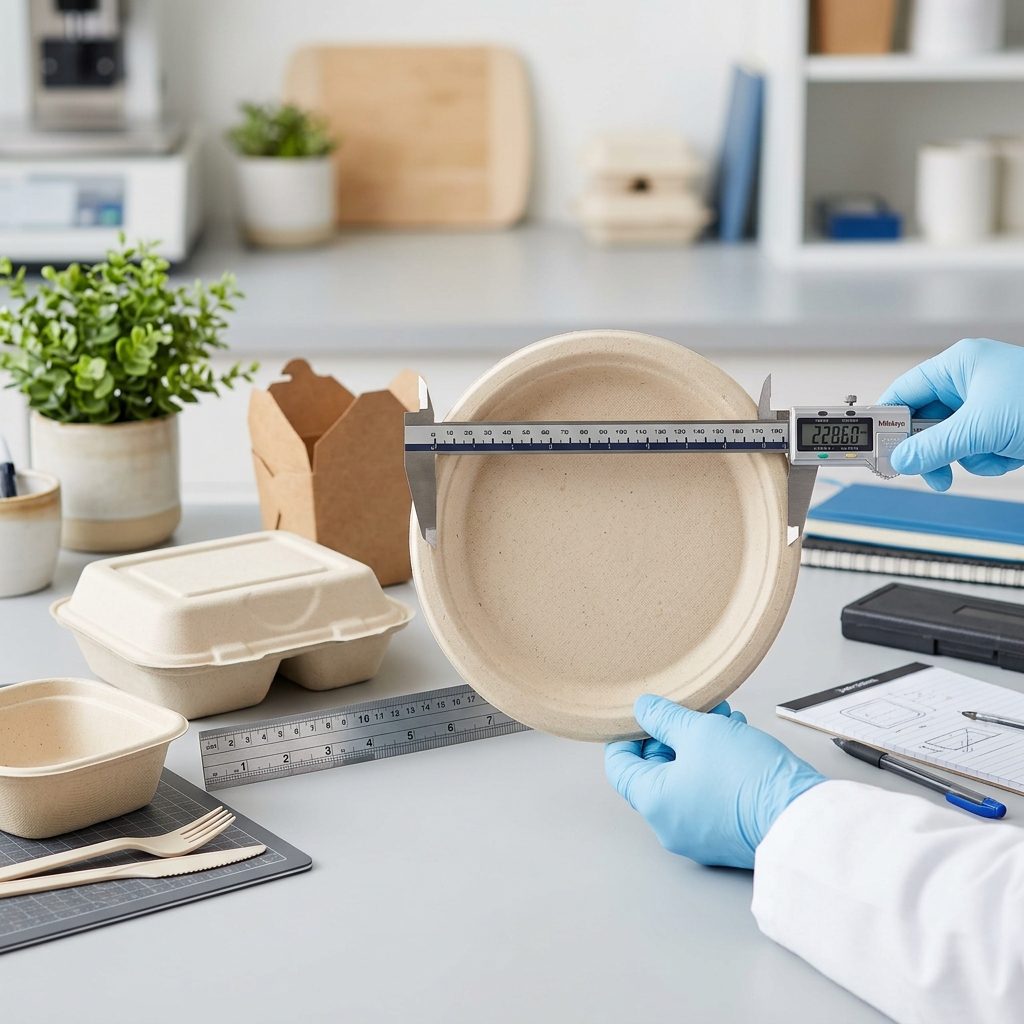
Top Diameter is the most common measurement - the distance across the plate at the widest point of the rim. This is what suppliers mean when they say "9-inch plate."
Base Diameter measures the flat bottom surface. For a 9-inch plate, the base might be 6-7 inches depending on rim width.
Usable Surface is what actually matters for food service. It's the flat area where food sits. A 9-inch plate with a 1.5-inch rim has only 6 inches of usable surface.
Rim Width varies by material and design. According to industry data from the Foodservice Packaging Institute:
Plastic plates: 0.75-1 inch rims
Paper plates: 1-1.25 inch rims
Bagasse plates: 1.25-1.5 inch rims (thicker for structural strength)
Ceramic-style molded plates: 0.5-0.75 inch rims
When ordering compostable dinner plates, always ask for both top diameter and usable surface measurements.
Material-Specific Considerations
Different materials affect how plates perform and how you should measure them.
Bagasse Plates
Made from sugarcane fiber, bagasse plates are 2-3mm thick with reinforced rims. According to ASTM D6868 testing standards, they handle up to 200°F and support 800-1000g of food for a 9-inch plate.
The thicker construction means:
Rims are wider (1.25-1.5 inches typical)
Usable surface is 15-20% smaller than plastic equivalents
Plates stack 25% higher than plastic
Our bagasse plate specifications include detailed measurements for both outer diameter and usable surface area.
Bamboo Pulp Plates
Bamboo pulp plates are thinner (1.5-2mm) with smoother rims. They're lighter than bagasse but less heat-resistant. A 9-inch bamboo plate typically has a 1-inch rim, providing more usable surface than bagasse.
Wooden Plates
Solid wood plates have natural variations. Manufacturing tolerances are ±2mm due to wood grain and moisture content. When ordering wooden plates, expect slight size variations within each batch.
Plate Sizing by Application
Different food service operations need different plate sizes. Here's what industry data shows works best.
Fine Dining Restaurants
Fine dining uses larger plates for presentation. According to the James Beard Foundation's restaurant standards:
Appetizers: 7-8 inch plates
Main courses: 10-12 inch plates
Desserts: 6-7 inch plates
The larger plates create negative space around food, emphasizing plating artistry. Cost per plate is 40-60% higher than standard sizes.
Fast Casual Chains
Fast casual operations prioritize efficiency and cost control. Industry benchmarks from Technomic's 2024 Fast Casual Report:
Standard meals: 9-inch plates (65% of orders)
Kids meals: 7-inch plates
Sharing appetizers: 10-inch plates
The 9-inch size balances portion perception with packaging costs. At $0.08-0.12 per plate for eco-friendly disposable plates, it's the most cost-effective option.
Catering Events
Catering needs vary by service style. Data from the National Association of Catering and Events:
Cocktail parties: 6-7 inch plates (finger foods)
Buffet service: 9-10 inch plates (guests serve themselves)
Plated dinners: 10-inch plates (full service)
For mixed events, order 60% dinner plates, 30% salad plates, and 10% dessert plates.
Food Trucks
Food trucks need portable, cost-effective options. Industry surveys show:
Single servings: 9-inch plates
Combo meals: 10-inch compartment plates
Sides: 6-7 inch plates
Space constraints favor nested packaging. Our bagasse plates nest efficiently, saving 30% storage space compared to rigid plastic.
Using the Product Spec Pro Tool
Our Product Spec Pro Converter handles three common scenarios:
Scenario 1: Comparing Supplier Quotes
You receive quotes from three suppliers:
Supplier A: "9 inch bagasse plates"
Supplier B: "23cm compostable plates"
Supplier C: "22.5cm eco plates"
Enter each measurement in the tool. It shows:
Supplier A: 9" = 22.86cm (rounds to 23cm)
Supplier B: 23cm = 9.06"
Supplier C: 22.5cm = 8.86"
Supplier C is actually offering 8.86-inch plates - smaller than standard 9-inch.
Scenario 2: Verifying Sample Dimensions
You receive samples but specifications seem off. Measure the actual plate with a ruler, enter the measurement, and compare to the supplier's stated size. Variations beyond ±2mm indicate quality control issues.
Scenario 3: Planning Storage Space
Calculate how many cases fit in your storage area. The tool converts plate dimensions to case dimensions, then calculates cubic feet needed for your order volume.
Convert your specifications now: Product Spec Pro Tool
Common Ordering Mistakes
Mistake 1: Assuming All Measurements Are Top Diameter
Some suppliers list base diameter or usable surface instead of top diameter. Always clarify which measurement they're providing. Ask for a technical drawing showing all three measurements.
Mistake 2: Ignoring Rim Width
Two 9-inch plates can have different usable surfaces depending on rim width. For food service, usable surface matters more than outer diameter. Request rim width specifications before ordering.
Mistake 3: Not Accounting for Material Thickness
Bagasse plates stack 20-30% higher than plastic plates of the same diameter. If you're replacing plastic with compostable plates, recalculate your storage space needs.
Mistake 4: Ordering Without Samples
Never place bulk orders without testing samples. Measure actual dimensions, test with your typical portions, and verify that lids (if needed) fit properly. We provide free sample kits for testing.
Mistake 5: Mixing Measurement Systems
Don't mix inches and centimeters in the same order. Pick one system and use it consistently across all specifications. This prevents confusion and ordering errors.
Quality Control Checklist
When your order arrives, verify dimensions before accepting the shipment:
Random sampling: Measure 10 plates from different boxes
Tolerance check: Verify dimensions are within ±2mm of specifications
Rim consistency: Check that rim width is uniform
Stacking test: Confirm plates stack properly without sticking
Load test: Place 800g of food on a plate to verify it doesn't bend
Document any discrepancies with photos and measurements. Most suppliers accept returns for dimension variances beyond ±2mm.
International Ordering Best Practices
Communicate in Both Systems
Always provide specifications in both inches and centimeters. This prevents conversion errors and ensures clarity.
Request Technical Drawings
Ask suppliers for CAD drawings or detailed specification sheets showing:
Top diameter
Base diameter
Rim width
Plate depth
Material thickness
Ready to convert your plate specifications?
Use our free Product Spec Pro Converter - no signup required.
Common Questions About Plate Dimensions
How do I convert 9 inches to centimeters?
Multiply by 2.54: 9 × 2.54 = 22.86 cm (rounds to 23 cm)
What's the difference between top diameter and usable surface?
Top diameter is the outer edge measurement. Usable surface is the flat area where food sits, which is smaller due to the rim.
Are bagasse plates the same size as plastic plates?
Outer diameter is the same, but bagasse plates have thicker rims, reducing usable surface by 15-20%.
How much size variation is acceptable?
Industry standard is ±2mm. Variations beyond this indicate quality control issues.
Can I mix plate sizes in one order?
Yes, but order in full case quantities. Mixed sizes in one case create packing inefficiencies.
What size plate is most cost-effective?
9-inch plates offer the best balance of portion size and cost for most applications.