
We've all been there. You're cooking dinner, staring at a bag of rice or pasta, thinking "how much do I actually need?" You take a guess, dump it in the pot, and end up with either way too much (hello, leftovers for days) or way too little (awkward moment when someone's still hungry).
Here's the good news: you don't need a kitchen scale or complicated math. Your hands are the perfect measuring tool, and they're always with you.
The Two-Handful Rule
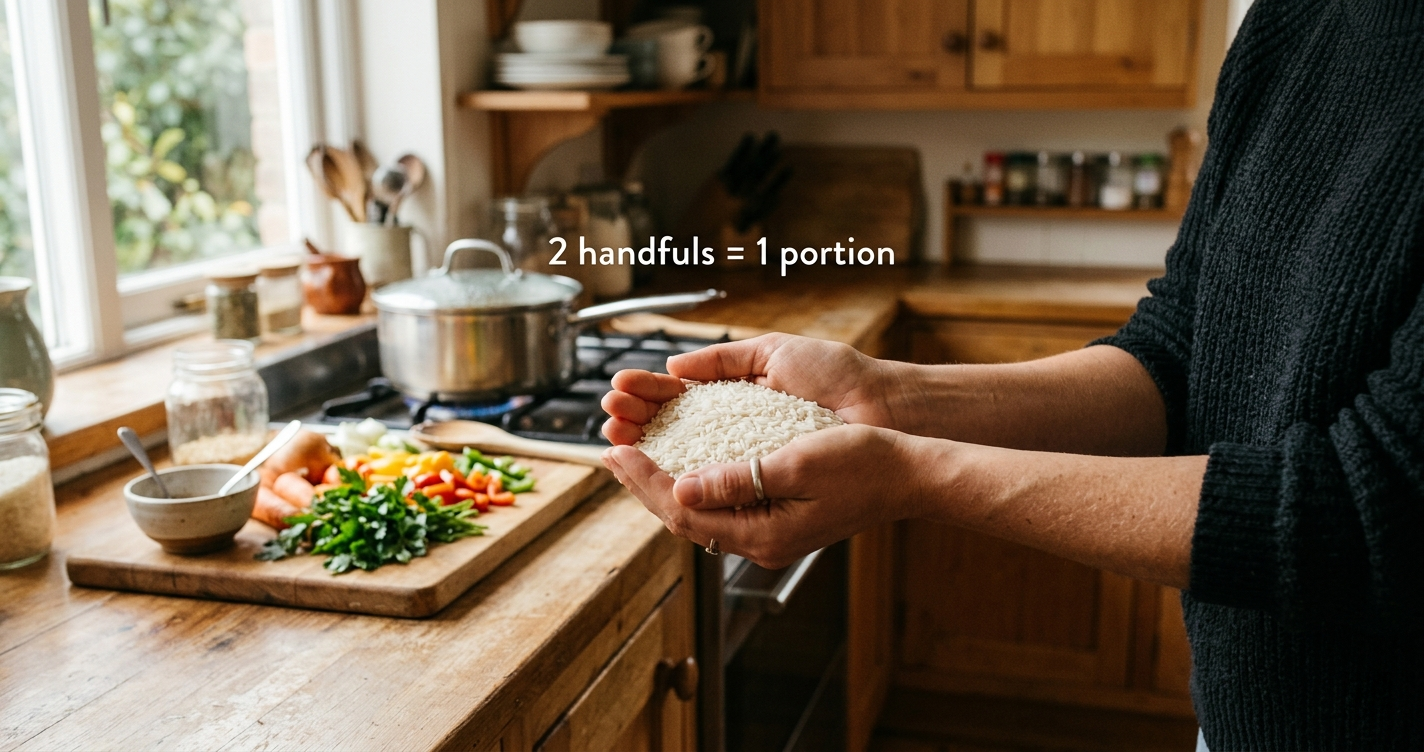
This is the simplest trick you'll ever learn for cooking rice and pasta:
For a main dish: 2 handfuls of dry rice or pasta per person
For a side dish: 1 handful per person
That's it. Seriously.
When we say "handful," we mean a loose, cupped hand - not packed tight, just naturally scooped. For most adults, this works out to about 75g (2.6 oz) for a main portion and 37g (1.3 oz) for a side.
Why This Works
Your hand size roughly corresponds to your body size, which means it naturally scales to how much you need to eat. A bigger person has bigger hands and needs more food. A smaller person has smaller hands and needs less. It's like your body comes with its own built-in measuring cup.
The Big Rice and Pasta Secret
Here's what catches everyone out: dry rice and pasta don't stay the same size when you cook them. They absorb water and expand - a lot.
Rice: Triples in volume when cooked
Pasta: Doubles in weight when cooked
So those 2 handfuls of dry rice? They'll turn into about 6 handfuls of cooked rice. That's why it always feels like you've made way too much - because it literally grows in the pot.
This is super important when you're meal prepping or storing leftovers. If you're using our bagasse containers to pack lunches, remember that 2 handfuls of dry rice will fill a 12oz container once it's cooked.
Protein Portions: The Palm Method
Forget weighing your chicken breast or fish fillet. Just use your palm.
One palm-sized portion = one serving of protein
Place your protein (chicken, fish, beef, whatever) on your palm. It should cover your palm and be about as thick as your palm too. That's roughly 4-6 oz cooked, which is exactly what nutritionists recommend.
Some quick visual guides:
Chicken breast: One medium breast per person
Fish fillet: About the size of a checkbook
Steak: Deck of cards size (or your palm)
Ground meat: Tennis ball size (about 3-4 oz)
If you're grilling for a crowd and need to pack portions for takeaway, our 16oz bagasse containers are perfect for a full protein portion plus sides.
Vegetables: The Fist Method
Make a fist. That's how much cooked vegetables you need per person.
One fist = one serving of vegetables (3-4 oz)
This works for pretty much any cooked veggie - broccoli, carrots, green beans, roasted peppers, you name it. For raw salad greens, use two handfuls instead, because they're mostly air and will compress when you eat them.
Pro tip: If you're packing salads to go, those fluffy greens need room to breathe. A 16oz container gives you enough space so your salad doesn't turn into a sad, squished mess.
Quick Reference: Hand Measurements for Everything

Let's put it all together in one simple chart you can screenshot and keep on your phone:
Food Type | Portion Size | Hand Measurement | Cooked Amount |
|---|---|---|---|
Rice (main) | 75g / 2.6 oz | 2 handfuls | Triples to 225g |
Rice (side) | 37g / 1.3 oz | 1 handful | Triples to 110g |
Pasta (main) | 75g / 2.6 oz | 2 handfuls | Doubles to 150g |
Pasta (side) | 37g / 1.3 oz | 1 handful | Doubles to 75g |
Protein | 4-6 oz | Palm size | Loses 25% weight |
Vegetables | 3-4 oz | Fist size | Stays similar |
Salad greens | 2-3 oz | 2 handfuls | Compresses when dressed |
Real-Life Scenarios: Putting It All Together
Let's make this practical with some common cooking situations.
Weeknight Dinner for 4 (Plus Tomorrow's Lunch)
You're making chicken stir-fry with rice for your family of four. Grab 8 handfuls of dry rice (2 per person) and get that cooking. While the rice is going, cut up 4 palm-sized chicken breasts and about 4 fists worth of mixed vegetables. Stir-fry everything together, and you're done in 30 minutes.
Here's the smart move: make 5 portions instead of 4. Pack that extra portion in a 16oz bagasse container while it's still hot, let it cool, then refrigerate. Tomorrow night when you're busy, someone just microwaves it for 2 minutes and dinner is served.
Meal Prep Sunday
Batch cooking for the week ahead. Cook 10 handfuls of dry rice for 5 lunches (remember, it triples when cooked). Grill 5 palm-sized chicken breasts and roast 5 fists worth of mixed vegetables.
Line up five 12oz kraft containers on your counter. Each gets about 1 cup of cooked rice, one piece of chicken, and one fist of roasted veggies. Stack them in your fridge, and you've got lunch sorted for the entire week. For more variety, prep components separately in 8oz containers and mix and match daily.
Kids' Lunch Boxes
Kids need about half the adult portions. Pack half a palm of protein, one handful of cooked pasta or rice, and half a fist of vegetables in an 8oz container. The smaller size looks full and manageable, which encourages kids to finish their lunch. If your kid doesn't like food touching, use multiple 8oz containers - one for the main, one for sides, one for fruit.
Office Lunch Routine
Tired of spending $12-15 on lunch daily? Prep 5 lunches on Sunday using the meal prep method above. Every morning, grab a 12oz container and a set of our wooden cutlery. At lunch, microwave for 2 minutes and eat. If you do this every workday, you're saving about $50-60 per week - that's $2,500+ annually, even after container costs.
Choosing the Right Container for Your Portions
Once you've mastered measuring portions with your hands, the next question is where to put all that perfectly portioned food. At TOGO, we've designed our container sizes to match real-world serving sizes, so your food looks as good as it tastes.
The 8oz Container: Perfect for Sides and Kids
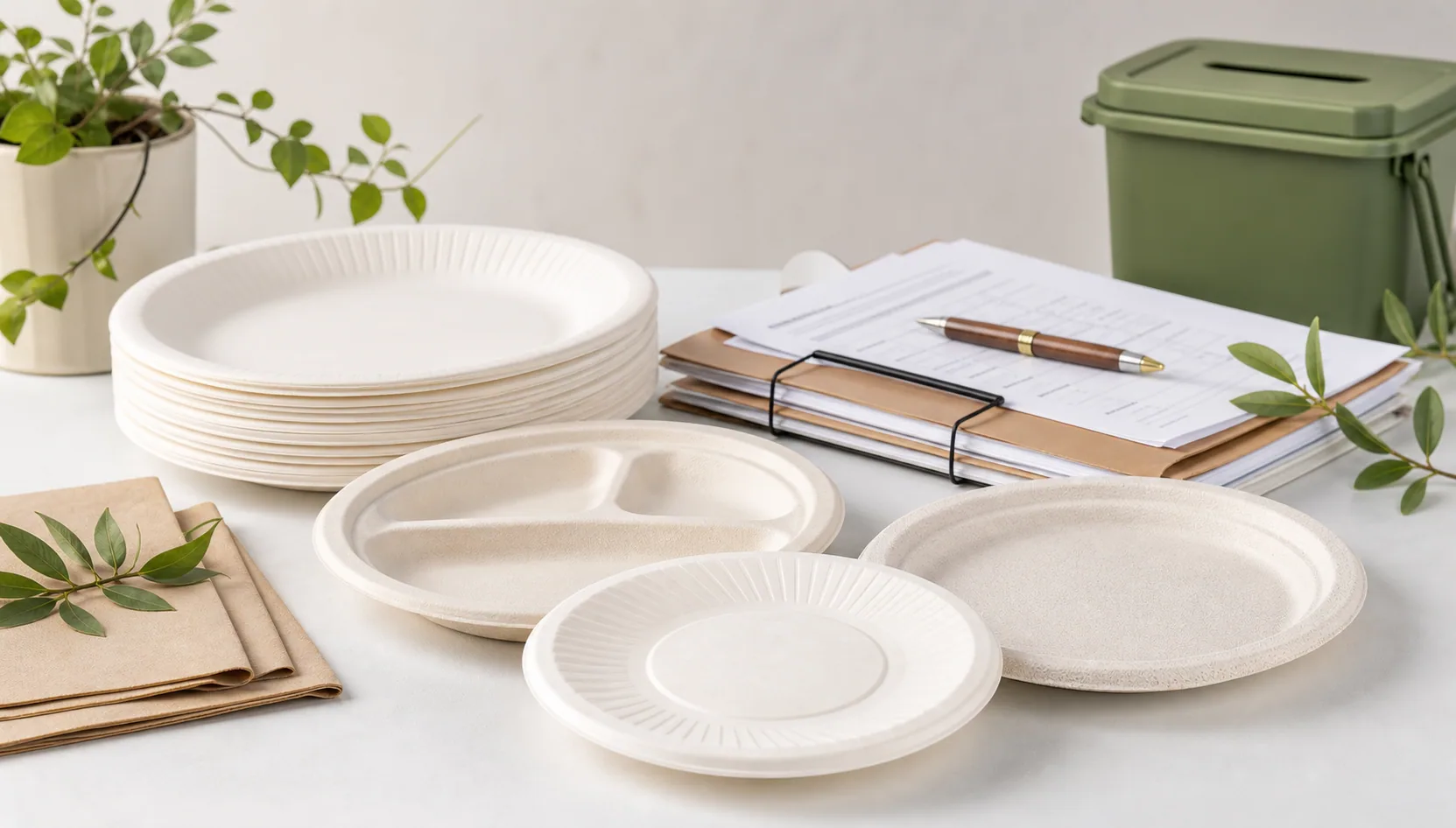
Our 8oz bagasse containers are ideal for single components like one fist of vegetables, one handful of cooked rice as a side, or kids' portions. These containers are made from bagasse (sugarcane fiber), which is completely compostable and breaks down in 60-90 days. They're microwave-safe, freezer-friendly, and sturdy enough for both hot and cold foods.
The 8oz size is also fantastic for meal prep when you want to keep components separate. Pack your protein, grains, and vegetables in individual 8oz containers, and you can mix and match throughout the week.
The 12oz Container: Your Everyday Lunch Solution
Our 12oz kraft containers are the workhorse of meal prep. Two handfuls of cooked rice, one palm-sized piece of protein, and one fist of vegetables fit perfectly with just enough room to breathe. This is your Monday-through-Friday lunch routine sorted.
Made from kraft paper with a plant-based coating, these containers are grease-resistant and fully compostable. They have that natural, earthy look that makes your food look fresh and appealing. Pro tip: fill the container about 70% full with solid foods first, then add sauce to prevent sogginess.
The 16oz Container: Full Dinner Portions
When you need a full dinner or hearty lunch, reach for our 16oz bagasse containers. These handle a palm-sized protein, generous vegetables, and two handfuls of cooked grains without crowding. They're perfect for saucy dishes like curry, pasta, or stir-fry, and they're great for salads since leafy greens need room to stay fluffy.
Like our 8oz containers, these are microwave-safe, freezer-friendly, and completely compostable. They're surprisingly sturdy too - you can stack them in your fridge without worrying about crushing or leaks.
Quick Container Matching Guide
Here's how your hand-measured portions translate to containers:
A classic chicken, rice, and broccoli meal (one palm protein + two handfuls cooked rice + one fist vegetables) fits perfectly in a 16oz container. Kids' portions (half the adult amounts) work beautifully in 8oz containers. For meal prep, use 12oz containers for complete lunches or separate components into multiple 8oz containers for flexibility.
Why TOGO Containers Make a Difference
Our containers cost about $0.10-0.15 more than plastic, but here's what you get: no chemicals leaching into your food, complete composting in 60-90 days instead of 500 years in a landfill, and microwave-safe convenience. Plus, when you portion correctly, you waste less food. The average family throws away $1,500 of food yearly - save even 20% and you've covered the container cost many times over.
Don't forget our wooden cutlery sets for a complete compostable solution. They're sturdy, don't taste like wood, and compost along with your containers.
Common Mistakes (And How to Avoid Them)
Mistake 1: Measuring Cooked Instead of Dry
You see a recipe that says "1 cup of rice per person" and you measure out cooked rice. Wrong! That measurement is almost always for dry rice. Remember: rice triples, pasta doubles.
Mistake 2: Forgetting About Sauces and Toppings
Your hand measurements are for the base ingredients. If you're making a saucy pasta or curry, you'll need a bigger container because liquid takes up space. Add about 2-3 tablespoons (1-1.5 oz) of sauce per portion.
Mistake 3: Not Adjusting for Appetite
These are average portions. If you're cooking for teenage boys or athletes, add an extra handful. Cooking for young kids? Half portions work better. Your hands are a guide, not a rigid rule.
Mistake 4: Confusing Liquid and Dry Ounces
This trips everyone up. When we say "4 oz of chicken," we mean weight. When we say "8 oz of soup," we mean volume. They're different measurements with the same name. Confusing, right? We wrote a whole article about liquid ounces vs dry ounces if you want to dive deeper.
Kids vs Adults: Scaling Portions
Children aren't just small adults when it comes to eating. They have smaller stomachs and different nutritional needs. Understanding how to scale portions for different ages makes meal planning easier and helps avoid overwhelming kids with adult-sized portions.
Toddlers (2-4 years) typically eat about one-third of adult portions and usually share from parents' plates. Young kids (5-8 years) need about half of adult portions - one handful of cooked rice instead of two, half a palm of protein, and half a fist of vegetables. Our 8oz containers are perfect for this age because when filled three-quarters full, the meal looks complete and manageable rather than overwhelming.
Older kids (9-12 years) eat about two-thirds of adult portions. They can use either an 8oz container filled completely or a 12oz container filled halfway. The 12oz option is better for school lunches as they grow into bigger portions. Teenagers eat the same as adults, and teenage athletes often need even more. For teen portions, use our 16oz containers.
Container size really matters for kids. A lunch that looks manageable is more likely to get eaten. Younger kids respond better to smaller containers that look full, while teens need the space for larger portions.
Storing Leftovers the Smart Way
So you've cooked perfect portions, but someone wasn't hungry or you intentionally made extra for tomorrow's lunch. This is where having the right containers makes all the difference between food that stays fresh and delicious versus food that turns into a science experiment in the back of your fridge.
The first rule of leftover storage is cooling food quickly. Spread your leftovers in a shallow container so they cool down fast. This is food safety 101. Bacteria multiply rapidly between 40°F and 140°F, so you want to get through that danger zone as quickly as possible. Our bagasse containers are perfect for this because they're shallow and wide, which maximizes surface area for faster cooling.
Here's something most people get wrong: they put a tiny portion in a massive container. That excess air space actually makes food go bad faster because there's more oxygen for bacteria to thrive in. Match your container size to your portion size. One fist of leftover vegetables? Use an 8oz container. Half a palm of leftover chicken and some rice? A 12oz container is your friend. This isn't just about freshness; it's also about fridge space. Properly sized containers stack better and take up less room.
Always label your containers. I know you think you'll remember what's in each container and when you made it, but you won't. Trust me on this. A piece of masking tape and a marker take five seconds and save you from the "is this rice from Monday or last Monday?" guessing game. Write the contents and the date. Your future self will thank you.
The beauty of our compostable containers is that they're microwave-safe, so you can reheat your leftovers right in the same container you stored them in. No transferring to a plate, no extra dishes to wash. Just pop the lid off, microwave for a minute or two, and you're eating. When you're finally done with the container, it goes straight into your compost bin where it breaks down in 60-90 days instead of sitting in a landfill for the next 500 years.
When to Use Actual Measurements
Look, hand measurements are awesome for everyday cooking, but sometimes you need precision:
Baking: Baking is chemistry. Use actual measurements or your cake will be sad.
Special diets: If you're tracking macros or following a medical diet, weigh your food properly.
Large events: Cooking for 50+ people? Check our catering portion calculator instead. Hand measurements don't scale well to huge crowds.
Recipe testing: If you're developing a recipe to share, use precise measurements so others can recreate it.
The Environmental Angle
Here's something cool: cooking the right portions isn't just convenient - it's better for the planet.
Food waste is a massive problem. When you cook too much and throw it away, you're wasting all the water, energy, and resources that went into growing, transporting, and preparing that food. In the US alone, we waste about 30-40% of our food supply.
By using simple hand measurements, you cook what you need and waste less. And when you do have leftovers, storing them in compostable containers means even your packaging breaks down naturally.
Small changes, big impact.
Quick Tips for Different Cuisines
Italian Night (Pasta, Pizza, Risotto)
Pasta: 2 handfuls dry per person
Pizza: 2-3 slices per person (about 1/4 to 1/3 of a large pizza)
Risotto: 1.5 handfuls of dry rice per person (it's richer than regular rice)
Asian Cooking (Rice, Noodles, Stir-Fry)
Rice: 2 handfuls dry for main dish, 1 for side
Noodles: Similar to pasta, 2 handfuls dry
Stir-fry vegetables: 1.5 fists per person (they shrink a lot when cooked)
Mexican Food (Tacos, Burritos, Rice and Beans)
Taco filling: Palm-sized portion of protein per 2-3 tacos
Rice: 1 handful dry (it's usually a side)
Beans: Fist-sized portion
American Classics (Burgers, BBQ, Mac and Cheese)
Burger patty: Palm-sized (about 4-6 oz)
Mac and cheese: 2 handfuls of dry pasta per person
BBQ meat: Palm-sized portion, but people usually eat more at BBQs (1.5 palms is realistic)
Frequently Asked Questions
How much rice should I cook for one person?
Two handfuls of dry rice for a main dish, one handful for a side. That's about 75g (2.6 oz) for a main and 37g (1.3 oz) for a side. When cooked, it'll triple in volume, giving you plenty to eat without massive leftovers.
How much pasta is enough for one person?
Same as rice - two handfuls of dry pasta for a main course. This works out to about 75g (2.6 oz) dry, which becomes roughly 150g (5.3 oz) when cooked. If you're serving it with a heavy sauce or lots of sides, one handful might be enough.
Do hand measurements work for everyone?
They work for most people because hand size correlates with body size. However, adjust based on appetite - athletes and teenagers might need more, while young children need less. The beauty of hand measurements is they're flexible.
What if I have really small or really large hands?
Your hand size is proportional to your body, so it naturally adjusts. If you have small hands, you probably need less food. If you have large hands, you probably need more. That said, if you're cooking for others, use your own judgment or ask them.
How do I measure portions for meal prep?
Use the same hand measurements, then multiply by the number of meals you're prepping. For 5 lunches, that's 10 handfuls of dry rice, 5 palm-sized proteins, and 5 fists of vegetables. Divide evenly into 12oz containers and you're set for the week.
Can I use hand measurements for baking?
No, baking needs precise measurements because it's a chemical process. Hand measurements are great for cooking (where you can adjust as you go) but not for baking (where ratios matter).
What about liquid portions like soup or sauce?
For soup, one cupped hand holds about 6-8 oz, which is a good serving. For sauces, use 2-3 tablespoons per portion (about 1-1.5 oz). If you want to understand more about liquid measurements, read our guide on liquid vs dry ounces.
How do I know what size container to use?
A palm of protein plus sides fits in a 16oz container for dinner portions. Lunch portions work well in 12oz containers. Single sides or snacks fit in 8oz containers. Check out our container size guide for more details.
Planning a Bigger Event?
Hand measurements are perfect for everyday cooking, but if you're planning a party, catering an event, or cooking for a large group, you'll want more precise calculations.
Our catering portion calculator helps you figure out exactly how much food you need for 20, 50, 100, or even 500 guests. It accounts for different service styles (plated vs buffet), event duration, and even calculates how many wooden cutlery sets and containers you'll need.
For smaller gatherings (10-20 people), you can still use hand measurements - just multiply by the number of guests and add a little extra for safety.
The Bottom Line
Cooking doesn't have to be complicated. You don't need fancy scales or measuring cups for everyday meals. Your hands are the perfect tool because they're always with you, they scale to your body size, and they make cooking intuitive instead of stressful.
Remember the basics: 2 handfuls of dry rice or pasta per person for a main dish, palm-sized portions for protein, and fist-sized portions for vegetables. Everything triples (rice) or doubles (pasta) when cooked, so don't panic when your pot looks too full.
But here's what takes this from good to great: pairing those perfect portions with the right containers. At TOGO, we've designed our container sizes specifically to match real-world serving sizes. Our 8oz containers are perfect for sides and kids' portions. Our 12oz kraft containers are the everyday lunch champions. And our 16oz bagasse containers handle full dinner portions with room for sauce.
All of our containers are made from sustainable materials that break down completely in 60-90 days. They're microwave-safe, freezer-friendly, and sturdy enough for any food. When you're done with them, they return to the earth instead of polluting it for the next 500 years. It's a small choice that makes a big difference.
Master these simple measurements, pair them with the right containers, and you'll never cook too much or too little again. Your food will taste better, you'll waste less, and you'll save money. Plus, you'll be doing something good for the planet. That's what we call a win-win-win.
Ready to get started? Grab some TOGO containers and start cooking with confidence. Your hands know what to do, and we've got the perfect containers to match.
Happy cooking!
Related Resources
Catering Portion Calculator - For larger events and precise calculations
How Many Ounces Should My Takeaway Containers Be? - Container sizing guide
Liquid Ounces vs Dry Ounces - Understanding measurements
What is Bagasse? - Learn about eco-friendly containers
Bagasse Containers - Shop compostable food containers
Kraft Containers - Shop paper containers