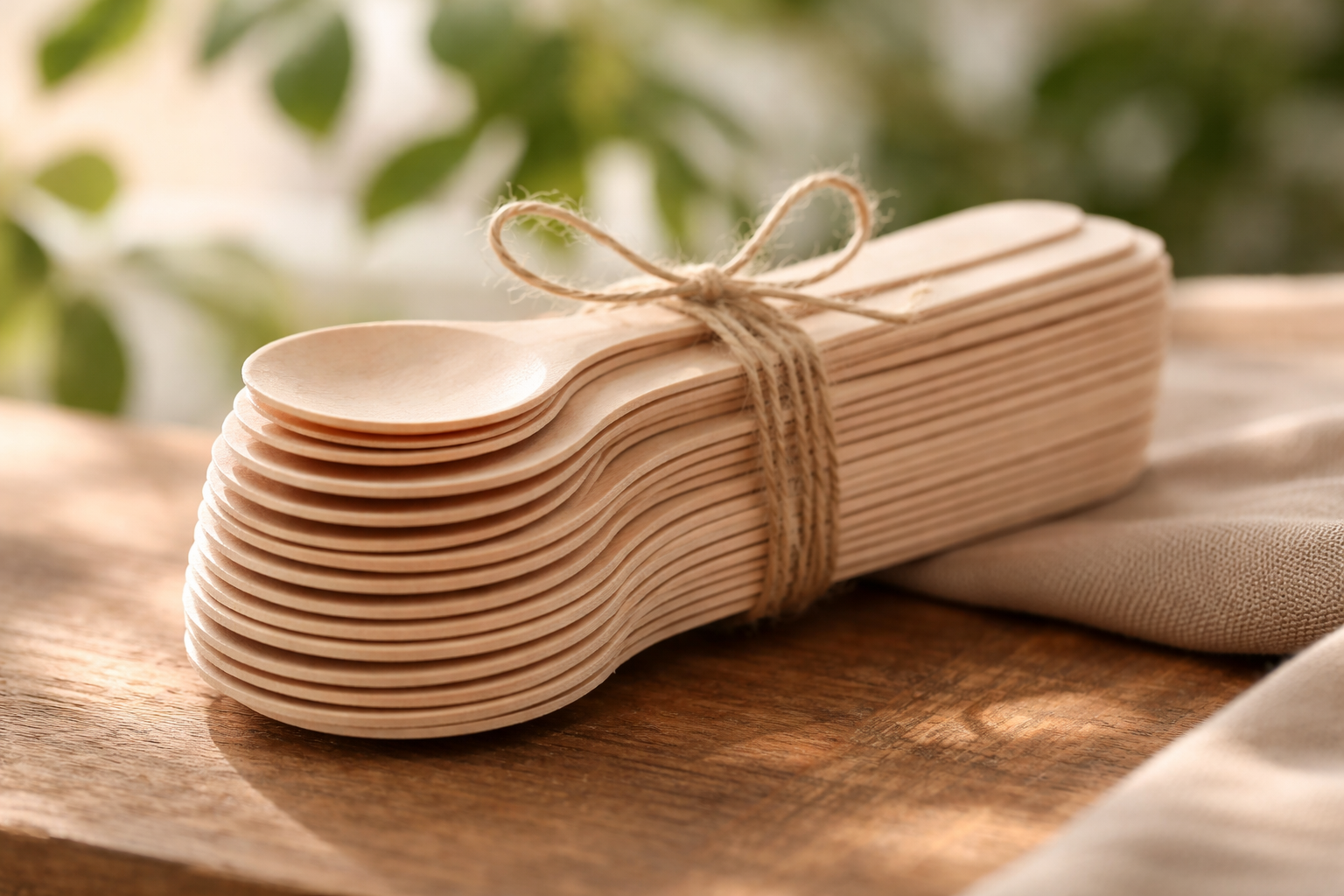
With the global shift away from single use plastics, the demand for disposable wooden cutlery has skyrocketed. For importers and distributors, this presents a massive opportunity,but also a significant risk.
Unlike standardized plastic manufacturing, wood is a natural material. It reacts to humidity, varies in grain, and requires precise processing. A shipment of "Grade A" wooden spoons from one factory can look completely different from another.
As a manufacturer specializing in birch wood tableware, we are pulling back the curtain. In this guide, we will walk you through exactly how to evaluate quality, identify common defects, and ensure your shipment meets international standards (FSC, FDA, LFGB).
1. The Material: Why White Birch?
Not all wood is created equal. If you see a quote that is significantly lower than the market average, the supplier might be using inferior timber.
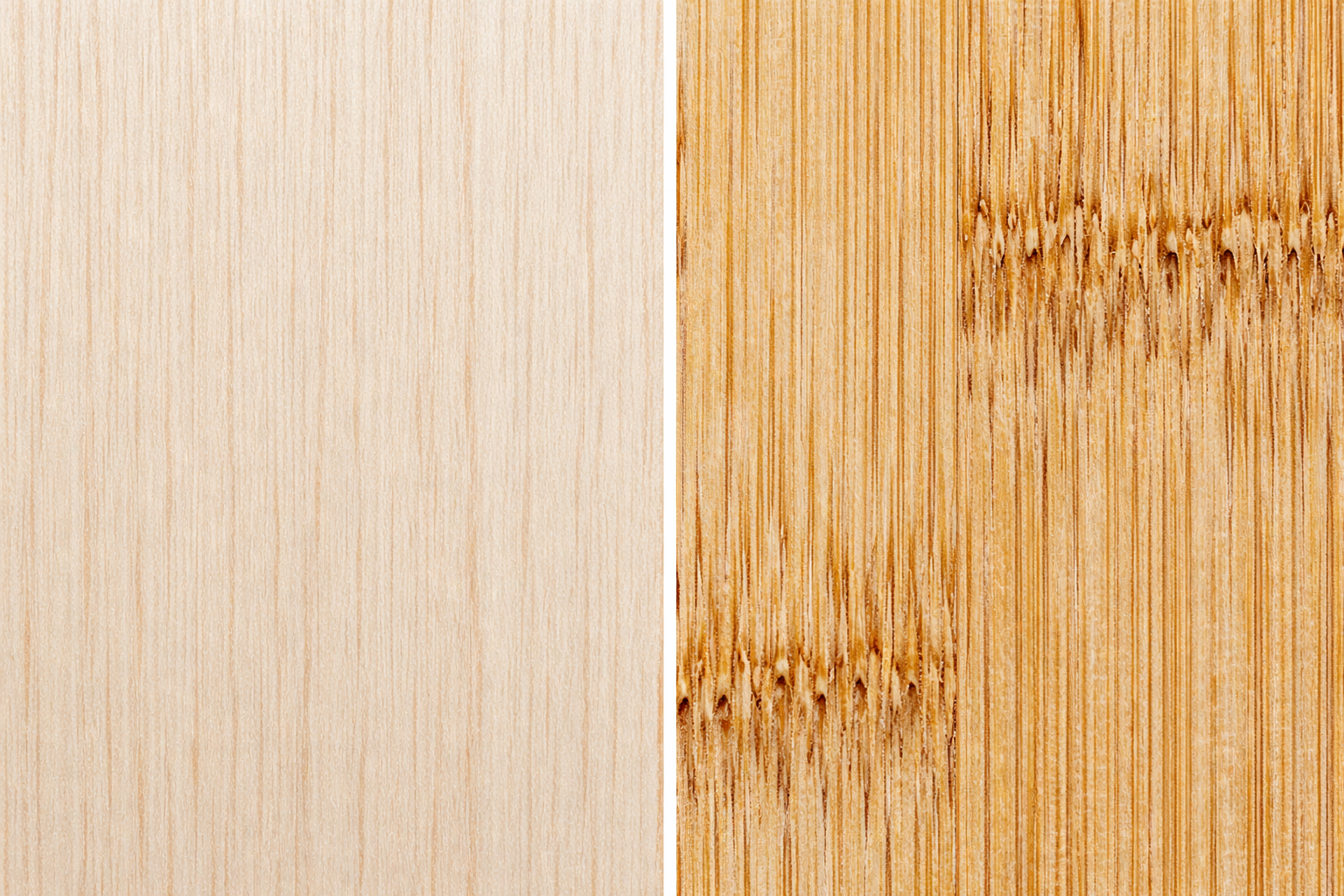
White Birch (Betula Platyphylla): The gold standard for disposable cutlery. It is naturally hard, has a tight grain (meaning fewer splinters), and is tasteless/odorless.
Poplar Wood: Often used for chopsticks but too soft for cutlery. It tends to be fuzzy and can break easily under pressure.
Bamboo: Excellent hardness but much more expensive to process into cutlery shapes. It also has a distinct "bamboo scent" that can affect the taste of food.
Always specify "100% White Birch Wood" in your purchase order to avoid material substitution.
2. Critical Manufacturing Steps That Define Quality
Quality isn't just about the wood; it's about the process. There are two hidden steps that determine if your spoons will warp or splinter.
The Drying Process (Moisture Control)
Wood contains water. If not dried properly, your cutlery will mold during the weeks spent in a shipping container.
High-quality cutlery undergoes high-temperature tunnel drying to bring moisture content below 10%. Some small factories rely on air drying to save energy costs. This is a gamble with mold.
Polishing (The Tumbling Test)
How do we make wood smooth enough to put in your mouth? We tumble them.
Grade A: Tumbled for at least 4-6 hours with food-grade wax (optional) to ensure edges are completely smooth.
Grade B: Tumbled for 2 hours. These often have rough edges (burrs) that can scratch a user's mouth.
3. The "Defect Gallery": What to Look For
When you receive samples or perform a Pre Shipment Inspection (PSI), use this checklist to catch issues before they reach your customers.
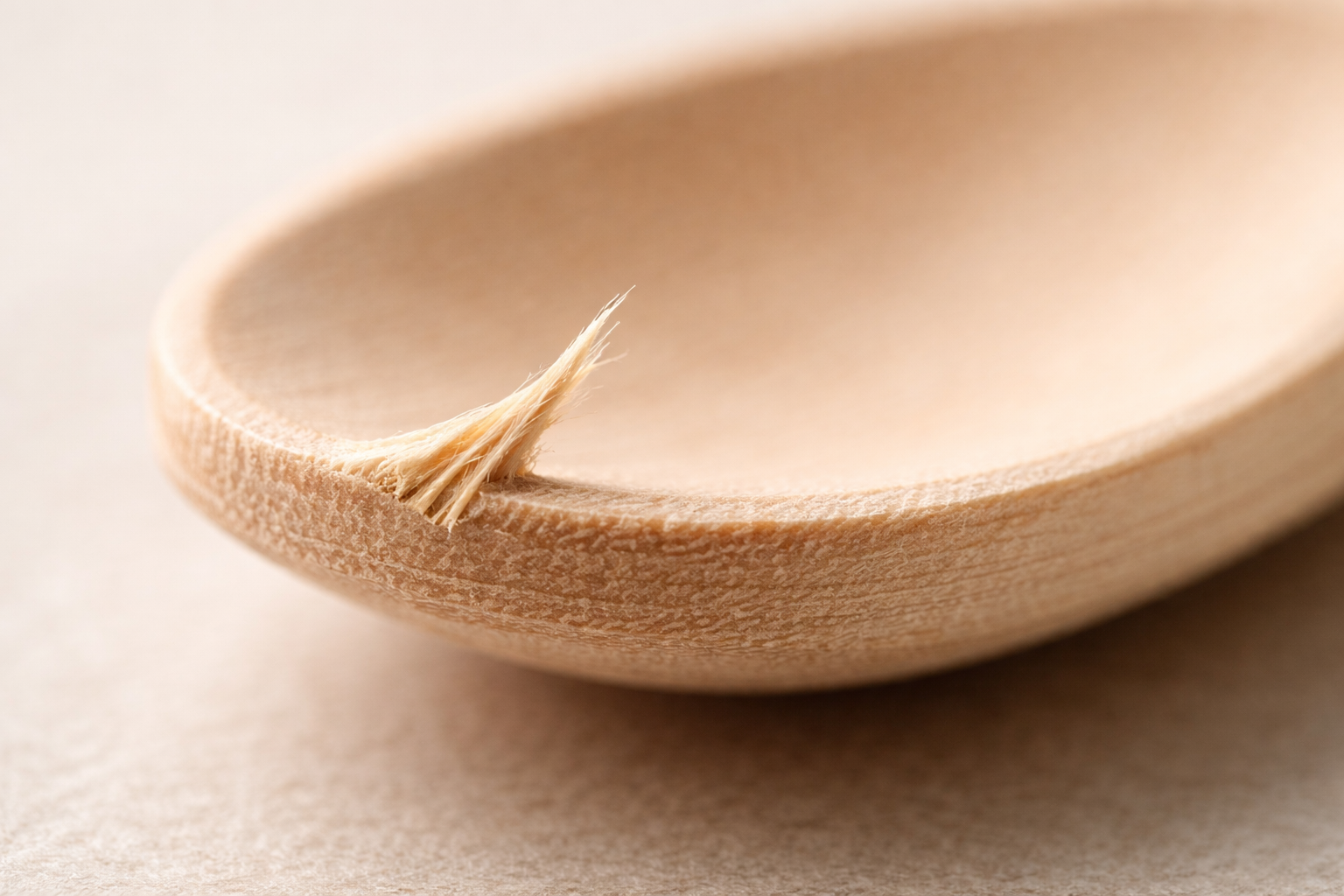
A. Splinters and Burrs (Critical Defect)
- What it is: Tiny shards of wood sticking out from the edges or surface.
- Why it matters: This is a safety hazard. Zero tolerance.
- Check: Run your finger along the rim of the spoon bowl. It should be perfectly smooth.
B. Mineral Streaks (Cosmetic Defect)
- What it is: Dark, black, or brown lines running through the wood grain. These are natural sugar deposits in the birch tree.
- Verdict: It does not affect safety or strength, but it affects the visual appeal.
- Grade A: Allows minimal streaks (less than 5% of surface area).
- Grade B: Allows visible streaks. (Great for budget-conscious buyers, but must be disclosed).
C. Thin Edges (Functional Defect)
If the wood veneer was peeled too thinly or polished too aggressively, the edge of the spoon becomes razor-thin. It feels sharp and uncomfortable in the mouth.
4. Compliance and Certifications
Importing into the EU or North America requires a paper trail.
- FSC Certification (Forest Stewardship Council): This proves the wood didn't come from illegal logging. Major retailers (like Walmart, Tesco) require this.
- Food Contact Safety (FDA / LFGB): Wooden cutlery is untreated, but verify that no harmful chemicals were used in the polishing or boiling process.
- PCP Test: Pentachlorophenol is a fungicide sometimes used in wood preservation. Ensure your supplier tests for this,it must be non-detectable for food-grade items.
Price is Important, Consistency is Key
In the B2B world, the cheapest price often ends up being the most expensive choice if your customers complain about splinters or mold.
At Togotableware, we control the entire process from birch log selection to the final polish. We don't just sell spoons; we sell the peace of mind that your brand reputation is safe.
Ready to see the difference? Contact us and get free samples, so you can decide what's right for your market.