
The Days of Plastic Forks at Weddings Are Over
Here's something we've noticed after supplying compostable tableware to hundreds of events, weddings, and catering operations over the past decade: the conversation has completely shifted.
Five years ago, event planners asked us, "Do you have anything eco-friendly?" Now they ask, "Which compostable option matches our color scheme?" That's how fast the market has moved.
And the numbers back it up. According to a 2022 survey by the Sustainable Wedding Alliance, 98% of couples now consider sustainability a factor in their wedding planning, with 78% calling it "important or very important." Meanwhile, 22% of catering services already offer zero-waste event packages and that number is climbing fast.
But here's the challenge every event planner and caterer faces: how do you find tableware that's genuinely sustainable, looks stunning on the table, holds up with real food, AND doesn't blow the budget? That's exactly what this guide is for.
Why Events and Weddings Are Ditching Plastic Tableware
The Waste Problem Is Massive
The average wedding produces approximately 400 pounds of garbage and generates about 63 tons of CO2 emissions. Single-use plastics account for roughly 20% of that waste — and disposable cutlery, plates, and cups are the biggest culprits.
For large-scale events, the numbers get even uglier. A 500-person corporate gala can easily burn through 2,000+ pieces of disposable tableware in a single evening. Multiply that across the thousands of events happening every weekend, and you start to see the scale of the problem.
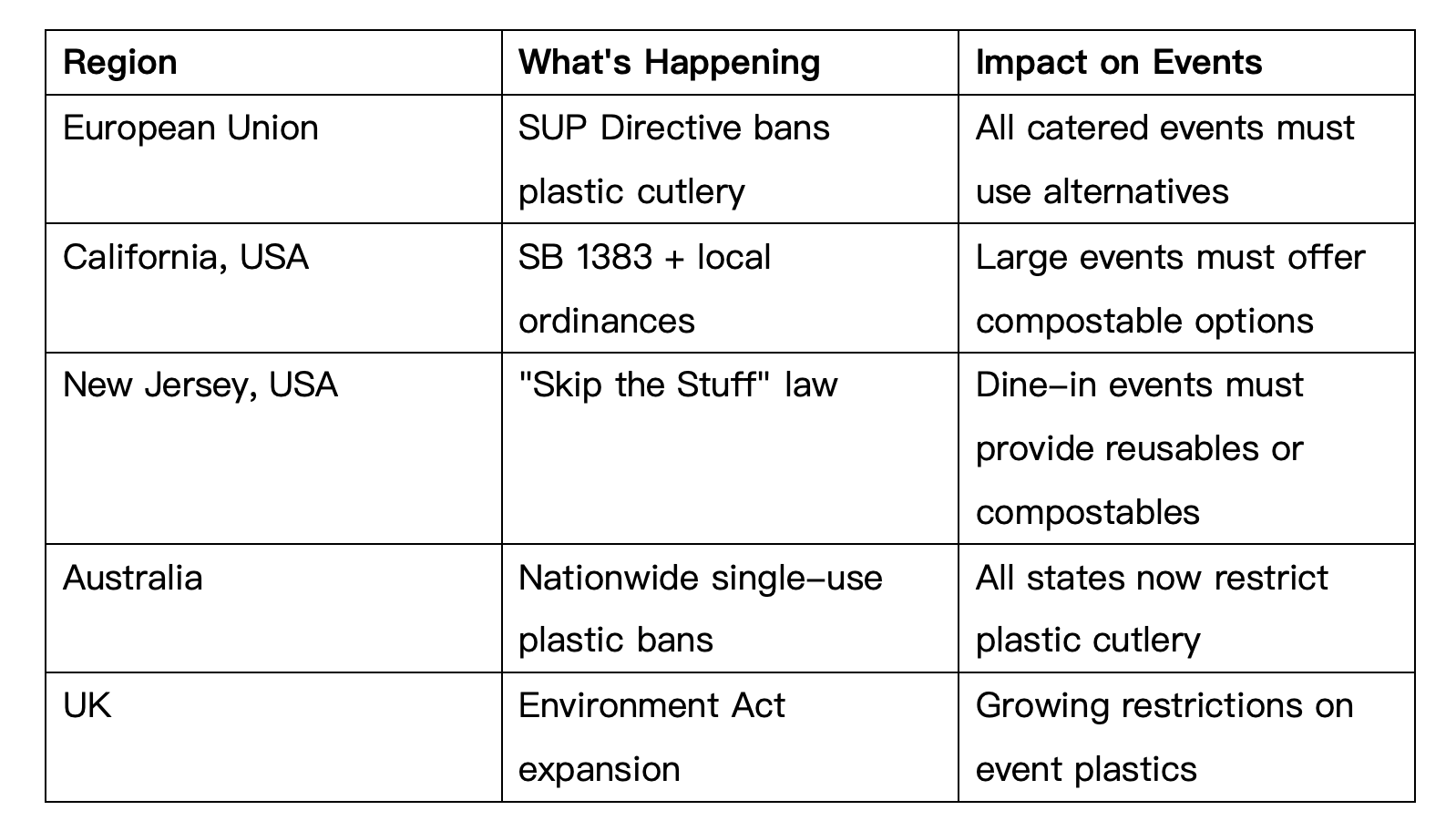
Regulations Are Forcing the Change
It's not just about values anymore — it's about compliance:
Guests Expect It Now
This isn't a fringe movement. 45% of couples now actively prioritize sustainability in their wedding planning — up from just 10% in 2010. For corporate events, sustainability credentials are increasingly part of the vendor selection process.
The bottom line: if you're still using plastic cutlery at events, you're not just behind the times — you're potentially breaking the law in some jurisdictions and definitely losing clients who care about this.
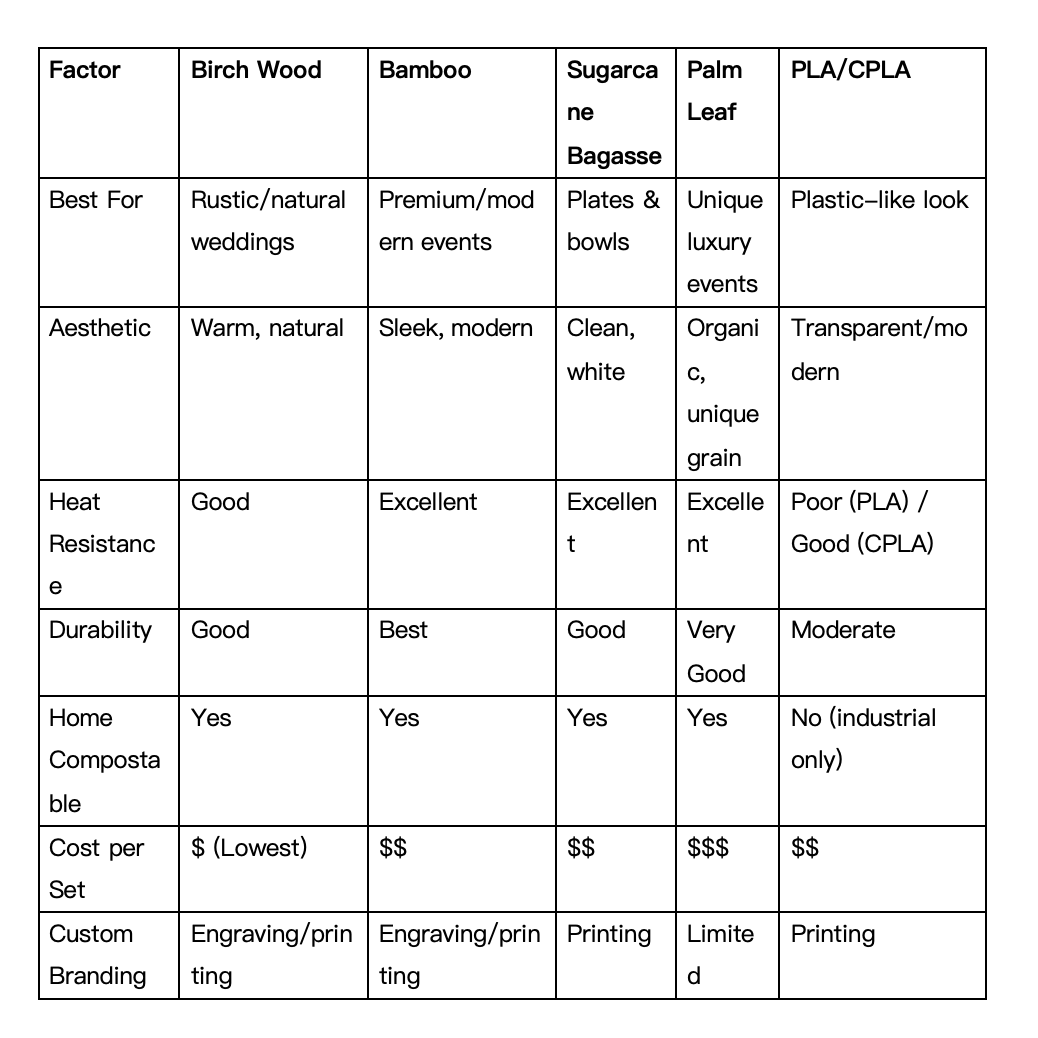
The 5 Best Compostable Materials for Events: A Complete Comparison
Not all eco-friendly wedding tableware is created equal. Here's how the top materials stack up for event use:
Birch Wood Cutlery — The Rustic Wedding Favorite
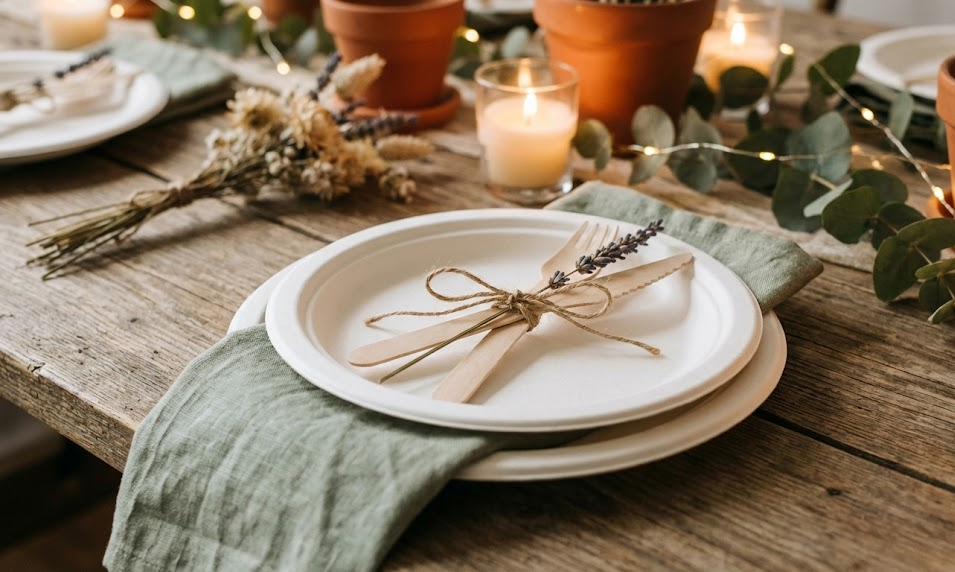
Birch wood cutlery is the go-to for natural, boho, and rustic-themed events. It's affordable, fully home compostable, and has that warm, organic look that photographs beautifully.
Why event planners love it:
· Most cost-effective option — especially for wooden cutlery bulk order purchases
· 100% home compostable — no special facilities needed
· Smooth, splinter-free finish (when sourced from quality suppliers)
· Available in all standard sizes: 96mm to 190mm
· FSC certification guarantees sustainable sourcing
Best for: Barn weddings, outdoor garden parties, farmhouse receptions, casual corporate events, food truck festivals
Watch out for: Not ideal for very liquidy foods (soups). Some guests may notice a mild "woody" taste with very hot foods.
Bamboo Cutlery — The Premium Choice
Bamboo cutlery screams "premium sustainability." It's the strongest natural option, naturally antimicrobial (thanks to bamboo kun), and has an incredibly smooth texture.
Why it works for high-end events:
· Strongest natural cutlery — handles steak knives and tough foods without breaking
· Naturally antibacterial — a real selling point for food safety-conscious clients
· Sleek appearance fits modern and minimalist wedding themes
· Bamboo cutlery bulk pricing makes it accessible for large orders
Best for: Hotel ballroom weddings, gala dinners, upscale corporate events, premium catering
Trade-off: Typically 15-25% more expensive than wood — but the premium look justifies it for high-end events.
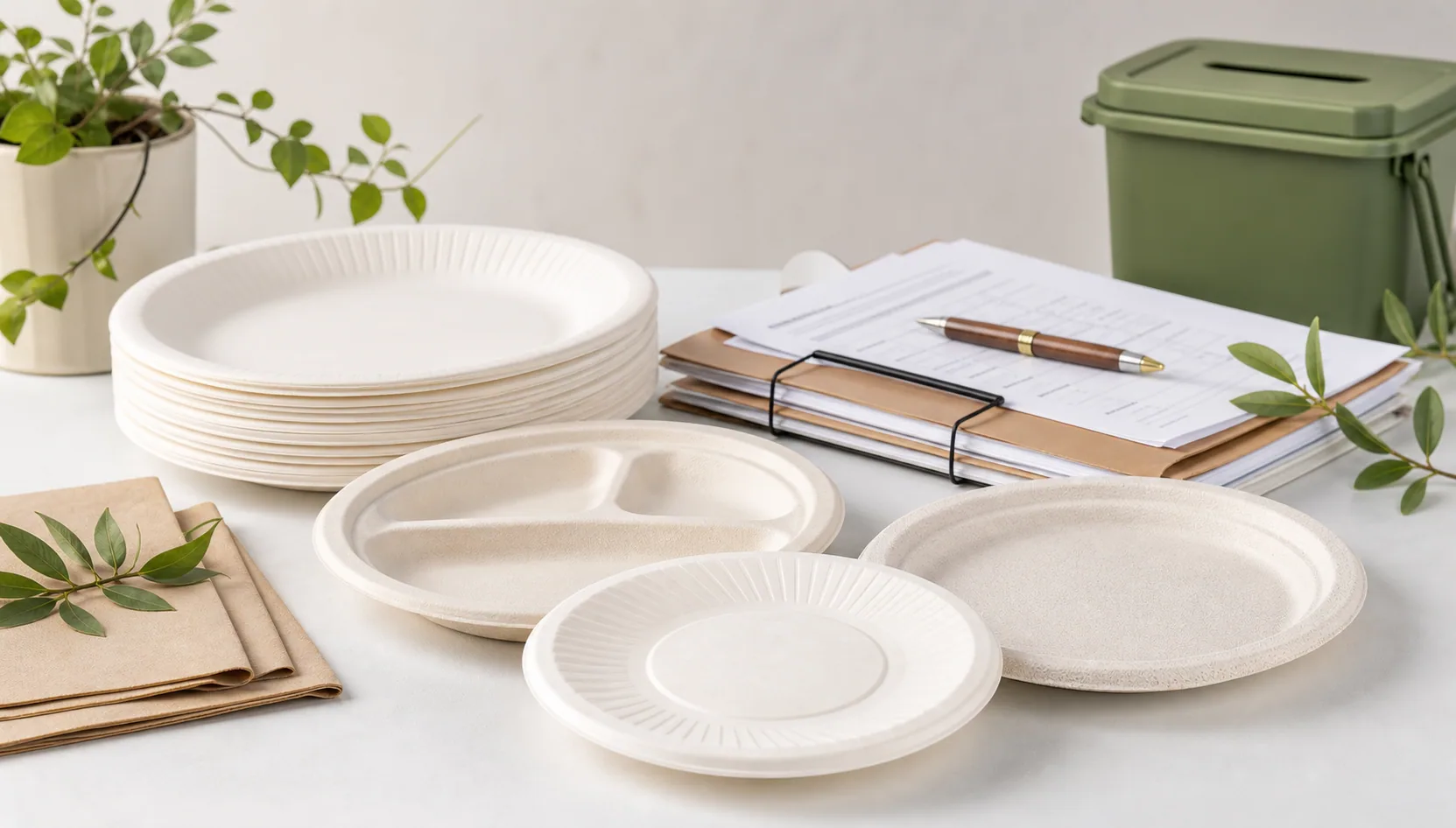
Sugarcane Bagasse — The Plate and Bowl Champion
Bagasse is made from the fibrous waste left after extracting juice from sugarcane — literally turning agricultural waste into elegant tableware.
Here's where it shines:
· Exceptional for plates, bowls, and containers
· Excellent heat resistance — handles hot entrees without any issues
· Clean white appearance works with virtually any event theme
· Microwave and freezer safe
· Both home and industrial compostable
Best for: Plated dinners, buffet service, hot food stations. Pair with wooden or bamboo cutlery for a complete sustainable table setting.
Note: Less commonly available as cutlery (forks, knives, spoons) — it's really a plates-and-bowls material.
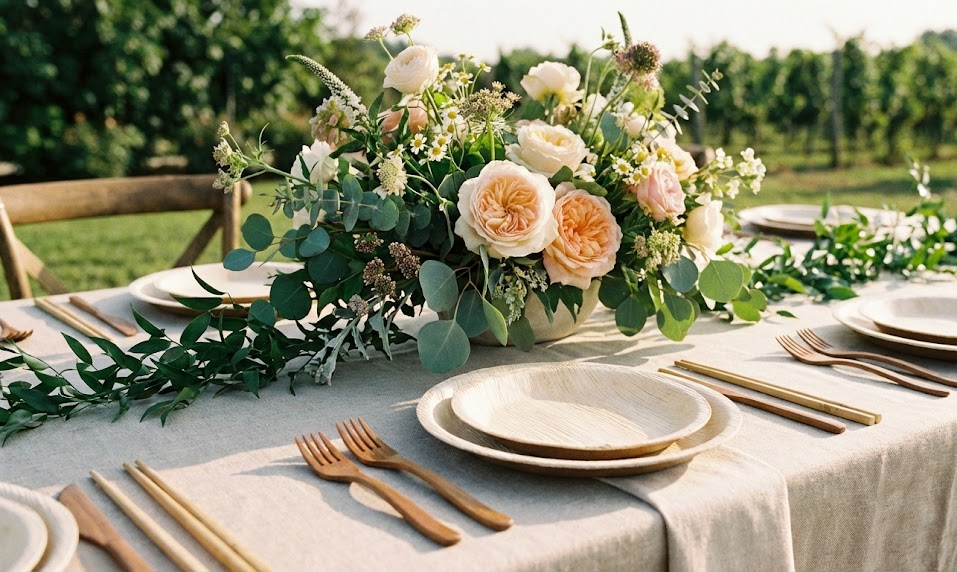
Palm Leaf — The Luxury Statement
Palm leaf tableware is made from naturally fallen Areca palm leaves — no trees are cut, making it a genuinely zero-harm product. Each piece has a unique grain pattern, making every plate one-of-a-kind.
The luxury appeal:
· Unique, natural grain — no two pieces look the same
· Extremely sturdy and heat-resistant
· Fully home compostable
· Chemical-free — just heat and pressure, no additives
Best for: Upscale outdoor weddings, exclusive dinner parties, eco-luxury brand events
Trade-off: Higher cost and limited design consistency (the unique patterns can be a pro or con depending on your event aesthetic).
PLA/CPLA — The Plastic Look-Alike (With Conditions)
PLA (Polylactic Acid) looks and feels almost identical to traditional plastic, which appeals to guests who aren't fans of the "wooden texture."
The important caveat:
PLA only breaks down in industrial composting facilities at 140-170°F for 90-180 days. It does NOT decompose in home compost, landfills, or the ocean. If your event venue doesn't have access to industrial composting, PLA ends up in landfills where it persists just like regular plastic.
When PLA makes sense: Indoor venues with verified industrial composting programs, cold food applications (ice cream, desserts), clients who specifically request plastic-like feel.
When to avoid PLA: Outdoor events, hot food, any venue where you can't control the waste stream.
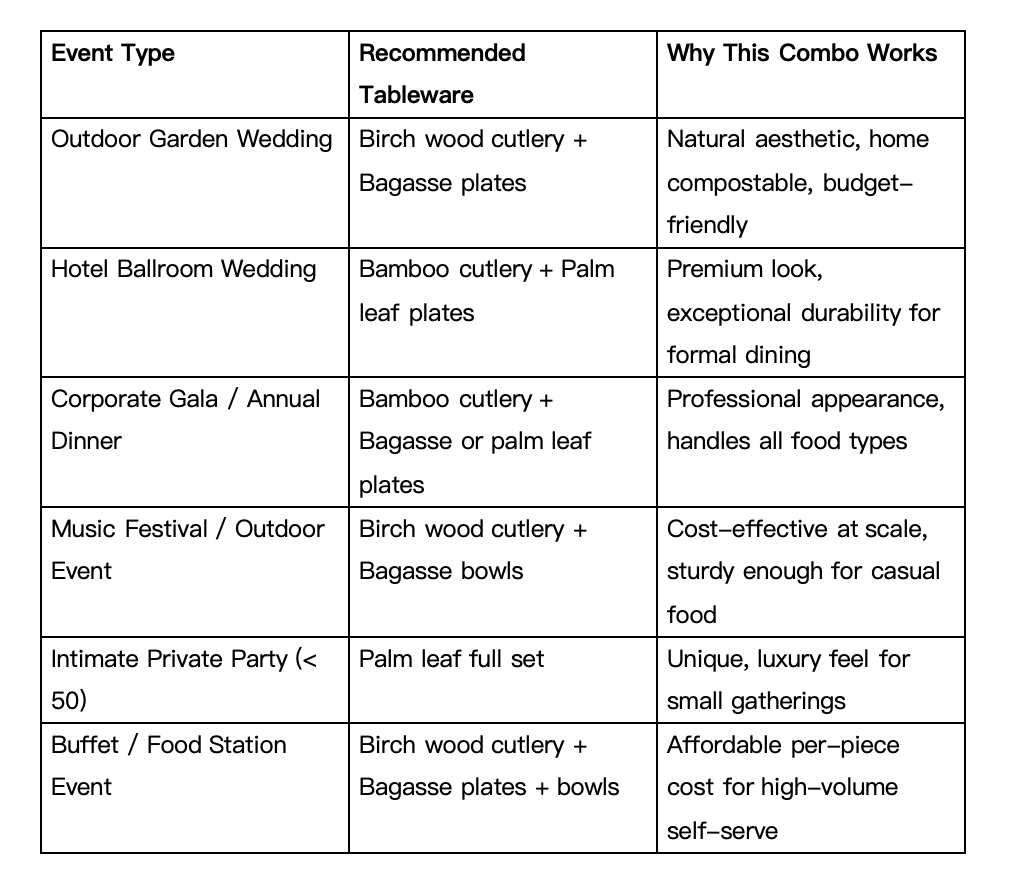
Which Material for Which Event? Scene-by-Scene Guide
Here's our real-world recommendation based on years of supplying events:
Key Factors to Consider for Your Event
Guest count: Drives your material choice more than anything — wood and bagasse give the best per-unit economics at 200+ guests.
Food type: Hot, heavy entrees need bamboo or palm leaf. Salads and desserts work with any material.
Weather: Outdoor events in heat or humidity favor wood and bamboo (PLA can warp in direct sun above 45°C/113°F).
Theme and aesthetic: This matters. Barn wedding? Wood. Modern minimalist? Bamboo. Tropical destination? Palm leaf.
Budget: For cost-sensitive events, birch wood cutlery with bagasse plates delivers the best value without sacrificing the eco message.
How to Estimate Quantities and Manage Costs
The Event Quantity Formula
Here's the formula we share with our catering clients:
Total pieces = Guests x Courses x Items per course x 1.15 (buffer)
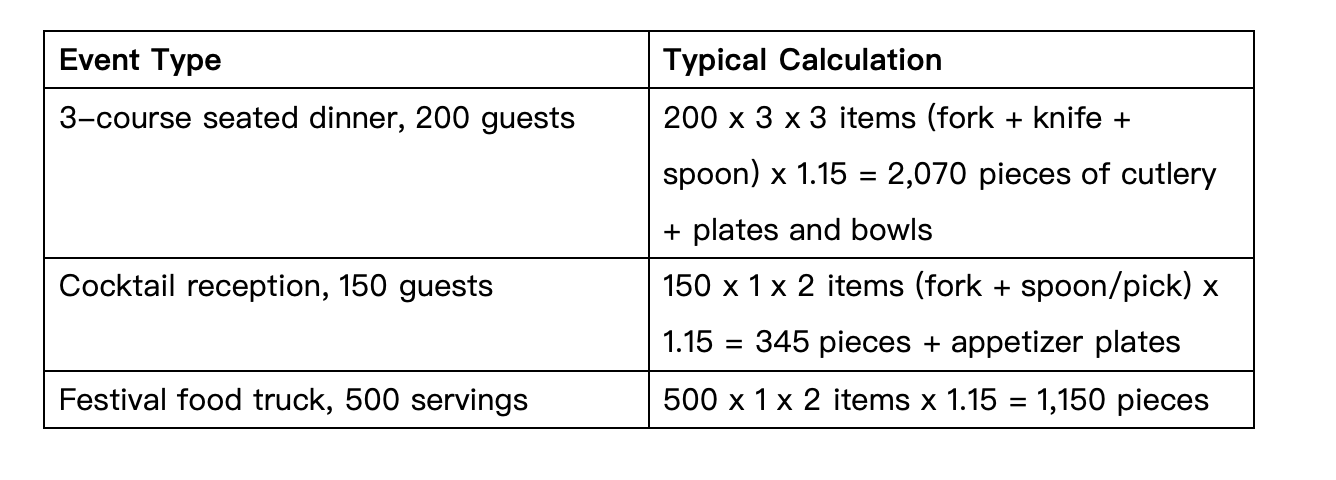
The 15% buffer accounts for drops, extras, and last-minute guest additions. For outdoor events, increase the buffer to 20%.
Cost Comparison per Set (Fork + Knife + Spoon)
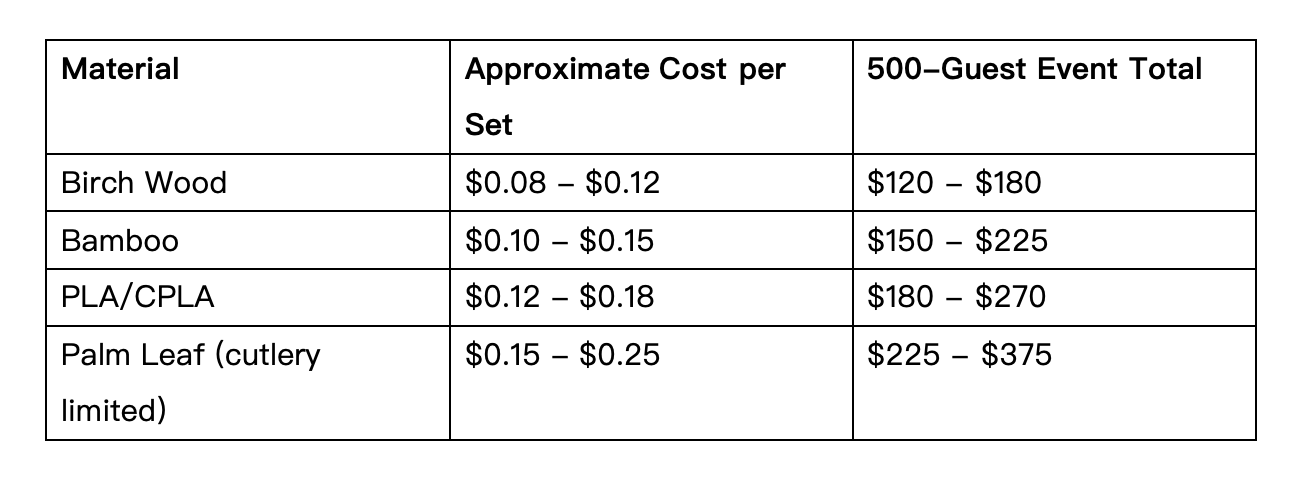
Prices based on disposable wooden cutlery wholesale quantities of 10,000+ pieces. Custom branding adds approximately 10-15%.
When to Order
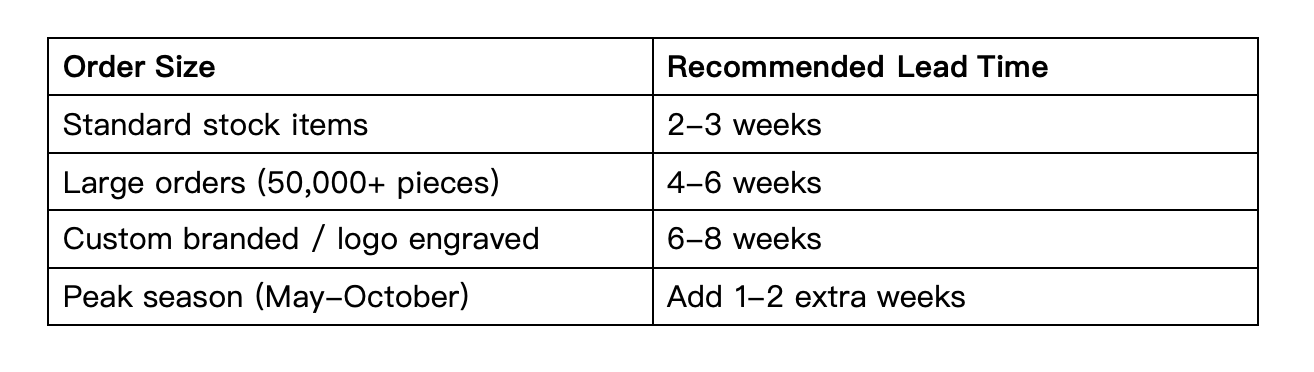
Pro tip: Lock in pricing and delivery 8-10 weeks before your event season starts. Demand spikes in spring and summer often cause delays and price increases.
Certifications That Matter — And How to Verify Them
When sourcing compostable cutlery for events, certifications separate credible products from greenwashing. Here's what to look for:
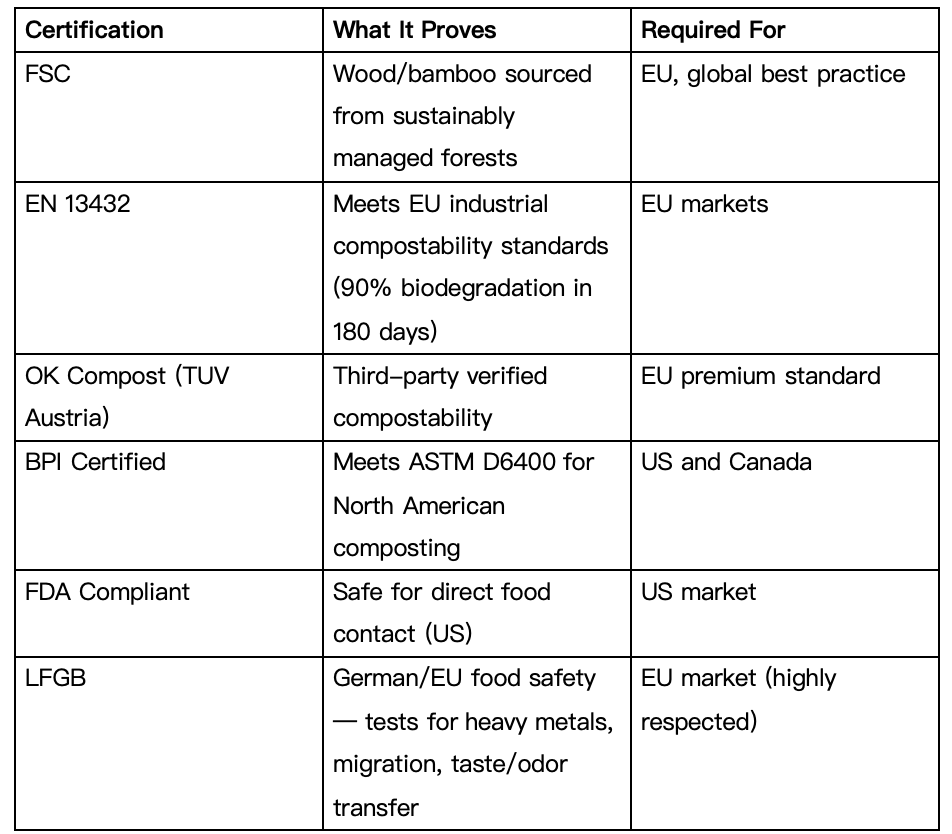
Why This Matters Especially for Events
Event planners are increasingly being asked to provide sustainability documentation for their events — by corporate clients, wedding couples, and venue managers. Having certifications on hand:
· Proves your claims if anyone questions the "eco-friendly" label
· Protects you from greenwashing accusations
· Satisfies venue sustainability requirements
· Gives your marketing team real credentials to promote
How to verify: Ask your supplier for copies of actual test certificates — not just logos on their website. Legitimate certifications have certificate numbers that can be verified with the issuing body.
Making Sure Your Compostable Tableware Actually Gets Composted
Here's a dirty industry secret: a lot of "compostable" event tableware ends up in landfills. Not because the products are bad — but because the waste management at the event isn't set up properly.
Setting Up Waste Stations at Your Event
A well-organized waste station makes the difference between "genuinely composted" and "went to landfill with a green label":
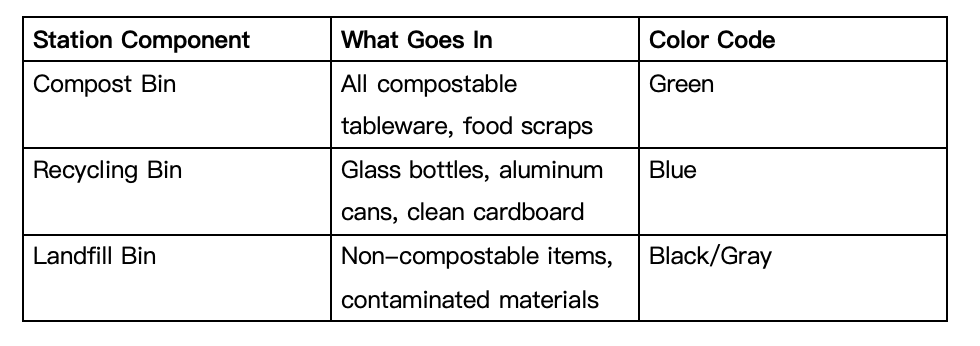
3Critical tips:
· Use clear signage with pictures — text alone doesn't work at events
· Place stations at every exit point and near food service areas
· Assign a waste ambassador at each station during peak service — this alone can boost proper sorting from 30% to 85%
· Coordinate with your waste hauler BEFORE the event to confirm they accept compostable tableware
The Biggest Mistake to Avoid
The #1 failure mode: buying certified compostable products but sending them to a waste hauler that doesn't separate compost from landfill waste. Always confirm your venue's waste management infrastructure before choosing materials.
If industrial composting isn't available at your venue, choose home compostable materials like wood, bamboo, or palm leaf. These will break down naturally even without specialized facilities — giving you a genuine sustainability story, not a marketing one.
Why Partner with ToGoTableWare for Your Events?
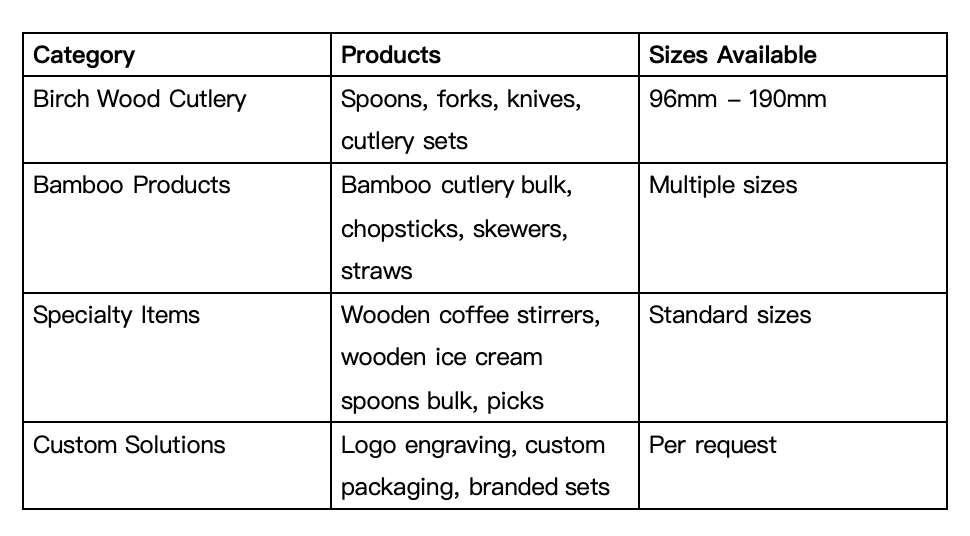
We've been manufacturing eco-friendly disposable cutlery since 1995 — long before "sustainable events" became a trend. Here's what we bring to event planners and caterers:
Our Event-Ready Product Range
What Event Clients Get
· Flexible MOQ — test with a small order before committing to a full season
· Volume pricing — the more you order, the better per-unit cost
· Full certification package — FSC, FDA, EN 13432, OK Compost documentation on request
· Custom branding — logo engraved or printed for branded events
· Reliable supply chain — consistent stock for recurring event operations
· Dedicated B2B support — a real person who answers when you call
The Bottom Line: Make Events Beautiful AND Sustainable
The event industry's shift from plastic to compostable isn't slowing down — it's accelerating. Regulations are tightening, couples and corporate clients are demanding it, and the products themselves have never been better.
For most events, birch wood cutlery paired with bagasse plates delivers the best balance of aesthetics, performance, and cost. For premium occasions where the tableware itself is part of the experience, bamboo cutlery and palm leaf plates create a genuinely impressive table.
The businesses that build their event supply chains around compostable tableware now will be the ones winning contracts for years to come. The ones still scrambling to find alternatives when the next regulation drops? They'll be paying rush prices and apologizing to clients.
Ready to Source Compostable Tableware for Your Next Event?