Your Coffee Shop's Plastic Problem Is About to Become a Legal Problem
We've been supplying wooden coffee stirrers and eco-friendly utensils to coffee chains, independent cafés, and bubble tea shops across 30+ countries since 1995. And here's what we're seeing: the cafés that switched to sustainable supplies two years ago are now winning the customers that their competitors are losing.
The numbers tell the story. The global biodegradable cups market is projected to hit $743.81 million in 2026 and surpass $1 billion by 2032. That's not a niche anymore — that's the mainstream.
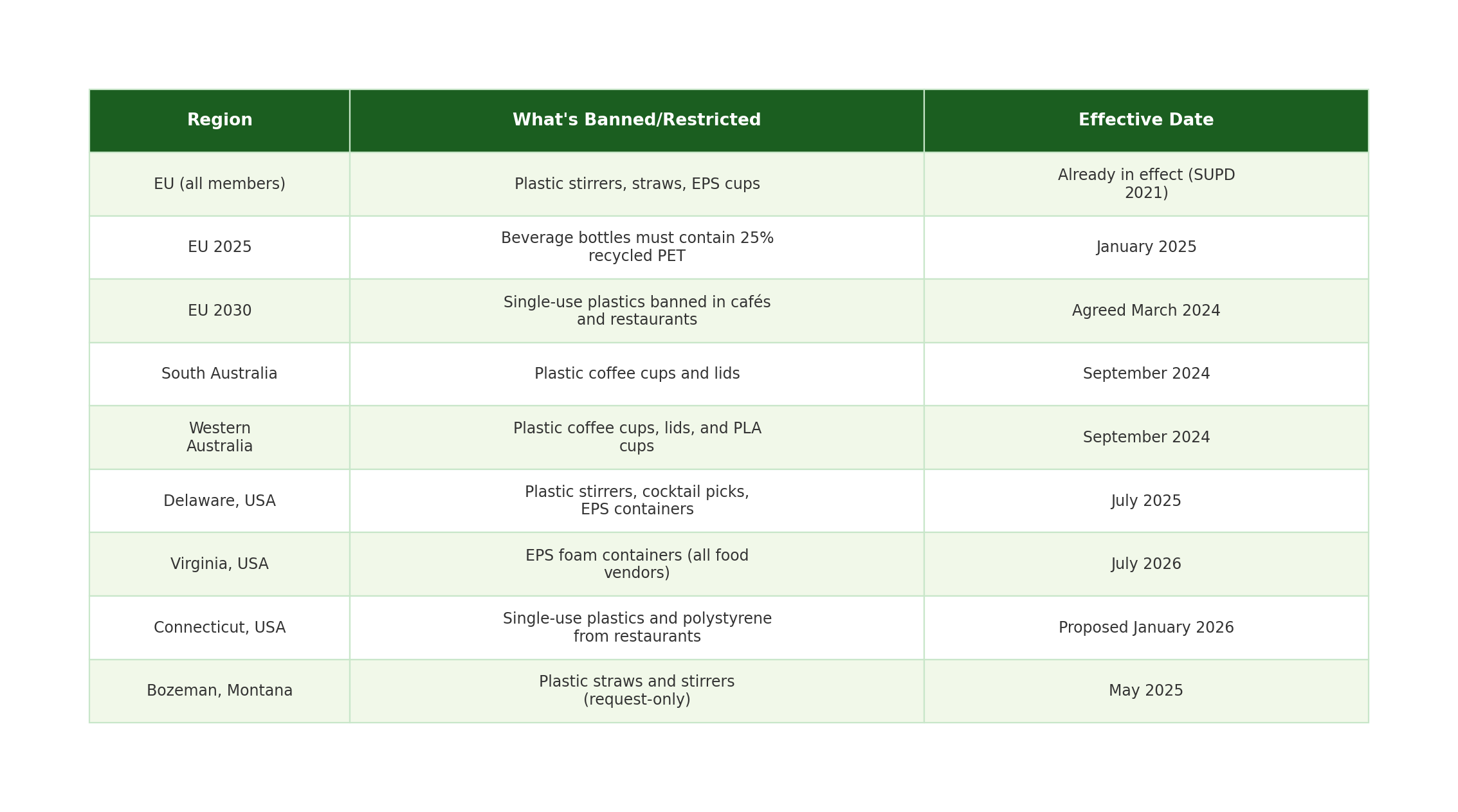
But here's the real urgency: regulations aren't coming. They're already here. The EU has already banned plastic stirrers and straws. Australia banned plastic coffee cup lids in South Australia and Western Australia. In the US, Delaware, Virginia, and Connecticut all have new single-use plastic restrictions taking effect in 2025-2026.
If you're a café owner, distributor, or foodservice buyer still sourcing plastic supplies, this guide will show you exactly what to switch to, what it costs, and how to do it without disrupting your operations.
Why Coffee Shops Must Switch to Eco-Friendly Supplies Now
The Regulatory Landscape Is Closing In
This isn't hypothetical. Here's what's already law or taking effect by 2026:
Your Customers Are Already Judging You
Gen Z and Millennial consumers — who now make up the majority of daily coffee buyers — actively choose brands based on sustainability credentials. A café still handing out plastic stirrers in 2026 sends a very clear (and negative) message about its values.
The Business Case Beyond Compliance
Switching to eco-friendly coffee shop supplies isn't just about avoiding fines. Cafés that have made the switch report:
· Higher customer loyalty — sustainability as a brand differentiator
· Premium pricing justification — customers accept paying more for eco-conscious brands
· Reduced waste disposal costs — compostable waste is often cheaper to process than mixed waste
· Marketing advantage — "100% plastic-free" is a powerful message on social media, storefronts, and delivery apps
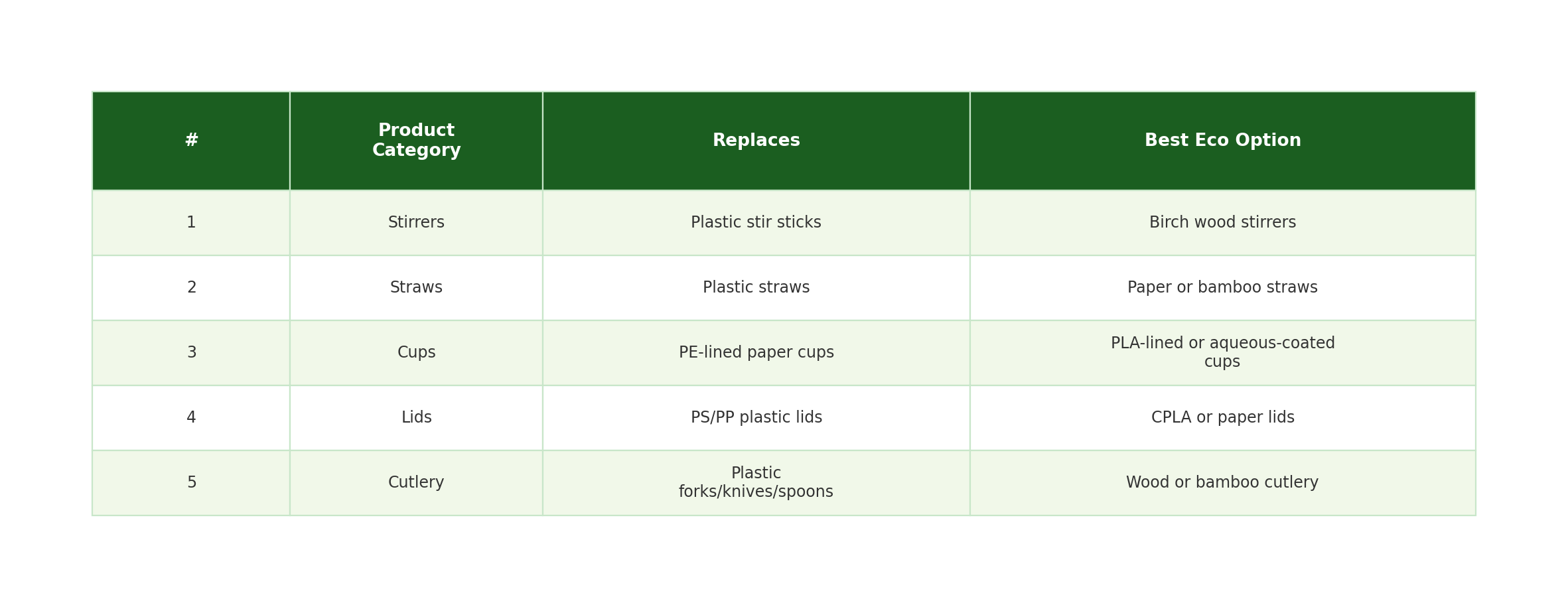
The 5 Essential Eco-Friendly Product Categories for Cafés
Here's the complete replacement checklist for every coffee shop:
1. Stirrers — The Easiest (and Most Impactful) Switch
Wooden coffee stirrers are the single simplest swap a café can make. They're cheaper than you think, fully home compostable, and customers actually prefer the feel.
Why birch wood wins:
· Cost-effective at scale — wooden coffee stirrers wholesale pricing starts at fractions of a cent per piece
· Smooth, splinter-free finish — no customer complaints
· 100% home compostable — breaks down in 90 days
· FSC certified options guarantee sustainable sourcing
· Available in multiple sizes: 110mm (espresso), 140mm (standard), 178mm (large)
Volume benchmark: A café serving 200 cups/day uses approximately 150-180 stirrers daily = ~55,000/year.
2. Straws — Multiple Options, Choose Based on Your Menu
The right straw depends on what you're serving:
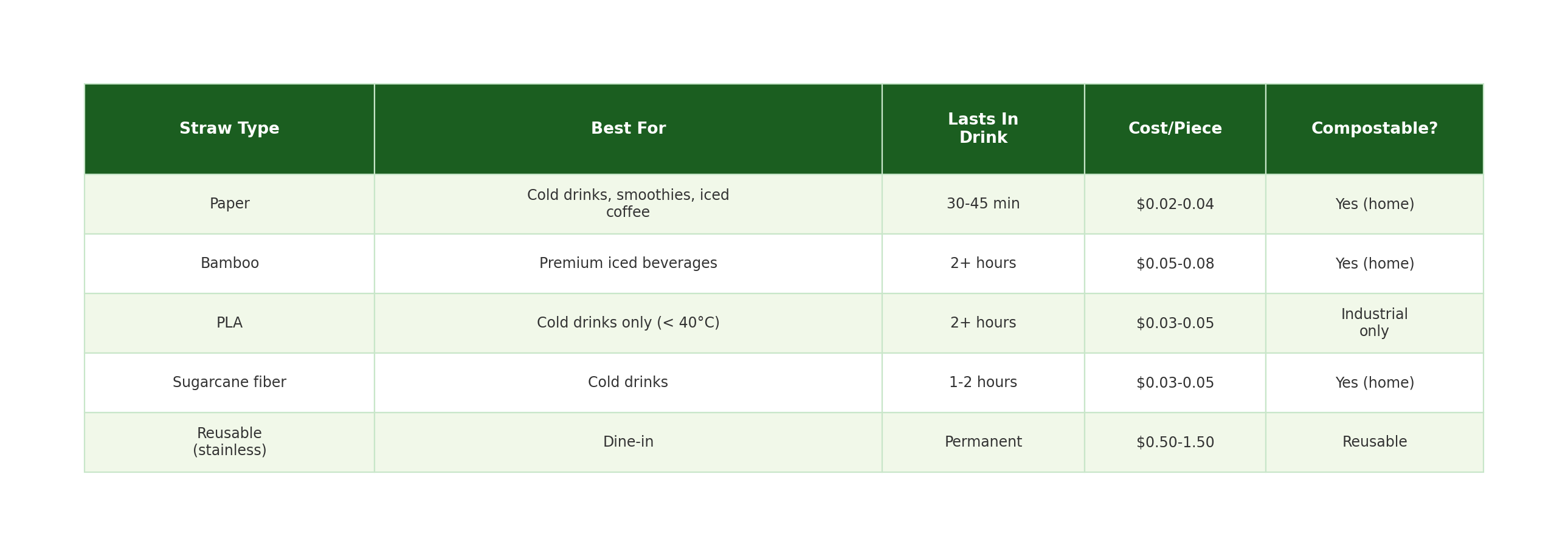
Our recommendation: Paper straws for high-volume takeaway. Bamboo straws for dine-in or premium beverages where the straw is part of the experience.
Watch out for: Paper straws that get soggy too fast — quality varies enormously between suppliers. Always request samples and test with your actual beverages before committing to a bulk order.
3. Cups — The Most Complex Switch
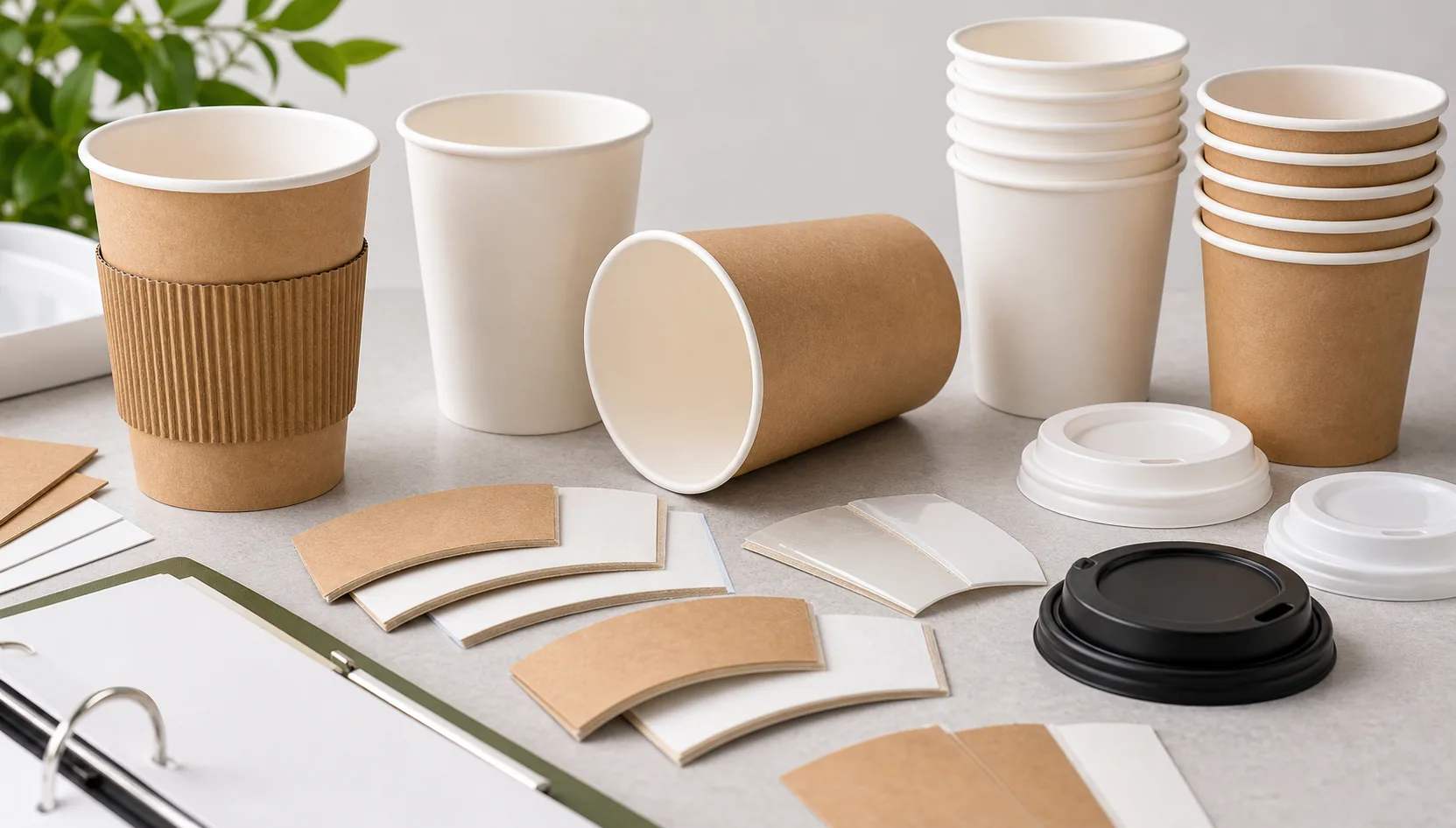
Coffee cups are the trickiest category because of the heat factor. Traditional paper cups use a PE (polyethylene) plastic lining that makes them non-recyclable and non-compostable. Here are the alternatives:
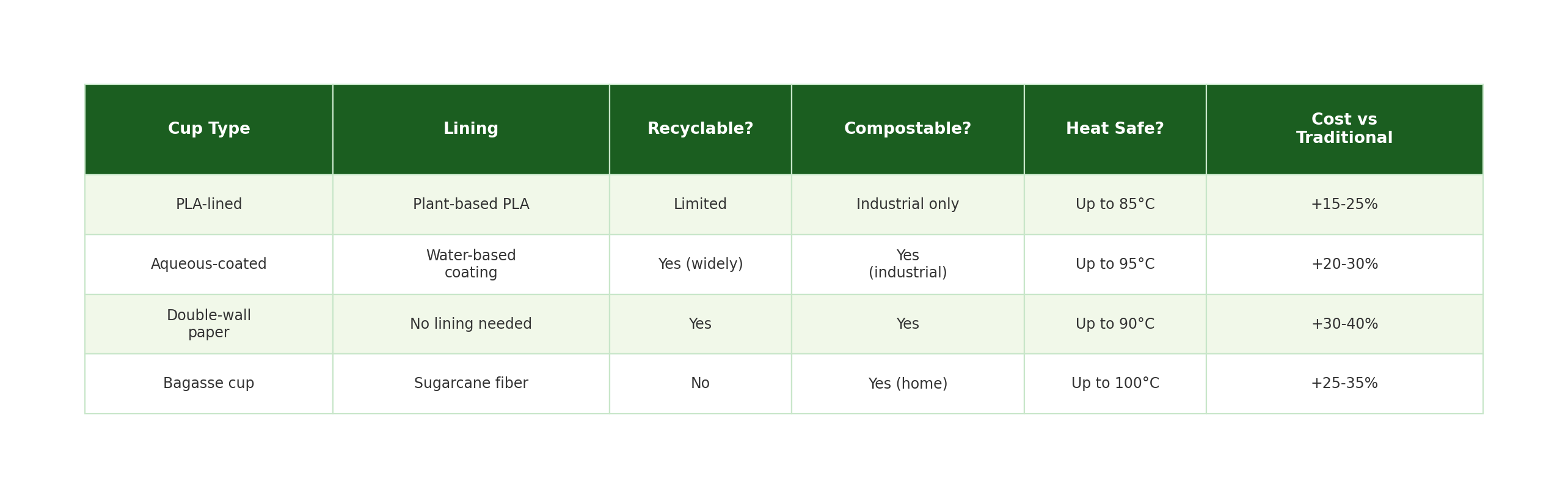
If your region has strong recycling infrastructure, aqueous-coated cups are the best all-around option. If composting infrastructure is better, PLA-lined or bagasse cups make more sense.
Pro tip: Incentivize reusable cups with a $0.25-0.50 discount per drink. Many successful cafés now see 15-25% of transactions using customer-owned cups.
4. Lids — Don't Overlook This One
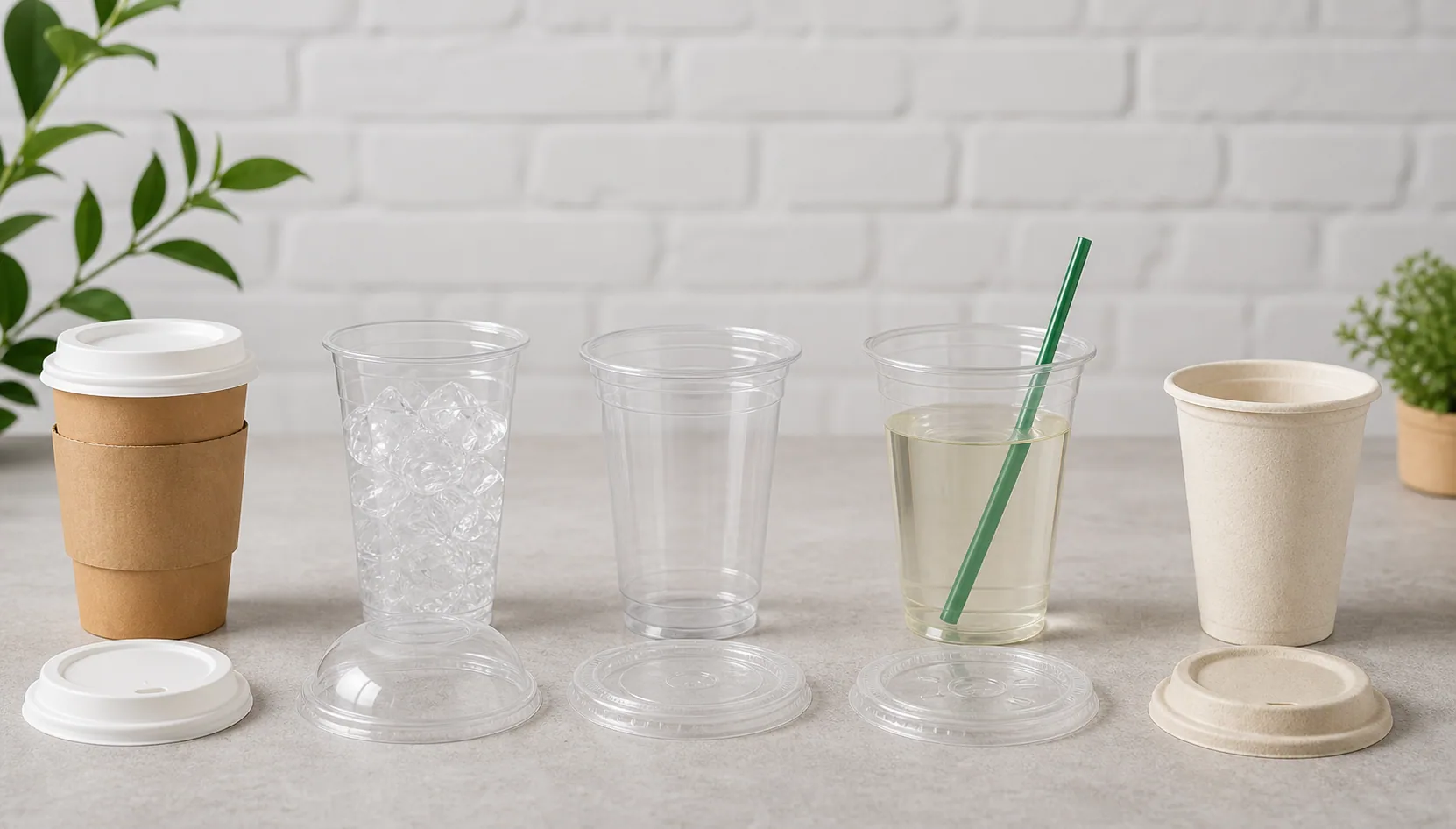
The lid is where many "eco-friendly" cafés slip up. Your cup might be compostable, but if the lid is PS or PP plastic, you've undermined the whole message.
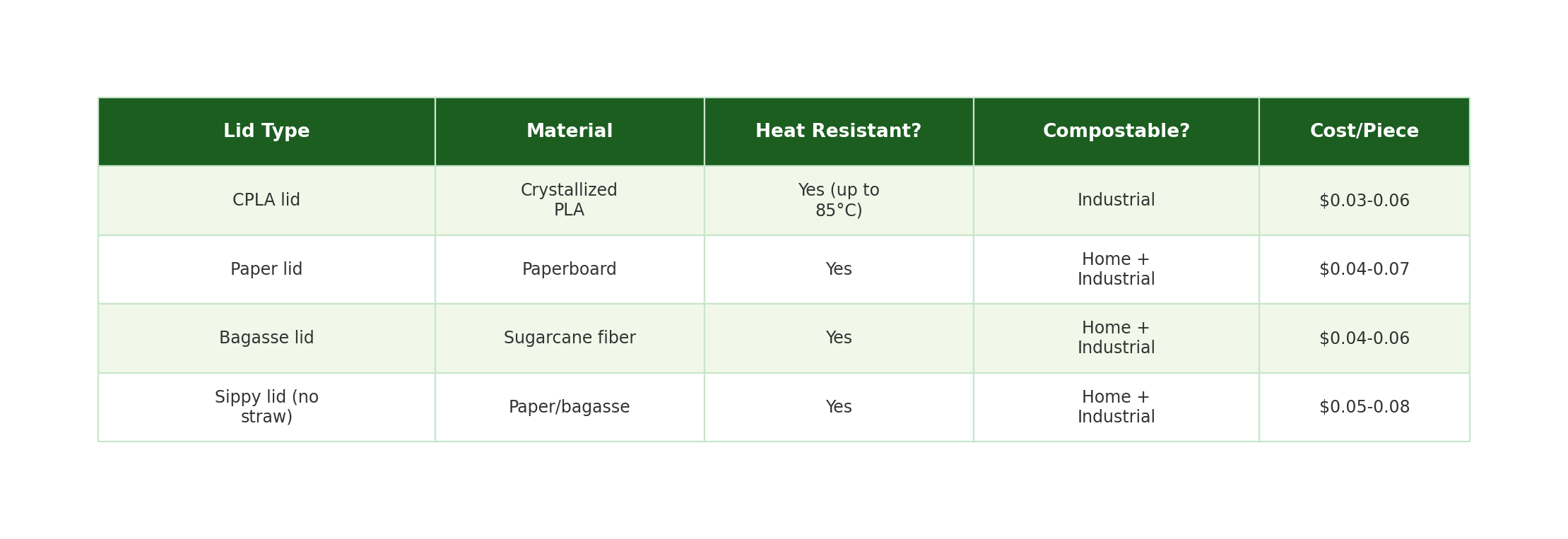
Our recommendation: Paper or bagasse lids for the best sustainability story. CPLA lids if your customers prefer the snap-on plastic-like feel.
5. Cutlery — Essential for Food-Serving Cafés
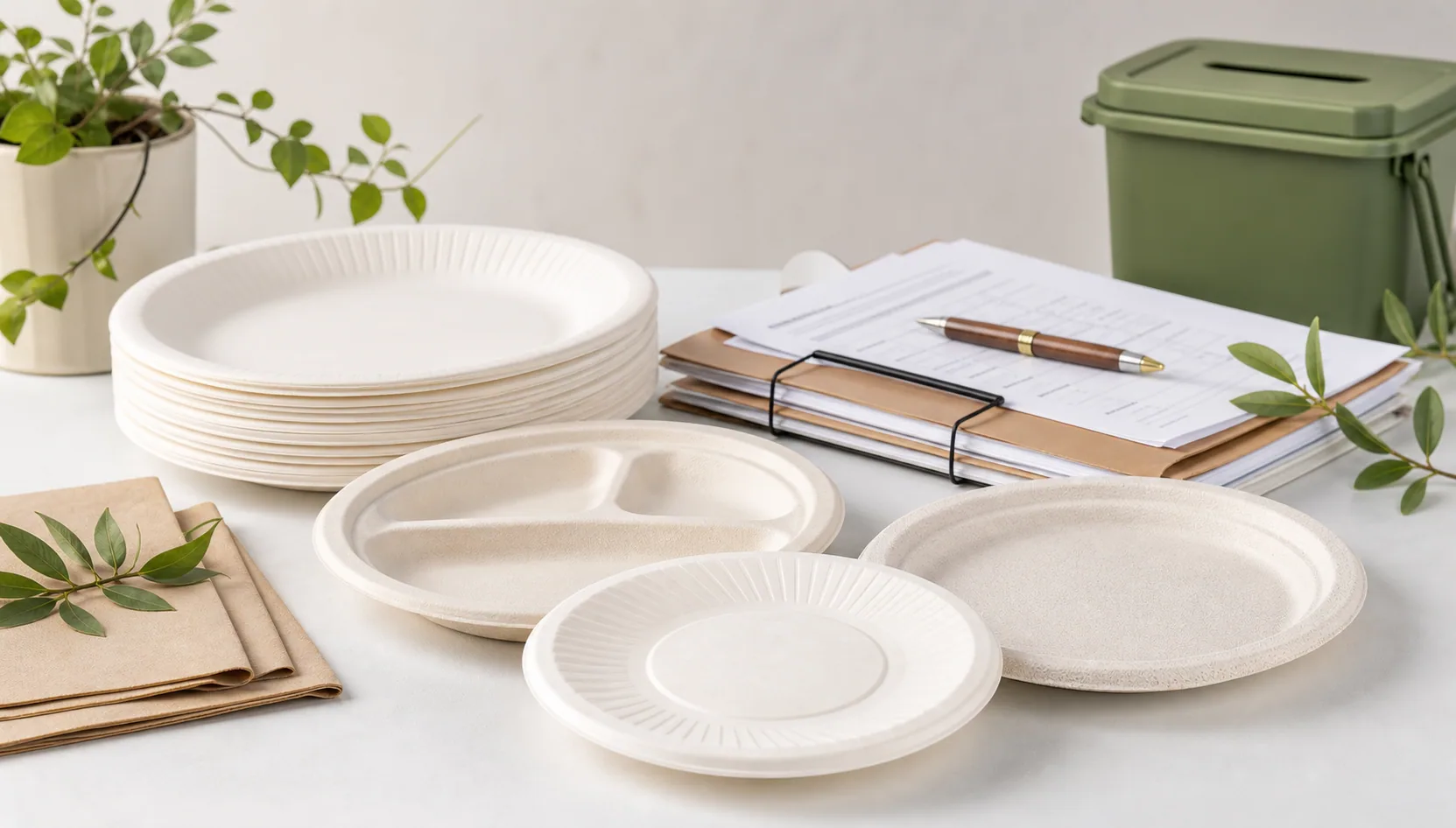
If your café serves food — sandwiches, salads, pastries, ice cream — you need eco-friendly cutlery for takeaway orders.
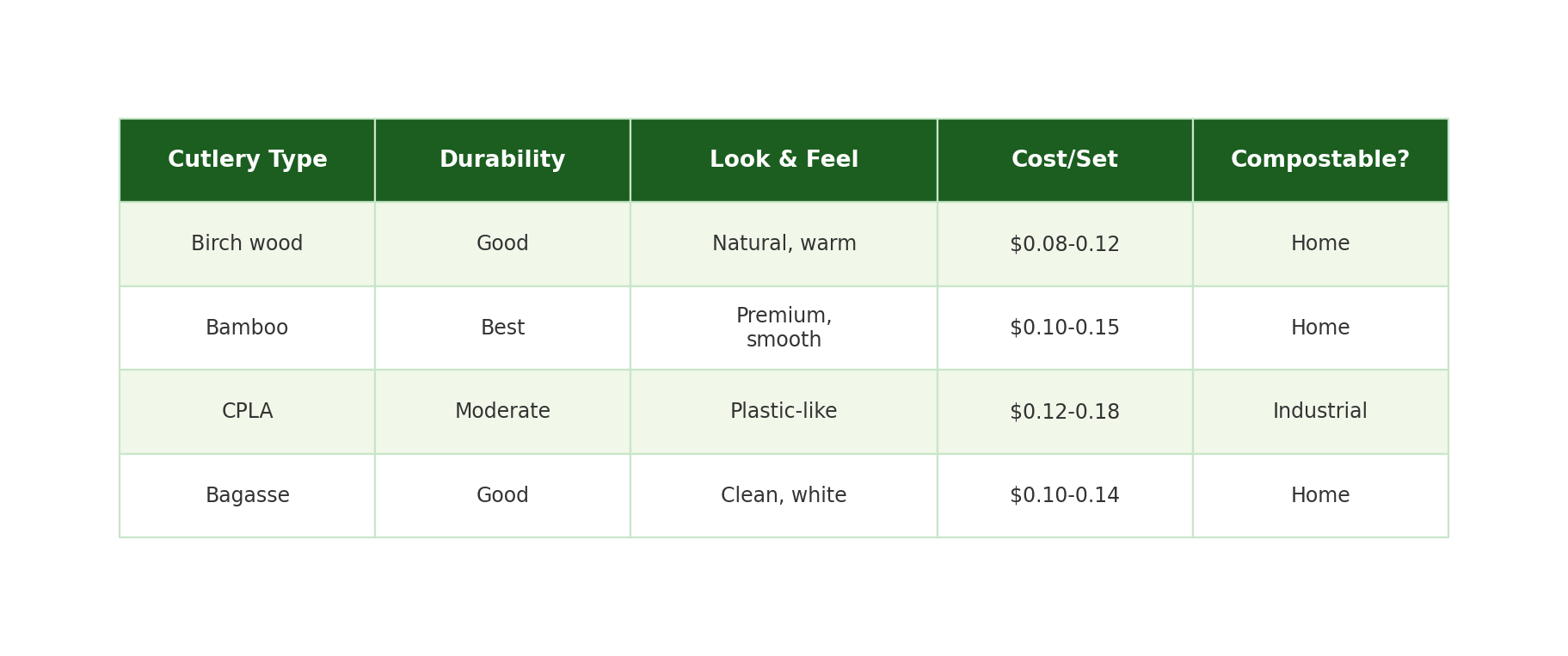
For cafés that serve desserts and ice cream, wooden ice cream spoons bulk orders are a natural fit — they come in multiple sizes and can be custom branded.
Materials Deep Dive: Hot Drinks vs Cold Drinks
The biggest mistake cafés make is using the same material for everything. Hot and cold drinks have completely different requirements:
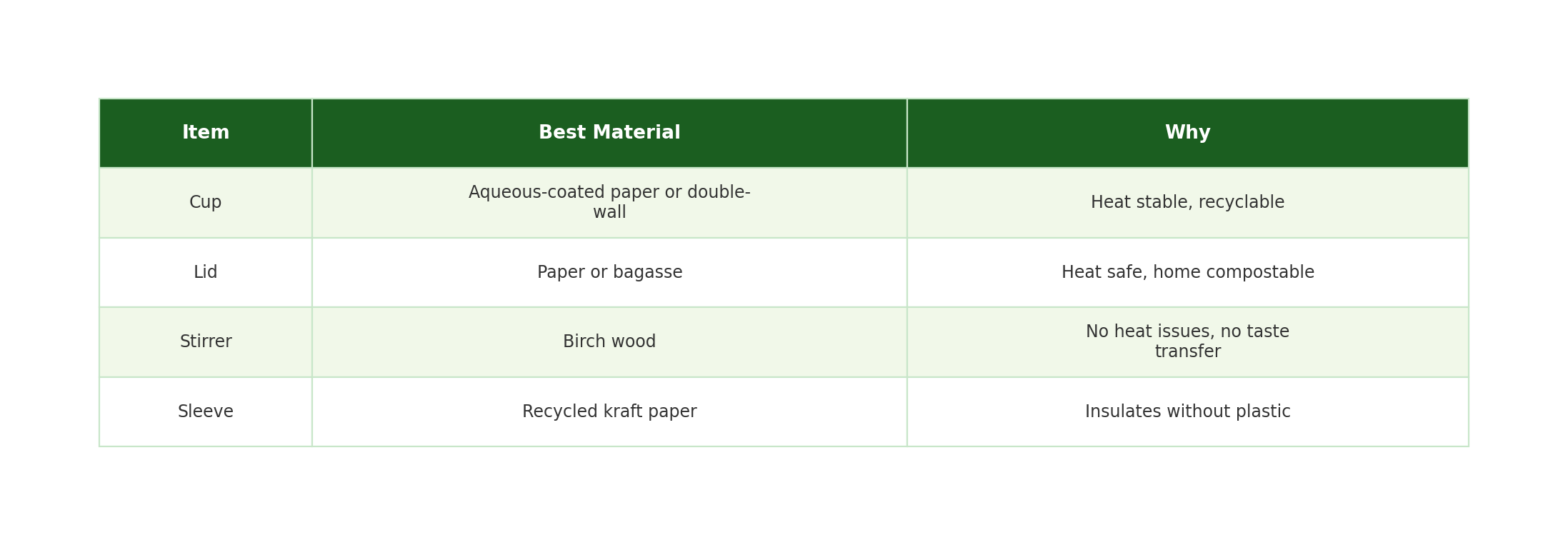
Hot Drinks (Espresso, Latte, Americano, Tea)
Critical factor: Heat resistance. Materials must handle 85-95°C without warping, leaching, or losing structural integrity.
Cold Drinks (Iced Coffee, Smoothies, Bubble Tea, Frappuccinos)
Critical factor: Condensation resistance and visual appeal (clear cups for layered drinks).
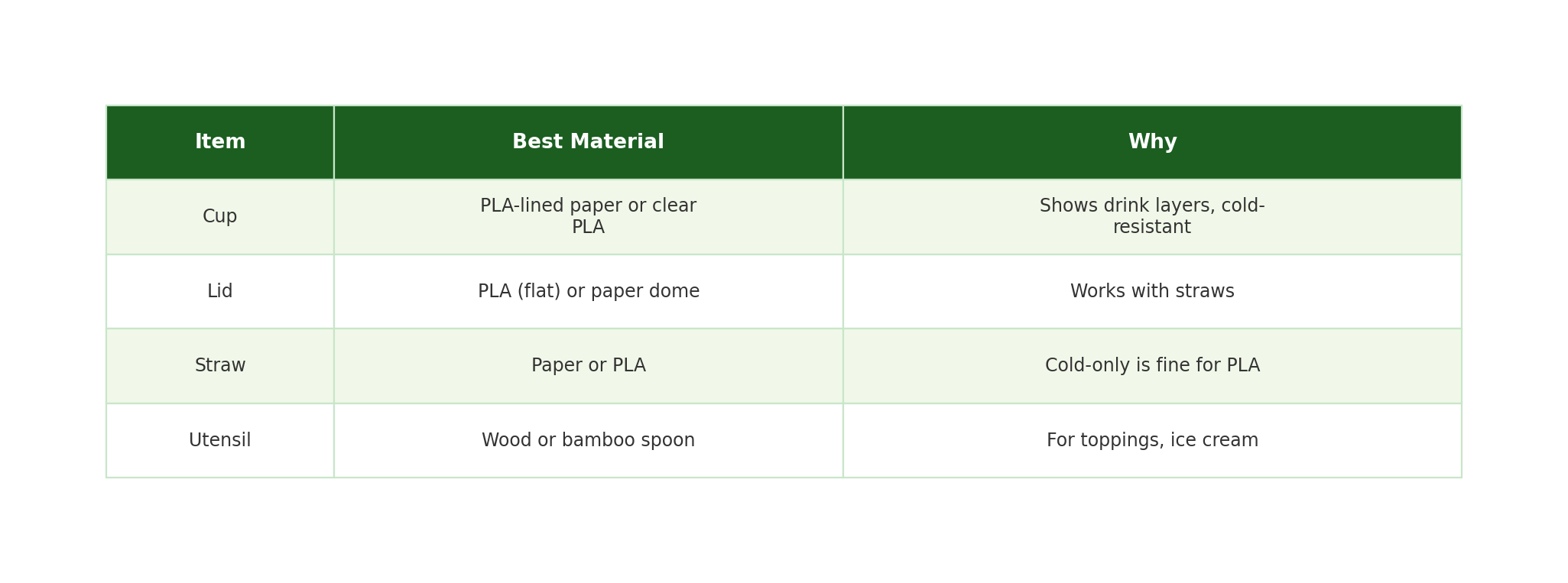
The key takeaway: Wood and paper work universally. PLA only works for cold applications. Plan your supply inventory accordingly — don't order PLA lids if most of your sales are hot lattes.
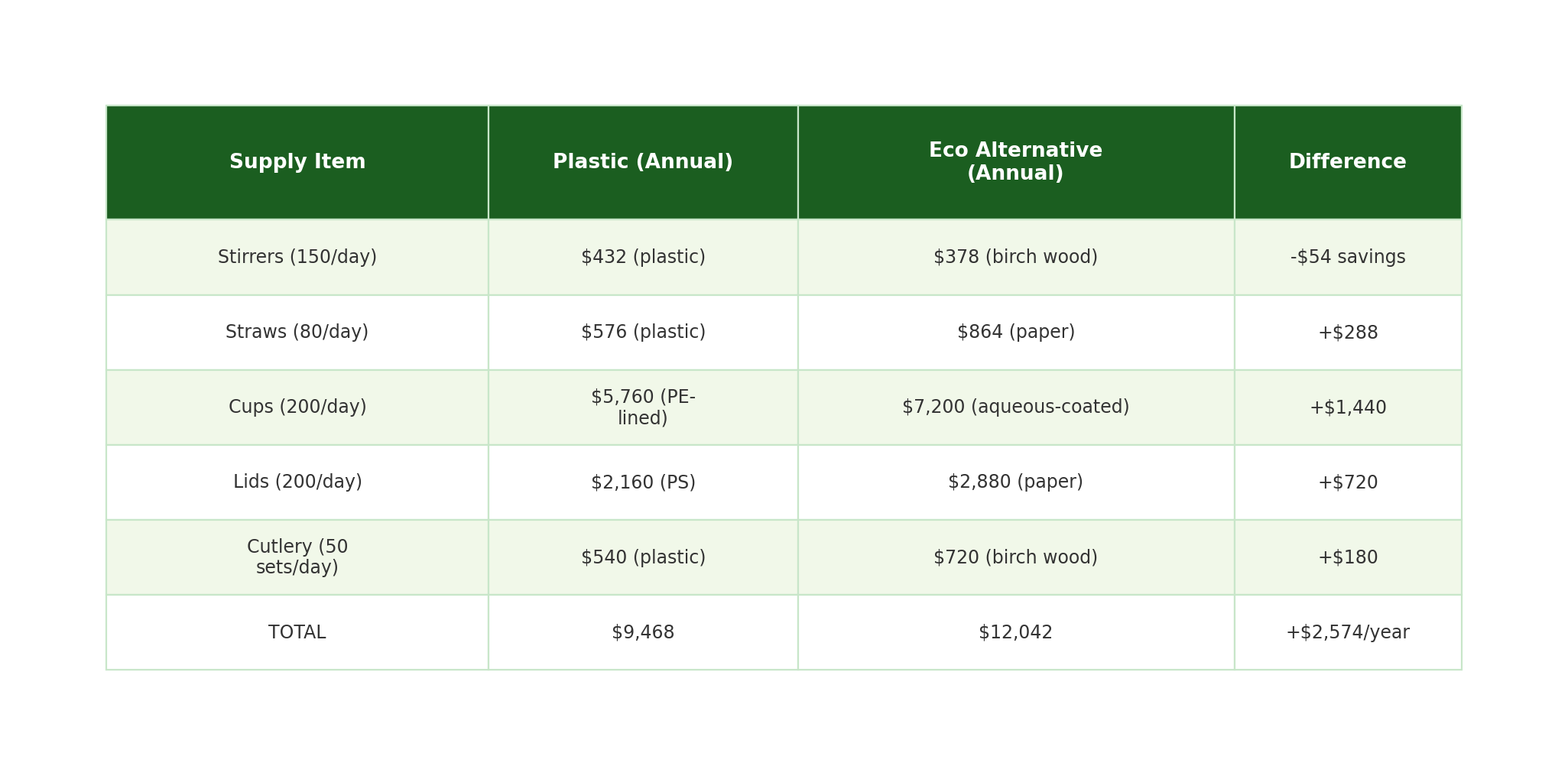
The Real Cost of Switching: A 200-Cup-a-Day Café Example
Let's do the math for a medium-sized café serving 200 cups per day, operating 360 days per year:
Annual Cost Comparison
The Hidden Savings That Offset the Cost
The $2,574 premium looks significant — but here's what the numbers don't show:
· Waste disposal savings: Compostable waste is 20-30% cheaper to process than mixed plastic waste. Estimated savings: $300-600/year
· Regulatory compliance: Some jurisdictions now fine businesses $500-1,000 per violation for using banned plastics
· Customer premium: Eco-conscious cafés can justify $0.10-0.25 higher prices per drink. At just $0.10 extra on 200 cups/day: +$7,200/year revenue
· Marketing value: "100% plastic-free café" branding generates organic social media exposure worth an estimated $2,000-5,000/year
Bottom line: The switch costs about $7/day extra in supplies — less than the price of two cappuccinos. And the revenue and brand benefits far exceed that investment.
How to Source Smart: Testing Suppliers and Avoiding Greenwashing
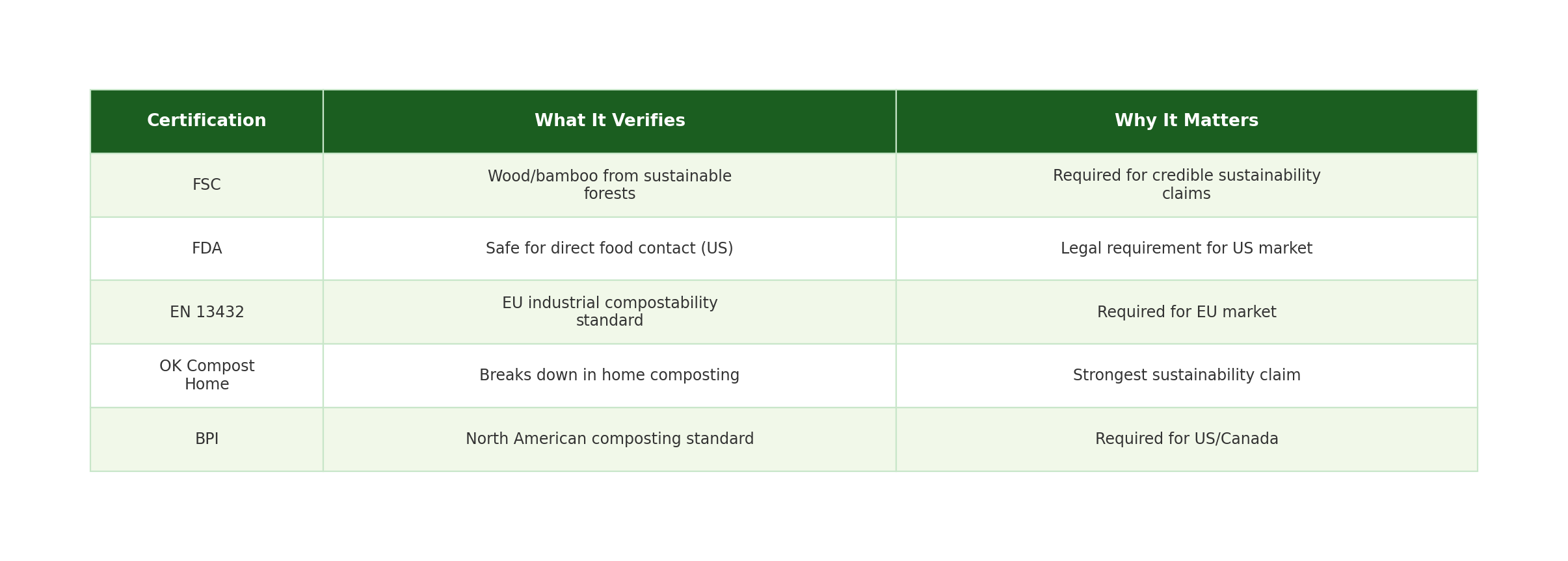
The Certification Checklist
Before committing to any supplier, verify these certifications:
Sample Testing: What to Check Before You Buy
Never commit to a large order without testing. Here's our recommended testing protocol:
For stirrers:
· Stir a hot espresso for 30 seconds — check for splinters, bending, or taste transfer
· Leave in hot water for 10 minutes — it should maintain shape
For cups:
· Fill with boiling water and let sit for 20 minutes — check for leaks, warping, or structural failure
· For cold cups: fill with ice water and leave for 2 hours — check for condensation failure
For lids:
· Snap-on fit test with your cup sizes — poor fit = spills = customer complaints
· Tip test: fill cup, attach lid, tilt 45° — it should not leak
For straws:
· Submerge paper straw in cold drink for 45 minutes — it should still be usable
· For smoothies: test with thick beverages — some paper straws collapse under suction
Ordering Timeline and MOQ Tips
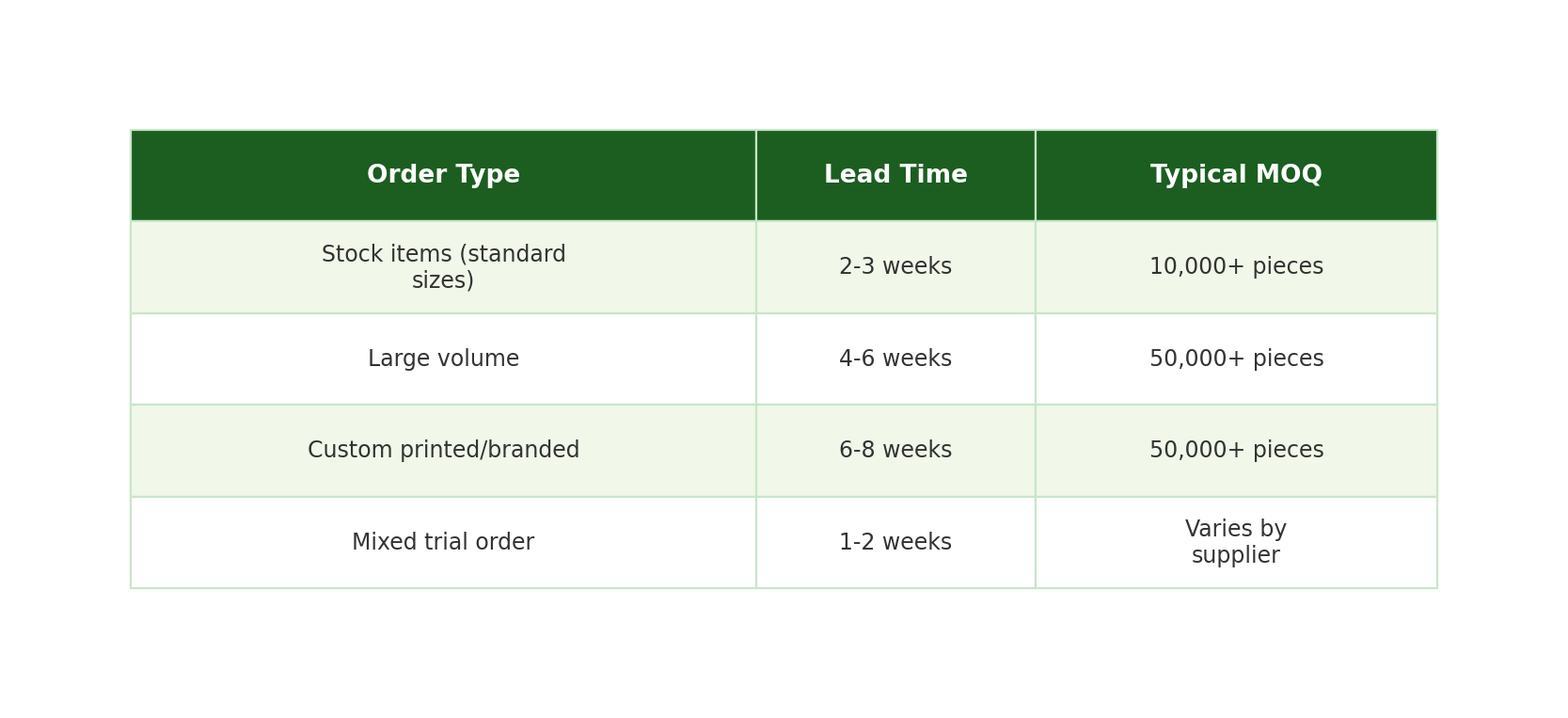
Storage tip: Keep wooden and paper products in a cool, dry environment. Moisture is the enemy — it can cause warping, mold, and early degradation. Most products have a shelf life of 18-24 months when stored properly.
Why Partner with ToGoTableWare?
We've been manufacturing eco-friendly coffee shop supplies since 2010. Here's what café operators and distributors get when they work with us:
Our Café-Ready Product Range
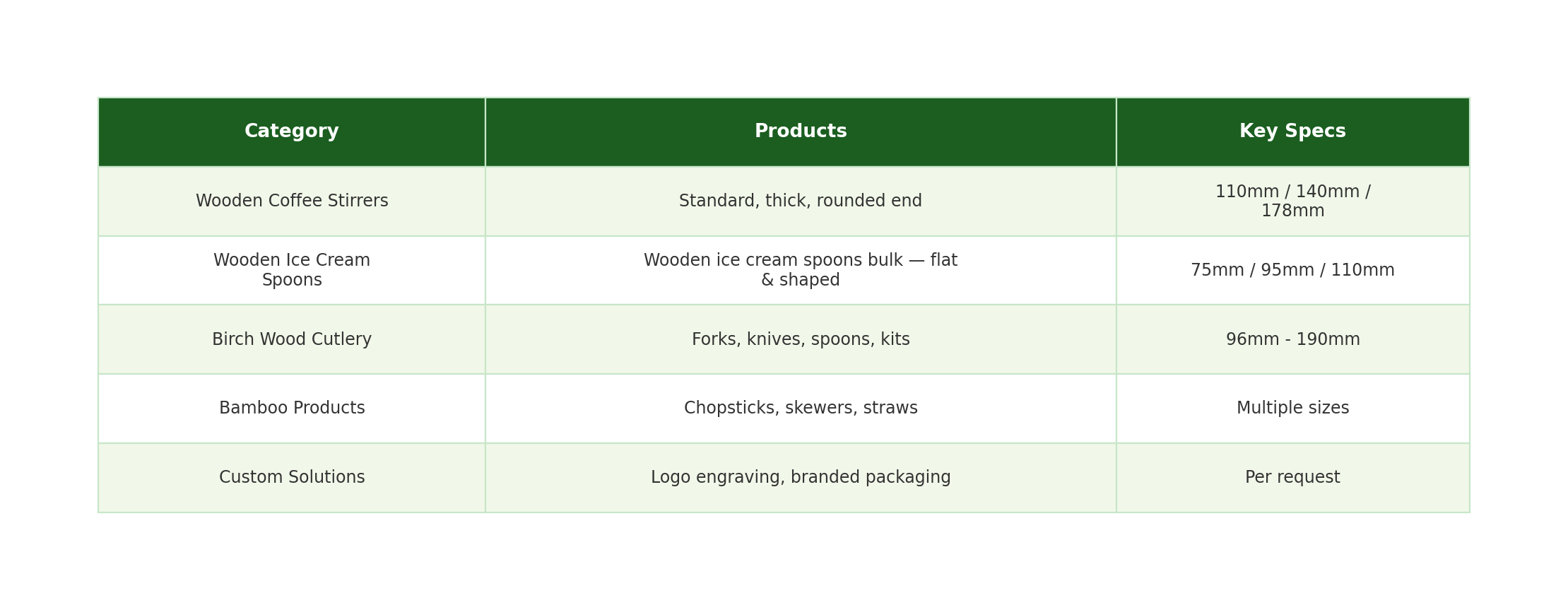
What Sets Us Apart
· Flexible MOQ — start with a trial order before scaling up
· Complete certification package
· Custom branding — logo engraved or printed on stirrers and cutlery
· Years of manufacturing expertise — we've been doing this since before it was trendy
· Global logistics — reliable supply to 30+ countries
Make Your Café Part of the Solution, Not the Problem
The coffee industry generates an estimated 16 billion disposable cups per year worldwide — and the vast majority end up in landfills. As a café owner or distributor, every supply decision you make either adds to that problem or helps solve it.
The good news? Switching to sustainable cafe packaging has never been easier or more cost-effective. Wooden stirrers are already cheaper than plastic. Compostable cups and lids are within 20-30% of traditional options. And the regulatory and consumer trends make this a question of "when," not "if."
The cafés making this transition today are building brand equity that will pay dividends for years. The ones that wait will be scrambling to catch up — paying premium rush prices and explaining to customers why they're still behind.