
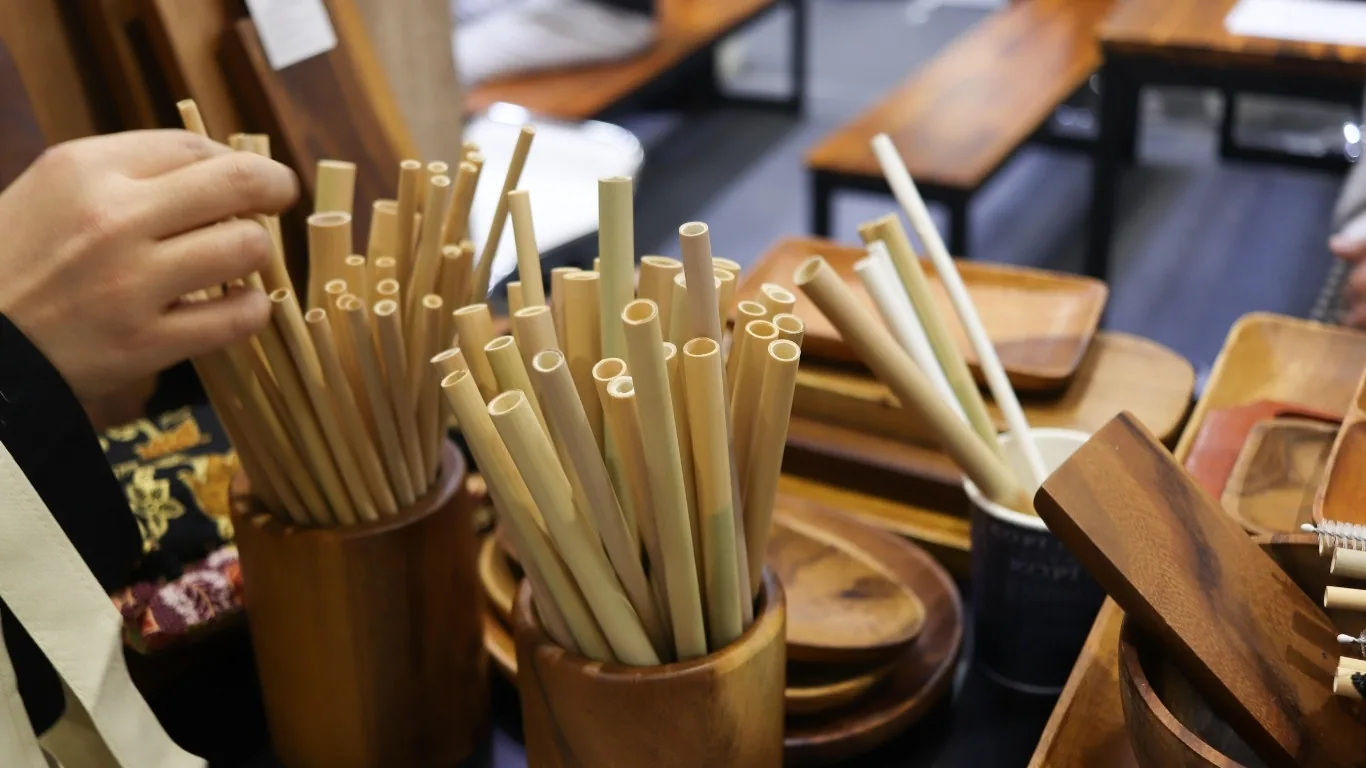
Bamboo straws can get moldy when moisture stays inside the tube or inside closed packaging. Cleaning alone is not enough; drying and ventilation are just as important. Commercial programs need a simple routine that staff can repeat during busy service, or a single-service bamboo format that avoids the cleaning workload.
Bamboo straw mold risk refers to the hygiene and appearance problems that occur when natural bamboo stays damp, holds drink residue, or is stored without airflow. The risk is closely tied to moisture, sugar, milk, fruit pulp, storage conditions, and the reuse practices of the staff.
Why Bamboo Straws Can Get Moldy
Bamboo is a natural tube. Its texture is part of the premium look, but natural material can hold moisture if the straw is not dried fully. Sweet drinks, smoothies, coffee, milk tea, citrus cocktails, and fruit pulp can leave residue inside the straw.
For any reusable food-contact item, safety principles reinforce the importance of intended use. For reusable bamboo straws, this intended use must include the cleaning, drying, storage, and return-to-service routine.
TOGO's Recommended Care Routine for Reusable Programs
Care Step | Staff Action | Hygiene Benefit |
|---|---|---|
Immediate rinse | Clear sugar, pulp, milk, and alcohol right after use | Prevents staining and stubborn odor |
Inner brushing | Scrub the inner channel, not just the outer surface | Eliminates hidden drink residue |
Upright air dry | Allow full airflow around and inside the straw | Prevents trapped moisture |
Ventilated storage | Keep in open containers; avoid sealed pouches | Significantly reduces mold risk |
Pre-service inspection | Discard straws with odor, stains, or cracks | Protects the final guest experience |
Reusable bamboo works best in controlled dine-in service. In our successful hospitality projects, the venue usually sets up a visible dirty-straw collection point, dedicated cleaning brushes, drying racks, and a strict pre-service inspection rule. The system is kept simple enough for bar staff to follow even during rush hours.
If the process depends solely on one careful person, it risks failing during staff turnover. That is why TOGO often suggests reusable bamboo for smaller menus or premium service moments where the team can manage the washing cycle consistently.
Single-Service Bamboo for Events and Hotels
Single-service bamboo keeps the natural look without requiring collection and washing after service. This model fits weddings, outdoor catering, welcome drinks, resort bars, and one-time hospitality events. Individual wrapping or event-ready cartons can make service easier.
TOGO's bamboo straws can support both reusable and single-service programs. If you are still weighing material choices, you can also review our paper and wheat options.
Moisture Control Before and After Delivery
Mold prevention starts before the straw reaches the counter. Drying, inner packing, carton protection, and warehouse condition all matter for bamboo. After delivery, cartons need a dry storage area with airflow and no direct contact with wet floors or humid walls.
For reusable programs, the highest-risk moment is after washing. A straw can look clean but still hold moisture inside. Air drying with enough time and space is more reliable than closing damp straws inside pouches, drawers, or sealed containers.
Packaging and Care Cards
Retail bamboo straw kits need clearer instructions than foodservice bulk packs because the customer takes the product home. A brush, pouch, and care card make the kit easier to understand. The care card can explain rinse, brush, dry fully, and store in a ventilated place.
For hotel or event service, care cards may not be needed, but packing still matters. Inner pack count, wrapping style, carton marking, and dry storage all affect the final service experience.
If you need guidance on bamboo straw care, single-service options for an event, or bulk pricing for your venue, reach out to us at [email protected] or send a message on WhatsApp at +852 5181 0016.
Bamboo Straw Mold FAQ
Can bamboo straws be reused safely?
They can be reused when cleaning, drying, storage, and inspection are controlled. Reuse is not only a product decision; it is an operating routine.
Why does a bamboo straw smell?
Odor can come from drink residue, poor drying, damp storage, or production quality. Strong odor in a new sample deserves extra review.
Are disposable bamboo straws easier for events?
Often yes. Disposable or single-service bamboo keeps the natural presentation while removing the cleaning burden after the event.