Understanding Hot-Drink PLA
When evaluating can pla straws be used in hot drinks, the crucial distinction lies in the specific engineering of the straw. "PLA for hot drinks" refers to a finished PLA straw whose material blend and wall structure have been specially engineered to maintain stiffness in warm or hot beverages. Standard cold-drink PLA is an entirely different product. While the two share a base resin, they behave very differently when the beverage temperature moves beyond standard cold-service conditions.
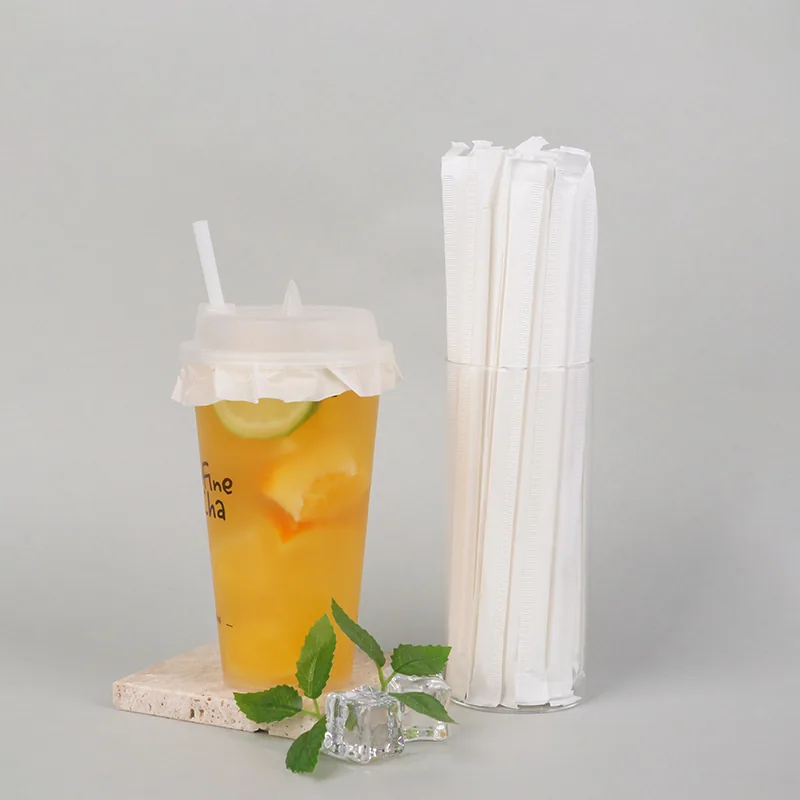
In production and sourcing files, hot-drink PLA should never be treated as a casual footnote added to a cold-drink SKU. The specific resin blend, the wall's structural feel, the color, the application label, and the rigorous sample testing all need to perfectly match the intended hot beverage. This fundamental difference is why TOGO meticulously lists hot-drink PLA straws separately from standard cold-drink PLA options. While a purchasing team might look at a photo and simply see two similar white straws, the detailed quote, the sample bag, and the carton mark must clearly differentiate the application from the very beginning.
Performance Depands on the SKU
Regular cold-drink PLA belongs strictly in iced coffee, juice, or iced tea—drinks served at or below room temperature. Understanding the pla straw melting point is vital; using a standard cold-drink straw in a hot latte will likely cause the wall to soften rapidly. The ultimate performance depends entirely on the finished product's specific formulation, the beverage's temperature, the cup used, and the expected service time.
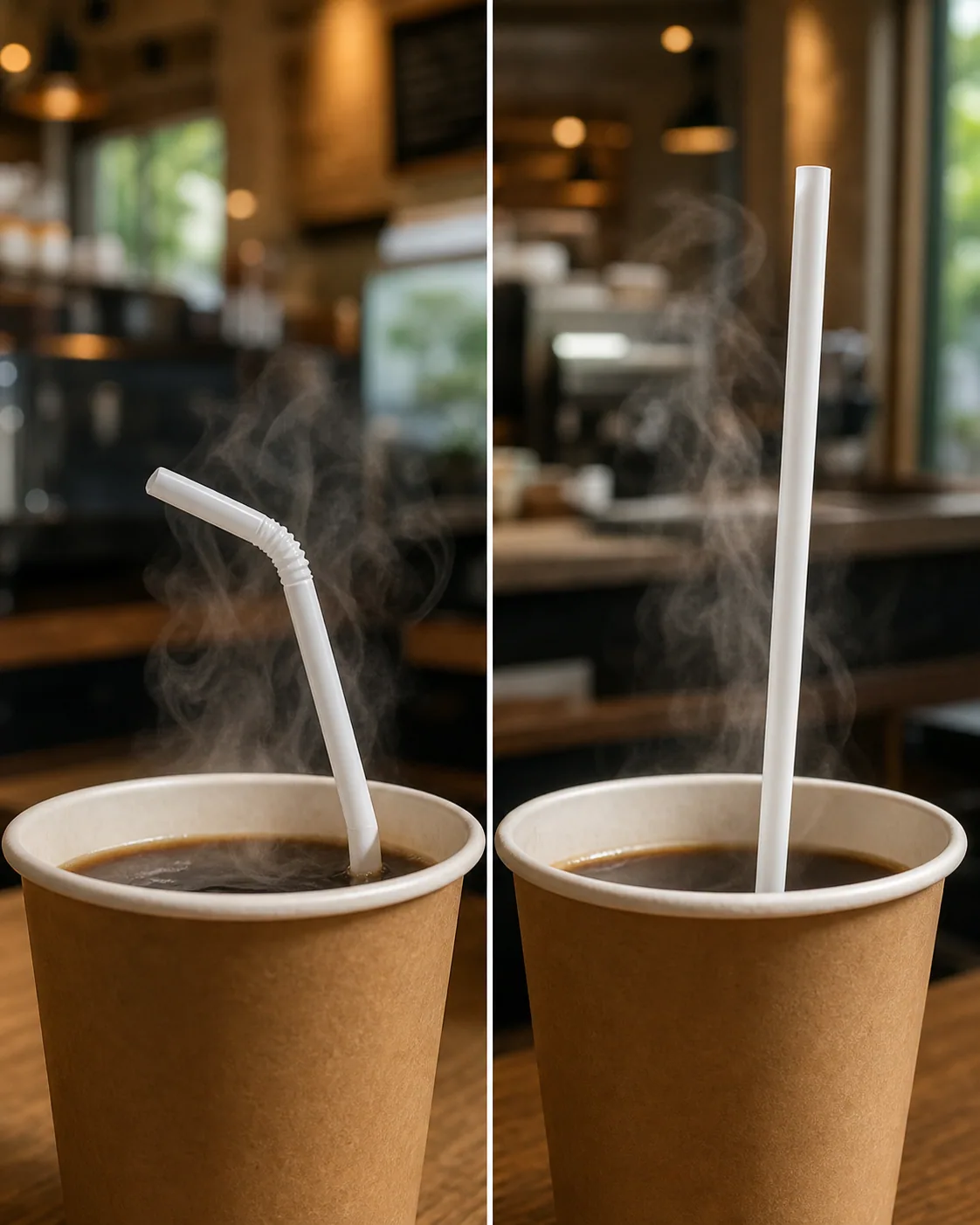 We have run this exact comparison in our sample room dozens of times. A direct side-by-side sample test quickly makes the difference apparent, reinforcing that cold-drink PLA and heat resistant pla straws are distinctly different finished products.
Furthermore, the EPA's biobased plastics FAQ highlights a broader point worth noting: a material's origin does not answer every performance question. Regardless of its plant-based origins, a straw must always be thoroughly tested in the actual beverage it is intended to serve.
Operational Challenges for Cafés
Because PLA looks and feels so much like conventional plastic, staff often grab whatever carton is closest. During a chaotic morning rush, it is rare for anyone to read the carton label twice. Café chain buyers frequently discover this problem only after receiving direct customer complaints—for example, a warm oat-milk latte handed out with a standard cold-drink PLA straw that went completely limp before the customer even reached their car.
The root cause of these issues is almost never a failure of the material itself; rather, it is a lack of strict SKU control. When a cold-drink PLA straw and a hot-drink PLA straw sit side-by-side on the same shelf in similar-looking cartons, operational mix-ups become almost inevitable. One hotel group successfully solved this challenge by actively requesting entirely different straw colors for hot and cold service—such as solid white for hot drinks and clear translucent for cold—allowing baristas to distinguish them instantly at a glance.
Cold-Drink PLA vs Hot-Drink PLA: Real Performance
| Condition | Cold-Drink PLA (standard) | Hot-Drink PLA (TOGO SKU) | What We Observe |
|---|---|---|---|
| Iced coffee, iced tea (0–10°C) | Firm, smooth feel | Also works, but higher cost | Cold-drink PLA is the natural fit |
| Room-temperature juice | Usually suitable | Often unnecessary | Standard PLA may be enough; confirm with samples |
| Warm milk tea (40–50°C) | Noticeable softening after 3–5 min | Holds rigidity through service | Test with actual drink and lid |
| Hot latte or americano | May soften or deform | Designed for warm-drink service; verify by sample test | Cup height, lid seal, and straw diameter all affect result |
| Near-boiling water | Not a normal straw-use condition | Not intended for this range unless product-specific evidence supports it | Do not use PLA straws for near-boiling liquid unless the finished product has specific support |
What Makes TOGO's Hot-Drink PLA Different
Our PLA Hot Drinking White Straw uses a crystallization-enhanced PLA blend. In practical terms, the straw wall resists deformation at temperatures where standard PLA would soften. It should be reviewed for warm beverage service, not near-boiling liquid.
During sample testing, we send both the hot and cold versions so the buyer can compare side by side in their own drinks. A real-cup dip test tells you more than a spec sheet alone. We've found that buyers who skip this step and order based on data alone end up switching SKUs after the first month.
Diameter should be selected around the drink, lid and flow requirement. Wrapping options are the same as our cold-drink range. Because hot-drink PLA is a separate SKU, it is best used only for drinks that actually need it.
Practical Tips for Managing Hot and Cold PLA
Keeping two PLA SKUs without mix-ups takes a few small operational steps:
- Carton marks: We print "HOT USE" or "COLD USE" in large text on opposite sides of each carton. Ask for contrasting label colors if your warehouse stores them in the same zone.
- Staff shorthand: One chain we supply labels their station bins "W-HOT" and "T-COLD" (white hot, translucent cold). Simple, but it eliminated complaints within a week.
- Catalog separation: If you distribute both, list them as distinct line items with different product codes. A generic "PLA straw" listing invites the wrong assumption.
The FTC's Green Guides apply to wrapper wording regardless of whether the straw is hot- or cold-use — so keep environmental claims consistent with your test documentation on both SKUs.
How Hot-Drink Service Changes the Test
A straw in a hot drink gets treated differently than one in iced tea. Customers hold hot cups longer, sip more slowly, and sometimes leave the straw sitting in warm liquid for 15 minutes or more. Staff may also insert the straw before handing the drink over, which adds dwell time.
During our sample evaluations, we recommend testing with the actual beverage, the actual cup height, and the actual lid. A 6mm straw that passes a bench test in plain hot water may behave differently in a thick hot chocolate with whipped cream pressing against the straw opening.
If the account serves both hot and cold drinks, the order should specify quantities for each SKU separately rather than defaulting to one "PLA straw" line item.
Finalizing Your Hot-Drink Strategy
When building a robust beverage program, assuming that standard cold-drink PLA will suffice for hot coffee is a fast track to customer complaints. Standard cold-drink PLA is fundamentally not suitable for high-temperature applications. You must use a specifically engineered hot-drink PLA SKU, and more importantly, you must physically test it with your actual cup, your specific lid, and your exact beverage.
Even with a specialized hot-drink formulation, temperature thresholds matter. A hot-drink PLA straw is designed to handle warm-to-hot beverages during a typical service window; however, it should not be treated as indestructible or assumed suitable for near-boiling liquids without explicit, product-specific support and rigorous testing.
To eliminate the guesswork, TOGO provides comprehensive comparison kits containing both our specialized PLA Hot Drinking White Straw and our standard PLA Straws Wholesale options, allowing your team to conduct side-by-side performance evaluations against your actual menu. When you are ready to find the perfect fit, reach out to us with your beverage types, exact serving temperature ranges, cup heights, lid styles, preferred straw diameters (typically 6mm or 8mm), packing formats, service conditions, destination market, and forecast quantities. We will match the right samples to your specific operational realities and provide a precise quote for a hot-drink PLA specification that will not let your customers down.