Understanding the Core Concepts
Industrial composting is a highly managed decomposition process conducted in a commercial facility with controlled heat, moisture, aeration, and microbial activity. When buyers ask are pla straws compostable at home, the distinction becomes critical. A "compostable PLA straw" generally refers to a finished product backed by evidence for an industrial composting pla route, such as meeting ASTM D6400 standards where applicable, rather than an uncontrolled backyard environment.
This distinction explains why TOGO carefully separates product specification from claim wording on PLA straw projects. The physical straw can be sampled and quoted purely as a PLA cold-drink straw long before the final wrapper language is decided. If the project eventually requires compostable wording, that wording is rigorously checked against available product evidence and the realities of the destination market. The objective is not to amplify the claim unnecessarily; rather, it is to ensure the label, quote, sample record, and carton information remain perfectly aligned and factually accurate.
The Reality of Industrial Composting Facilities
Because most buyers have never seen the inside of a composting facility, the word "compostable" often remains somewhat abstract. In practice, evaluating how does pla break down requires understanding these environments.
Industrial composting facilities are designed to receive organic waste and, in specific markets, accepted certified compostable packaging. The material is processed in intensely managed systems—such as windrows or enclosed vessels—where moisture, aeration, and heat are strictly controlled to accelerate breakdown.
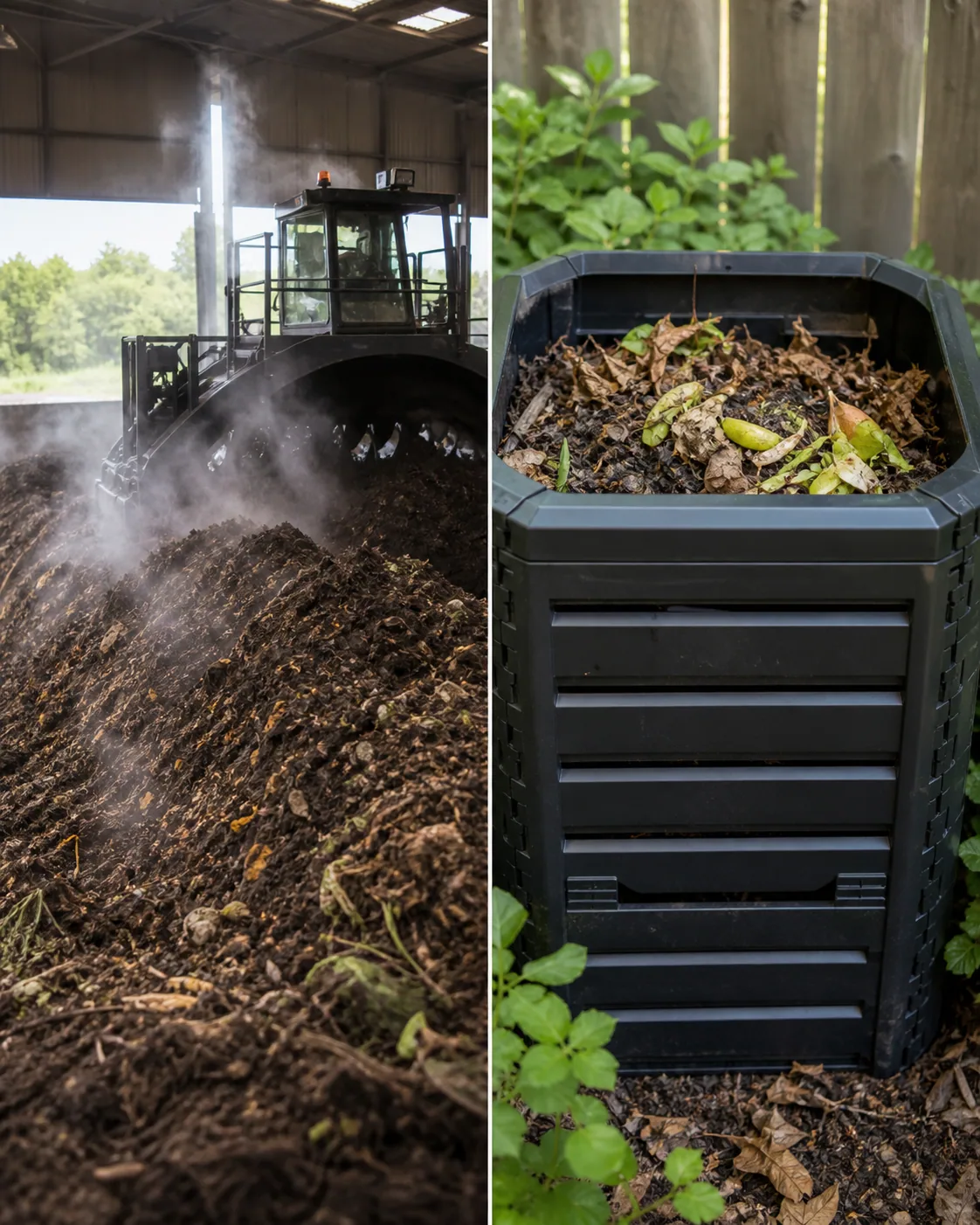 These optimized conditions differ vastly from a typical backyard bin, where temperatures and moisture levels are inconsistent. Consequently, a PLA straw should never be promoted as backyard compostable unless the finished product has specific, undeniable evidence supporting that exact claim.
Where the Confusion Actually Comes From
We hear the same questions from buyers regularly. For instance, many assume that because their straws are PLA, they can automatically print 'compostable' on the wrapper. This is not inherently true; PLA is merely the material name. Compostability is a highly specific claim about the finished product under defined disposal conditions, meaning any wrapper claim must match explicit product evidence and local market regulations.
Another common misconception is relying solely on a generic factory statement. A statement about the resin is not equivalent to a finished-product test report. ASTM D6400 testing and third-party BPI compostability certification are conducted on the actual finished product, not just the raw material. Additionally, while regions like California require compostable foodservice ware, the product must still meet SB 1383 collection requirements and be accepted by local haulers and facilities.
These aren't edge cases. They come up in nearly every PLA straw project where the buyer wants environmental wording on the packaging, underscoring the need for careful, product-specific verification.
PLA Composting Conditions Comparison
| Condition | Industrial Composting Facility | Backyard Compost Bin |
|---|---|---|
| Temperature | Controlled facility conditions | Weather-dependent and inconsistent |
| Moisture control | Monitored and adjusted | Varies with rain, watering habits |
| Aeration | Mechanical turning or forced air | Manual turning, irregular |
| Microbial management | Optimized for throughput | Natural, uncontrolled |
| PLA breakdown timeline | 8–12 weeks typical | Months to years, often incomplete |
| Regulatory framework | ASTM D6400, EN 13432 | No standard applies |
Does Your City Actually Accept PLA?
Having a compostable PLA straw with proper certification is one thing. Whether it goes into the compost stream at its destination is another.
Some cities — parts of San Francisco, Seattle, Portland — have commercial composting programs that accept certified compostable foodservice packaging. Others technically have composting programs but exclude foodservice items because the facility operator doesn't want the contamination risk. Many mid-size cities have no commercial composting infrastructure at all.
For multi-location chains, this creates a real problem. The same straw might be genuinely compostable in one city and headed for landfill in another. We've worked with distributor programs that ended up printing two wrapper versions — one with composting language for markets with accepting facilities, and one without for everywhere else. More work upfront, but it avoided the customer-service headache of explaining why a "compostable" straw went in the trash.
Aligning Your Packaging Wording
A highly practical approach drawn from hundreds of wrapper proofing cycles is to finalize your claim wording before the artwork begins, rather than treating it as an afterthought.
Inconsistencies often arise when a product page says "plant-based," the wrapper says "compostable," and the carton uses "biodegradable." Presenting three different claims on three different surfaces creates confusion. The distributor's sales team struggles with inconsistent messaging, and the end customer might read the wrapper and incorrectly expect backyard compostability. This misalignment complicates the entire supply chain.
The most effective solution is choosing a single, unified set of words. If the product holds BPI certification or an ASTM D6400 test report, phrases like "commercially compostable" or "industrially compostable where accepted" are highly defensible. If product-level evidence is still pending, using "plant-based PLA" maintains accuracy while the documentation is finalized. Including the agreed-upon claim wording on every TOGO quote ensures consistency across wrapper proofs, carton marks, and sales sheets.
Choosing the Right PLA Straw for Your Program
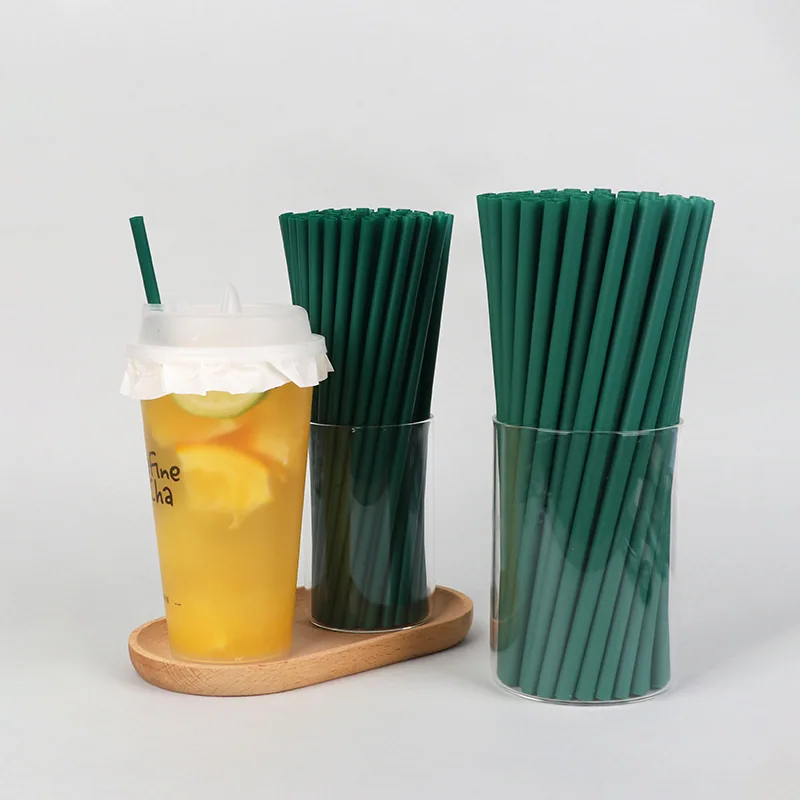
The composting question matters, but it shouldn't overshadow the product decision. A PLA Cold Drinking White Straw works in iced coffee programs whether the wrapper says "compostable" or not. A PLA Green Sugarcane Bagasse Straw gives a natural visual for natural-positioned or organic-branded concepts. A PLA Plant Fiber Short Straw fits cocktail and juice-bar programs where shorter lengths and a craft aesthetic matter.
Start from the drink and the customer experience. Layer in the composting claim only where the evidence and the local infrastructure support it.
Clarifying Your Environmental Claims
When preparing to source bio-based straws, understanding the precise differences in environmental terminology protects both your brand and your customers. A frequent point of confusion is the difference between "commercially compostable" and "home compostable." Commercially compostable means the product requires the high-heat, highly managed environment of an industrial facility to break down effectively. Home compostable means it can break down under the lower-temperature, less consistent conditions of a backyard bin. In practice, standard PLA straws should almost never be assumed suitable for backyard compost.
Furthermore, while PLA can biodegrade under proper industrial conditions, using the term "biodegradable" without clear qualification is risky because it falsely implies the straw will break down harmlessly in any environment. You should only print terms like "compostable" on your custom PLA straw wrapper when the finished product has explicit test evidence (such as ASTM D6400 or BPI certification) and your target destination market actually possesses facilities that accept it. Printing claims without this rigorous product-level backing creates significant regulatory and customer-trust risks.
At TOGO, we prioritize aligning your operational needs with accurate, defensible claims. When you are ready to evaluate options, share your specific drink program, your destination market, the wrapper language you are considering, and your order forecast with us. We will provide targeted samples from our PLA Straws Wholesale collection, perfectly matching the SKU to your cup and lid, and include all available claim documentation. If your program specifically requires BPI-certified options, letting us know upfront allows us to narrow the SKU selection immediately and provide a precise, compliant quotation.