
Why Restaurants Moved Away From Plastic Straws
Many restaurants began reviewing straw programs because of regulation, brand policy, and customer pressure. In the European Union, the European Commission notes that certain single-use plastic products, including straws, could no longer be placed on EU member-state markets from 3 July 2021. In some U.S. cities, rules focus on straw-by-request service; Portland's policy covers restaurants, bars, coffee shops, hotels, caterers, and food service contractors.
That context creates a practical need for alternatives. Paper straws are familiar, easy to present as a non-plastic option, and available in many sizes and colors. The tradeoff is performance: a weak paper straw in the wrong drink can create more complaints than the plastic straw it replaced.
Paper vs Plastic Straws in Restaurant Service
Service Factor | Paper Straws | Plastic Straws |
|---|---|---|
Customer perception | Clear non-plastic signal | Familiar but often less preferred in plastic-reduction programs |
Drink performance | Strong in short-service cold drinks when matched well | Consistent strength across many drinks |
Menu fit | Needs size and strength matching | Easier one-size approach |
Regulation exposure | Often used as a plastic alternative | Restricted or limited in many markets |
Branding | Custom colors, kraft look, wrapped formats | Limited sustainability story |
Storage | Needs dry storage | More tolerant of humidity |
Where Paper Straws Work Well
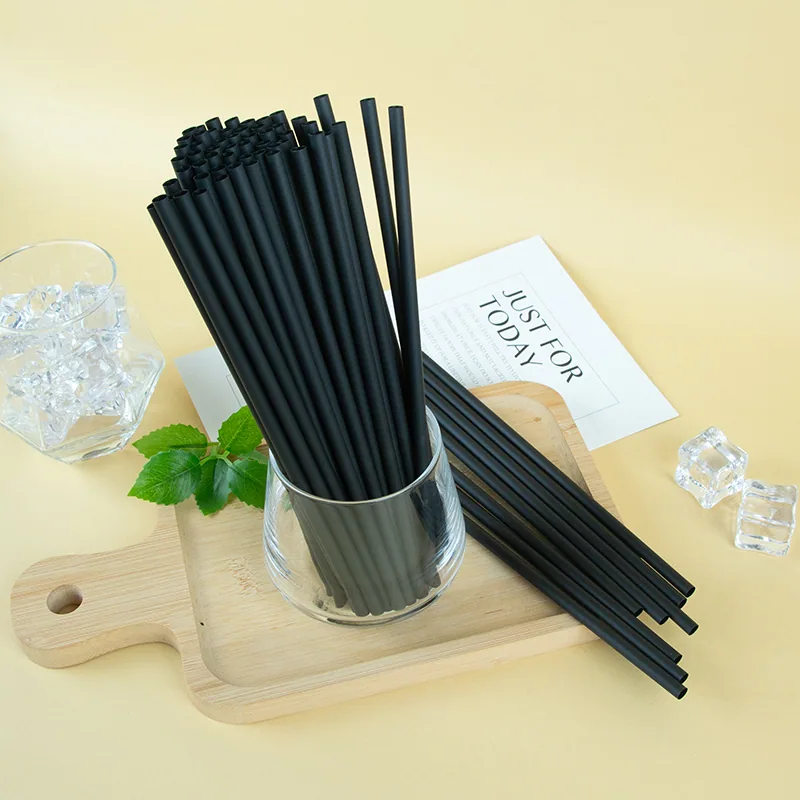
Paper straws work well for water, soda, iced tea, lemonade, cold brew, and many iced coffee programs. Wrapped paper straws can fit takeaway counters, hotels, catering packs, and hygiene-sensitive service. Black paper straws or kraft paper straws can support bar, hotel, and casual dining presentation.
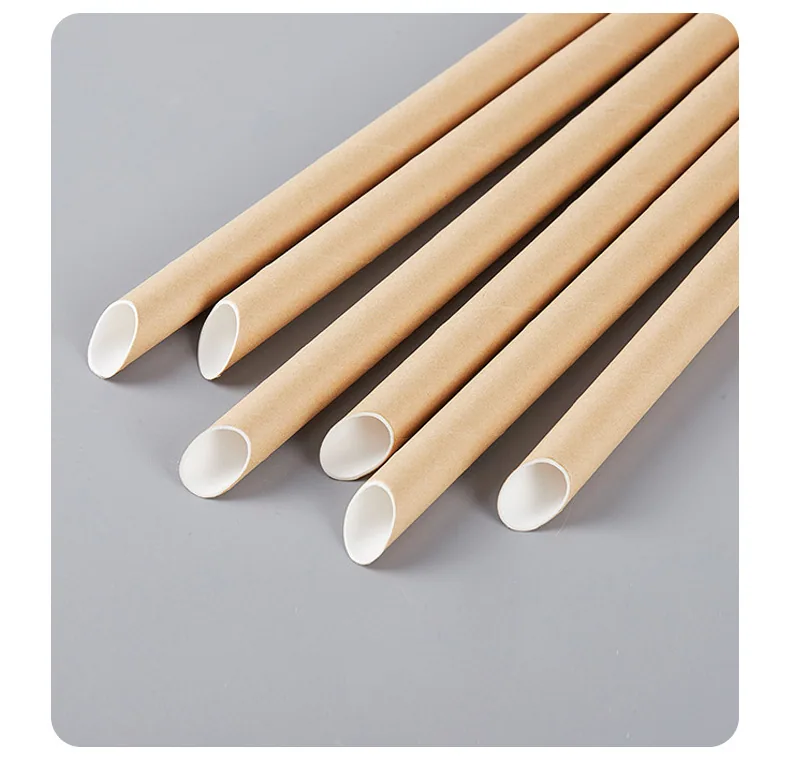
For thick drinks, milkshakes, smoothies, and bubble tea, regular paper straws may not be enough. Larger diameter, stronger wall structure, or bevel-tip options may be needed. Reviewing our paper straw options alongside the sizing guide helps directly connect the straw spec to cup height, lid type, and drink flow.
When a Mixed Straw Program Works Better
One straw rarely fits every drink. A restaurant may use standard paper straws for iced tea, stronger paper straws for milkshakes, bamboo straws for premium cocktails, and stirrers for coffee service. This keeps each material in the use case where it performs best.
Exploring our full range of eco-friendly straws gives restaurants a way to compare paper, bamboo, wheat, and other materials without treating the choice as a single yes-or-no decision.
Restaurant Cost Is More Than Unit Price
Paper straws may cost more than conventional plastic straws, but unit price is only part of the restaurant cost. Complaints, replacement straws, drink remakes, poor reviews, storage waste, and wrong-size inventory also carry cost. A slightly stronger straw can be the cheaper program if it prevents service problems.
In TOGO's chain rollout projects, we usually suggest a small store trial before replacing straws across all locations. This allows the team to track drink fit, staff comments, guest reaction, storage workflows, and reorder rhythm without disrupting the entire operation.
Packaging Details That Change the Result
Two paper straws with the same diameter can feel different in service. Inner paper quality, wall thickness, winding, coating, adhesive, wrapping, and storage condition all affect mouthfeel. A wrapped paper straw may work better for takeaway and hotel rooms. An unwrapped straw may fit fast counter service with controlled storage.
Restaurants that use custom cups or lids also need fit testing. A straw that is too wide for the lid hole slows staff down. A straw that is too short looks poor in a tall cold cup. TOGO can match straw samples with cup and lid photos before the restaurant commits to a full rollout.
For custom sizing, mixed material options, or bulk restaurant orders, contact TOGO at [email protected] or via WhatsApp at +852 5181 0016.
FAQ
Are paper straws always better than plastic?
No. Paper is better when the straw matches the drink and service model. Plastic may feel stronger, but it can conflict with local rules or brand policy.
Do paper straws work for milkshakes?
They can, but regular narrow paper straws are often too weak or too slow-flowing. Wider and stronger paper straws are usually a better fit.
Do restaurants need wrapped paper straws?
Wrapped straws are useful for takeaway, hotels, catering, and hygiene-focused programs. Unwrapped straws can work for controlled counter service.