Ever picked up a beautifully curved bamboo spoon at a café and wondered, "How on earth did they bend that without snapping it in half?" I had the same question when I first started working with bamboo at ToGoTableware. Bamboo seems so rigid and brittle—until you learn its secret.
The truth is, bamboo is surprisingly flexible when you know how to work with it. Whether you're a DIY enthusiast wanting to make custom utensils, a small business owner looking to understand your supplier's process, or just curious about how those gorgeous curved bamboo products are made, this guide will walk you through everything you need to know.
Why Would You Want to Bend Bamboo?
Before we dive into the how, let's talk about the why. Curved bamboo isn't just prettier—it's actually more functional. Spoons hold more liquid when the bowl has a natural curve, and handles fit your hand better with an ergonomic bend. Serving utensils scoop more easily with the right angle, and decorative pieces look way more interesting with curves and waves. Even chopsticks benefit from a slight curve because they won't roll off the table.
Plus, let's be honest—curved bamboo just looks more artisanal and premium. That's why we use curved designs for many of our bamboo products at ToGoTableware.
The Science Behind Bending Bamboo
Here's the deal: Bamboo is made up of tough fibers held together by a natural "glue" called lignin. When bamboo is cold, lignin is hard and rigid. But when you heat it up, lignin softens and becomes pliable—kind of like how butter melts.
Once the lignin softens, you can bend the bamboo fibers without breaking them. Then, when it cools down, the lignin hardens again and locks the bamboo into its new curved shape. Pretty cool, right?
The key is heating it just enough to soften the lignin without burning or weakening the fibers. That's where technique comes in.
Method 1: Steam Bending (The Best Method for Beginners)
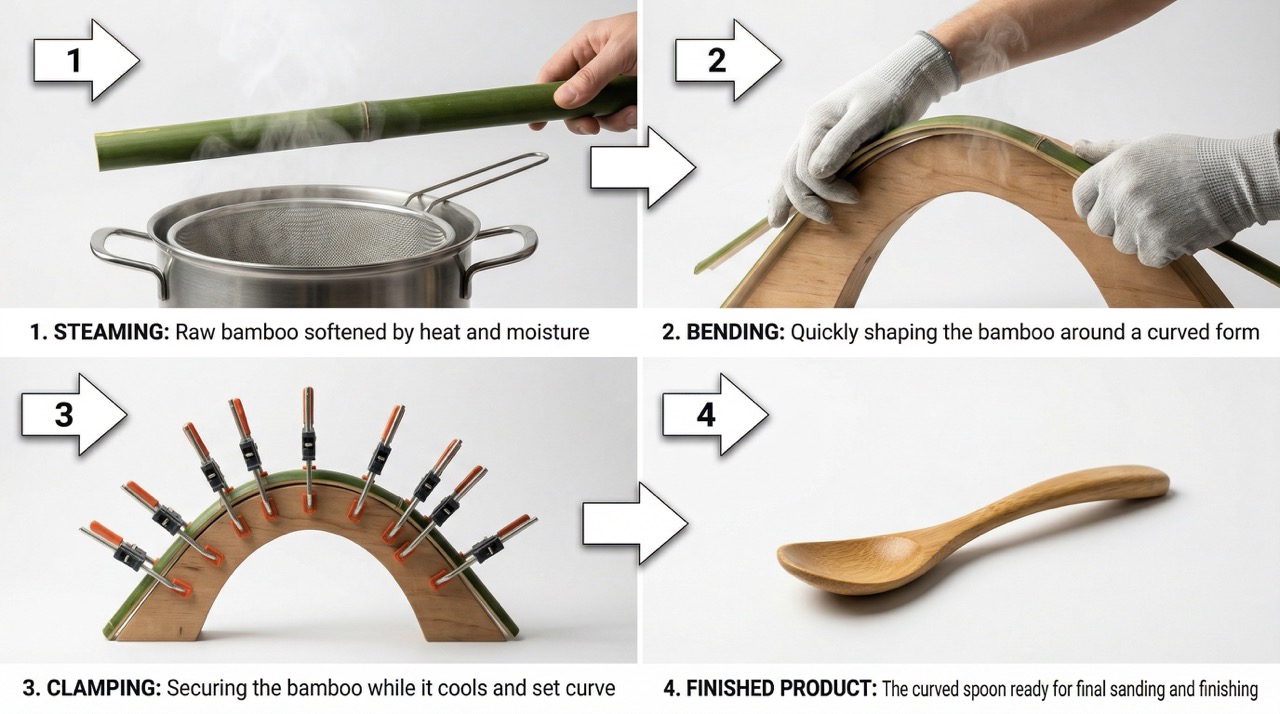
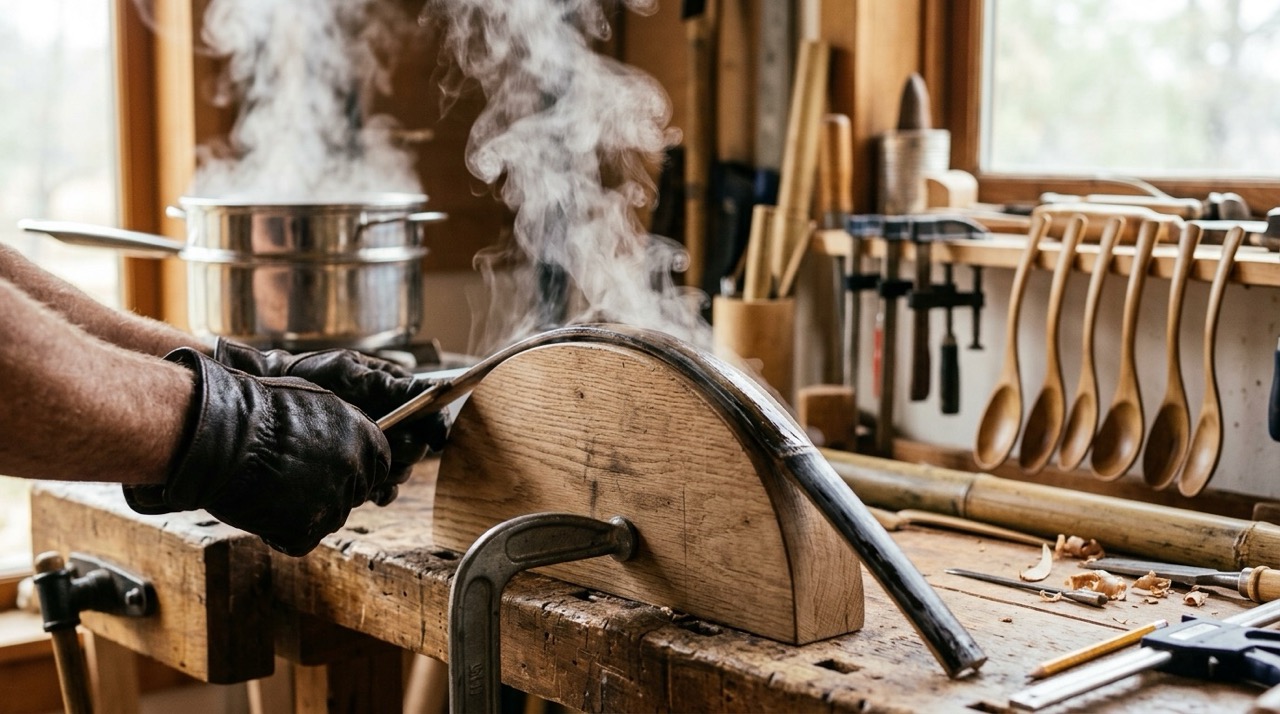
This is my favorite method because it's gentle, consistent, and hard to mess up. Steam bending is what professional manufacturers use—including us at ToGoTableware—because it produces the smoothest, strongest curves.
What You'll Need:
For this method, you'll need a bamboo piece (thinner pieces are easier to start with), a large pot with lid or a wallpaper steamer, heat-resistant gloves, a curved mold or form (can be a bucket, pipe, or custom wooden form), clamps or strong rubber bands, and a towel.
Step-by-Step Process:
Step 1: Prepare Your Bamboo
Start with bamboo that's been dried for at least 2-3 months. Fresh "green" bamboo has too much moisture and won't hold its shape well. If you're buying bamboo from a supplier, it should already be properly dried.
Step 2: Set Up Your Steamer
Fill your pot with 2-3 inches of water and bring it to a rolling boil. If you're using a wallpaper steamer, just follow the manufacturer's instructions. The goal is to create a steady stream of hot steam.
Step 3: Steam the Bamboo
Place your bamboo piece over the steam (not touching the water). Cover it with a lid or towel to trap the steam. Here's the timing guide:
Thin bamboo (under 1/4 inch): 15-20 minutes
Medium bamboo (1/4 to 1/2 inch): 30-45 minutes
Thick bamboo (over 1/2 inch): 60+ minutes
You'll know it's ready when the bamboo feels warm and slightly flexible. Don't rush this step—patience is key.
Step 4: Bend It Quickly
Put on your heat-resistant gloves and remove the bamboo from the steam. Work fast because you only have about 60-90 seconds before it starts cooling and stiffening.
Gently bend the bamboo around your mold or form. Start from one end and gradually work your way along the length. If you feel resistance, don't force it—you might crack it. Just steam it a bit longer.
Step 5: Secure and Cool
Use clamps or rubber bands to hold the bamboo in its curved position. Make sure it's firmly secured because bamboo has "memory" and will try to spring back to its original shape.
Let it cool completely—at least 2-3 hours, or overnight for thick pieces. The longer you leave it, the better it will hold its shape.
Step 6: Release and Admire
Carefully remove the clamps. Your bamboo should now hold its curved shape! If it springs back a little, that's normal—you can always steam and re-bend it.
When steam bending, always test first by practicing on scrap pieces before working on your final project. Remember that multiple gentle bends are better than one extreme bend. Watch for darkening because if bamboo turns dark brown or black, you've overheated it. Also, make sure to support the outer curve since the outside of the bend is under tension and more likely to crack.
Method 2: Heat Bending (The Traditional Way)
This is the old-school method that craftspeople have used for centuries. It's faster than steam bending but requires more skill and attention.
What You'll Need:
For heat bending, gather your bamboo piece, a heat source (torch, heat gun, or even a gas stove), heat-resistant gloves, a curved mold or form, clamps, and a damp cloth.
Step-by-Step Process:
Step 1: Prepare Your Workspace
Work in a well-ventilated area away from flammable materials. Have your mold and clamps ready because you'll need to work quickly.
Step 2: Apply Heat Gradually
Hold your heat source 4-6 inches away from the bamboo. Move it back and forth along the section you want to bend. Keep it moving—never hold the flame in one spot or you'll scorch the bamboo.
Heat for 30-60 seconds until the bamboo feels warm and starts to become pliable. You might see a little steam coming off—that's good.
Step 3: Test and Bend
Gently try to bend the bamboo. If it resists, heat it more. If it bends easily, quickly shape it around your mold.
Step 4: Cool with Damp Cloth
Once bent, press a damp (not soaking wet) cloth against the bamboo. This rapidly cools it and locks in the shape. Hold for 30-60 seconds.
Step 5: Clamp and Wait
Secure with clamps and let it sit for at least an hour before releasing.
With heat bending, go slow because it's better to heat multiple times than to overheat once. Aim for a coffee-brown color since light brown is perfect, but dark brown or black means you've gone too far. Work in sections for long pieces by bending one section at a time. Remember that practice makes perfect because this method has a learning curve, so don't get discouraged.
Method 3: Cold Bending (For Gentle Curves Only)
This method works for very thin bamboo or when you only need a slight curve.
What You'll Need:
For cold bending, you'll need thin bamboo (under 1/8 inch), a curved mold, strong clamps or weights, and patience (lots of it).
The Process:
Simply clamp your bamboo to a curved form and leave it for 1-2 weeks. The bamboo will slowly take on the shape of the mold. This works because bamboo has some natural flexibility, especially when it's thin.
Important: This only works for gentle curves. Don't expect dramatic bends with this method.
Common Mistakes (And How to Avoid Them)
After years of working with bamboo, I've seen every mistake in the book. Here are the big ones:
Mistake 1: Rushing the Heating Process
The Problem: Bamboo that's not heated enough will crack when you try to bend it.
The Fix: Be patient. Give it the full steaming or heating time, even if it seems like overkill.
Mistake 2: Bending Too Sharply
The Problem: Trying to create a 90-degree angle in one go will snap your bamboo.
The Fix: Bend gradually. If you need a sharp curve, do it in multiple sessions, increasing the bend each time.
Mistake 3: Not Securing Properly
The Problem: Bamboo springs back to its original shape if not held firmly while cooling.
The Fix: Use strong clamps and leave them on longer than you think necessary—overnight is ideal.
Mistake 4: Working with Green Bamboo
The Problem: Fresh bamboo has too much moisture and won't hold its shape.
The Fix: Only use bamboo that's been dried for at least 2-3 months.
Mistake #5: Overheating
The Problem: Too much heat burns the bamboo, making it weak and brittle.
The Fix: Watch for color changes. Light brown is good; dark brown or black is bad.
What Can You Make with Bent Bamboo?
Once you've mastered the bending technique, the possibilities are endless. In the kitchen, you can create curved serving spoons, ergonomic spatulas, salad tongs with natural curves, and soup ladles. For home décor, consider making curved picture frames, decorative wall art, lamp bases, or plant stakes with artistic curves. If you're into furniture, bent bamboo works beautifully for chair backs with gentle curves, table edge trim, and drawer handles. Garden enthusiasts can use curved bamboo for garden borders, decorative trellises, and bamboo arches.
When DIY Isn't Practical: Professional Curved Bamboo Products
Look, I love a good DIY project as much as anyone. But let's be real—if you're running a restaurant, café, or catering business, you probably don't have time to steam-bend hundreds of bamboo spoons in your kitchen.
That's where we come in. At ToGoTableware, we manufacture curved bamboo products using industrial steam-bending equipment that ensures consistent quality and food-safe standards. Every piece goes through quality control to make sure there are no cracks, splinters, or weak spots.

Our Curved Bamboo Collection:
Our curved bamboo spoons are perfect for soups, desserts, and yogurt parfaits. The curved bowl holds more liquid than straight spoons, and the ergonomic handle feels natural in your hand. They're available in 6" and 7" lengths. We also offer curved bamboo forks where the slight curve in the handle makes these forks comfortable for extended use—great for salad bars and buffets. The strong tines won't bend or break even with heavy use.
For larger serving needs, our curved serving utensils feature 10-12" serving spoons and forks with dramatic curves that make scooping and serving easier. These are showpieces that customers notice and appreciate. Why choose our products? We maintain consistent curves with no wonky bends or asymmetry, all our products are FDA-approved and PFAS-free, we have less than 1% defect rate, we use sustainably harvested bamboo, and everything is fully compostable.
We offer free samples so you can test the quality before committing to a bulk order. Just reach out through our contact page and tell us what you're looking for.
Frequently Asked Questions
Q: How do you bend bamboo without breaking it?
The key is heat. Bamboo contains lignin, a natural polymer that softens when heated above 150°F (65°C). Steam bending is the safest method: steam your bamboo for 15-60 minutes depending on thickness, then quickly bend it around a mold while it's hot. Secure it with clamps and let it cool completely (2-3 hours minimum). The lignin will harden again, locking the bamboo into its new curved shape. Never try to bend cold bamboo—it will crack.
Q: Can you bend bamboo with just hot water?
Yes, but it's less effective than steam. Submerge bamboo in boiling water for 30-60 minutes to soften the lignin. However, water doesn't penetrate as deeply as steam, so you'll get less flexibility. This method works okay for thin bamboo (under 1/4 inch) but isn't reliable for thicker pieces. Steam bending is always better because steam surrounds the bamboo and heats it more evenly.
Q: How long does bent bamboo hold its shape?
Permanently, if done correctly. Once the lignin cools and hardens in the new position, the curve becomes the bamboo's "new normal." However, if you expose bent bamboo to high heat again (like leaving it in a hot car), it might try to revert to its original shape. Properly bent bamboo products can last for years without losing their curve.
Q: What's the best thickness of bamboo for bending?
For beginners, start with bamboo that's 1/4 inch thick or less. Thinner bamboo is more forgiving and requires less heating time. Once you're comfortable with the technique, you can work up to 1/2 inch or thicker. Professional manufacturers can bend bamboo up to 1 inch thick using industrial steam chambers, but that's not practical for home DIY.
Q: Can you bend bamboo poles for garden projects?
Yes, but large bamboo poles (1-2 inches diameter) are challenging to bend at home. You'd need a very large steamer or heat source, and the bending force required is substantial. For garden arches and structures, it's often easier to use naturally curved bamboo pieces or to create curves by joining straight sections at angles. If you need curved bamboo poles, consider buying pre-bent ones from specialty suppliers.
Q: Does bending weaken bamboo?
Not if done properly. Steam bending actually maintains bamboo's structural integrity because you're not cutting or damaging the fibers—just rearranging them. The outer curve (tension side) is slightly weaker than the inner curve (compression side), but overall strength remains high. Avoid the "slashing" method where V-cuts are made, as this significantly weakens the bamboo.
Q: Can you bend bamboo more than once?
Yes, you can re-bend bamboo by heating it again. However, each heating cycle slightly degrades the lignin, so bamboo becomes more brittle after multiple bends. For best results, plan your final curve carefully and try to get it right the first time. If you must re-bend, be extra gentle and use lower heat.
Q: What's the difference between bamboo and wood bending?
Bamboo is actually easier to bend than most hardwoods because its hollow structure and parallel fibers make it more flexible. Wood bending typically requires longer steaming times (1 hour per inch of thickness) and more force. However, bamboo is also more prone to cracking if you bend too sharply, so you need to be more careful with the curve radius.
Q: Where can I buy bamboo for bending projects?
Hardware stores and craft stores often carry thin bamboo stakes and dowels suitable for small projects. For larger quantities or specific sizes, check online suppliers like Amazon, specialty bamboo suppliers, or even garden centers. If you're looking for food-grade bamboo for making utensils, make sure it's untreated and safe for food contact. At ToGoTableware, we occasionally sell bamboo blanks to small businesses and craftspeople—just reach out if you're interested.
Q: Is bent bamboo food-safe?
Yes, as long as the bamboo itself is untreated and you don't use any toxic adhesives or finishes. Steam bending and heat bending don't require any chemicals, so the bamboo remains food-safe. If you're making utensils for commercial use, make sure your bamboo source can provide FDA compliance documentation. All of our curved bamboo products at ToGoTableware are FDA-approved and regularly tested for food safety.
Final Thoughts: Bend It Like Bamboo
Bending bamboo is one of those skills that seems impossible until you try it—and then you wonder why you waited so long. Whether you're making a single curved spoon for your kitchen or exploring bamboo crafts as a hobby, the techniques in this guide will get you started.
Remember: patience is your best friend. Don't rush the heating process, don't force the bend, and give it plenty of time to cool. With a little practice, you'll be creating beautiful curved bamboo pieces that look professionally made.
And hey, if you decide that DIY isn't your thing after all, we've got you covered with our full line of curved bamboo products. Either way, you'll have a new appreciation for those gorgeous curved utensils next time you see them.
Happy bending!
Want to see professional curved bamboo products in action? Check out our Bamboo Cutlery Collection or request free samples to test the quality for yourself.