
The Short Answer: Understanding the Two Toxins
While BPA is a chemical used historically to harden rigid, clear plastics, PFAS are "forever chemicals" applied as invisible, grease-proof coatings to paper and fiber bowls; ensuring your packaging is both BPA and PFAS-free protects you from two entirely different, highly toxic chemical groups.
Do PFAS Free Plastic Containers Have BPA?
It is a common consumer misconception that a single "eco-friendly" label covers all harmful chemicals.
This confusion is glaring when comparing BPA with PFAS. Bisphenol A (BPA) is a monomer primarily used to manufacture rigid polycarbonate plastics (think of heavy, reusable water bottles or old food storage tubs). When consumers seek out safe plastics, they are generally looking for pfas free plastic containers that also explicitly exclude BPA. Conversely, PFAS (Per- and Polyfluoroalkyl Substances) are not plastics themselves. They are microscopic, chemical, waterproof washes that manufacturers spray onto seemingly natural materials—like paper pizza boxes and molded fiber bowls—to stop hot grease from seeping through. A product can be 100% BPA-free and yet entirely soaked in PFAS.
The Need for BPA and PFAS Free Food Containers
Protecting your internal organs requires avoiding both families of chemicals simultaneously.
According to systemic research reported by the Centers for Disease Control and Prevention (CDC / ATSDR), both BPA and PFAS are recognized as severe endocrine disruptors. However, their pathways of harm differ. BPA largely mimics estrogen, accelerating reproductive issues and early puberty. PFAS, on the other hand, disrupts the thyroid, elevates blood cholesterol, and aggressively increases cancer markers. By choosing true bpa and pfas free food containers, you eliminate this dual threat to public health. Additionally, guidelines from the World Health Organization (WHO) underscore that co-exposure to multiple chemical classes via food-contact materials exponentially increases the chronic toxic burden on the human body.
How Public Awareness is Forcing Market Changes
Public awareness and decisive regulation forced the market shift:
The BPA Reckoning: Over a decade ago, immense consumer backlash pushed manufacturers and regulatory bodies worldwide to outright ban BPA in baby bottles, fundamentally shifting the rigid plastic industry.
The New PFAS Era: Today, the FDA and EPA are mimicking that aggressive strategy against PFAS. Recognizing that the greaseproof coatings on "BPA-free" cardboard takeout boxes are equally dangerous, global regulators are now demanding total elimination of PFAS across the paper and compostable food service sectors.
How to Judge and Choose Total Chemical Safety
Health-conscious food businesses and families must elevate their purchasing standards.
Never assume a label covers everything. If you are buying heavy-duty clear plastics, verify the structural integrity of pfas free plastic containers and ensure they carry a distinct "BPA-Free" mark. However, if you are purchasing disposable bowls, the primary danger is PFAS. To ensure complete safety, especially when sourcing bpa and pfas free food containers, you must demand third-party lab testing and up-to-date compostability certifications (like the BPI standard) which explicitly prohibit the intentional addition of any fluorine-based chemicals.

Safer Alternatives: Next-Generation Plant Coatings
It is completely possible to enjoy hot, messy takeout without compromising your health to either BPA or PFAS.
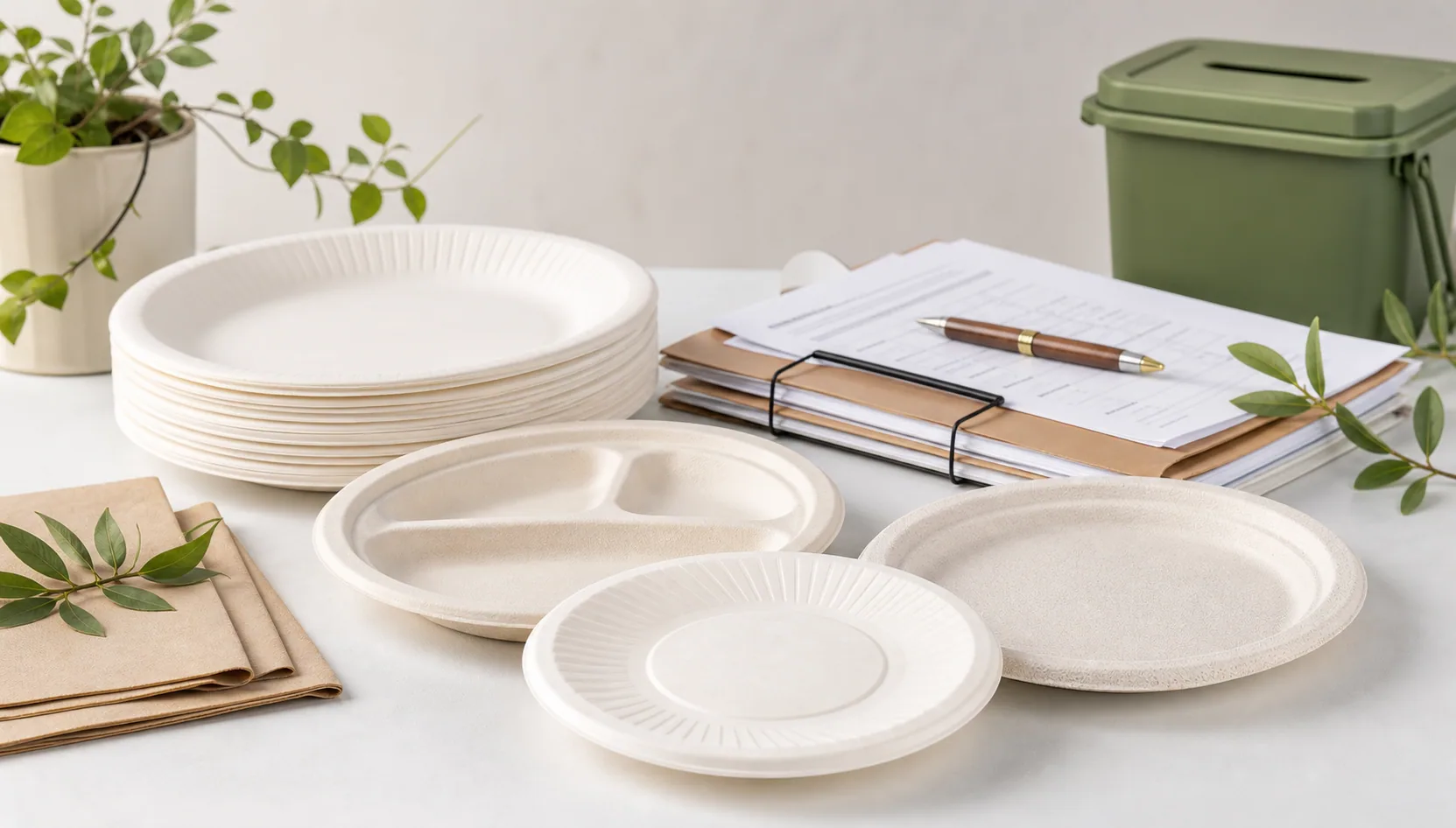
At ToGoTableware, our state-of-the-art bagasse (sugarcane pulp) and paper products use advanced plant-based waterproof and greaseproof coatings. Whether you are searching for premium clamshells, sturdy pfas free paper bowls, or everyday pfas free paper plates, our structural innovations provide superior natural barrier properties—guaranteeing your packaging is genuinely BPA and PFAS-free.
Making the Switch to PFAS-Free Food Packaging
Complete chemical safety means closing all the regulatory loopholes. Upgrade to packaging that refuses to compromise on any toxic family.
Ready to make the sustainable switch? Explore our complete range of certified bpa and pfas free food containers at ToGoTableware. From highly durable bagasse clamshells to heavy-duty pfas free paper plates, we provide you with lab-tested, genuinely eco-friendly packaging solutions that protect both your food and the environment.
FAQ: Clearing the Confusion
Q: Are BPA-free plastic food storage containers also PFAS-free?
A: In most cases, standard rigid plastics (like PP and PET food prep tubs) naturally do not require PFAS coatings for grease resistance, meaning they are usually both. The highest PFAS risk is in paper and compostable containers.
Q: Do all paper plates have BPA?
A: No, BPA is not typically utilized in paper manufacturing. The concern for paper plates is almost exclusively the invisible PFAS grease barrier coating.
Q: Is it safe to reheat food in containers that are only BPA-free?
A: No. If a container is BPA-free but contains PFAS, microwaving will still cause extreme chemical migration of the forever chemicals into your food.